
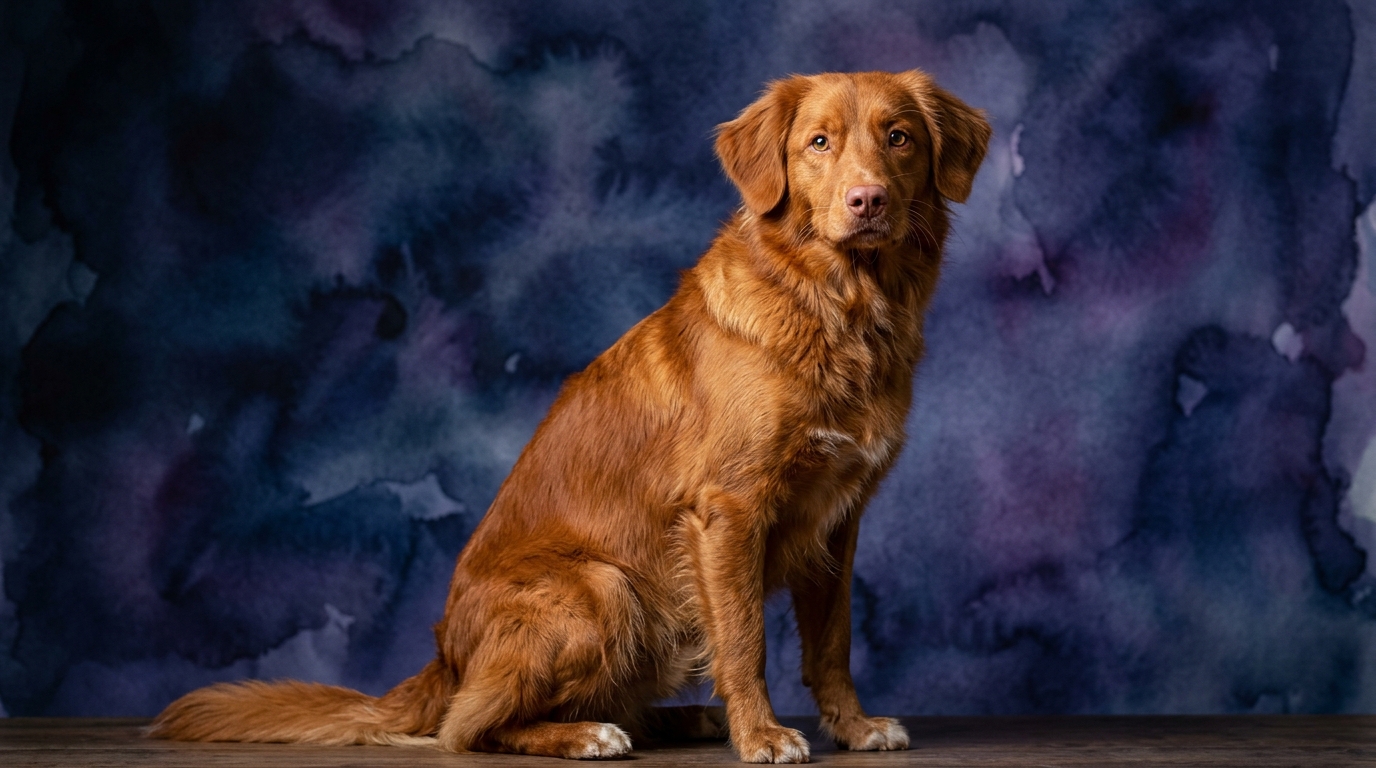
Side-by-Side Cognitive Profiles
At The Cosmic Pet Pet IQ Lab, we assess canine intelligence across five key dimensions. While both the Cane Corso and the Nova Scotia Duck Tolling Retriever register a solid 3/5 across all categories, the *application* and *manifestation* of these cognitive abilities are profoundly shaped by their breed histories and inherent temperaments.
The Cane Corso, a breed from the Working Group, descends from Roman war dogs and later served as farm guardians, reflecting a need for independence and discernment in their cognitive makeup.
Problem Solving (3/5): This score indicates a solid capacity for assessing situations and formulating responses, particularly in guarding or protective scenarios. A Cane Corso might independently decide how to patrol a perimeter or respond to an unfamiliar sound, relying on its judgment rather than constant human direction.
Training Speed (3/5): While capable of learning at a steady pace, the Cane Corso's strong will and self-assured nature mean that training requires consistent, firm, and fair leadership. They grasp concepts but need motivation beyond mere repetition, often thriving on purpose-driven tasks.
Social Intelligence (3/5): Their social understanding is often focused on pack dynamics and discerning intent. They are adept at reading their family's moods and reacting to potential threats, but can be reserved with strangers, evaluating new individuals carefully before accepting them.
Instinctive Drive (3/5): The Cane Corso's core drive is protection and guardianship. This manifests as a strong territorial instinct and an innate desire to watch over their family and property, often leading to vigilant observation and a readiness to act when perceived necessary.
Memory (3/5): They possess a good memory for routines, boundaries, and individuals, remembering who belongs and who doesn't. This contributes to their effectiveness as guardians, as they recall past interactions and established rules within their environment.
The Nova Scotia Duck Tolling Retriever, a member of the Sporting Group, was bred to "toll" or lure ducks and retrieve game, meaning their intelligence is finely tuned for interactive, task-oriented work.
Problem Solving (3/5): Tollers exhibit practical problem-solving, especially in scenarios involving retrieving or navigating complex environments. This might involve figuring out the best route to an object or adapting their luring movements to attract birds, demonstrating flexibility in their approach.
Training Speed (3/5): These dogs typically learn new commands with enthusiasm and a desire to please, often picking up new skills efficiently. Their focus and eagerness for engagement make them responsive pupils, though they can become bored or distracted if training isn't stimulating.
Social Intelligence (3/5): Tollers are highly attuned to their human companions, excelling at reading cues and working collaboratively. Their social cognition enables them to anticipate commands and adapt their behavior to handler expectations, fostering strong working partnerships.
Instinctive Drive (3/5): The Toller's primary drives are retrieving and their unique "tolling" behavior, which involves playful movements to draw waterfowl closer. This strong prey drive is channeled into cooperative hunting activities, making them highly motivated by games involving chase and fetch.
Memory (3/5): Their memory is robust for sequences of commands, the locations of retrieved items, and learned routes. This capacity is crucial for their working role, allowing them to execute complex tasks and remember specific details of their environment.
Where the Cane Corso Wins Cognitively
The Cane Corso's cognitive strengths shine in areas demanding independent judgment and protective acumen. Their problem-solving, while rated 3/5, is particularly refined for assessing potential threats and making strategic decisions about territorial defense, often without direct instruction. This breed demonstrates a nuanced social intelligence in discerning friend from foe, reading subtle human intentions, and establishing a clear hierarchy within their family unit, providing a sense of secure order. Their memory serves them well in maintaining consistent boundaries and routines, ensuring a stable and predictable environment for their charges.
Where the Nova Scotia Duck Tolling Retriever Wins Cognitively
Conversely, the Nova Scotia Duck Tolling Retriever excels in cognitive domains centered on collaborative work and adaptability in dynamic environments. Their 3/5 problem-solving capability is optimally applied to practical, task-oriented challenges, such as navigating complex terrain to retrieve an object or adjusting their luring technique based on bird behavior. Tollers leverage their social intelligence to form incredibly strong, responsive partnerships with their handlers, anticipating cues and adapting their actions seamlessly. Their training speed benefits from an inherent eagerness to engage, allowing them to rapidly acquire and recall intricate sequences of commands for various sporting activities.
Which is Easier to Train and Why
While both breeds hold a 3/5 training speed score, the *approach* to training and the *ease* of achieving compliance differ significantly due to their inherent temperaments. The Nova Scotia Duck Tolling Retriever is generally considered more straightforward to train for obedience and complex tasks. Their strong desire to please, combined with their focus on interaction and motivation for play or food rewards, makes them highly receptive to positive reinforcement methods. They thrive on engagement and mental stimulation, often eager to learn new things and quickly grasp concepts, making them excellent candidates for advanced dog sports. In contrast, the Cane Corso, with its inherent independence and guardian mentality, requires a more consistent and experienced hand. While equally capable of learning, their training often demands clear, confident leadership and a strong understanding of their motivations. They may question commands if they don't perceive a clear purpose, or if the handler's authority isn't firmly established. Their learning is steady, but their willingness to execute a command can be more tied to their assessment of the situation and their relationship with the trainer. Therefore, while both learn, the Toller's eagerness often translates to a smoother, faster training journey for most owners.
Suitability for Active vs. Relaxed Owners
When considering lifestyle compatibility, the cognitive profiles and energy levels of these breeds offer distinct matches. The Nova Scotia Duck Tolling Retriever is an ideal companion for highly active owners who enjoy engaging in various outdoor activities like hiking, running, or dog sports such as agility, flyball, or dock diving. Their robust instinctive drive and problem-solving skills thrive on regular physical and mental challenges, making them restless and potentially destructive if under-exercised or under-stimulated. They require owners who can provide consistent, interactive engagement that channels their natural working intelligence. The Cane Corso, while also requiring regular exercise to maintain physical and mental well-being, is generally better suited for owners who appreciate a more composed, observant presence. Their cognitive strengths lean towards vigilance and independent decision-making in a protective role, which doesn't necessarily translate to high-octane physical demands throughout the day. They need consistent walks and opportunities to patrol their territory, but are often content with structured activity followed by quiet time with their family. A relaxed owner who can provide consistent structure, moderate exercise, and mental enrichment through training and boundary reinforcement would find the Cane Corso more fitting than the perpetually energetic Toller.
The Verdict
Choose the Cane Corso if you seek a steadfast, discerning guardian who thrives on clear leadership and purposeful engagement, offering a composed yet protective presence.
Opt for the Nova Scotia Duck Tolling Retriever if your lifestyle is highly active and you desire a collaborative, energetic partner eager for interactive challenges and consistent mental stimulation.
🧠 Find Your Pet's IQ Score
Our Pet IQ Lab assessment covers 25+ tests across 5 cognitive dimensions — personalized to your breed.
Take the Full IQ Test →Frequently Asked Questions
Does a 3/5 IQ score mean neither breed is particularly clever?
Not at all; a 3/5 score indicates a solid, functional level of cognitive ability. For these breeds, it signifies they possess the intelligence necessary for their historical roles, applying their problem-solving, social understanding, and memory effectively within their specific contexts.
How does a Cane Corso's social intelligence differ from a Toller's, given both are 3/5?
A Cane Corso's social intelligence is often geared towards discerning intentions and understanding hierarchy within its family, making it reserved with strangers. A Toller's social intelligence focuses more on collaborative work with its handler and reading subtle cues for task-oriented engagement.
Can a Cane Corso participate in dog sports like a Toller?
While a Cane Corso can certainly be trained for some dog sports, especially those requiring strength and focus like obedience or protection work, they typically do not possess the same inherent drive and physical agility for activities like agility or dock diving that a Toller excels at due to its breed-specific instincts and physique.