
Side-by-Side IQ Profile
The Cane Corso: A Guardian's Mind: Hailing from Italy, the Cane Corso's cognitive architecture is deeply influenced by its history as a protector, hunter, and loyal companion. Their Problem Solving (3/5) manifests as a pragmatic approach to assessing situations, particularly those involving their family or territory. They are adept at evaluating potential threats and devising strategies to maintain order, often displaying a nuanced understanding of their environment. When it comes to Training Speed (3/5), Cane Corsos typically absorb commands and routines with moderate rapidity, driven by a strong desire to please and establish clear communication with their handler. Their dedication to their human family often translates into a focused learning style, though their strong will requires consistent and confident guidance. Social Intelligence (3/5) in a Cane Corso is characterized by a discerning nature; they are keenly attuned to human emotions and intentions within their established social circle, often displaying a quiet observation of strangers before acceptance. Their loyalty is profound, forming deep, protective bonds. The Instinctive Drive (3/5) is powerfully geared towards guardianship, territorial defense, and a natural protective instinct for their family. This drive is a core component of their psychological makeup, requiring appropriate outlets and management. Finally, their Memory (3/5) is robust, enabling them to retain complex sequences of commands, remember past interactions with people, and recall learned boundaries with precision.
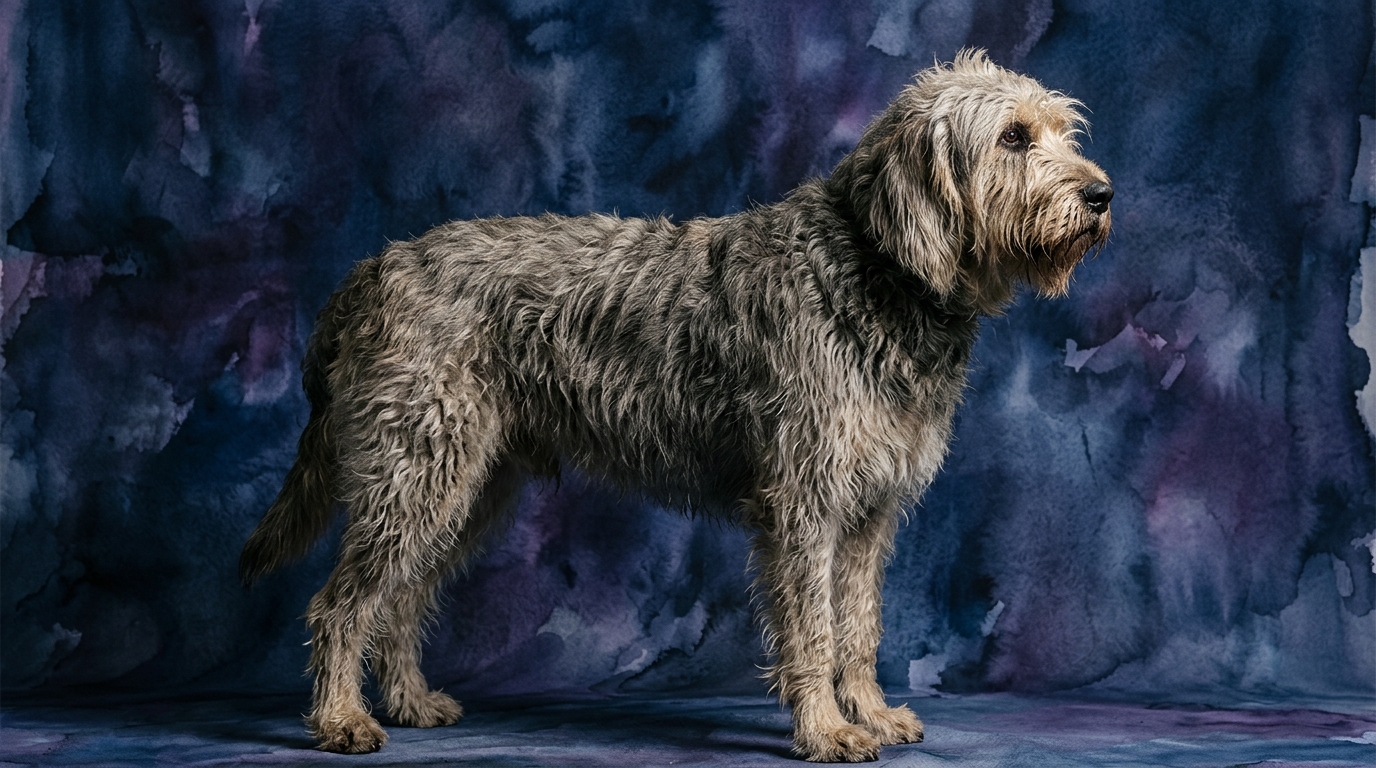
The Otterhound: A Scent-Driven Explorer: Originating from Great Britain, the Otterhound's cognitive landscape is shaped by centuries of tracking otters across varied terrains and waterways. Their Problem Solving (3/5) is uniquely adapted to sensory challenges, excelling at unraveling complex scent trails and navigating obstacles to pursue a lead. This often involves intricate spatial reasoning and persistent investigation rather than social strategizing. Regarding Training Speed (3/5), Otterhounds learn steadily, but their process is often punctuated by their powerful, independent scent drive. They can grasp concepts well, but their focus may waver if a compelling scent distraction arises, demanding patience and creative motivation from their trainer. Their Social Intelligence (3/5) is expressed through an affable, boisterous demeanor; they are generally friendly and tolerant, often less concerned with subtle human social cues than with engaging in play or following an interesting smell. They possess a good-natured curiosity about their surroundings and the beings within it. The Instinctive Drive (3/5) is overwhelmingly dominated by their extraordinary olfactory capabilities and an innate desire to track. Their deep, resonant bay is a testament to this drive, signaling their engagement with a scent. Memory (3/5) for an Otterhound is particularly strong concerning scent associations and geographical locations where intriguing smells were found, allowing them to recall and revisit productive sniffing grounds, alongside remembering routines and familiar faces.
Where Cane Corso Wins Cognitively
While both breeds demonstrate a 3/5 in problem-solving, the Cane Corso's cognitive strengths shine particularly in scenarios demanding strategic discernment and a focused understanding of social dynamics. Their problem-solving often involves assessing human-centric situations, such as identifying a genuinely threatening presence versus a playful visitor, or understanding complex household rules. This nuanced social problem-solving, combined with their instinctive protective drive, means they can act as a vigilant, thinking deterrent, often making decisions that prioritize the safety and order of their family unit. Their memory, while rated similarly, appears particularly strong in recalling specific human interactions, commands, and boundaries, which is crucial for their role as a highly integrated family member and guardian. This means they are less likely to 'forget' a rule or a person's status once established.
Where Otterhound Wins Cognitively
The Otterhound's specific cognitive strengths lie in their unparalleled sensory processing and relentless persistence, particularly in the realm of scent. Their 3/5 problem-solving is a masterclass in olfactory puzzle-solving, allowing them to navigate intricate environments purely by smell, deciphering faint trails that would be imperceptible to most other breeds. This involves not just following a scent but understanding its age, direction, and intensity. Their instinctive drive to track is so profound that it fuels a remarkable cognitive endurance, enabling them to maintain focus on a scent for extended periods, even when faced with physical challenges or distractions. This persistence is a cognitive advantage in tasks requiring sustained, independent investigation. Their memory, while a 3/5, is exceptionally tuned to recalling and recognizing scent patterns, allowing them to revisit and re-evaluate areas of interest with remarkable precision.
Which is Easier to Train and Why
Despite both breeds holding a 3/5 for Training Speed, their inherent behavioral differences significantly impact the training experience. The Cane Corso, with its strong desire to bond and please its handler, often appears 'easier' to train in the sense that they are generally eager to engage and respond to commands. Their social intelligence and memory mean they quickly grasp what is expected of them and enjoy the structure of working alongside their human. However, their powerful protective instincts and strong will necessitate a confident, consistent handler who can establish clear leadership without resorting to harsh methods. Training a Cane Corso is about channeling their inherent drives into appropriate behaviors and building trust.
The Otterhound, while equally capable of learning, presents a different kind of training challenge. Their 3/5 training speed is often overshadowed by their profound instinctive drive to follow a scent. When an Otterhound catches a compelling smell, their focus on human commands can diminish significantly. Training an Otterhound requires immense patience, creativity, and a deep understanding of positive reinforcement to make training more rewarding than the allure of the environment. Their independent, hound-like nature means they often need more motivation and repetition to solidify commands, particularly in distracting outdoor environments. They are not defiant, but rather deeply engrossed in their sensory world, making consistent recall a particular point of focus for owners.
Which Suits Active Owners vs. Relaxed Owners
For owners seeking a deeply engaged canine companion who thrives on structured activity and mental challenges, the Cane Corso is an ideal fit. Their need for consistent training, opportunities to 'work' (even if it's advanced obedience or protection sports), and structured exercise means they are best suited for active owners who can provide clear leadership and integrate the dog fully into their lives. A relaxed owner who cannot meet these cognitive and physical demands may find a Cane Corso's protective instincts and energy difficult to manage.
The Otterhound, while possessing a boundless enthusiasm for life, suits a different kind of active owner. They thrive with individuals or families who enjoy long, rambling walks or hikes, especially in varied natural environments where their incredible nose can be put to good use. They are less about structured 'work' and more about exploration and sensory engagement. Owners who appreciate a dog with an independent spirit and a love for the outdoors, and who don't mind a boisterous, vocal companion, will find the Otterhound a rewarding partner. They are not suited for truly relaxed owners who prefer minimal activity, as their need for physical and olfactory stimulation is significant.
The Verdict
Choose the Cane Corso if you seek a dedicated, discerning guardian who thrives on clear leadership, consistent training, and integration into a structured family life, offering unparalleled loyalty and a thoughtful protective presence.
Opt for the Otterhound if you desire a boisterous, affable companion who excels in scent-based exploration, loves long outdoor adventures, and whose independent, good-natured spirit brings joy to a family that appreciates a dog's profound connection to the natural world.
🧠 Find Your Pet's IQ Score
Our Pet IQ Lab assessment covers 25+ tests across 5 cognitive dimensions — personalized to your breed.
Take the Full IQ Test →Frequently Asked Questions
Are Cane Corsos good with children?
Cane Corsos can be excellent family dogs, often forming deep, protective bonds with children in their family. However, their size, strength, and protective instincts mean they require early socialization, consistent training, and supervision around children, especially when young.
Do Otterhounds bark a lot?
Otterhounds are known for their deep, resonant bay, which they use to communicate when on a scent trail or when excited. While they don't incessantly bark without reason, their vocal nature means they can be quite expressive and may bay when bored or when their instincts are piqued.
Do either of these breeds require a lot of grooming?
The Cane Corso has a short, dense coat that requires minimal grooming, primarily weekly brushing to remove loose hair. The Otterhound, however, has a coarse, shaggy double coat that is water-resistant and requires regular brushing (2-3 times a week) to prevent matting, along with occasional stripping or trimming.