
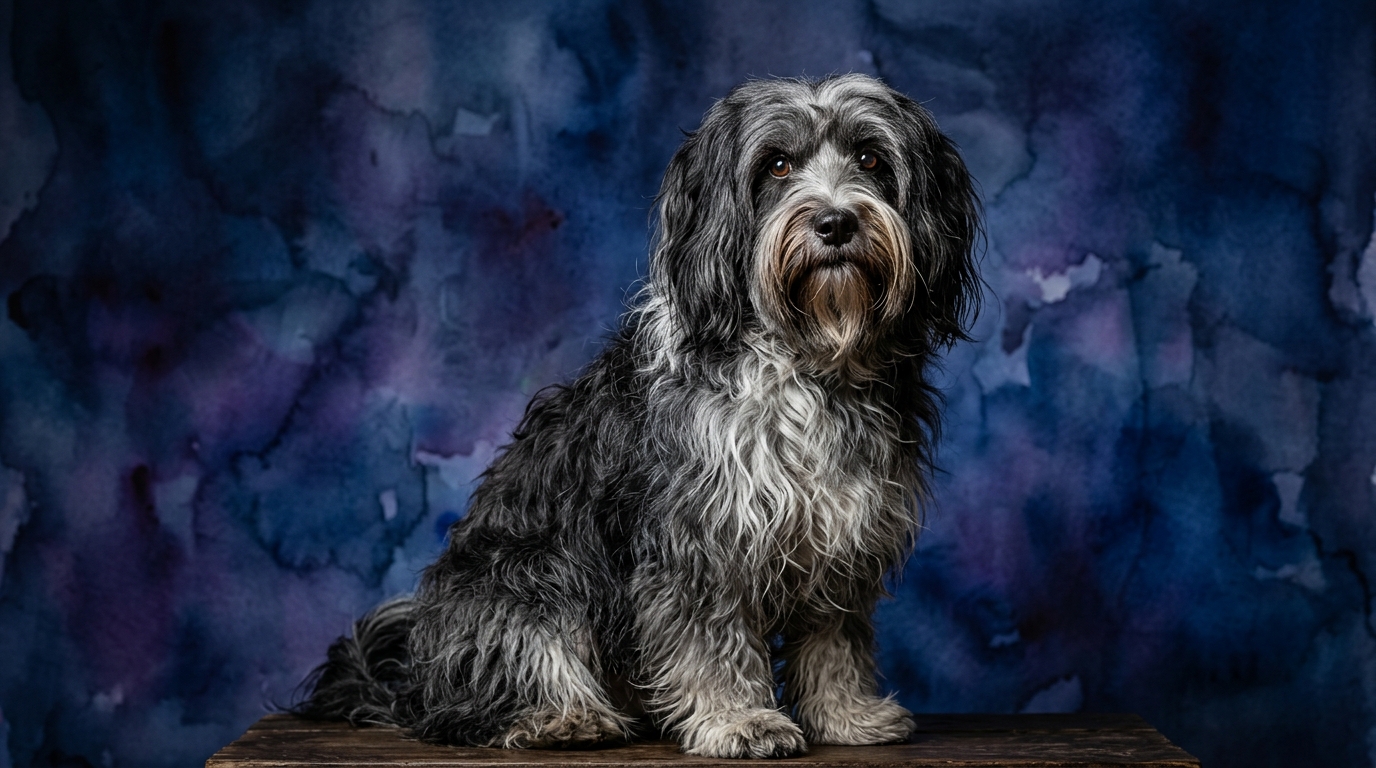
Side-by-Side IQ Profile: Cane Corso vs. Tibetan Terrier
The Cosmic Pet Pet IQ Lab assesses canine intelligence across five key dimensions, providing a nuanced view beyond simple rankings. Interestingly, both the Cane Corso and the Tibetan Terrier register a consistent 3/5 across all five cognitive dimensions, indicating a competent, average aptitude in each area. However, the *application* of this competency varies significantly between the breeds, shaped by their historical roles and inherent temperaments.
For the **Cane Corso**, a working dog, their 3/5 in **Problem Solving** reflects practical, situational resourcefulness, especially in contexts related to guarding, territory management, or discerning potential threats. This isn't about solving complex puzzles, but rather making sound judgments in real-world scenarios. Their **Training Speed** at 3/5 suggests they are capable learners, but their independent nature and strong will often require a consistent, firm, and clear approach from their handler. They learn effectively when they respect the source of instruction and understand the purpose. Their **Social Intelligence** (3/5) is particularly attuned to their immediate family unit, allowing them to read human intentions and pack dynamics within their trusted circle, while often maintaining a reserved or watchful demeanor with strangers. A 3/5 **Instinctive Drive** for the Cane Corso is predominantly expressed through their protective instincts, territoriality, and a strong drive to guard their family and property, which is central to their being. Finally, their **Memory** (3/5) is robust, especially for routines, familiar people, and past experiences related to security or perceived threats, aiding their role as guardians.
The **Tibetan Terrier**, a non-sporting breed with a Coren rank of #63, also scores 3/5 in all categories, yet their expression differs. Their 3/5 in **Problem Solving** manifests as cleverness and adaptability, often in navigating their environment or devising ways to engage their people, rather than threat assessment. They are resourceful in finding ways to entertain themselves or achieve their desires. The 3/5 in **Training Speed** indicates they are capable of learning a wide array of commands and tricks, but their independent streak and occasional stubbornness mean that training often benefits from engaging methods, positive reinforcement, and making it feel like a game. Their **Social Intelligence** (3/5) is characterized by a strong attunement to family emotions and a desire for companionship, making them adept at integrating into household life and reading the moods of their human companions, though they can be reserved with newcomers. The Tibetan Terrier's 3/5 **Instinctive Drive** leans towards companionship, agility, and perhaps a historical role in gathering or herding (though less pronounced than a dedicated herding breed). This drive fuels their need for interaction and engagement. Their **Memory** (3/5) is reliable for people, places, and learned commands, particularly those associated with positive experiences and established routines within their family structure.
Where Cane Corso Wins Cognitively
While both breeds share identical numerical scores, the Cane Corso's cognitive strengths are deeply rooted in their heritage as guardians and working dogs. Their 3/5 problem-solving ability shines brightest in scenarios demanding practical judgment and strategic thinking related to protection. This isn't abstract reasoning, but rather the capacity to assess a situation, identify a potential threat, and react appropriately to safeguard their family or territory. They demonstrate a discerning intelligence in evaluating who belongs and who does not, often making astute observations about human intent.
The Cane Corso's social intelligence, while rated 3/5, is specifically tailored for understanding and maintaining hierarchical structures within their family unit, coupled with a keen awareness of external dynamics. They possess a profound memory for past interactions, allowing them to recall individuals who have previously posed a threat or been welcomed. This combination of situational problem-solving and memory for social context gives them an edge in roles requiring vigilance, self-preservation, and an unwavering commitment to their guardianship duties.
Where Tibetan Terrier Wins Cognitively
The Tibetan Terrier, despite sharing the same 3/5 scores, demonstrates a distinct cognitive advantage in areas emphasizing adaptability, cleverness, and social finesse within a companion role. Their problem-solving prowess, while not focused on guarding, excels at navigating complex indoor environments, figuring out how to access desired items, or creatively engaging their owners for attention and play. They often display a nimble-mindedness in adapting to new situations, schedules, and various types of enrichment activities.
Their social intelligence, also 3/5, is particularly adept at emotional attunement and subtle communication within the family. Tibetan Terriers are often described as deeply empathetic, capable of picking up on human moods and adjusting their behavior accordingly to offer comfort or solicit interaction. Their memory for routines and positive interactions reinforces their companionability, allowing them to seamlessly integrate into family life and anticipate enjoyable activities. This makes them particularly adept at forming strong, reciprocal bonds based on mutual understanding and clever engagement.
Which is Easier to Train and Why
Evaluating ease of training for both breeds requires understanding their specific drives and motivations. The Cane Corso, with a 3/5 training speed, is certainly capable of learning, but their strong will and independent nature mean that training demands a confident, consistent, and experienced handler. They need to respect the trainer's authority and understand the 'why' behind a command, especially when it might conflict with their natural protective instincts. Training success hinges on clear boundaries, early socialization, and consistent reinforcement, establishing the owner as a reliable leader.
The Tibetan Terrier, also at a 3/5 training speed, can learn quickly when motivated, but their independent and sometimes stubborn streak can present its own challenges. They respond best to positive reinforcement, engaging training sessions, and a trainer who can make learning fun and rewarding. Unlike the Cane Corso, whose challenge might be a strong will to protect, the Tibetan Terrier's challenge often lies in their cleverness and potential for distraction, coupled with a 'what's in it for me?' attitude. They need to be convinced that obeying is more rewarding than pursuing their own clever agenda. Neither breed is inherently 'easier' in a universal sense; rather, they demand different training approaches tailored to their unique cognitive profiles.
Which Suits Active Owners vs. Relaxed Owners
For the **Cane Corso**, an owner who is genuinely active and understands the needs of a working breed is essential. Their 3/5 instinctive drive for protection and their substantial physical presence mean they require not just physical exercise, but significant mental stimulation and a clear sense of purpose. This breed thrives with owners who can provide consistent training, confident leadership, and structured activities that engage their formidable intellect and body. They are not suited for purely relaxed, hands-off ownership, as their potential for independent decision-making in guardian roles necessitates careful guidance and socialization.
The **Tibetan Terrier**, while adaptable, also benefits from active owners, albeit in a different capacity. Their 3/5 instinctive drive for companionship and their agile nature mean they enjoy interactive play, walks, and activities like agility or trick training. They are not as physically demanding as a Cane Corso but still require regular engagement to prevent boredom and channel their clever problem-solving skills constructively. While they are content to relax indoors with their family, they are not a purely sedentary breed. Owners who appreciate a dog that can transition from playful outdoor adventures to cozy indoor companionship will find the Tibetan Terrier a suitable match.
The Verdict
Choose the Cane Corso if you are an experienced owner seeking a dedicated, protective companion with a strong presence and are prepared for consistent, firm training to channel their formidable working drives.
Choose the Tibetan Terrier if you desire an engaging, adaptable, and clever companion who thrives on social interaction and enjoys a balance of active play and relaxed family time.
🧠 Find Your Pet's IQ Score
Our Pet IQ Lab assessment covers 25+ tests across 5 cognitive dimensions — personalized to your breed.
Take the Full IQ Test →Frequently Asked Questions
Are Cane Corsos good family dogs?
Yes, Cane Corsos can be exceptional family dogs, displaying deep loyalty and affection towards their immediate family members. However, their strong protective instincts and need for confident leadership mean they thrive best in homes that provide consistent training, early socialization, and clear boundaries.
Do Tibetan Terriers bark a lot?
Tibetan Terriers are known to be vocal and can bark to alert their owners to new sights or sounds, or simply out of excitement or boredom. Consistent training and addressing the root cause of their barking can help manage this trait, but owners should expect a certain level of vocal communication from this breed.
How much exercise does a Cane Corso need compared to a Tibetan Terrier?
A Cane Corso requires substantial daily exercise, typically 60-90 minutes of vigorous activity, coupled with mental stimulation, due to their working dog heritage and large size. A Tibetan Terrier needs moderate exercise, around 30-60 minutes daily, enjoying walks, playtime, and mental challenges, being more adaptable to indoor activity but still requiring regular engagement.