
Side-by-Side IQ Profile: Unpacking Identical Scores
The Cane Corso, a formidable guardian from Italy, registers a balanced 3/5 across all five cognitive dimensions. Their problem-solving (3/5) is keenly developed for assessing environmental threats and determining appropriate defensive responses, rather than abstract puzzles. Training speed (3/5) reflects their capacity to learn commands, though their strong will necessitates consistent, clear leadership. They integrate lessons, but compliance is often tied to their respect for the handler and the perceived purpose of the task.
The Corso's social intelligence (3/5) allows them to profoundly read human emotions and family dynamics, adeptly discerning friend from foe. This enables deep household integration, where they understand their protective role. Their instinctive drive (3/5) is oriented towards vigilance and territorial defense, making them naturally attentive to their surroundings. Furthermore, their memory (3/5) reliably retains training, routines, and experiences, especially those linked to family members and past perceived threats.
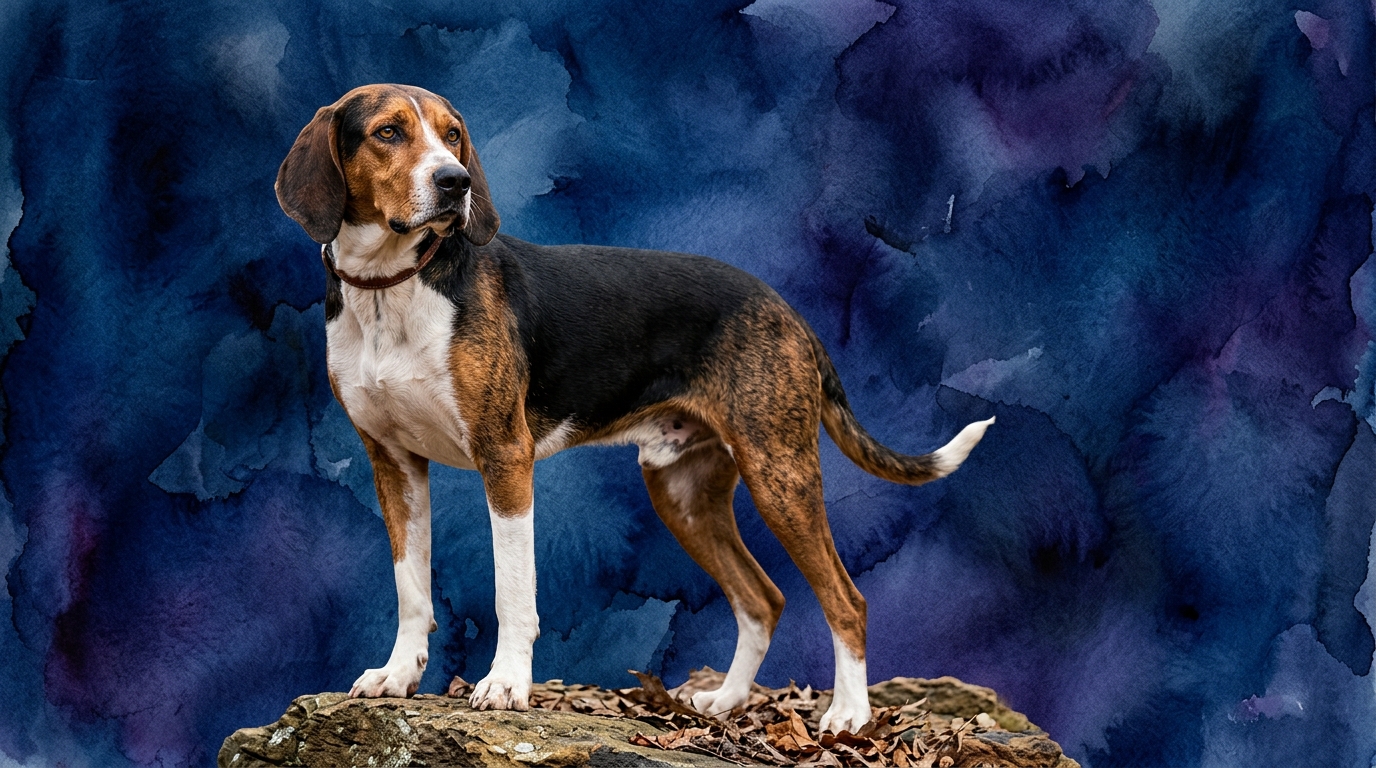
In contrast, the Treeing Walker Coonhound, an American hunting specialist, also scores 3/5 across the board, but these scores manifest differently. Their problem-solving (3/5) is masterfully applied to intricate tracking, navigating complex terrain, and strategizing how to "tree" quarry, demonstrating a practical, scent-driven ingenuity. Training speed (3/5) means they can learn, but their formidable prey drive often means lessons must compete with overwhelming natural instincts, making off-leash reliability a significant challenge.
The Coonhound's social intelligence (3/5) is highly tuned for pack cooperation during hunts, understanding roles within a working group. Their instinctive drive (3/5) is overwhelmingly directed towards tracking, baying, and pursuing game, an intrinsic motivation. Their memory (3/5) is exceptional for recalling scent patterns, navigating vast hunting grounds, and remembering specific signals, demonstrating a highly specialized form of recall crucial for their working function.
Where the Cane Corso's Cognition Excels
The Cane Corso's cognitive strengths are distinctly geared towards their guardian heritage. Their problem-solving and social intelligence merge to create a sophisticated threat assessment system, excelling at discerning subtle cues in human behavior and environmental changes. This isn't about solving an arbitrary puzzle, but rather solving the "puzzle" of potential danger with strategic foresight and making rapid, calculated decisions under pressure, prioritizing family safety.
Their human-centric social awareness allows for profound integration into the family, where they are exceptionally attuned to their owner's emotional states. This deep empathetic connection, combined with their memory for routines and preferences, enables them to seamlessly uphold the social structure of a human household. They demonstrate a practical wisdom in their protective role, focusing their cognitive processes on focused, guardian-specific responses.
Where the Treeing Walker Coonhound's Cognition Shines
The Treeing Walker Coonhound's cognitive prowess lies in its unparalleled sensory processing and interpretation of scent. Their problem-solving involves an intricate analysis of complex odor molecules, filtering out irrelevant stimuli, and following faint trails across challenging landscapes. This specialized intelligence relies on memory for scent profiles and the ability to extrapolate a path from fragmented information, critical for successful pursuit.
Their instinctive drive for the hunt, coupled with problem-solving and memory, fosters an independent and relentless pursuit capability. A Coonhound can tirelessly track game for hours, making autonomous decisions about routes and obstacles without constant human guidance. This sustained focus and self-directed navigation through complex environments highlight a distinct cognitive resilience and determination, essential for their working function in expansive natural settings.
Training Dynamics: Cane Corso vs. Treeing Walker Coonhound
Despite identical 3/5 training speeds, the practical experience of training these breeds diverges significantly due to their inherent motivations. The Cane Corso, desiring to please its family and integrate into the household hierarchy, can be highly receptive to obedience training, especially when it reinforces their protective instincts. They learn quickly with clear, consistent leadership, though their physical strength and assertive nature demand a firm but fair approach to prevent manipulation.
The Treeing Walker Coonhound presents different training challenges. Their overwhelming instinctive drive for scent work often takes precedence over human commands, particularly outdoors. Once on a compelling scent, their focus becomes singularly dedicated to the chase, making recall or redirection incredibly difficult. Training success requires making commands exceptionally rewarding, engaging, and consistently proofed in various environments to compete with their powerful, ingrained natural drive.
Suitability for Active vs. Relaxed Owners
Neither breed is suitable for a truly "relaxed" owner; both demand significant engagement, albeit for distinct reasons. The Cane Corso requires consistent physical exercise to maintain its physique and mental stimulation to prevent boredom. An owner active in a disciplined, structured manner, providing clear guidance and a perceived "job" through training and purposeful activities, will find a responsive companion.
The Treeing Walker Coonhound embodies boundless energy and an insatiable need to use its nose, demanding extensive, vigorous physical activity. Long hikes, secure off-leash runs, or participation in scent work are essential. An owner who embraces outdoor adventures and can provide ample opportunities for their dog to explore and follow scents will be a better match, understanding their companion's independent, nose-driven pursuits.
The Verdict
Choose the Cane Corso if you seek a dedicated, discerning guardian deeply integrated into family life, willing to invest in consistent leadership, structured training, and purposeful physical and mental stimulation.
Opt for the Treeing Walker Coonhound if you are an avid outdoor enthusiast, prepared to provide extensive opportunities for scent work, long vigorous exercise, and appreciate an independent, vocal companion with a profound hunting drive.
🧠 Find Your Pet's IQ Score
Our Pet IQ Lab assessment covers 25+ tests across 5 cognitive dimensions — personalized to your breed.
Take the Full IQ Test →Frequently Asked Questions
Are Cane Corsos and Treeing Walker Coonhounds good with children?
Cane Corsos, with proper socialization and training, can be excellent family guardians, often forming strong bonds with children and acting protectively. Treeing Walker Coonhounds are generally good-natured and tolerant, but their high energy and strong prey drive mean supervision is crucial, especially with very young children.
Do Cane Corsos or Treeing Walker Coonhounds make good apartment dogs?
Neither breed is ideal for apartment living due to their size and exercise needs. Cane Corsos require space and structured activity, while Treeing Walker Coonhounds need vast outdoor opportunities to satisfy their hunting instincts and energy levels.
Which breed is more vocal, the Cane Corso or the Treeing Walker Coonhound?
The Treeing Walker Coonhound is generally far more vocal, known for its distinctive baying and howling, especially when on a scent or seeking attention. Cane Corsos are typically quieter, barking only when necessary for guarding or communication within the family.