
Side-by-Side IQ Profile: Cardigan Welsh Corgi vs. Basset Hound
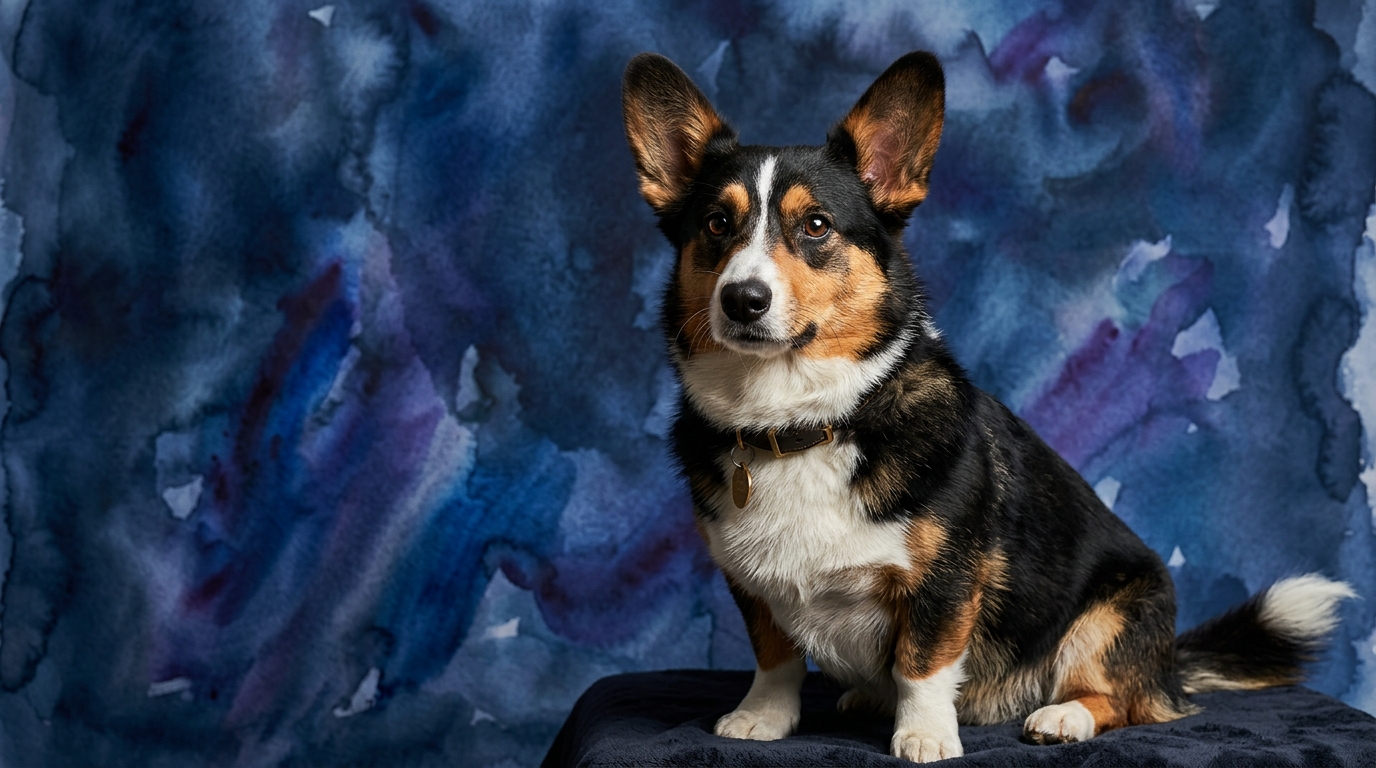
As a member of the Herding group, the Cardigan Welsh Corgi, ranking #26 on the Coren intelligence scale, exhibits a cognitive profile tailored for dynamic tasks. Their Problem Solving is rated 4/5, reflecting an ability to quickly assess and react to changing situations, a vital trait for managing livestock. Training Speed is also high at 4/5, indicating a readiness to absorb new commands and routines efficiently. Their Social Intelligence stands at 3/5, suggesting they understand human cues and group dynamics well enough for cooperative work. An Instinctive Drive of 3/5 points to a moderate but focused intrinsic motivation, often directed towards their historical herding role. Memory is a strong suit at 4/5, allowing them to recall learned tasks and experiences over time, crucial for consistency in their work.
Hailing from the Hound group, the Basset Hound occupies the #71 spot on the Coren scale, showcasing a cognitive architecture built for endurance and sensory precision rather than rapid reaction. Their Problem Solving is rated 3/5, which means they can navigate challenges, but often at their own deliberate pace, relying heavily on scent information. Training Speed is 3/5, indicating a capacity to learn, though their independent nature and focus on scent can make the process less immediate than some other breeds. Social Intelligence is 3/5, reflecting a generally amiable disposition and an understanding of their pack, human or canine. Their Instinctive Drive is also 3/5, but this drive is overwhelmingly channeled into scent tracking, making them persistent and focused when a trail is present. Memory is rated 3/5, adequate for recalling important scents and established routines, but perhaps less for complex, multi-step sequences unrelated to their primary drive.
Where the Cardigan Welsh Corgi Wins Cognitively
The Cardigan Welsh Corgi's cognitive strengths are evident in its quick processing and adaptability, a direct inheritance from its herding lineage. With a Problem Solving score of 4/5, they demonstrate a superior capacity for analytical thought and improvisation, often figuring out how to bypass obstacles or manipulate objects to achieve a goal. This manifests in their ability to learn complex sequences of commands or understand multi-step games with relative ease. Their Training Speed, also at 4/5, means they grasp new concepts rapidly, often requiring fewer repetitions than many other breeds to solidify a behavior. This cognitive agility allows them to excel in activities like obedience, agility, and even scent work when directed, as they can quickly connect actions to outcomes and remember those connections due to their 4/5 Memory rating. They are adept at anticipating events and reacting appropriately, making them highly responsive partners in various structured tasks.
Where the Basset Hound Wins Cognitively
While not celebrated for rapid-fire problem-solving or quick training responses, the Basset Hound possesses a unique cognitive prowess centered on its extraordinary olfactory capabilities and unwavering persistence. Their instinctive drive, rated 3/5, is almost entirely devoted to scent tracking, making them unparalleled in tasks requiring sustained focus on a specific sensory input. This isn't just about a good nose; it's a cognitive specialization where their brain is exquisitely wired to interpret and follow complex scent trails, often ignoring all other distractions. Their Problem Solving (3/5) in this context involves intricate mental mapping of a scent path, piecing together fragments of information over vast distances or prolonged periods. While their Training Speed (3/5) might seem average, their memory (3/5) for scents and associated experiences is profound, allowing them to recall specific trails or locations with remarkable accuracy, sometimes even weeks later. This deep, specialized sensory intelligence allows them to "solve" the complex puzzle of a hidden scent in a way few other breeds can rival.
Which is Easier to Train and Why
Based on their IQ profiles, the Cardigan Welsh Corgi generally presents as the easier breed to train. Their Training Speed of 4/5, coupled with a Problem Solving score of 4/5 and Memory of 4/5, means they are typically eager to learn, quick to understand new commands, and retain that information effectively. A Corgi often thrives on mental stimulation and enjoys the engagement of training sessions, viewing them as a cooperative activity. They are responsive to positive reinforcement and clear directives, quickly connecting actions with rewards.
In contrast, the Basset Hound, with a Training Speed of 3/5, Problem Solving of 3/5, and Memory of 3/5, can be more challenging. Their primary instinctive drive is centered on scent, making them highly distractible when a compelling odor is present. This deep focus on scent can make them appear stubborn or disengaged from human-led training exercises. While they are capable of learning, their learning process is often slower and requires immense patience and creativity from the trainer to compete with the allure of a good scent trail. Real behavioral differences include a Corgi's natural inclination to look to its handler for direction, versus a Basset's tendency to put its nose to the ground and follow its own, often very strong, impulses, making consistent recall or heel work more demanding.
Which Suits Active Owners vs. Relaxed Owners
The Cardigan Welsh Corgi generally suits more active owners, or at least those prepared for consistent engagement. Their herding background imbues them with a moderate instinctive drive (3/5) and a need for mental and physical activity. They thrive on structured play, training, and opportunities to use their problem-solving skills, whether that's through puzzle toys, obedience classes, or regular walks with varied stimuli. An owner who enjoys teaching tricks, participating in dog sports, or simply providing consistent, stimulating interaction will find a Corgi a rewarding companion. Left without sufficient mental and physical outlets, their intelligence and drive can manifest as boredom-driven behaviors.
The Basset Hound, conversely, is often a better match for more relaxed owners, though this doesn't mean they are sedentary. While their instinctive drive (3/5) is powerful, it's primarily focused on scent work, and they are generally not high-energy dogs in the same way a herding breed might be. They enjoy leisurely strolls where they can explore scents at their own pace, and while they need regular exercise to maintain a healthy weight, intense, fast-paced activities are less their forte. A relaxed owner who appreciates a dog content to nap by their feet after a good sniff-filled walk, and who is patient with their independent streak, will find the Basset's calm demeanor and affectionate nature a perfect fit. They are less demanding of constant mental "work" and more content with comfortable companionship.
The Verdict
Choose the Cardigan Welsh Corgi if you seek a responsive, mentally agile companion eager to engage in training and problem-solving activities. They are ideal for owners who enjoy an active partnership, providing consistent mental and physical stimulation to channel their intelligent herding instincts.
Opt for the Basset Hound if you appreciate a placid, independent companion with an unparalleled nose, and you are prepared for a slower, more patient approach to training. They are best for owners who value quiet companionship and enjoy leisurely, scent-driven explorations over high-intensity activities.
🧠 Find Your Pet's IQ Score
Our Pet IQ Lab assessment covers 25+ tests across 5 cognitive dimensions — personalized to your breed.
Take the Full IQ Test →Frequently Asked Questions
Are Cardigan Welsh Corgis prone to stubbornness during training?
While Cardigan Welsh Corgis are generally eager to learn due to their high training speed, they can exhibit an independent streak if not motivated or if training lacks consistency. Their intelligence means they can quickly learn what they can get away with, so clear boundaries and engaging methods are key.
How does a Basset Hound's strong scent drive impact their daily life?
A Basset Hound's profound scent drive means they are constantly processing olfactory information, which can lead them to follow interesting trails with single-minded determination. This requires secure fencing and reliable leash control, as their nose often takes precedence over human commands, especially outdoors.
Can a Basset Hound participate in dog sports despite its lower training speed?
Yes, Basset Hounds can participate in dog sports, especially those that leverage their natural strengths like scent work, tracking, or even rally obedience with patient training. While they may not achieve the same speed or precision as some other breeds, their persistence and enjoyment of a task can lead to success in their own unique way.