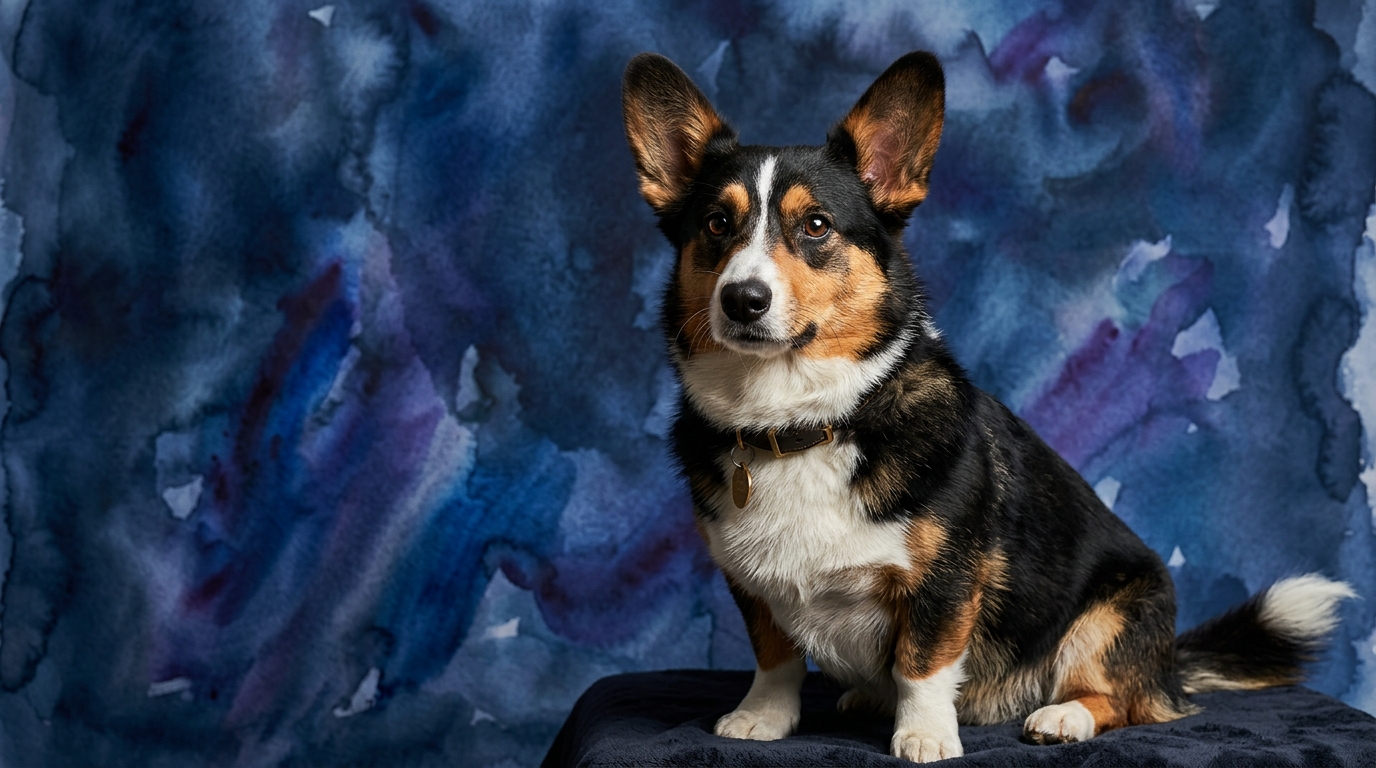
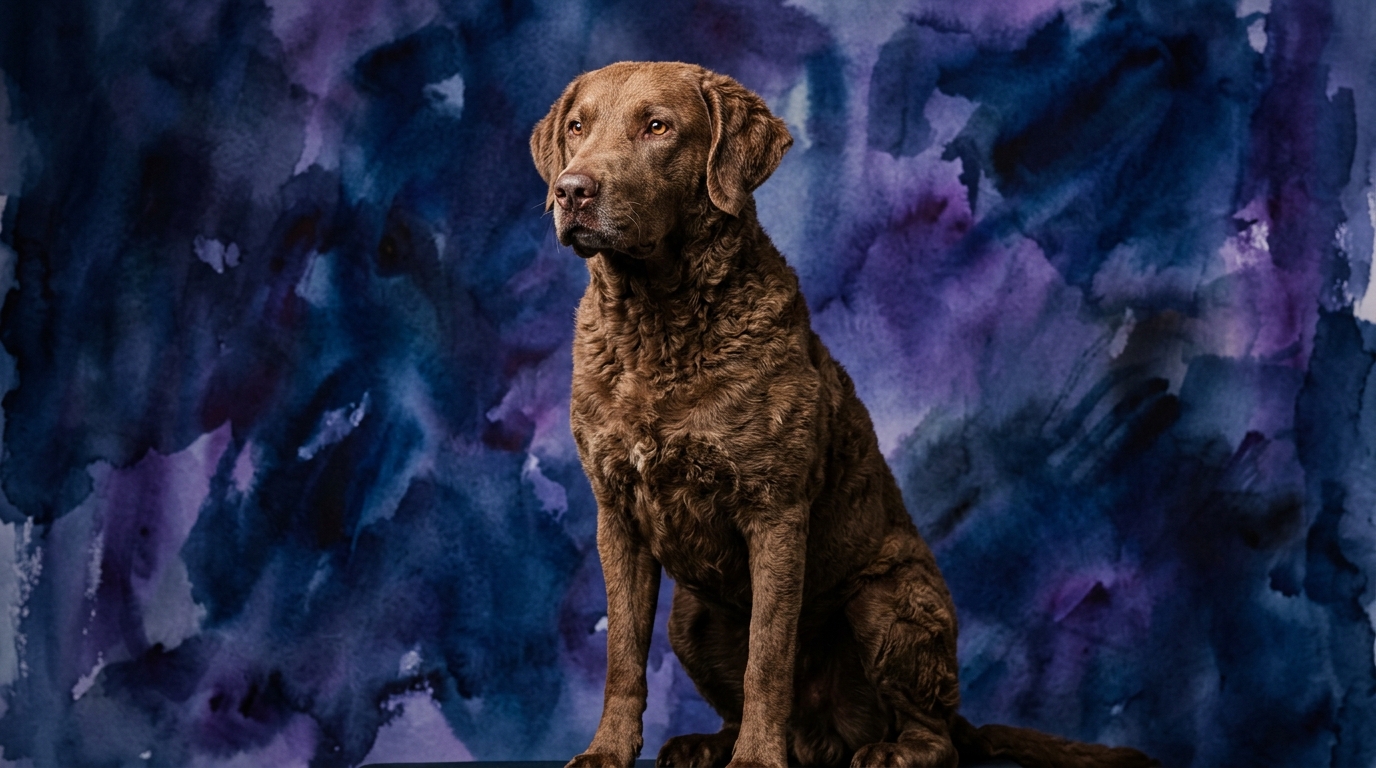
Side-by-Side IQ Profile: Herding Wit vs. Retriever Grit
The Cardigan Welsh Corgi, a venerable herding breed, and the Chesapeake Bay Retriever, a robust sporting dog, present a fascinating study in cognitive application. Despite their differing ancestral tasks, both breeds boast a Coren rank in the mid-twenties (Cardigan #26, Chessie #27) and remarkably, share identical scores across The Cosmic Pet Pet IQ Lab's five key dimensions: Problem Solving (4/5), Training Speed (4/5), Social Intelligence (3/5), Instinctive Drive (3/5), and Memory (4/5). This identical numerical profile necessitates a nuanced examination of how each breed leverages these cognitive strengths within their specific world.
For the **Cardigan Welsh Corgi**, their Problem Solving (4/5) is rooted in the dynamic challenges of livestock management. This involves anticipating the movements of sheep or cattle, strategically positioning themselves to guide the herd, and adapting tactics on the fly. Their Training Speed (4/5) allows them to quickly grasp complex commands and sequences, particularly those related to control and direction, though their independent spirit ensures they process instructions with a distinct herding dog's discernment. Social Intelligence (3/5) means they effectively read human cues and bond deeply with their family, but their history of working independently on the farm means they might prioritize their perceived 'job' over constant human interaction, often showing a reservedness with strangers. An Instinctive Drive (3/5) manifests as a strong desire to gather and control, often playfully applied to family members or other pets, while their Memory (4/5) is crucial for recalling intricate routes, learned tasks, and the patterns of their environment, essential for efficient herding.
The **Chesapeake Bay Retriever**, on the other hand, applies these same cognitive scores to the demanding world of waterfowl retrieval. Their Problem Solving (4/5) is demonstrated by their ability to strategize retrieves in challenging conditions, such as navigating icy waters, dense cover, or strong currents to locate downed game. The Chessie's Training Speed (4/5) reflects an eagerness to learn tasks pertinent to their retrieving purpose, displaying a focused determination to execute a 'job' once understood, though their strong-willed nature requires consistent guidance. Their Social Intelligence (3/5) allows them to form profound connections with their chosen human companions, but they are often reserved and independent around unfamiliar people, a trait reflecting their solitary working heritage. An Instinctive Drive (3/5) in a Chessie is a powerful, almost singular focus on retrieving, coupled with an inherent resilience to endure harsh weather. Finally, their Memory (4/5) is exceptional for recalling the precise locations of multiple 'falls' (downed birds) and executing complex retrieving patterns, critical for success in the field.
Where the Cardigan Welsh Corgi Excels Cognitively
The Cardigan Welsh Corgi’s cognitive strengths shine particularly in scenarios requiring dynamic spatial reasoning and anticipatory behavior. Their herding background cultivates an ability to process and react to the fluid, often unpredictable movements of multiple living entities simultaneously. A Corgi excels at understanding cause and effect within a group dynamic, predicting where a 'stray' might go and how to subtly influence its direction. This translates into a nuanced understanding of their environment, allowing them to navigate complex home layouts with an almost strategic efficiency, or to 'manage' the flow of family members during daily routines. Their problem-solving is less about brute force and more about elegant, efficient control, often using subtle body language and intelligent positioning to achieve their goals, a truly impressive display of applied intelligence for their size.
Where the Chesapeake Bay Retriever Excels Cognitively
The Chesapeake Bay Retriever's cognitive prowess is most evident in its unwavering focus and resilience in the face of demanding physical and environmental challenges. Their problem-solving is geared towards overcoming obstacles to complete a task, particularly when it involves retrieving. A Chessie exhibits exceptional mental fortitude, maintaining concentration on a retrieve despite distractions like other game, harsh weather, or difficult terrain. This breed’s memory excels at marking complex sequences, such as recalling the precise landing spots of multiple birds shot over water, and executing a predetermined retrieving order. Their instinctive drive to work, combined with their ability to reason through environmental barriers, allows them to perform tasks that would deter many other breeds, showcasing a powerful blend of cognitive endurance and purposeful application.
Training Dynamics: Consistency for Both, but Different Approaches
While both breeds share a Training Speed score of 4/5, indicating a general aptitude for learning, the 'why' and 'how' of their training can differ significantly due to their inherent behavioral traits. The Cardigan Welsh Corgi, with its independent herding spirit, might quickly grasp a command but then apply its problem-solving abilities to determine if obeying is truly in its best interest, or if there's a more 'efficient' Corgi-approved method. They require consistent, engaging training that channels their desire to work and control, transforming potential nipping at heels into focused obedience or agility work. Their independence means they often benefit from positive reinforcement that makes training a rewarding collaborative effort, rather than a battle of wills.
The Chesapeake Bay Retriever, conversely, brings an intense focus to training, especially when the tasks align with their retrieving drive. They learn quickly, but their strong will and reserved social intelligence mean they require a handler who establishes clear, consistent leadership and earns their respect. A Chessie might push boundaries, not out of malice, but to test the handler's resolve. Early and thorough socialization is crucial for shaping a well-adjusted Chessie, as their powerful drive and independent nature can become challenging without proper guidance. For both breeds, early and consistent training, paired with a deep understanding of their breed-specific motivations, is paramount for success, but the specific strategies employed to engage their minds will vary.
Matching Lifestyles: Active Engagement for Both, with Nuance
When considering which breed aligns with an owner's lifestyle, both the Cardigan Welsh Corgi and the Chesapeake Bay Retriever demand active engagement, though the nature of that activity differs. The Corgi, despite its compact size, is not a sedentary companion. Their herding heritage means they thrive on mental stimulation and regular physical activity, enjoying brisk walks, puzzle toys, and structured play that mimics their working tasks. They can adapt well to various living situations, including apartments, provided their cognitive and physical needs are consistently met. Owners who enjoy teaching tricks, engaging in dog sports like agility or herding trials, and providing a stimulating home environment will find a Corgi a wonderfully engaging partner.
The Chesapeake Bay Retriever is unequivocally suited for highly active, outdoors-oriented owners. This breed possesses an immense stamina and a profound need for strenuous daily exercise, ideally incorporating activities that tap into their retrieving instincts, such as swimming, long games of fetch, hiking, or field work. A Chessie requires a 'job' to feel fulfilled, and without adequate physical and mental outlets, their powerful drive can manifest as restlessness or destructive behaviors. They are not content to be couch potatoes and thrive with owners who are consistent, firm leaders willing to dedicate significant time to their dog's physical exertion and purposeful engagement in challenging activities.
The Verdict: Choosing Your Cognitively Capable Companion
The Verdict
Choose a Cardigan Welsh Corgi if you appreciate a clever, independent companion with a strong sense of purpose, enjoy engaging in mental challenges and structured activities, and can manage a dog with a robust build for an active family life without extreme physical demands.
Opt for a Chesapeake Bay Retriever if you seek a devoted, resilient partner for demanding outdoor activities, particularly those involving water and retrieving, and are prepared to provide consistent, firm leadership and channel their strong working drive into productive, strenuous outlets.
🧠 Find Your Pet's IQ Score
Our Pet IQ Lab assessment covers 25+ tests across 5 cognitive dimensions — personalized to your breed.
Take the Full IQ Test →Frequently Asked Questions
Are Cardigan Welsh Corgis good family dogs?
Yes, Cardigan Welsh Corgis are typically devoted and playful with their families, forming strong bonds. However, their herding instincts may lead them to 'herd' children or other pets, which requires early training and management to ensure harmonious household dynamics.
How much exercise does a Chesapeake Bay Retriever need?
Chesapeake Bay Retrievers require a significant amount of strenuous daily exercise, ideally including swimming, retrieving games, or long hikes, to satisfy their powerful working drive and maintain their physical and mental well-being. Without adequate activity, they can become restless or potentially destructive.
Do these breeds get along with other pets?
Cardigan Welsh Corgis can coexist with other pets, though their herding instinct might prompt them to 'manage' other animals. Chesapeake Bay Retrievers can be good with other dogs they are raised with, but their independent nature suggests careful introductions are always best to ensure a harmonious multi-pet household.