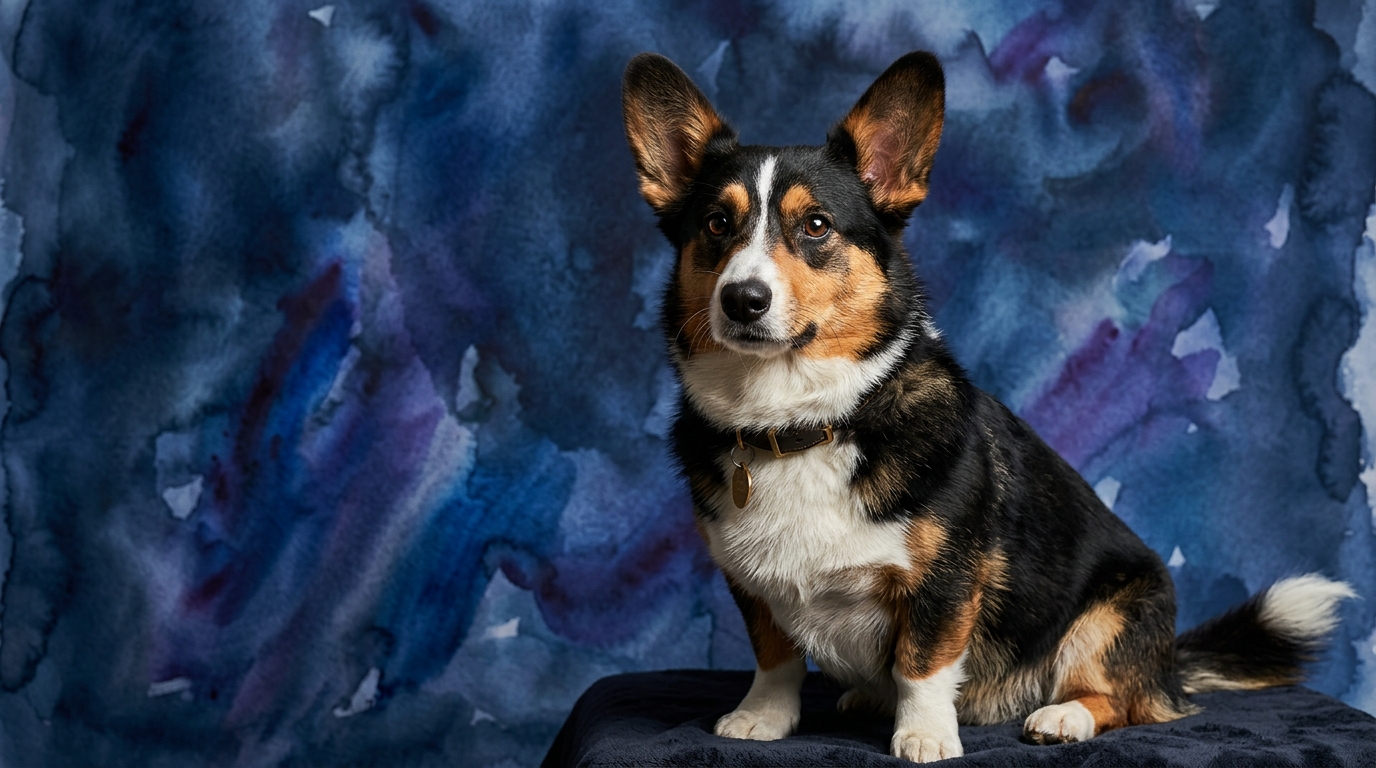

Side-by-Side IQ Profile: Cardigan Welsh Corgi vs. Parson Russell Terrier
The Cardigan Welsh Corgi, a herding breed, demonstrates robust cognitive capabilities. Its Problem Solving score of 4/5 indicates a capacity for figuring out complex situations, like navigating obstacles or understanding multi-step commands. With a Training Speed of 4/5, Corgis typically grasp new cues and routines quickly, often requiring fewer repetitions than many other breeds. Social Intelligence at 3/5 suggests they are adequately aware of human emotions and social structures, capable of forming strong bonds but perhaps not exhibiting the highest levels of empathetic response or subtle social manipulation. Their Instinctive Drive, also 3/5, points to a moderate inherent motivation, often tied to their herding legacy, which can be channeled into tasks or play. Finally, a Memory score of 4/5 means they retain learned information and experiences over long periods, making training cumulative and effective.
Originating as hunting companions, the Parson Russell Terrier exhibits a distinct cognitive makeup tailored to its working roots. Its Problem Solving at 3/5 suggests a practical, persistent approach to challenges, often relying on trial-and-error and sheer determination rather than complex strategizing. A Training Speed of 3/5 indicates they learn at a steady pace, but their independent nature might sometimes require more engaging methods and consistent reinforcement. Social Intelligence at 3/5 means they are generally responsive to human interaction and social cues, though their focus often remains on their environment or task at hand. Their Instinctive Drive, also 3/5, is a powerful force, deeply rooted in their prey drive and zest for exploration, driving much of their behavior and requiring appropriate outlets. A Memory score of 3/5 implies they remember key associations and commands, but perhaps with less detail or over shorter durations than breeds with higher scores, necessitating regular refreshers for less frequently used skills.
Where the Cardigan Welsh Corgi Wins Cognitively
The Cardigan Welsh Corgi's cognitive strengths are particularly evident in its superior Problem Solving and Memory, both rated 4/5 compared to the Parson Russell Terrier's 3/5. This means a Corgi is generally more adept at analyzing novel situations and devising effective solutions without extensive guidance. For instance, presented with a puzzle toy, a Cardigan might more quickly deduce the mechanism to release treats, demonstrating a higher capacity for abstract reasoning. Their excellent memory further enhances this, allowing them to recall successful strategies from past experiences and apply them to new, similar challenges.
This cognitive edge also manifests in their ability to learn complex sequences of commands or understand nuanced cues with greater ease. A Corgi might master a multi-step agility course or a sophisticated obedience routine more rapidly, not just due to faster training speed, but because they can mentally map and retain the entire sequence. This robust memory also contributes to their consistency in learned behaviors, as they are less likely to "forget" established rules or commands, making them reliable companions in structured environments. Their herding background likely contributes to this, requiring them to remember boundaries, flock movements, and handler signals across varied terrains and situations.
Where the Parson Russell Terrier Wins Cognitively
While the Parson Russell Terrier's raw scores might appear lower in a direct comparison, its specific cognitive profile, particularly its 3/5 Instinctive Drive combined with its persistent 3/5 Problem Solving, allows it to "win" in scenarios demanding unwavering focus and tenacity. The Parson excels where sheer grit and unyielding determination are paramount, such as in scent work or earthdog trials. Its problem-solving, though not as abstract as the Corgi's, is highly effective for tasks requiring repeated, focused effort to overcome physical obstacles or locate hidden targets.
A Parson might relentlessly dig to reach a perceived scent source, demonstrating a cognitive strength in sustained, goal-oriented action that the Corgi, with its broader problem-solving approach, might abandon if the initial solutions fail. This breed's terrier spirit translates into a cognitive advantage for tasks that require a "never give up" attitude, even when faced with frustrating setbacks. Their drive ensures they remain engaged and motivated, often pushing through discomfort or difficulty to achieve their objective. This specific type of cognitive resilience makes them formidable in roles where persistence is the primary pathway to success, rather than immediate cleverness.
Which is Easier to Train and Why
Based on their respective IQ profiles, the Cardigan Welsh Corgi is generally easier to train than the Parson Russell Terrier. The Corgi's Training Speed of 4/5, combined with its 4/5 Problem Solving and 4/5 Memory, creates a powerful learning combination. They tend to grasp new commands quickly, understand the desired behavior with fewer repetitions, and retain that knowledge over time. For example, a Corgi might learn to "stay" for extended periods after just a few sessions, consistently remembering the command and its associated reward. Their herding instinct also lends itself to being biddable and responsive to direction, as their historical role involved working closely with handlers.
In contrast, the Parson Russell Terrier's 3/5 scores across Training Speed, Problem Solving, and Memory, coupled with its strong independent streak driven by its hunting instincts, mean training can be more challenging. While they are capable learners, they might require more creative and varied training methods to keep them engaged, and their memory might necessitate more frequent refreshers for less-used commands. A Parson might learn "stay" but test the boundaries more frequently, or require more consistent reinforcement to maintain the behavior, especially if a more stimulating distraction arises. Their inherent drive to explore and chase can sometimes override their desire to comply, demanding a trainer who can consistently capture and redirect their focus. Consistency, patience, and making training feel like a fun game are crucial for the Parson, whereas the Corgi might thrive more on a structured, routine approach.
Which Suits Active Owners vs. Relaxed Owners
The Cardigan Welsh Corgi, with its moderate Instinctive Drive (3/5) and balanced cognitive profile, can adapt to a wider range of owner activity levels, though they still require daily mental and physical engagement. Their problem-solving and memory skills mean they benefit greatly from structured activities like obedience training, puzzle toys, and even low-impact agility, which can satisfy their cognitive needs without demanding extreme athleticism. While they enjoy walks and yard play, they are also content to settle down indoors, making them suitable for owners who enjoy regular, but not necessarily intense, outdoor adventures and appreciate a companion who is equally happy on the couch for an evening. A relaxed owner who is committed to consistent mental stimulation and moderate daily exercise would find a Corgi a rewarding fit.
The Parson Russell Terrier, on the other hand, is unequivocally better suited for active owners. Their strong Instinctive Drive (3/5, but expressed with terrier intensity) and relentless problem-solving, even if not the most abstract, demand significant outlets. These dogs thrive on vigorous exercise, engaging games, and tasks that allow them to use their natural instincts, such as exploring, digging, and chasing. Owners who enjoy hiking, running, dog sports like agility or earthdog, or even just long, brisk walks with plenty of opportunities for sniffing and investigating, will find the Parson a delightful, energetic partner. A relaxed owner who cannot provide consistent, high-energy physical and mental stimulation might find a Parson Russell Terrier becoming restless, destructive, or prone to barking due to unmet needs. Their cognitive profile benefits from constant engagement that challenges their physical and mental endurance.
The Verdict
Choose the Cardigan Welsh Corgi if you seek a companion with a balanced cognitive profile, quick learning ability, and excellent memory, suitable for structured training and moderate activity. This breed excels in understanding complex cues and retaining information, making them adaptable family members who appreciate both mental engagement and relaxed companionship.
Opt for the Parson Russell Terrier if you are an active owner who can provide consistent, high-intensity physical and mental challenges that satisfy a tenacious, driven problem-solver. This breed thrives on tasks requiring relentless persistence and offers a spirited partnership for those who embrace an energetic lifestyle.
🧠 Find Your Pet's IQ Score
Our Pet IQ Lab assessment covers 25+ tests across 5 cognitive dimensions — personalized to your breed.
Take the Full IQ Test →Frequently Asked Questions
Do Cardigan Welsh Corgis get bored easily without mental stimulation?
Yes, Corgis, with their high problem-solving and memory, require consistent mental engagement to prevent boredom. Puzzle toys, obedience training, and learning new tricks are excellent ways to keep their minds active and prevent undesirable behaviors.
How does the Parson Russell Terrier's instinctive drive manifest in daily life?
The Parson Russell Terrier's strong instinctive drive often manifests as a keen interest in chasing small animals, digging, and exploring scents. This means they benefit from secure yards and leashed walks, and thrive in activities like scent work or earthdog trials that channel these natural urges constructively.
Are Cardigan Welsh Corgis good with other pets given their social intelligence score?
With a social intelligence score of 3/5, Cardigan Welsh Corgis can generally coexist well with other pets, especially if introduced properly and socialized from a young age. Their herding background might sometimes prompt them to "herd" other animals or children, which can be managed with training.