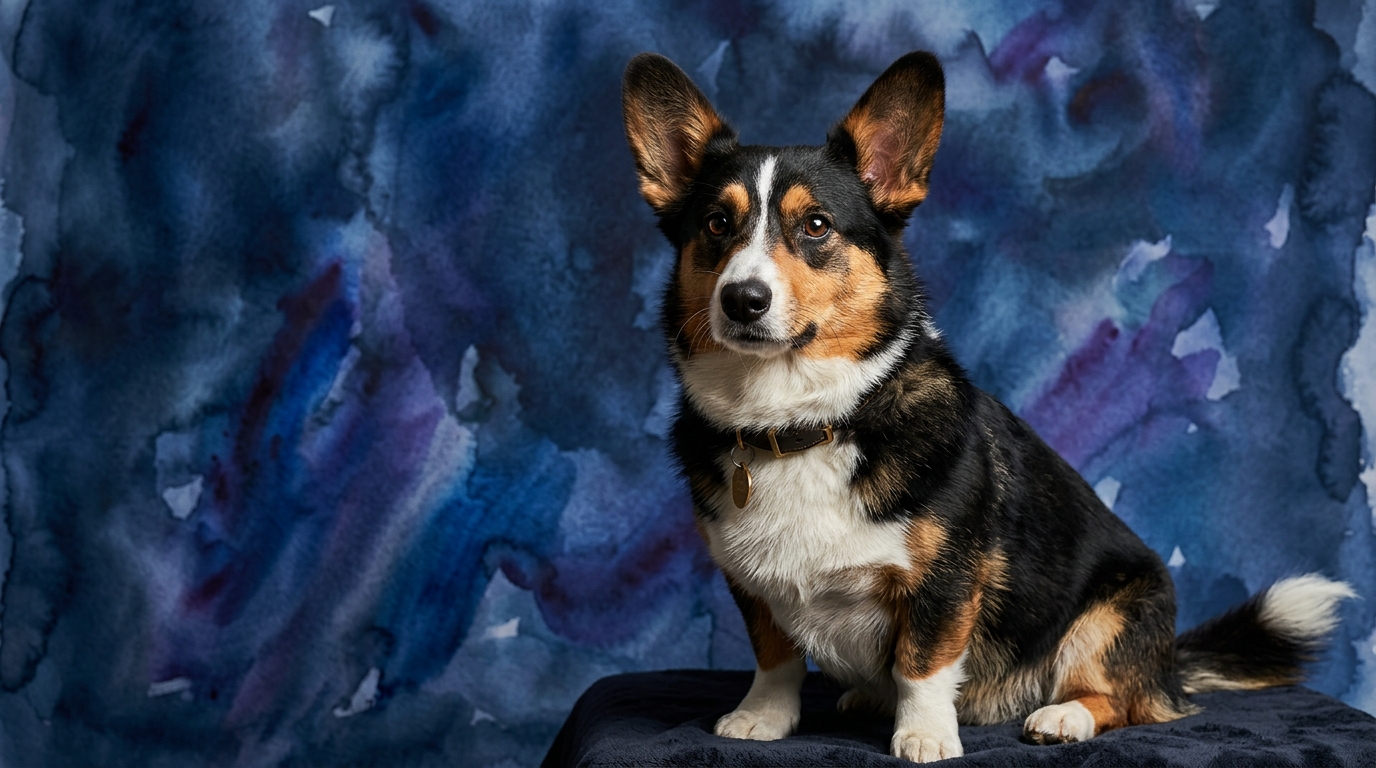

Side-by-Side IQ Profile: Cardigan Welsh Corgi vs. Rat Terrier
At The Cosmic Pet Pet IQ Lab, we dissect canine cognition across five critical dimensions to offer a precise understanding of each breed's mental aptitude. For the Cardigan Welsh Corgi, a distinguished member of the herding group, and the Rat Terrier, a spirited terrier, these dimensions paint a picture of distinct cognitive strengths.
The **Cardigan Welsh Corgi**, ranked #26 by Coren for working and obedience intelligence, presents a robust cognitive profile. Their Problem Solving is rated at 4/5, indicating a strong capacity for strategic thought and navigating complex scenarios. Training Speed is also a notable 4/5, suggesting they grasp new commands and routines with efficiency. Social Intelligence stands at 3/5, reflecting a reasonable ability to interpret human cues but sometimes with an independent streak. Their Instinctive Drive, rated 3/5, primarily manifests as a herding instinct, a desire to gather and control movement. Finally, Memory is a solid 4/5, allowing for excellent recall and retention of learned behaviors over time.
The **Rat Terrier**, while not Coren-ranked, offers a different set of cognitive strengths forged by their history as pest eradicators. Their Problem Solving is rated 3/5, indicating an ability to resolve immediate, practical challenges, often through persistence. Training Speed is 3/5, meaning they learn at a moderate pace, requiring consistent and engaging methods. Social Intelligence is also 3/5; they are responsive to human interaction but retain their terrier independence. Their Instinctive Drive is a pronounced 3/5, heavily focused on chasing, digging, and investigating small prey. Memory is rated 3/5, adequate for retaining commands but potentially requiring more frequent reinforcement for less practiced skills.
Where the Cardigan Welsh Corgi Wins Cognitively
The Cardigan Welsh Corgi's cognitive advantages are evident in areas demanding structured learning, strategic foresight, and consistent recall. Their 4/5 problem-solving score shines in scenarios demanding sequential thought and adaptability. Their herding lineage primes them to anticipate movement and strategize, translating into a dog that can quickly grasp multi-step commands or navigate an intricate agility course, not just by brute force but by understanding the flow and purpose. This cognitive edge allows them to excel in activities requiring more than simple recall, such as advanced obedience or rally, where they must process a series of instructions and execute them precisely.
Furthermore, the Corgi's superior 4/5 Training Speed and 4/5 Memory mean they not only learn complex tasks quickly but retain them reliably, making them a consistent partner in long-term learning endeavors. They are adept at generalizing learned behaviors, applying solutions from one context to another, and remembering a broad vocabulary of commands and cues over extended periods. This combination of quick learning, strategic thinking, and strong retention makes them particularly well-suited for owners interested in competitive dog sports or advanced training programs.
Where the Rat Terrier Wins Cognitively
While their problem-solving score is a 3/5, the Rat Terrier excels in a specific, practical domain of cognitive ability: tenacious, goal-oriented investigation and resourcefulness. Their terrier heritage imbues them with a drive to solve immediate, physical challenges, such as figuring out how to access a scent source or navigating tight spaces in pursuit of a perceived 'quarry.' This isn't about complex sequences but rather persistent, often ingenious, trial-and-error combined with an unwavering focus on their objective. Their determination to achieve a goal, even if it involves significant effort like digging, is a distinct cognitive advantage in their specific sphere.
Their 3/5 instinctive drive, while not about herding, is a cognitive asset when channeled into activities like scent work, barn hunt, or earthdog trials, where their independence and focused determination to root out a target are paramount. They might not follow a human-devised plan as readily as a Corgi, but they will devise their own effective strategy for a tangible, instinct-driven goal. This breed's cognitive strength lies in their ability to operate autonomously and effectively in environments where their keen senses and physical persistence are key to success, demonstrating a unique form of practical intelligence.
Which Breed is Easier to Train and Why?
When considering ease of training, the Cardigan Welsh Corgi generally holds an advantage due to their higher scores in Training Speed (4/5) and Memory (4/5). Their working breed heritage fosters an inclination to collaborate and respond to human direction. They often demonstrate a clear desire to understand and respond to cues, making them highly receptive to positive reinforcement methods. Their herding background cultivates an attentiveness to handler cues, enabling them to quickly generalize learned behaviors across different environments and distractions, making structured training sessions more fluid and productive.
In contrast, the Rat Terrier's 3/5 scores in Training Speed and Memory, coupled with their independent terrier spirit and strong prey drive, present a different training dynamic. They are perfectly capable of learning, but success hinges on making training highly engaging, relevant to their instincts, and consistently reinforced. Distractions, especially enticing scents or movement, can easily divert their focus, requiring more patience and creativity from the owner. While they form strong bonds, their inherent drive to pursue their own interests means an owner must be adept at making training more rewarding than the environment's myriad temptations, requiring a more nuanced approach to maintain their attention and compliance.
Suitability for Active vs. Relaxed Owners
Both breeds benefit from active engagement, but the nature of that activity differs, influencing their suitability for various lifestyles. The Cardigan Welsh Corgi is an excellent match for owners who enjoy structured activities. Their sturdy build and mental acumen make them thrive in dog sports like agility, obedience, and rally, or even simulated herding trials. They appreciate long, purposeful walks and mental challenges that keep their minds occupied, and after sufficient exercise, they are generally content to settle down indoors, enjoying family time. They are not typically suited for entirely relaxed, sedentary households, as their intelligence demands an outlet.
The Rat Terrier, while also requiring activity, often prefers more dynamic and instinct-driven pursuits. They are ideal for owners who enjoy exploring varied environments, engaging in high-energy play, and participating in activities that tap into their prey drive, such as lure coursing, barn hunt, or extensive scent work. Their tenacity and quickness mean they excel in fast-paced games and require outlets for their investigative nature and digging instincts. While they can be affectionate companions, an under-exercised Rat Terrier may become restless or destructive, making them less suitable for genuinely relaxed owners who cannot commit to channeling their considerable energy and mental drive.
The Verdict
Choose a Cardigan Welsh Corgi if you value a companion eager for structured learning, excelling in obedience and complex tasks, and capable of long-term memory for varied commands, thriving on a clear partnership with their human.
Opt for a Rat Terrier if you appreciate a tenacious, independent spirit with a keen sense for practical problem-solving in their environment, who thrives on dynamic, instinct-driven activities and requires an owner who can channel their persistent drive.
🧠 Find Your Pet's IQ Score
Our Pet IQ Lab assessment covers 25+ tests across 5 cognitive dimensions — personalized to your breed.
Take the Full IQ Test →Frequently Asked Questions
Are Cardigan Welsh Corgis good for first-time dog owners?
Their training speed and desire to please make them a manageable choice for new owners, provided their need for mental stimulation and moderate exercise is consistently met. Early socialization and consistent positive reinforcement are key to harnessing their natural aptitude.
How do Rat Terriers handle being left alone?
Rat Terriers, being independent, can tolerate some alone time, but their energy and drive mean they require ample exercise and mental engagement before being left. Prolonged boredom without appropriate outlets can lead to destructive behaviors like digging or chewing.
Which breed is better for a multi-pet household?
Cardigan Welsh Corgis generally adapt well to other pets, especially with proper introductions, due to their moderate social intelligence and herding inclination to gather. Rat Terriers, with their strong prey drive, might require more careful management around smaller pets like cats or rodents, though many coexist peacefully with early socialization.