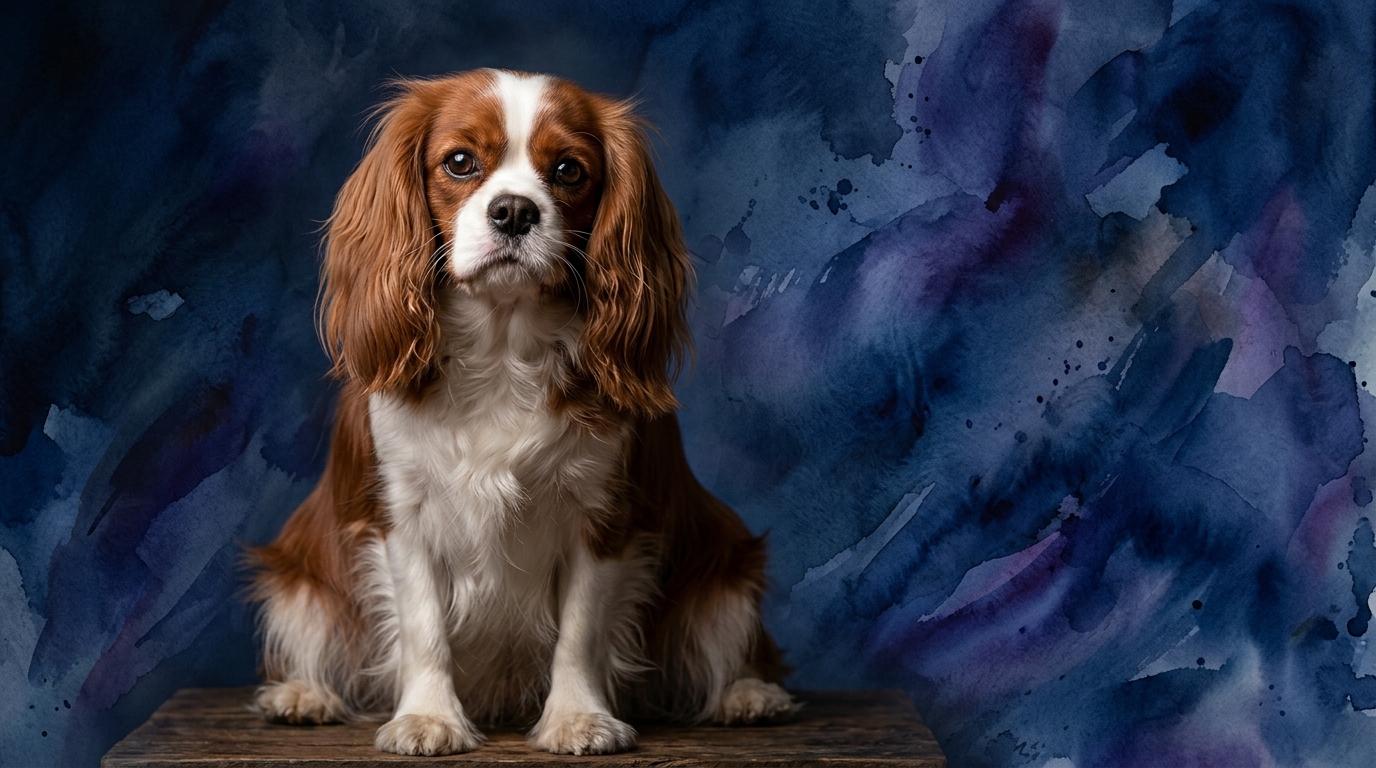
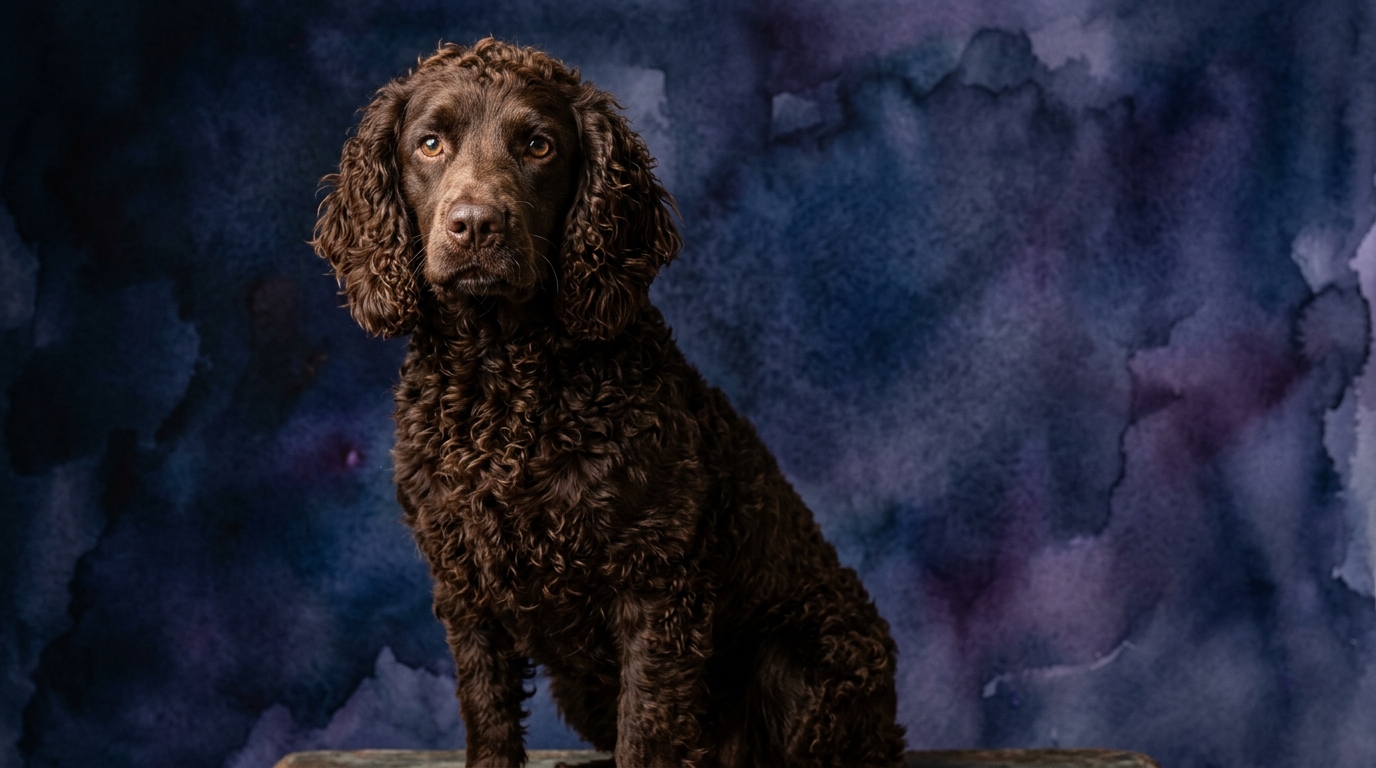
Side-by-Side IQ Profile: Cavalier King Charles Spaniel vs. American Water Spaniel
The Cosmic Pet Pet IQ Lab employs a multi-dimensional approach to assess canine intelligence, moving beyond simple obedience to explore problem-solving, social understanding, instinctive behaviors, and memory. Both the Cavalier King Charles Spaniel (CKCS) and the American Water Spaniel (AWS) share a Coren rank of #44, placing them in a category of capable working dogs who generally understand new commands in 25-40 repetitions and obey on the first command 50% of the time or better. However, a deeper dive into their individual cognitive profiles reveals distinct strengths.
**Problem Solving:** This dimension assesses a dog's ability to navigate novel situations, figure out puzzles, or independently devise solutions to obstacles. A higher score indicates a dog that can quickly adapt and innovate.
**Cavalier King Charles Spaniel (3/5):** Cavaliers possess an average capacity for problem-solving. They can learn to overcome routine obstacles or understand simple puzzle toys through trial and error, but they may not consistently devise complex, independent solutions to new challenges. Their approach tends to be more reliant on learned behaviors or seeking human assistance rather than intricate strategizing.
**American Water Spaniel (3/5):** Similarly, the American Water Spaniel exhibits an average aptitude for problem-solving. They are capable of learning how to achieve goals in straightforward scenarios and can adapt to new environments. However, their cognitive strength here doesn't typically manifest as highly inventive or spontaneous problem-solving, preferring to apply known solutions rather than invent new ones under pressure.
**Training Speed:** This measures how quickly a dog learns and masters new commands or behaviors, typically reflected in the number of repetitions required before a command is understood and consistently obeyed.
**Cavalier King Charles Spaniel (3/5):** Reflecting their Coren rank, Cavaliers learn at a moderate pace. They respond well to consistent, positive reinforcement methods but require patience and repetition to solidify new commands. Their eagerness to please, however, often aids in maintaining engagement during training sessions.
**American Water Spaniel (3/5):** The American Water Spaniel also learns at a moderate speed, aligning with their Coren ranking. They are receptive to training and can master new commands effectively, provided the methods are clear, consistent, and engaging. Their working background means they are generally focused during learning, though they benefit from structured sessions.
**Social Intelligence:** This dimension evaluates a dog's ability to understand and respond to human cues, emotions, and social dynamics within a family or group setting.
**Cavalier King Charles Spaniel (5/5):** This is the Cavalier's crowning cognitive attribute. They possess an exceptional ability to read human emotions, body language, and vocal tones with remarkable accuracy. This profound social acumen allows them to anticipate needs, offer comfort, or seek interaction with an almost intuitive understanding, making them incredibly empathetic and deeply connected companions.
**American Water Spaniel (3/5):** American Water Spaniels demonstrate a solid, practical level of social intelligence. They are capable of forming strong bonds with their family members and understanding basic human interactions, but they do not exhibit the same nuanced, intuitive grasp of complex emotional states or subtle social cues as the Cavalier. Their social responses are generally more direct and less overtly empathetic.
**Instinctive Drive:** This refers to the inherent, genetically programmed behaviors such as hunting, retrieving, herding, or guarding, and the intensity with which a dog expresses these drives.
**Cavalier King Charles Spaniel (3/5):** While originating from sporting spaniels, the Cavalier's instinctive drive has been moderated over generations, resulting in an average score. They may show interest in chasing small animals or retrieving toys, but these drives are typically manageable and not overwhelmingly dominant in their daily behavior, fitting their role as a companion dog.
**American Water Spaniel (3/5):** Despite being a dedicated sporting breed, the American Water Spaniel also scores an average 3/5 in instinctive drive. While they possess innate abilities for retrieving and working in water, these drives are generally well-balanced and require encouragement and specific training to fully express. They are not typically high-strung or uncontrollably driven, making their working instincts manageable for dedicated owners.
**Memory:** This dimension measures a dog's capacity to retain information over time, including learned commands, past experiences, and the location of objects or people.
**Cavalier King Charles Spaniel (3/5):** Cavaliers exhibit an average memory capacity. They can recall learned commands and routines, but like many breeds, benefit from regular reinforcement to maintain the sharpness of their learned repertoire. They remember familiar faces and places but may not retain complex sequences of events as readily.
**American Water Spaniel (4/5):** This is a significant cognitive strength for the American Water Spaniel. Their superior memory allows them to retain complex sequences of commands, remember specific locations of retrieves, and recall past training experiences with greater longevity. This robust retention is a crucial asset for a working dog, enabling them to build a large and reliable skill set over time with fewer refreshers.
Where the Cavalier King Charles Spaniel Excels Cognitively
The Cavalier King Charles Spaniel shines brightest in the realm of social intelligence, scoring an impressive 5 out of 5. This exceptional capacity means they are profoundly attuned to human emotions and social cues, often anticipating their owner's moods or desires without explicit commands. They demonstrate an innate ability to read subtle facial expressions, body language, and vocal inflections, making them incredibly empathetic and responsive companions. This high social acumen translates into a remarkable aptitude for bonding, fostering deep emotional connections, and seamlessly integrating into family life as intuitive companions. Their cognitive strength here isn't just about being friendly; it's about a sophisticated understanding of their social environment and their place within it, allowing them to offer comfort or seek interaction with remarkable precision. Owners often describe them as 'velcro dogs' precisely because of this profound social awareness and desire for connection, a trait that goes beyond simple affection to a genuine cognitive grasp of interpersonal dynamics.
Where the American Water Spaniel Excels Cognitively
The American Water Spaniel’s cognitive advantage lies distinctly in its memory, where it achieves a 4 out of 5, surpassing the Cavalier. This superior memory capacity is a significant asset, particularly in tasks requiring sequential learning or recalling specific locations and procedures. An American Water Spaniel is more likely to remember a complex retrieve pattern over time, recall the precise spot where a bird fell, or retain a long series of obedience commands with fewer refreshers. This robust memory makes them highly effective in field work, where remembering specific instructions, landmarks, and past successes contributes directly to their performance. For an owner, this means less reteaching of previously mastered skills and a dog that can build a larger repertoire of learned behaviors with greater retention. Their ability to store and retrieve information efficiently contributes to their adaptability in varied environments and their capacity to learn and perform intricate tasks consistently over extended periods.
Which is Easier to Train and Why
When considering ease of training, both the Cavalier King Charles Spaniel and the American Water Spaniel share a Coren rank of #44, indicating they generally grasp new commands at a moderate pace, requiring 25-40 repetitions for basic understanding. Their identical scores in Training Speed (3/5) and Problem Solving (3/5) suggest a similar baseline for learning new tasks and navigating novel challenges. However, the nuances in their other cognitive strengths offer different pathways to successful training.
The Cavalier's exceptional Social Intelligence (5/5) makes them highly motivated by positive reinforcement and owner approval. They are quick to understand what their human wants and are eager to comply, often interpreting subtle cues that might be missed by other breeds. This innate desire to please and their profound attunement to human emotion can make training feel smoother and more collaborative, as they actively seek to align their behavior with their owner's expectations. Their responsiveness to social feedback can accelerate the initial stages of learning, as they quickly pick up on what earns praise and strengthens the bond.
In contrast, the American Water Spaniel's superior Memory (4/5) becomes a distinct advantage in long-term training and retention. While they may not demonstrate the same immediate social eagerness during initial training sessions as the Cavalier, once a command or skill is learned, the American Water Spaniel is more likely to retain it over extended periods. This means less frequent refreshing of previously mastered behaviors and the ability to build a more extensive and reliable repertoire of commands. For complex tasks or sequences, their robust memory reduces the need for constant repetition, allowing for progression to more advanced concepts. Therefore, while both are capable, the Cavalier might *feel* easier to train due to its social responsiveness and desire to please, making the process more engaging for the owner. The American Water Spaniel, however, provides a stronger foundation for lasting retention of learned skills, making it potentially more reliable in complex, long-term applications once the initial learning phase is complete.
Suitability for Active vs. Relaxed Owners
The choice between these two breeds for active versus relaxed owners hinges less on their identical instinctive drive scores (3/5) and more on their overall disposition and the application of their cognitive strengths. The Cavalier King Charles Spaniel, with its exceptional social intelligence, thrives in a relaxed, companion-oriented home where close human interaction is paramount. Their profound ability to read and respond to human emotions means they are perfectly content to be involved in daily family life, whether it's a gentle stroll around the block or simply cuddling on the couch. While they enjoy moderate play, their primary cognitive fulfillment comes from social engagement and being a cherished part of the family unit. They are ideal for owners who seek a constant, empathetic presence and are willing to invest heavily in social bonding and gentle companionship. Their moderate instinctive drive means they are not typically driven by intense physical demands, making them excellent choices for less active individuals or those living in smaller spaces who prioritize emotional connection.
Conversely, the American Water Spaniel, despite also having a moderate instinctive drive, is a sporting breed whose superior memory and solid intelligence lend themselves to more structured activities. While they can certainly be affectionate family members, their cognitive profile benefits from activities that engage their mind and body, such as retrieving games, scent work, or obedience training that utilizes their retention skills. They are well-suited for active owners who enjoy outdoor pursuits like hiking, swimming, or participating in dog sports. Their memory allows them to excel in tasks requiring recall and sequential learning, making them rewarding partners for owners who enjoy consistent training and providing a 'job' for their dog. While they can adapt to a more relaxed lifestyle, an American Water Spaniel will likely be happiest and most cognitively fulfilled with regular opportunities to use their physical and mental capabilities in a purposeful way.
The Verdict
Choose a Cavalier King Charles Spaniel if you prioritize an exceptionally empathetic, socially attuned companion who thrives on close emotional connection and gentle companionship, seamlessly integrating into a relaxed family lifestyle.
Choose an American Water Spaniel if you seek a capable, intelligent partner for active pursuits and structured training, valuing strong memory for complex tasks and a resilient nature that enjoys purposeful engagement.
🧠 Find Your Pet's IQ Score
Our Pet IQ Lab assessment covers 25+ tests across 5 cognitive dimensions — personalized to your breed.
Take the Full IQ Test →Frequently Asked Questions
Do Cavalier King Charles Spaniels bark a lot?
While individual temperament varies, Cavaliers are not typically known as excessive barkers. Their high social intelligence often means they learn quickly when barking is appropriate or disruptive, and they are more inclined to communicate through other means, such as nudging or expressive gazes.
Are American Water Spaniels good with children?
American Water Spaniels can be excellent family dogs, including with children, especially if properly socialized from a young age. Their moderate instinctive drive and good memory mean they can learn appropriate interactions, though their active nature benefits from supervision with very young children.
How much exercise do these breeds need daily?
The Cavalier King Charles Spaniel typically requires moderate daily exercise, such as a couple of short walks or indoor play, fulfilling their need for activity without being overly demanding. The American Water Spaniel, being a sporting breed, generally thrives on more vigorous and varied exercise, including swimming, fetching, or longer runs, to satisfy both their physical and mental needs.