
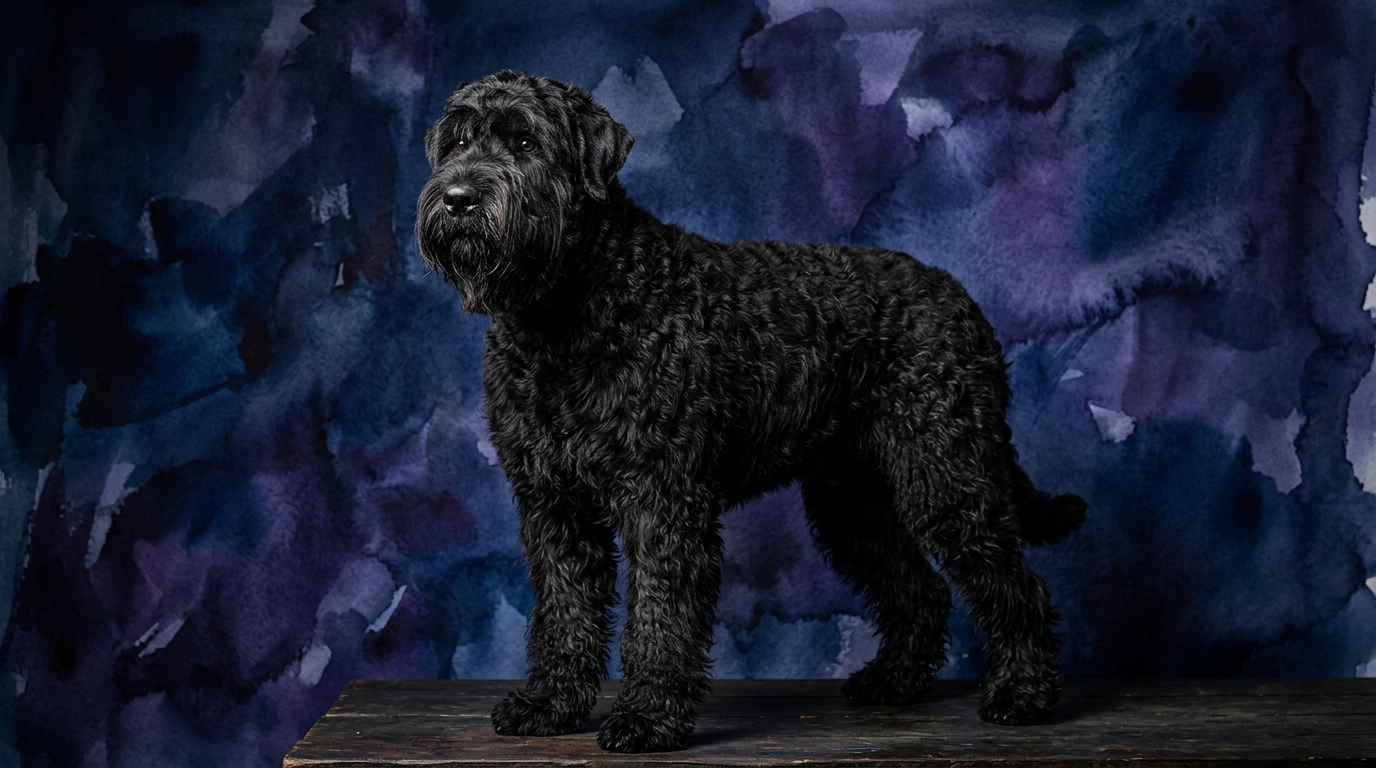
Side-by-Side IQ Profile: Cavalier vs. Black Russian Terrier
The Cosmic Pet Pet IQ Lab employs five key dimensions to evaluate canine intelligence, offering a granular view beyond traditional rankings. For the Cavalier King Charles Spaniel, its profile shows a Problem Solving score of 3/5, indicating an average capacity for navigating novel challenges and understanding cause-and-effect relationships. Its Training Speed, also at 3/5, suggests it learns new commands and routines at a moderate pace, requiring consistent positive reinforcement. Where the Cavalier truly shines is its Social Intelligence, scoring a remarkable 5/5; this reflects an exceptional ability to interpret human cues, form deep bonds, and adapt to social dynamics. Its Instinctive Drive is rated 3/5, manifesting typically as a gentle desire for companionship and comfort rather than intense working tasks. Lastly, its Memory stands at 3/5, allowing it to retain learned behaviors and social interactions adequately. The Cavalier also holds a respectable Coren rank of #44, placing it firmly in the average working and obedience intelligence category.
In contrast, the Black Russian Terrier presents a different tapestry of cognitive traits, largely shaped by its heritage as a protective working dog. Its Problem Solving ability is rated 3/5, mirroring the Cavalier, suggesting it too possesses a solid, practical intelligence for everyday situations. Similarly, its Training Speed is 3/5, indicating a moderate learning curve that benefits from clear, structured training approaches. The Black Russian Terrier’s Social Intelligence is 3/5, signifying competence in understanding its immediate family, but a more reserved or discerning approach to strangers and new social contexts compared to the Cavalier. Its Instinctive Drive is also 3/5, but this manifests as a powerful inclination towards guarding, protection, and vigilance, distinct from the Cavalier's companionship drive. Its Memory, like the Cavalier’s, is 3/5, ensuring it remembers training and experiences. Notably, the Black Russian Terrier is not listed on Coren's ranking, which often implies a more specialized intelligence suited for its specific working roles rather than broad obedience prowess.
Where the Cavalier King Charles Spaniel Wins Cognitively
The Cavalier King Charles Spaniel's undeniable cognitive advantage lies in its extraordinary Social Intelligence, scoring a perfect 5/5. This isn't merely about being friendly; it reflects a profound capacity for emotional attunement and reading human behavior. Cavaliers excel at interpreting subtle facial expressions, vocal tones, and body language, allowing them to anticipate their owner's moods and desires with remarkable precision. This translates into an intuitive ability to offer comfort, adapt their behavior to suit the household's emotional climate, and integrate seamlessly into family routines. Unlike many breeds, a Cavalier's problem-solving (3/5) and memory (3/5) are often applied in a social context, such as figuring out how to gain a cuddle or navigating complex family dynamics to secure a favored spot on the sofa. Their higher Coren rank also suggests a greater general aptitude for understanding and executing a broad range of commands in varied settings, making them more adaptable to diverse training objectives beyond specialized tasks.
Where the Black Russian Terrier Wins Cognitively
While the Black Russian Terrier shares several identical cognitive scores with the Cavalier, its 'wins' are found in the specialized application and robustness of those traits, particularly within its working context. Its 3/5 Instinctive Drive, combined with its physical stature and protective heritage, means its problem-solving and memory are often geared towards security and guarding. A BRT's 3/5 problem-solving might manifest as strategically positioning itself to observe an entire property, or discerning a genuine threat from a benign visitor, rather than solving a puzzle toy. Its 3/5 Social Intelligence, while lower than the Cavalier's, is advantageously focused; it develops deep, unwavering loyalty to its family but maintains a naturally reserved demeanor towards strangers. This selective social engagement means its cognitive resources are less dispersed on universal appeasement and more concentrated on vigilance and protection, making it exceptionally reliable in roles requiring discernment and steadfastness. Its cognitive profile, though not higher in raw scores, is uniquely optimized for tasks demanding focus, physical resilience, and a strong sense of duty, qualities that are paramount in a true working and guarding breed.
Which is Easier to Train and Why
When considering ease of training, the Cavalier King Charles Spaniel generally presents a more straightforward experience due to its superior Social Intelligence (5/5). This high score means Cavaliers are inherently eager to please and highly motivated by human interaction and approval. They are exceptionally responsive to positive reinforcement, quickly forming associations between their actions and desired outcomes, particularly if those outcomes involve praise or affection. Their moderate Training Speed (3/5) is bolstered by their eagerness to cooperate and their ability to read their handler's intentions. For example, a Cavalier is more likely to anticipate a command or offer a desired behavior simply by observing its owner's mood or body language, making the training process feel more collaborative and less like a battle of wills. Their Coren rank of #44 further supports their general trainability across a wide range of basic obedience and household manners.
The Black Russian Terrier, with its 3/5 Training Speed and 3/5 Social Intelligence, requires a more consistent, firm, and experienced approach. While intelligent and capable of learning, their lower social intelligence means they are less innately driven by the desire to please every human. Their motivation often stems from understanding expectations and fulfilling a perceived 'job' rather than seeking constant approval. Training a BRT involves clear, concise commands and a strong, confident handler who can establish leadership. They are less forgiving of inconsistency and may test boundaries more frequently. Their powerful instinctive drive, while excellent for protective work, can also mean they are more prone to independent thinking or distraction if not properly channeled through focused training. Real behavioral differences include the Cavalier's tendency to follow its owner everywhere, making recall training intuitive, whereas a BRT might require more diligent proofing of commands in distracting environments due to its innate vigilance.
Which Suits Active Owners vs. Relaxed Owners
The Cavalier King Charles Spaniel is an ideal match for relaxed owners seeking a devoted, low-key companion. Their moderate Instinctive Drive (3/5) primarily manifests as a desire for companionship and gentle play, making them content with moderate daily walks and ample snuggle time. Their high Social Intelligence (5/5) means they thrive on human interaction and are perfectly happy to spend hours curled up beside their owner, making them excellent companions for those who enjoy quiet evenings at home or a leisurely lifestyle. They adapt well to apartment living and do not demand extensive physical exertion or complex mental tasks to prevent boredom. Owners who prioritize emotional connection and a calm household dynamic will find the Cavalier's cognitive and behavioral profile perfectly aligned with their lifestyle.
Conversely, the Black Russian Terrier is best suited for active, experienced owners who can provide consistent leadership, structured training, and ample physical and mental stimulation. Their 3/5 Instinctive Drive, though numerically similar to the Cavalier's, translates into a robust need for purpose and activity, often manifesting as a strong protective impulse. This breed requires more than just walks; they need engaging activities like obedience training, protection sports, or a 'job' that challenges their problem-solving (3/5) and memory (3/5) in a constructive way. Their reserved Social Intelligence (3/5) means they aren't content being merely a decorative pet; they thrive when integrated into activities that leverage their natural capabilities. Owners who enjoy an active outdoor lifestyle, are committed to ongoing training, and desire a formidable, loyal protector will find the Black Russian Terrier to be a rewarding, albeit demanding, partner.
The Verdict
Choose the Cavalier King Charles Spaniel if you desire an emotionally intelligent, adaptable companion that excels in social settings and thrives on gentle companionship with a relaxed lifestyle.
Opt for the Black Russian Terrier if you are an experienced, active owner seeking a powerful, loyal protector that thrives on purpose-driven work and structured training.
🧠 Find Your Pet's IQ Score
Our Pet IQ Lab assessment covers 25+ tests across 5 cognitive dimensions — personalized to your breed.
Take the Full IQ Test →Frequently Asked Questions
Do Black Russian Terriers need more mental stimulation than Cavaliers?
Yes, while both breeds have a 3/5 problem-solving score, the Black Russian Terrier's working heritage and lower social intelligence mean it requires more structured mental challenges to prevent boredom and channel its instinctive drive constructively. Cavaliers are often content with social interaction as their primary mental engagement.
How does social intelligence impact daily life with these breeds?
The Cavalier's 5/5 social intelligence makes it exceptionally attuned to family emotions, highly adaptable to new people, and generally eager to please, making it a natural fit for diverse social environments. The Black Russian Terrier's 3/5 social intelligence means it forms deep bonds with its family but is typically reserved or discerning with strangers, requiring careful socialization to manage its protective instincts.
Is a Cavalier's Coren rank of #44 significant compared to an unranked BRT?
Yes, the Cavalier's Coren rank suggests a higher general aptitude for broad obedience and trainability, indicating it grasps common commands and tasks more readily. The Black Russian Terrier being unranked often signifies its intelligence is highly specialized for specific working roles, rather than general obedience, requiring a handler who understands its unique motivations.