
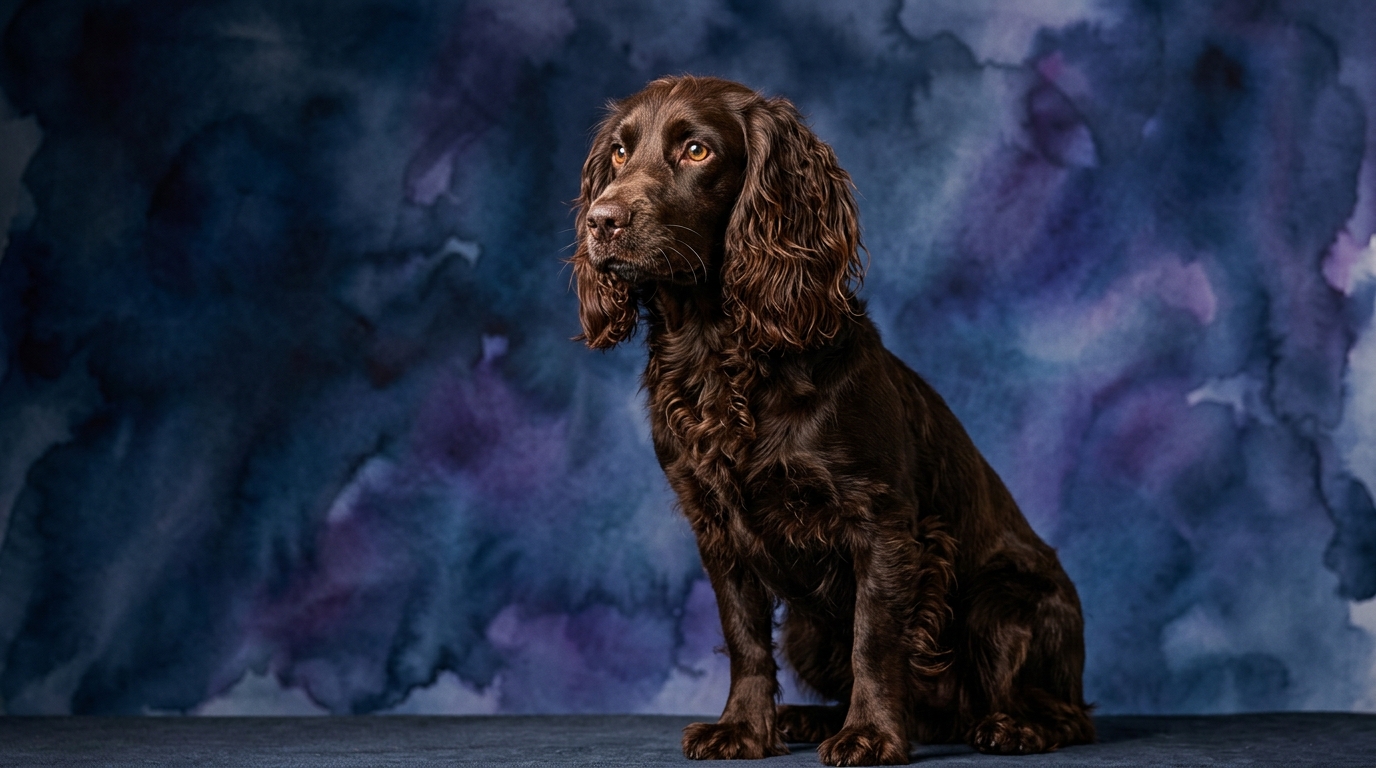
Side-by-Side IQ Profile: Cavalier vs. Boykin
At The Cosmic Pet Pet IQ Lab, we evaluate canine cognition across five distinct dimensions, offering a nuanced understanding beyond simple 'smartness.' For the Cavalier King Charles Spaniel, a Toy group dog, and the Boykin Spaniel, a Sporting group member, their scores paint a picture of differing, yet equally valuable, mental architectures.
Problem Solving: Both breeds score 3/5 in problem-solving, indicating a moderate capacity to analyze and navigate novel situations or mentally challenging puzzles. They possess the ability to figure out solutions to new obstacles, but may require some guidance or repetition.
Training Speed: With a 3/5 rating for training speed, both the Cavalier and Boykin demonstrate an average pace for acquiring and retaining new commands or routines. Owners can expect consistent progress with positive, clear reinforcement, though neither is an exceptionally rapid learner.
Social Intelligence: This is where a significant divergence occurs. The Cavalier King Charles Spaniel earns an impressive 5/5, showcasing an exceptional ability to understand human emotions, cues, and social structures. The Boykin Spaniel, by contrast, scores a moderate 3/5, indicating a solid, but less profound, attunement to human social dynamics.
Instinctive Drive: Both breeds register a 3/5 in instinctive drive. While the numerical score is identical, the *nature* of this drive is shaped by their breed groups. For the Cavalier, this moderate drive often manifests as a desire for companionship and comfort; for the Boykin, it channels into retrieving and active outdoor pursuits, reflecting its Sporting heritage.
Memory: Both the Cavalier and Boykin Spaniel achieve a 3/5 in memory. This suggests a moderate capacity for recalling past experiences, learned commands, and spatial information, sufficient for daily living and training, but not exceptionally long-lasting or detailed without reinforcement.
Where the Cavalier King Charles Spaniel Excels Cognitively
The Cavalier King Charles Spaniel's cognitive advantage lies overwhelmingly in its remarkable social intelligence, scoring a perfect 5/5. This isn't merely about friendliness; it's a deep-seated capacity to interpret nuanced human expressions, vocal tones, and body language. A Cavalier can often seem to anticipate an owner's mood or needs, offering comfort without explicit instruction. This exceptional social acumen allows them to form incredibly profound bonds, making them intuitive companions who thrive on emotional connection and shared experiences. Their ability to seamlessly integrate into human family dynamics and provide emotional support is a direct result of this cognitive strength, setting them apart as highly empathetic and responsive partners. This makes them particularly adept as therapy or emotional support animals, where reading and responding to human emotional states is paramount.
Where the Boykin Spaniel Excels Cognitively
While the Cavalier shines in the social sphere, the Boykin Spaniel's cognitive strengths manifest in its balanced, pragmatic application of its abilities, particularly within a working context. Its 3/5 instinctive drive, though numerically equal to the Cavalier's, is inherently directed towards tasks like retrieving, requiring a specific kind of focused persistence and environmental awareness crucial for its Sporting role. This drive, combined with its 3/5 problem-solving capability, allows it to excel in efficiently assessing and executing task-oriented challenges. Furthermore, its moderate social intelligence (3/5) means it can maintain focus on a task with less reliance on constant human social feedback, a cognitive advantage when independent work or sustained attention to an objective is required. Thus, the Boykin's cognitive 'win' is in its effective, task-specific focus and adaptable utility in environments where a job needs doing.
Ease of Training: Cavalier vs. Boykin
Both breeds share a 3/5 rating for training speed, suggesting they learn at a similar, moderate pace. However, the *approach* to training and the perceived 'ease' can differ significantly due to their other cognitive dimensions. The Cavalier's 5/5 social intelligence makes it exceptionally eager to please and highly responsive to positive reinforcement rooted in social connection and approval. They are deeply motivated by their owner's happiness and understanding, making them seemingly easier to train for general obedience and companionship because their primary focus is often on the handler's cues and reactions. Their high social attunement means they often pick up on subtle expectations.
The Boykin Spaniel, also with a 3/5 training speed, benefits from its 3/5 instinctive drive, particularly for retrieving or water work. When training aligns with these innate tendencies, Boykins can be incredibly focused and motivated, making them relatively straightforward to train for specific tasks like fetch, scent games, or even more complex field work. However, their 3/5 social intelligence means they might not be as inherently driven by human emotional cues alone. Owners may find they need to employ more consistent, task-focused motivation and clear, reward-based systems rather than relying solely on the dog's desire for social approval, particularly for tasks outside their natural inclinations. They are trainable, but often benefit from a 'why' related to a task rather than just a 'because I said so' based on social bond.
Owner Suitability: Active vs. Relaxed Lifestyles
The cognitive and temperamental profiles of these two spaniels naturally align them with different owner lifestyles. The Cavalier King Charles Spaniel, categorized in the Toy group with its high social intelligence (5/5) and moderate instinctive drive (3/5), is ideally suited for more relaxed owners. They thrive in environments where they receive consistent human companionship, gentle play, and moderate daily activity like short walks or garden romps. Their primary need is for connection and comfort, making them perfect lap dogs and attentive indoor companions who are content with a less strenuous pace of life.
Conversely, the Boykin Spaniel, a Sporting group dog with a balanced 3/5 across most cognitive dimensions, is a better fit for active owners. Its moderate instinctive drive, particularly for retrieving and exploring, demands regular exercise and mental stimulation. Owners who enjoy outdoor activities such as hiking, jogging, or participating in dog sports will find a Boykin an enthusiastic and capable partner. They require a 'job' or purpose, even if it's daily games of fetch, scent work, or consistent training, to keep their minds and bodies engaged and prevent boredom-related behaviors. Their cognitive profile is geared towards engagement with their environment and tasks, rather than solely social interaction.
The Verdict: When to Choose Each Spaniel
The Verdict
Choose the Cavalier King Charles Spaniel if you seek an exceptionally empathetic, emotionally attuned companion who thrives on close social bonds and a more relaxed, indoor-centric lifestyle.
Opt for the Boykin Spaniel if you lead an active lifestyle, appreciate a balanced, task-oriented canine partner, and can provide consistent outlets for its moderate drive and problem-solving aptitude through outdoor activities.
🧠 Find Your Pet's IQ Score
Our Pet IQ Lab assessment covers 25+ tests across 5 cognitive dimensions — personalized to your breed.
Take the Full IQ Test →Frequently Asked Questions
Are Boykin Spaniels difficult to train since they aren't Coren-ranked?
No, Coren ranking primarily assesses working obedience and does not define a dog's inherent trainability for all contexts. Boykin Spaniels possess a moderate training speed (3/5) and a strong instinctive drive for specific tasks, making them receptive to consistent, positive training methods, especially when engaging their natural retrieving abilities.
How does the Cavalier's high social intelligence impact its daily life?
A Cavalier's 5/5 social intelligence means they are exceptionally perceptive to human emotions and cues, often seeming to anticipate their owners' needs. This makes them highly adaptable family members, excellent therapy companions, and very responsive to social reinforcement, fostering strong, intimate bonds and a desire to be constantly near their people.
Do both breeds require similar amounts of mental stimulation?
While both benefit from mental engagement, the *type* differs significantly. Cavaliers thrive on social interaction, gentle games, and learning new tricks for connection and positive reinforcement. Boykins, with their sporting background and balanced cognitive profile, benefit more from structured activities like fetch, scent work, or puzzle toys that challenge their problem-solving and instinctive drives in a task-oriented manner.