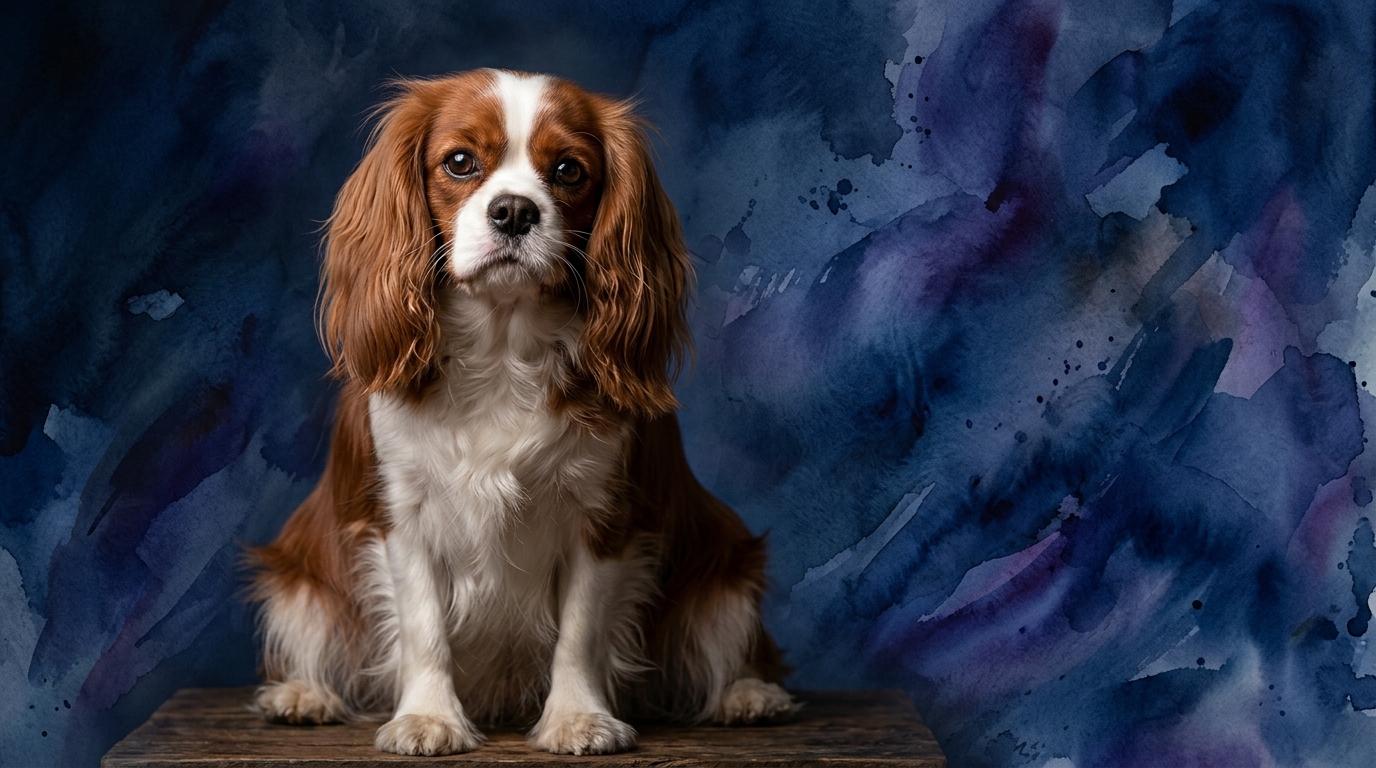
Side-by-Side IQ Profile: Cavalier King Charles Spaniel
The Cavalier King Charles Spaniel, a beloved toy breed, holds a Coren Rank of #44, indicating a respectable capacity for learning and obedience within the canine spectrum. Their Problem Solving is rated 3/5, suggesting a moderate aptitude for navigating new challenges or figuring out novel situations; they learn routines well but may not independently devise complex solutions.
Their Training Speed is also 3/5, meaning this breed learns new commands at a moderate pace. Consistent, positive reinforcement methods are effective, and they respond well to patient instruction rather than rapid-fire drills. The Cavalier truly shines in Social Intelligence, scoring a perfect 5/5. This exceptional ability to read human emotions, understand subtle social cues, and integrate seamlessly into family dynamics is unparalleled; they are deeply attuned to their owner's moods and desires.
Instinctive Drive for Cavaliers is 3/5, indicating a moderate level of inherent breed-specific behaviors. While they retain some spaniel instincts for flushing small game, their primary drive is companionship and emotional connection, manifesting as a strong desire to be near their people. Finally, their Memory is rated 3/5, reflecting moderate recall of learned commands and experiences; they retain familiar routines and basic obedience but might require occasional refreshers for less frequently practiced tasks.
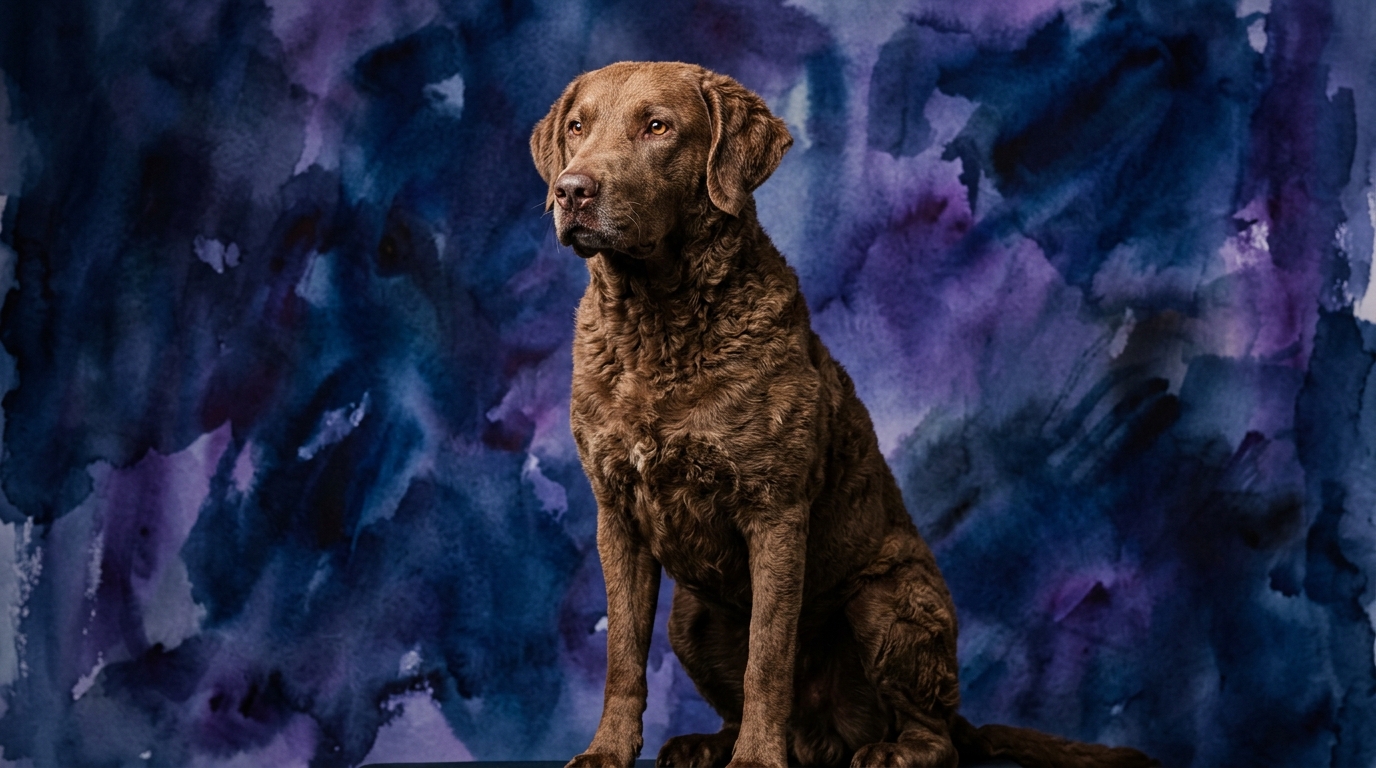
Side-by-Side IQ Profile: Chesapeake Bay Retriever
The Chesapeake Bay Retriever, a robust sporting breed, boasts a Coren Rank of #27, placing them significantly higher in the working intelligence hierarchy, reflecting their capacity for complex tasks. Their Problem Solving is 4/5, demonstrating an above-average capacity for analytical thinking and adapting to new situations; they can often figure out how to overcome obstacles or achieve goals with a degree of independence.
Their Training Speed is also 4/5, meaning these retrievers learn new tasks and commands with good efficiency. They are quick studies, particularly when the training aligns with their working drives and involves engaging activities. In Social Intelligence, the Chesapeake Bay Retriever typically exhibits 3/5. While capable of forming strong bonds, they are often more focused on their task or independent pursuits rather than constantly seeking human emotional attunement, though they are loyal to their family.
The Chesapeake Bay Retriever's Instinctive Drive is 3/5, representing a strong, focused drive primarily for retrieving, water work, and endurance. While numerically similar to the Cavalier, the *nature* of this drive is profoundly different, geared towards rigorous outdoor activity and purpose-driven tasks. Their Memory is rated 4/5, indicating good retention of learned information and experiences; once a command or task is mastered, it tends to stick, allowing for reliable performance over time, crucial for their working roles.
Where the Cavalier King Charles Spaniel Wins Cognitively
The Cavalier King Charles Spaniel's undeniable cognitive victory lies in its exceptional Social Intelligence, scoring a perfect 5/5. This isn't merely about being friendly; it's a deep-seated, nuanced capacity to perceive and respond to human emotional states. A Cavalier will often sense a change in its owner's mood, offering gentle comfort without prompting, or adjusting its play style to match the energy of its human companions. Their ability to subtly read facial expressions, body language, and vocal tones allows them to integrate into family life with remarkable grace, often anticipating needs before they are explicitly communicated. This cognitive strength makes them unparalleled emotional support animals, capable of fostering profound, empathetic connections that transcend simple companionship.
Where the Chesapeake Bay Retriever Wins Cognitively
The Chesapeake Bay Retriever excels across several cognitive dimensions critical for its working heritage. With a Problem Solving score of 4/5, Chessies demonstrate a superior ability to independently assess and navigate complex environments, such as locating fallen game in challenging terrain or figuring out how to retrieve an item from an unusual spot. Their Training Speed, also at 4/5, means they acquire new skills and commands with impressive efficiency, making them adept at learning intricate sequences for competitive dog sports or advanced field work. Furthermore, their Memory, rated 4/5, ensures that once a task, command, or routine is learned, it is retained reliably, allowing for consistent performance under varying conditions. These cognitive strengths combine to produce a dog capable of sophisticated, purpose-driven learning and execution.
Which is Easier to Train and Why
Determining which breed is 'easier' to train depends heavily on the training goals and the trainer's approach. The Chesapeake Bay Retriever, with its higher scores in Training Speed (4/5) and Problem Solving (4/5), generally picks up complex commands and multi-step tasks more quickly. They are often eager to work and enjoy the challenge of learning, especially when it involves their natural retrieving instincts. However, their independent nature and lower Social Intelligence (3/5) can mean they are less inherently driven to *please* their owner simply for social reward, requiring a more consistent, confident, and task-oriented trainer.
Conversely, the Cavalier King Charles Spaniel, despite its moderate Training Speed (3/5) and Problem Solving (3/5), often proves easier for novice owners in basic obedience and house manners due to its exceptional Social Intelligence (5/5). Cavaliers are deeply motivated by human connection and approval, making them highly receptive to positive reinforcement centered around praise and affection. While they may take more repetitions to master a command, their profound desire to cooperate and avoid displeasing their human often translates into a more willing and forgiving training partner for everyday companion behaviors. For advanced, task-specific training, the CBR has an edge; for general companion manners and emotional responsiveness, the CKCS often provides a smoother path for the average owner.
Which Suits Active Owners vs. Relaxed Owners
The contrast in lifestyle suitability between these two breeds is quite stark, primarily driven by their inherent energy levels and instinctive drives. The Chesapeake Bay Retriever is unequivocally suited for active owners. This is a robust sporting breed that thrives on vigorous physical exercise and mental engagement. Owners who enjoy long hikes, running, swimming, hunting, or participating in dog sports like agility, dock diving, or obedience trials will find a highly compatible partner in a Chessie. Their stamina and need for a 'job' mean they require significant daily activity to prevent boredom and destructive behaviors.
In contrast, the Cavalier King Charles Spaniel is an ideal match for more relaxed owners. While they enjoy daily walks and playtime, their energy requirements are moderate. They are content with indoor activities, cuddling on the couch, and being a constant, gentle presence. Apartment dwellers, individuals seeking a calm companion for quiet evenings, or those with less demanding outdoor lifestyles will find the Cavalier's temperament and physical needs align perfectly with their own.
The Verdict
Choose the Cavalier King Charles Spaniel if your priority is a deeply empathetic, emotionally attuned companion who thrives on close social connection and a more relaxed home environment.
Opt for the Chesapeake Bay Retriever if you are an active individual seeking a robust, intelligent working partner capable of mastering complex tasks and sharing in vigorous outdoor adventures.
🧠 Find Your Pet's IQ Score
Our Pet IQ Lab assessment covers 25+ tests across 5 cognitive dimensions — personalized to your breed.
Take the Full IQ Test →Frequently Asked Questions
Do Cavaliers need a lot of mental stimulation despite their relaxed nature?
While not requiring the intense, task-oriented mental work of a retriever, Cavaliers benefit greatly from gentle mental engagement. Short training sessions, puzzle toys, and interactive play help keep their minds active and reinforce their social bond.
Is the Chesapeake Bay Retriever suitable for first-time dog owners?
The Chesapeake Bay Retriever can be challenging for first-time owners due to their strong will, high energy, and need for consistent, experienced guidance. They require an owner committed to extensive training, socialization, and providing ample outlets for their working drive.
How does social intelligence impact training for these breeds?
High social intelligence in Cavaliers means they are highly motivated by pleasing their owner, making them very responsive to praise and affection during training. For Chessies, their moderate social intelligence means while they form strong bonds, training often benefits from being task-driven and engaging their natural working instincts rather than relying solely on social approval.