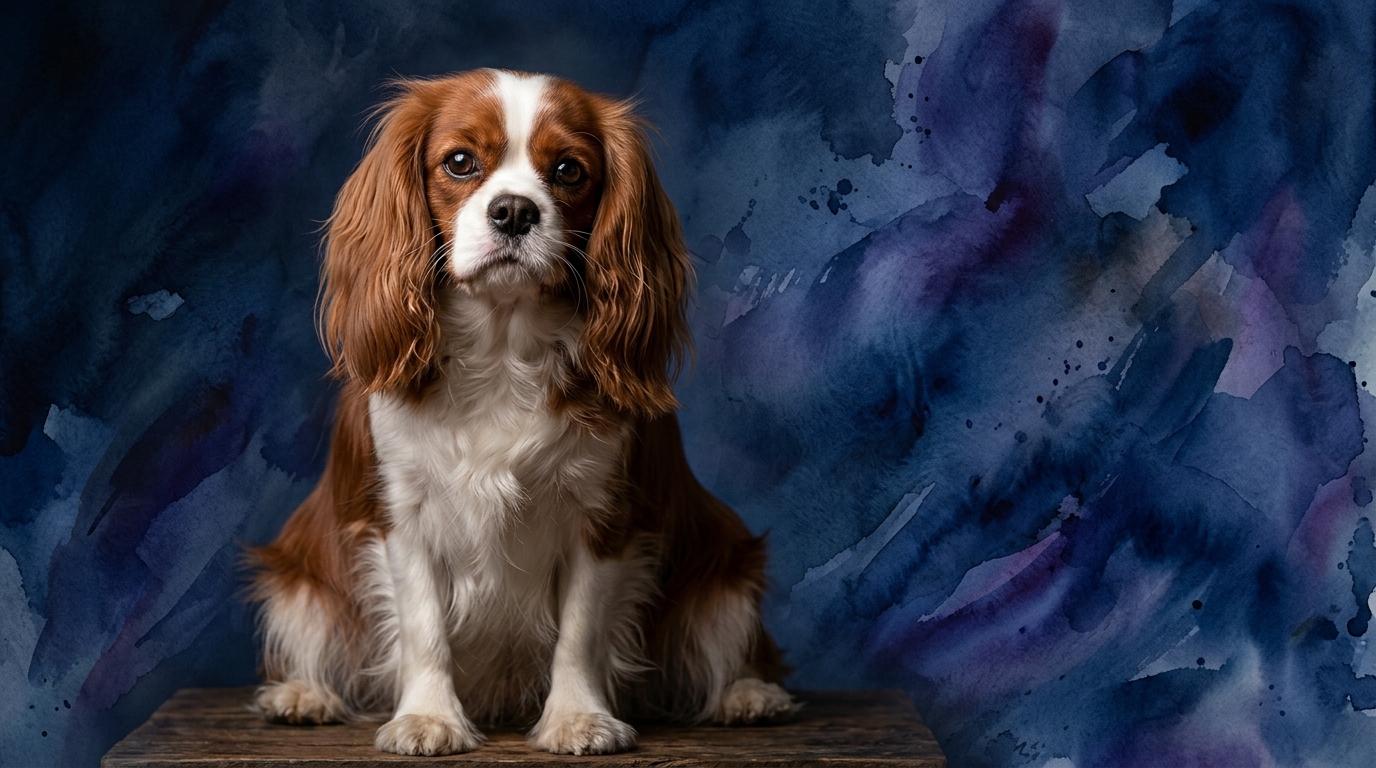
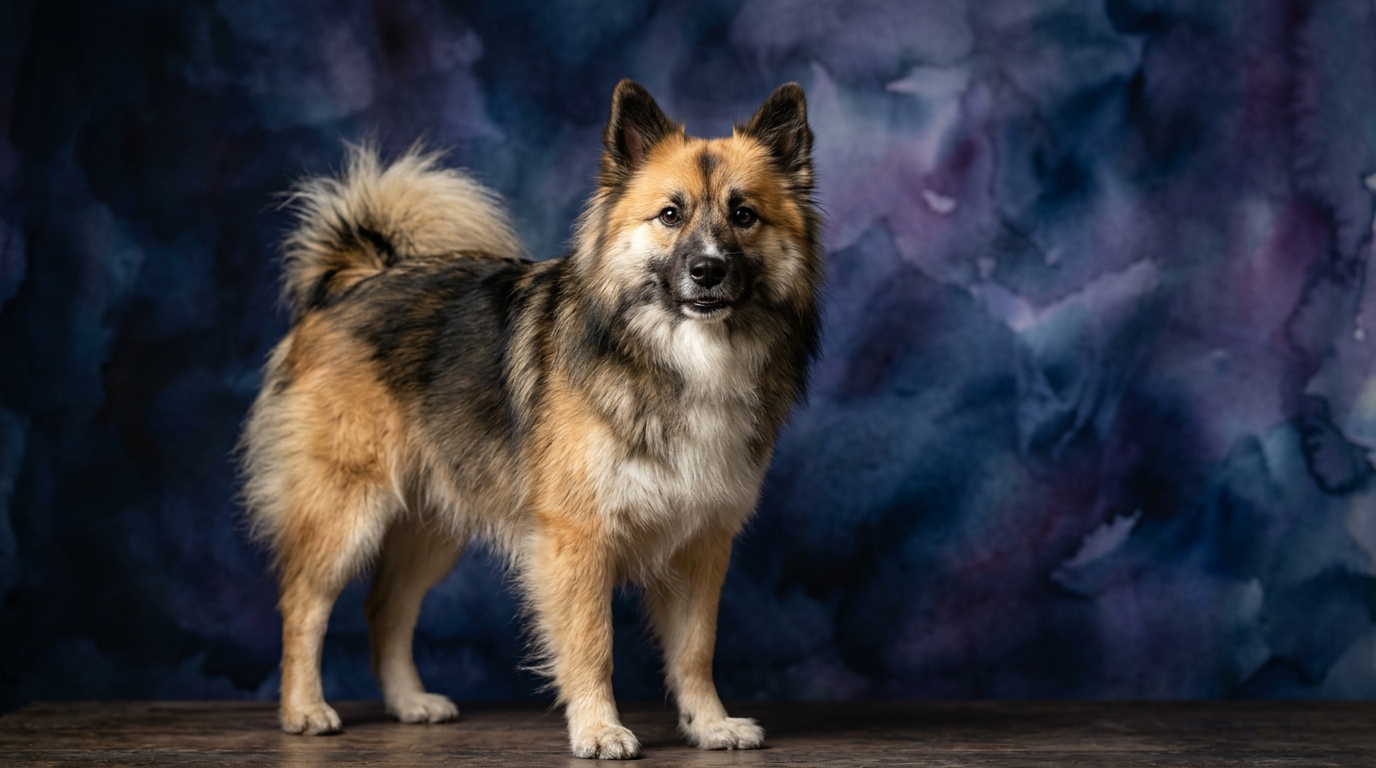
Side-by-Side IQ Profile: Cavalier vs. Icelandic Sheepdog
The Cosmic Pet Pet IQ Lab employs five key dimensions to evaluate canine intelligence, offering a detailed look at how different breeds process the world. For the Cavalier King Charles Spaniel, a breed traditionally cherished for companionship, its Coren rank of #44 highlights a moderate capacity for working and obedience tasks. Its Problem Solving score of 3/5 indicates it's capable of navigating daily challenges and learning routines, but might not excel at complex, multi-step puzzles. Training Speed also sits at 3/5, meaning Cavaliers learn new commands at a steady, average pace, responding well to consistent, positive reinforcement. Where the Cavalier truly distinguishes itself is in Social Intelligence, scoring a remarkable 5/5, reflecting an exceptional ability to read human emotions, understand subtle cues, and form profound empathetic bonds. Its Instinctive Drive is a moderate 3/5, encompassing typical dog instincts without strong specialized working drives. Memory, at 3/5, ensures it retains learned information and routines adequately.
The Icelandic Sheepdog, a breed steeped in centuries of herding tradition in rugged landscapes, is not Coren-ranked, suggesting its intelligence is less about formal obedience and more about practical application in its working role. Its Problem Solving score of 3/5 indicates an aptitude for practical, environment-based challenges, particularly those related to livestock management and navigating varied terrain. The breed’s Training Speed is also 3/5, signifying a moderate learning curve, often motivated by engagement and purpose rather than rote memorization. Its Social Intelligence is 3/5; while friendly and observant, they engage with humans in a more functional, cooperative manner compared to the Cavalier's empathetic depth. The Instinctive Drive for an Icelandic Sheepdog is 3/5, specifically manifesting as a focused, purposeful herding drive, directing its attention to monitoring and gathering. Memory, at 3/5, allows them to retain tasks, locations, and social interactions effectively within their working context.
Where the Cavalier King Charles Spaniel Wins Cognitively
The Cavalier King Charles Spaniel unequivocally shines in the realm of Social Intelligence, scoring a perfect 5/5 compared to the Icelandic Sheepdog's 3/5. This isn't merely about friendliness; it signifies a profound capacity for emotional attunement and nuanced communication with humans. A Cavalier can often anticipate its owner's mood, offering comfort without prompting, or understand complex social dynamics within a household, making them exceptional emotional support animals. Their ability to read subtle facial expressions, body language, and even vocal inflections allows for an unparalleled level of companionship, fostering a deep, almost intuitive bond that few breeds can match.
Where the Icelandic Sheepdog Wins Cognitively
While the Icelandic Sheepdog’s individual cognitive scores match or fall below the Cavalier’s in some areas, its collective cognitive profile is uniquely suited for environments demanding practical application and independent thought, especially in its ancestral herding role. Its Instinctive Drive at 3/5, though numerically equal to the Cavalier, manifests as a focused, purposeful energy geared towards monitoring and moving livestock, a cognitive function entirely absent in the Cavalier. This drive, coupled with its Problem Solving 3/5, translates into an ability to assess and react to dynamic situations in an open environment, making quick decisions about herd movement or potential threats. This isn't about solving abstract puzzles, but rather about effective, real-time environmental navigation and management—a cognitive strength deeply ingrained and highly valuable in its heritage.
Training Ease: Social Connection vs. Purposeful Engagement
On paper, both breeds share a Training Speed score of 3/5, suggesting they learn new commands at a moderate pace. However, the Cavalier King Charles Spaniel often presents as 'easier' to train for the average pet owner, primarily due to its exceptional Social Intelligence (5/5). Cavaliers possess an inherent desire to please and an acute sensitivity to human feedback; they are highly motivated by praise and connection, making them responsive and eager to comply. Their strong social bond means they are constantly seeking to understand and adapt to their owner's wishes, often picking up on subtle cues before explicit commands are given. Conversely, while the Icelandic Sheepdog also learns at a steady pace, its 3/5 Social Intelligence means it might be less driven by purely pleasing its human and more by understanding the *purpose* of a command, or by its own intrinsic motivation. Its herding background can mean moments of independent thought or a tendency to focus on environmental stimuli, requiring a trainer to be consistent, engaging, and perhaps more creative in maintaining its focus. Therefore, for foundational obedience and a keen desire to cooperate, the Cavalier often has an edge.
Matching Lifestyle: Active Explorers vs. Relaxed Companions
The choice between these two breeds largely hinges on an owner's lifestyle and energy levels. The Cavalier King Charles Spaniel is an ideal companion for more relaxed owners or those seeking a devoted indoor family member. Their moderate Instinctive Drive (3/5) and lower exercise requirements mean they are content with daily walks, playtime in the yard, and extensive cuddle sessions. They thrive on constant human companionship and are not built for strenuous outdoor work or long periods of solitude. In stark contrast, the Icelandic Sheepdog, with its inherent herding heritage, is best suited for active owners who can provide ample physical exercise and, crucially, mental stimulation. Their Problem Solving (3/5) and Instinctive Drive (3/5) are best engaged through activities like agility, herding games, long hikes, or structured tasks that allow them to utilize their natural problem-solving abilities and energy. A relaxed, sedentary owner might find an Icelandic Sheepdog restless and potentially destructive if its cognitive and physical needs are not met.
The Verdict
Choose the Cavalier King Charles Spaniel if your priority is an emotionally attuned, affectionate companion who thrives on close social interaction and adapts beautifully to a relaxed home environment. They are perfect for owners seeking a devoted lapdog who offers comfort and connection above all else.
Opt for the Icelandic Sheepdog if you are an active owner prepared to engage a clever, energetic dog in purposeful activities, appreciating a breed with a robust independent streak and a heritage of outdoor work. They are ideal for those who enjoy training and challenging their dog's natural instincts.
🧠 Find Your Pet's IQ Score
Our Pet IQ Lab assessment covers 25+ tests across 5 cognitive dimensions — personalized to your breed.
Take the Full IQ Test →Frequently Asked Questions
Are Cavalier King Charles Spaniels good at learning tricks?
With a Training Speed of 3/5 and strong Social Intelligence (5/5), Cavaliers are quite capable of learning a variety of tricks, especially when training involves positive reinforcement and strengthens their bond with their owner. Their eagerness to please makes them enthusiastic participants in short, fun training sessions.
Does the Icelandic Sheepdog's herding drive make it difficult to live with?
The Icelandic Sheepdog's Instinctive Drive (3/5) means they possess a natural inclination to herd, which can manifest as nipping at heels or trying to gather family members if not properly channeled. Consistent training, early socialization, and providing appropriate outlets for this drive, such as herding games or agility, are crucial for harmonious living.
How do their memory scores (3/5 for both) impact daily life?
A 3/5 memory score for both breeds indicates they retain routines, commands, and social interactions adequately. Both will remember their training, familiar people, and household rules. However, neither is exceptional to the point of remembering complex sequences after long breaks without reinforcement; consistent practice is still beneficial.