
Side-by-Side IQ Profile: Cavalier King Charles Spaniel vs. Komondor
The Cavalier King Charles Spaniel, a breed primarily developed for companionship, presents a cognitive profile centered around social harmony and connection. With a Coren rank of #44, their intelligence is geared towards understanding and interacting with their human family, rather than complex independent tasks.
Their Problem Solving is a steady 3/5, allowing them to navigate daily domestic challenges and learn household routines without extensive struggle. Training Speed also registers at 3/5, indicating a willingness to learn commands and cues, often motivated by positive reinforcement and connection. Where they truly shine is Social Intelligence, scoring an exceptional 5/5; Cavaliers possess an innate ability to read human emotions, adapt to various social situations, and offer intuitive companionship. Instinctive Drive is a moderate 3/5, primarily manifesting as a gentle curiosity or a desire to chase a toy, rather than strong prey or guarding behaviors. Memory, at 3/5, is sufficient for remembering family members, established routines, and learned commands, ensuring consistent interaction.
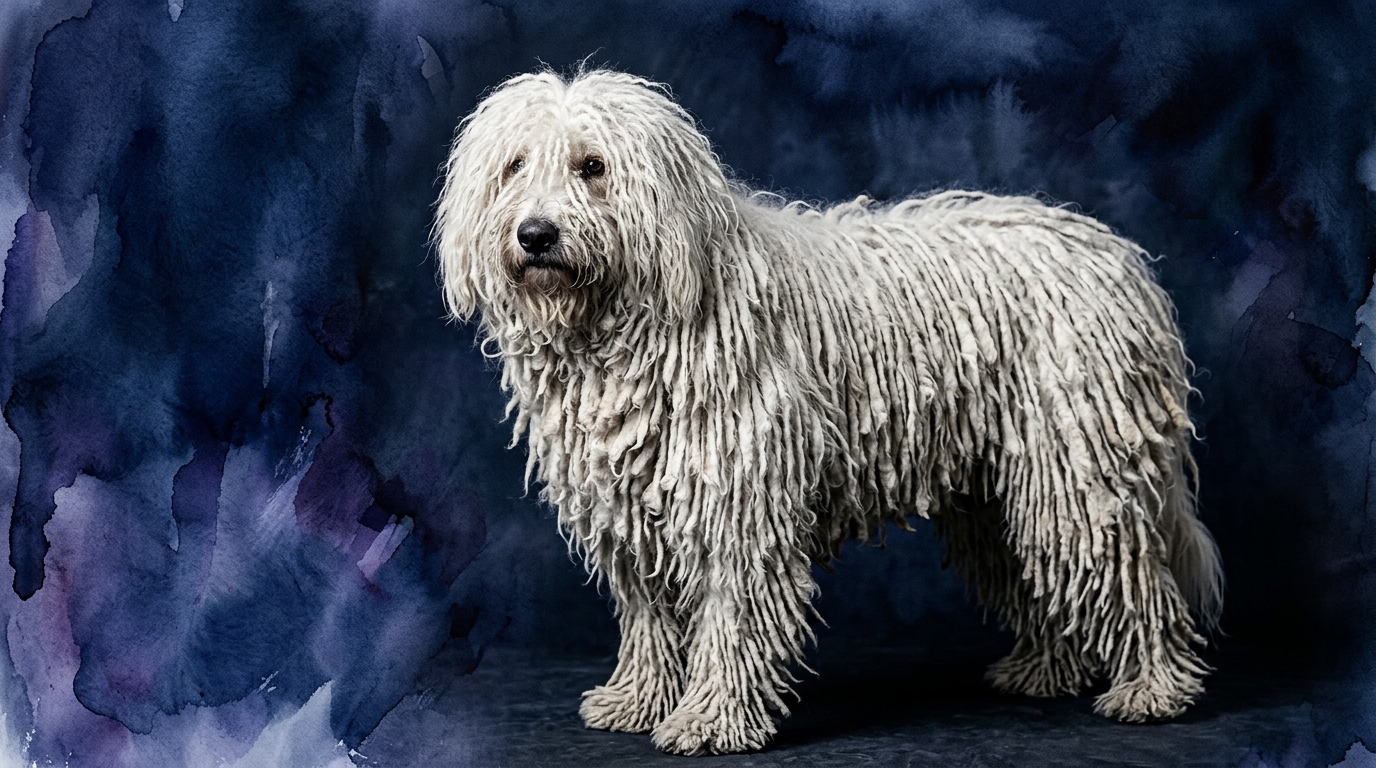
In stark contrast, the Komondor, a majestic working breed with a Coren rank of #67, boasts an intelligence forged by centuries of independent livestock guarding. Their cognitive strengths are rooted in self-reliance, vigilance, and protective decision-making, rather than a desire for constant human interaction.
The Komondor's Problem Solving ability is rated 3/5, yet this score reflects a capacity for autonomous decision-making in their guardian role, evaluating threats and responding without direct human intervention. Training Speed is also 3/5, but this is tempered by their inherent independence; they learn, but often on their own terms, requiring consistent and patient guidance. Social Intelligence stands at 3/5, meaning they understand their family unit and pack hierarchy, but typically remain aloof with strangers, valuing vigilance over generalized social engagement. Instinctive Drive is a strong 3/5, almost exclusively dedicated to their formidable guarding instincts, manifesting as territoriality and protectiveness. Their Memory, at 3/5, is highly functional for remembering individuals, territory boundaries, and past experiences related to their guarding duties, contributing to their effective watchfulness.
Where the Cavalier King Charles Spaniel Wins Cognitively
The Cavalier King Charles Spaniel undeniably excels in the realm of social intelligence, scoring a perfect 5/5 compared to the Komondor's 3/5. This remarkable aptitude translates into an unparalleled ability to integrate seamlessly into human family life, often anticipating their owner's moods and needs. They are masters of non-verbal communication, able to pick up on subtle facial expressions and body language cues, allowing them to offer comfort or solicit attention with uncanny precision.
This superior social cognition makes Cavaliers exceptionally intuitive companions. They derive immense satisfaction from reciprocal social engagement, actively seeking out interaction and thriving on the emotional bonds they form. Their cognitive strengths are finely tuned for partnership, making them adept at mirroring human emotions and providing unwavering, empathetic presence, which is a specialized form of cognitive brilliance in its own right.
Where the Komondor Wins Cognitively
While both breeds share a 3/5 rating for Problem Solving, the Komondor's cognitive strength in this area manifests very differently, and arguably more profoundly within its specific context. The Komondor's problem-solving is characterized by a deep-seated independence and an ability to assess and manage threats autonomously in a guarding capacity. Unlike a Cavalier, who might look to an owner for guidance, a Komondor is bred to make critical protective decisions without human direction, evaluating environmental cues and potential dangers on its own terms.
Furthermore, the Komondor's specialized Instinctive Drive, also rated 3/5, represents a highly refined cognitive adaptation for its role. This drive is not just a raw instinct; it involves a complex interplay of territorial awareness, vigilance, and the cognitive processing required to distinguish friend from foe. Their memory, also 3/5, is particularly adept at recalling past encounters and recognizing patterns of behavior, which directly feeds into their effective, independent guarding strategies. This profound self-reliance and environmental mastery represent a unique cognitive advantage, making them exceptionally capable in their specialized field.
Which is Easier to Train and Why
When it comes to ease of training, the Cavalier King Charles Spaniel generally presents a more straightforward experience for owners. Their higher social intelligence (5/5) means they are intrinsically motivated to please and connect with their human counterparts, making them highly receptive to positive reinforcement and eager to cooperate during training sessions. Their Coren rank of #44, significantly higher than the Komondor's #67, further indicates a greater propensity for obedience learning and understanding human commands.
The Komondor, conversely, offers a more challenging training journey due to its inherent independence and specialized cognitive focus. Their Problem Solving and Training Speed are rated 3/5, but their self-reliant nature means they aren't driven by the same desire to please. A Komondor will often evaluate a command's utility before complying, and their strong guarding instincts can lead to selective hearing if they perceive a more pressing 'job' at hand. Training a Komondor requires immense patience, consistency, and a profound understanding of their independent, protective mindset, focusing on building mutual respect rather than absolute obedience.
Which Suits Active Owners vs. Relaxed Owners
For owners leading a more relaxed lifestyle, the Cavalier King Charles Spaniel is an ideal match. Their moderate instinctive drive and adaptable nature mean they are content with daily walks, indoor play, and most importantly, consistent human companionship. Their exceptional social intelligence ensures they thrive on presence and interaction, rather than demanding extensive physical exertion, making them perfect for apartment living or less active households.
The Komondor, by contrast, requires a different kind of 'active' owner—one who is active in training, management, and providing a suitable environment for their unique cognitive and instinctive needs. While not necessarily requiring miles of running, they need space, a sense of purpose often fulfilled by guarding, and an owner capable of consistently managing their independent nature and powerful protective instincts. They are best suited for experienced owners with larger properties or those who understand the commitment required to channel their specialized cognitive strengths effectively.
The Verdict
Choose the Cavalier King Charles Spaniel if you seek a devoted, emotionally intelligent companion who will seamlessly integrate into your family life, offering intuitive social interaction and consistent affection.
Opt for the Komondor if you are an experienced owner with the capacity to manage a powerful, independent guardian, providing a clear purpose and understanding their profound territorial and protective nature.
🧠 Find Your Pet's IQ Score
Our Pet IQ Lab assessment covers 25+ tests across 5 cognitive dimensions — personalized to your breed.
Take the Full IQ Test →Frequently Asked Questions
Does the Cavalier's high social intelligence make them easier to live with?
Yes, their 5/5 social intelligence means they are exceptionally attuned to human emotions and social cues, adapting their behavior to maintain harmony. This makes them highly intuitive companions, often anticipating needs and providing comfort, which generally leads to a very smooth integration into family life.
How does the Komondor's independent problem-solving impact daily life?
The Komondor's independent problem-solving, though rated 3/5, is geared towards autonomous decision-making in a guarding context. This means they are less likely to seek constant human direction and will assess situations on their own, requiring an owner who respects and can manage this self-reliant approach, especially regarding perceived threats.
Can a Komondor be a good family pet despite its guarding instincts?
Yes, a Komondor can be a dedicated family pet, fiercely protective of its inner circle. However, their strong guarding instincts and lower social intelligence with strangers mean they require extensive socialization from a young age and consistent, experienced handling to ensure they are safe and well-adjusted around non-family members.