
Side-by-Side IQ Profile
The Cosmic Pet Pet IQ Lab assesses canine intelligence across five key dimensions, offering a granular view beyond general classifications. For the Cavalier King Charles Spaniel (CKCS) and the Pointer, a direct comparison of these profiles highlights subtle yet significant distinctions in their cognitive makeup.
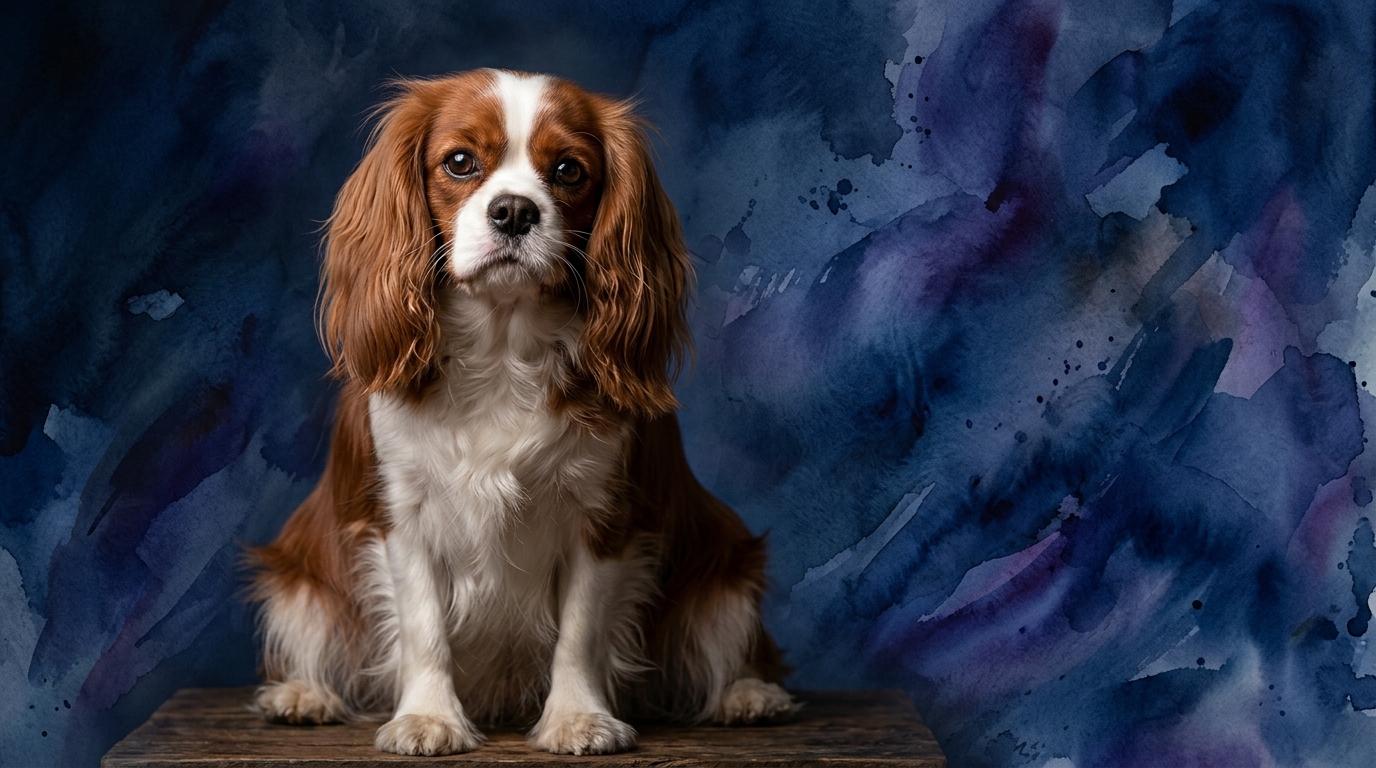
The Cavalier King Charles Spaniel, ranked #44 by Coren, demonstrates a balanced cognitive profile with one standout trait. Their Problem Solving ability is rated 3/5, indicating a moderate capacity to navigate novel situations. Training Speed, also at 3/5, means they require consistent repetitions to master new commands. Where the CKCS truly shines is in Social Intelligence, scoring an exceptional 5/5, reflecting an outstanding ability to interpret human emotions and intentions. Their Instinctive Drive sits at 3/5, typically manifesting as a desire for close companionship. Finally, their Memory is rated 3/5, allowing them to recall learned commands and routines reliably.
The Pointer, while not holding a Coren rank, presents a cognitive profile geared towards its historical role. Their Problem Solving capacity is also 3/5, suggesting a moderate ability to overcome obstacles with a practical, goal-oriented approach. Similarly, Training Speed is 3/5, meaning they learn at a steady pace with consistent reinforcement, particularly when tasks align with natural inclinations. The Pointer’s Social Intelligence is rated 3/5; while capable of forming strong bonds, they don't possess the same innate depth of emotional interpretation as the CKCS. Their Instinctive Drive is 3/5, representing a powerful, inherent urge to hunt, scent, and point. Their Memory is also 3/5, enabling them to retain complex scent patterns and learned commands relevant to their field work.
Where Cavalier King Charles Spaniel Wins Cognitively
The Cavalier King Charles Spaniel's undeniable cognitive victory lies squarely in the realm of social intelligence, where their 5/5 rating significantly outpaces the Pointer's 3/5. This isn't merely about being friendly; it's a deep-seated capacity for emotional attunement and empathetic understanding. A CKCS can often sense a shift in a person’s mood, offering comfort without explicit prompting, or subtly adjusting their behavior based on the household's emotional climate. For instance, a Cavalier might instinctively offer a gentle nudge or lean into an upset owner, demonstrating an acute awareness of distress. They excel at reading nuanced human body language and vocal tones, allowing for remarkably intuitive communication. This specific cognitive advantage means they are often the first to pick up on subtle social cues, making them remarkably responsive and cooperative in companion settings where emotional harmony is valued.
Where Pointer Wins Cognitively
While the raw scores for Problem Solving, Training Speed, Instinctive Drive, and Memory are identical at 3/5 for both breeds, the Pointer’s cognitive strengths are distinctly applied through the lens of its specialized purpose. The Pointer's 3/5 Instinctive Drive, for example, is not a general urge but a powerful, finely-tuned predisposition for scent work, tracking, and pointing. This specific drive underpins their problem-solving and memory in ways unique to their lineage. A Pointer might demonstrate its 3/5 problem-solving by efficiently navigating complex terrain to locate a hidden retrieve, or by strategizing the most effective path to a scent. Their 3/5 memory is particularly adept at recalling intricate scent trails, marking the location of game, or remembering sequences of commands related to field work, even after long periods. The Pointer's intellect is honed for independent, task-oriented execution in an outdoor environment, with cognitive processing channeled into sustained focus on a goal and spatial awareness relevant to their task.
Which is Easier to Train and Why
Determining which breed is "easier" to train depends heavily on the training goals, given their identical 3/5 Training Speed scores. For general companion behaviors and household manners, the Cavalier King Charles Spaniel often presents an easier path due to their superior social intelligence (5/5). Their innate desire to please and their profound ability to read human cues mean they are highly motivated by positive reinforcement rooted in social connection and approval. A CKCS will often try harder to understand what their human wants simply because they are so attuned to their owner's emotional state and desire harmony, responding well to gentle methods.
In contrast, while the Pointer also scores 3/5 in Training Speed, their training often requires a different approach. Their 3/5 Instinctive Drive, focused on hunting and scenting, can sometimes make general obedience challenging if not properly channeled. They can be highly focused and driven, which is excellent for specific tasks like field work, but this intensity means they might be less motivated by purely social rewards if a compelling scent or activity is present. Training a Pointer effectively often involves incorporating their natural drives into the learning process, making it engaging and purposeful. Therefore, for a family seeking a dog primarily for companionship, the CKCS's social intelligence makes them more intuitively cooperative in typical obedience scenarios.
Which Suits Active Owners vs Relaxed Owners
The distinction between these two breeds for active versus relaxed owners is quite clear, largely driven by their underlying instinctive drives and cognitive priorities. The Pointer, with its 3/5 Instinctive Drive rooted in hunting and field work, is unequivocally suited for active owners. These dogs require consistent and vigorous physical exercise, coupled with mental stimulation that engages their natural drive to scent, search, and work. A Pointer thrives on activities like long hikes, running, agility, or actual field trials where they can utilize their keen senses and stamina. Owners who enjoy outdoor adventures and are prepared to dedicate significant time to exercise will find a Pointer to be an immensely rewarding partner. Without adequate outlets for their physical and mental energy, Pointers can become restless or exhibit undesirable behaviors.
Conversely, the Cavalier King Charles Spaniel, with its 3/5 Instinctive Drive primarily focused on companionship and social interaction, is an ideal match for more relaxed owners. While they certainly enjoy walks and play, their exercise requirements are moderate compared to the Pointer. Their cognitive strength in social intelligence means their primary need is for human connection and being an integral part of family life. A CKCS is content with cozying up on the sofa, gentle strolls, or engaging in quiet play indoors. They thrive in environments where they receive ample affection and attention, making them perfect companions for individuals or families who prefer a calmer lifestyle and seek a deeply bonded, emotionally responsive pet.
The Verdict
Choose the Cavalier King Charles Spaniel if you prioritize a deeply empathetic, emotionally attuned companion who thrives on close social connection and will seamlessly integrate into a more relaxed household environment. Their superior social intelligence makes them ideal for owners seeking a responsive, intuitive, and affectionate pet.
Choose the Pointer if you are an active individual or family eager to engage in outdoor adventures and provide structured activities that fulfill a powerful, task-oriented instinctive drive. Their cognitive strengths are best utilized by owners prepared to channel their energy into purposeful work or sport, valuing a dedicated partner for active pursuits.
🧠 Find Your Pet's IQ Score
Our Pet IQ Lab assessment covers 25+ tests across 5 cognitive dimensions — personalized to your breed.
Take the Full IQ Test →Frequently Asked Questions
Do Pointers make good family pets despite their hunting drive?
Yes, Pointers can be excellent family pets, particularly for active families. Their affectionate nature and loyalty shine when their exercise and mental stimulation needs, related to their instinctive drive, are consistently met through outdoor activities or structured training.
How does a Cavalier's high social intelligence manifest daily?
A Cavalier's high social intelligence means they are exceptionally attuned to household moods, often offering comfort to an upset family member or quietly observing social dynamics. They excel at intuitive communication, responding to subtle cues and seeking close physical and emotional proximity.
Since both have 3/5 problem-solving, are they equally good at learning tricks?
While both score 3/5 in problem-solving, the type of tricks they excel at might differ. Cavaliers may pick up tricks faster that involve social interaction or charming behaviors due to their social intelligence, while Pointers might excel at sequential tasks or those involving physical dexterity if sufficiently motivated by purpose or reward.