
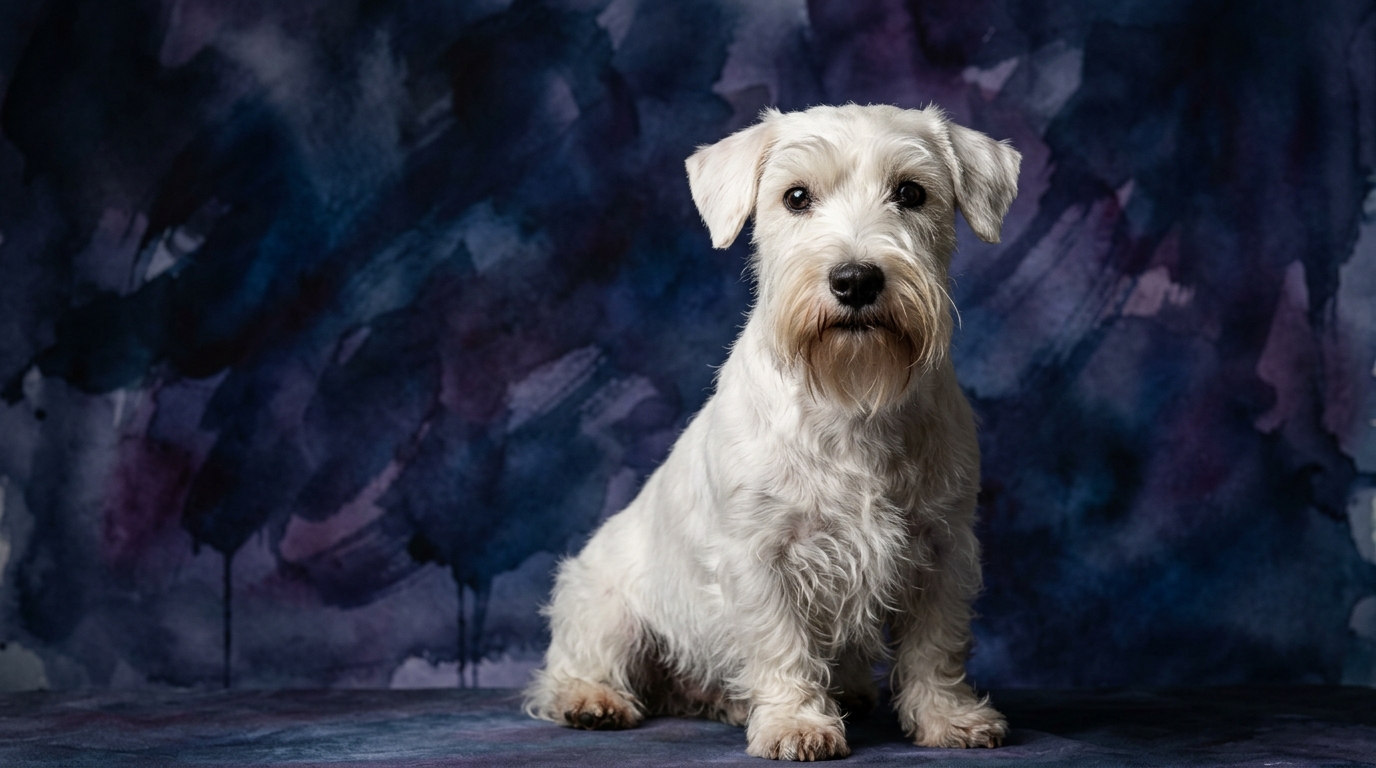
Side-by-Side IQ Profile: Cavalier King Charles Spaniel vs. Sealyham Terrier
**Cavalier King Charles Spaniel (CKCS):**
**Problem Solving (3/5):** The Cavalier displays a moderate ability to navigate new situations and resolve daily challenges, often relying on learned routines rather than complex strategic planning. They readily absorb familiar patterns and simple puzzles but rarely invent intricate solutions independently.
**Training Speed (3/5):** Cavaliers acquire new commands and behaviors at an average, consistent pace. Their inherent desire for positive human interaction fosters cooperative training, though they generally require repetition to master more complex sequences.
**Social Intelligence (5/5):** This is the Cavalier's distinguishing cognitive strength, signifying an exceptional capacity for understanding human emotions, subtle body language, and social dynamics. They excel at forming deep bonds, adapting their demeanor to social contexts, and offering intuitive comfort, making them profoundly empathetic companions.
**Instinctive Drive (3/5):** Their instinctive drives are moderate and primarily directed towards companionship and comfort. While they possess basic canine instincts like sniffing, these are typically mild and easily manageable, seldom dominating their overall behavior.
**Memory (3/5):** Cavaliers exhibit an average memory, enabling consistent recall of learned commands, familiar individuals, and established routines. They retain both positive and negative associations effectively, which contributes to their trainability and stability within a consistent home environment.
**Sealyham Terrier (ST):**
**Problem Solving (3/5):** The Sealyham Terrier approaches problem-solving with a practical, independent mindset, often driven by terrier tenacity to achieve a goal like investigating a scent or retrieving an object. Their solutions typically reflect persistent effort rather than intricate logical deduction.
**Training Speed (3/5):** Sealyhams learn new behaviors at an average rate, but their independent nature demands consistent, engaging training methods that resonate with their working terrier instincts. They can master commands, though their focus may lean more towards the task's inherent reward than solely pleasing their handler.
**Social Intelligence (3/5):** Sealyhams possess moderate social intelligence, forming strong attachments to their families and interacting appropriately in various settings. However, they generally display less overt emotional attunement and subtle responsiveness compared to breeds specifically developed for companion roles, often appearing more self-contained.
**Instinctive Drive (3/5):** Despite the numerical similarity, the Sealyham's 3/5 instinctive drive is distinctly terrier-specific, manifesting as a strong prey drive, a propensity for digging, and an exploratory nature. This purposeful drive, while manageable, requires structured outlets to prevent boredom or destructive behaviors.
**Memory (3/5):** Sealyhams maintain an average memory for commands, daily routines, and significant experiences. They efficiently recall past events, especially those linked to their instinctive drives or successful problem-solving, which supports their learning and adaptation within their environment.
Where Cavalier King Charles Spaniel Wins Cognitively
The Cavalier King Charles Spaniel's clear cognitive advantage lies in its exceptional social intelligence, rated at a perfect 5/5 compared to the Sealyham's 3/5. This dimension signifies a profound capacity for emotional understanding and nuanced communication, making them highly intuitive companions. Cavaliers are adept at reading human moods, responding to subtle shifts in tone or body language, and providing comfort precisely when needed, fostering deep, reciprocal bonds.
This superior social acumen allows them to seamlessly integrate into various family dynamics, adapting their behavior to social contexts with remarkable empathy. Their Coren ranking at #44, while the Sealyham is unranked, further suggests a more consistent and predictable approach to formal learning, likely aided by their inherent desire to interact positively and harmoniously with their human partners.
Where Sealyham Terrier Wins Cognitively
While the Sealyham Terrier's numerical IQ scores largely mirror the Cavalier, its cognitive strengths are found in the *application* and *nature* of its abilities, particularly concerning its instinctive drive and practical problem-solving. A 3/5 instinctive drive in a terrier translates to a focused, resilient, and independent approach to tasks, representing a distinct advantage in specific, self-driven scenarios.
Sealyhams exhibit a robust, persistent drive to investigate, explore, and overcome environmental obstacles, making them highly effective at tasks requiring self-reliance and tenacity. Their problem-solving, though rated 3/5, is often less about social pleasing and more about achieving a self-motivated goal, like figuring out how to access a scent. This independent cognitive style means they draw on an internal wellspring of determination rather than solely human direction.
Which Is Easier to Train and Why
Despite both breeds scoring 3/5 for training speed, the Cavalier King Charles Spaniel is generally considered easier to train due to its superior social intelligence and inherent desire to please. A Cavalier's 5/5 social intelligence means they are highly motivated by positive human interaction, praise, and the reward of companionship, making them more responsive to cues and less likely to challenge authority.
The Sealyham Terrier, with its 3/5 social intelligence and strong terrier instincts, presents a different training dynamic. While capable of learning, their independence means they might not always see the immediate benefit in complying with every command. Training a Sealyham requires more patience, consistency, and creative methods to engage their independent spirit, often focusing on making training a game or a rewarding challenge.
Which Suits Active Owners vs. Relaxed Owners
For relaxed owners seeking a devoted and emotionally responsive companion, the Cavalier King Charles Spaniel is an ideal match. Their high social intelligence means they thrive on close human interaction and are content with a more sedentary lifestyle, enjoying cuddles or gentle walks. Their moderate instinctive drive means they are less prone to self-directed mischief or demanding vigorous physical outlets, making them a calming presence.
The Sealyham Terrier is better suited for owners prepared for a more active and engaged relationship. Their terrier heritage, even with an instinctive drive of 3/5, implies a need for mental stimulation and outlets for their natural curiosity and persistence. They benefit from regular, purposeful walks and engaging play sessions. Owners who enjoy training challenges or providing structured activities will find the Sealyham's cognitive tenacity rewarding.
The Verdict
Opt for the Cavalier if your priority is an exceptionally empathetic, devoted, and adaptable companion who thrives on close emotional connection and provides profound comfort. They are ideal for relaxed households seeking a dog that seamlessly integrates into family life with minimal fuss, valuing social harmony and affection above all else.
Select the Sealyham if you appreciate an independent, tenacious, and spirited companion who enjoys engaging challenges and purposeful activities, and you are prepared to channel their distinct terrier drives. They are best for active owners who value a dog with a robust personality and are committed to consistent training and providing mental stimulation.
🧠 Find Your Pet's IQ Score
Our Pet IQ Lab assessment covers 25+ tests across 5 cognitive dimensions — personalized to your breed.
Take the Full IQ Test →Frequently Asked Questions
Does the Cavalier's high social intelligence make them better family dogs?
The Cavalier's 5/5 social intelligence certainly makes them exceptional family dogs, as they are highly attuned to human emotions and readily form strong bonds with all family members. They adapt well to different personalities and situations, making them gentle, patient, and empathetic companions for both children and adults.
Are Sealyham Terriers difficult to live with due to their 'terrier' nature?
Sealyham Terriers are not inherently difficult, but their 'terrier' nature, reflected in their 3/5 instinctive drive, means they possess an independent spirit and a need for mental and physical engagement. Consistent training, early socialization, and providing outlets for their natural drives can ensure they are well-adjusted and rewarding companions.
Given their similar problem-solving scores, do both breeds learn tricks equally well?
While both breeds score 3/5 in problem-solving and training speed, their motivation differs. Cavaliers learn well through positive reinforcement and a desire to please, while Sealyhams respond best when tricks are framed as engaging challenges or lead to a tangible reward, leveraging their independent tenacity.