
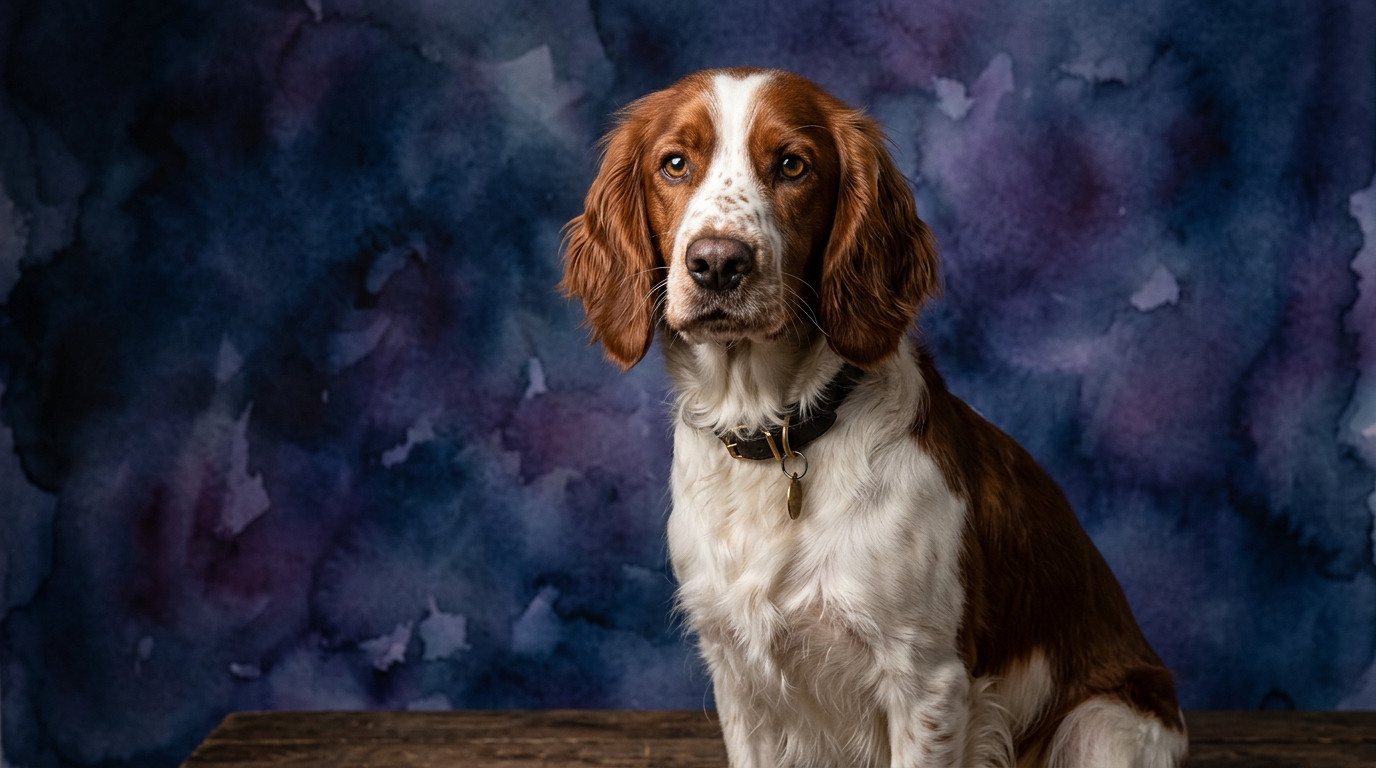
Side-by-Side IQ Profile: Cavalier vs. Welsh Springer
The Cosmic Pet Pet IQ Lab employs a five-dimensional framework to assess canine intelligence, offering a nuanced view beyond simple obedience. For the Cavalier King Charles Spaniel, categorized as a Toy breed with a Coren ranking of #44, their profile leans heavily into social connection, while the Sporting breed Welsh Springer Spaniel, ranking #31, showcases a more task-oriented cognitive design.
The Cavalier King Charles Spaniel exhibits a Problem Solving score of 3/5, indicating a moderate ability to navigate novel situations or figure out puzzles independently; they are capable but may not instinctively seek out complex mental challenges. Their Training Speed is also 3/5, meaning they learn commands at a steady pace, often motivated by positive reinforcement and a desire to please, though they might require consistent repetition to solidify new behaviors. Where the Cavalier truly shines is in Social Intelligence, scoring a perfect 5/5; this breed possesses an exceptional capacity to interpret human emotions, body language, and vocal cues, often anticipating their owner's needs or moods with remarkable sensitivity and forming deep, empathetic bonds. Instinctive Drive for the Cavalier sits at 3/5, suggesting a moderate internal motivation for typical dog behaviors like chasing or exploring, which is generally manageable in a home environment. Finally, their Memory score is 3/5, indicating a solid ability to recall learned commands and routines, though perhaps not with the same long-term retention as some working breeds.
In contrast, the Welsh Springer Spaniel presents a distinct cognitive blueprint. Their Problem Solving ability is rated 4/5, reflecting a strong aptitude for tackling complex tasks, figuring out environmental challenges, and adapting strategies to achieve goals, often displaying persistence and cleverness. This breed's Training Speed is 4/5, signifying a rapid learning curve for new commands and behaviors, allowing them to pick up intricate sequences with fewer repetitions, making them highly responsive to structured training. The Welsh Springer's Social Intelligence is 3/5; while affectionate and loyal, their understanding of human social dynamics is solid rather than exceptional, meaning their focus might sometimes be more on a task or their environment than purely on empathetic connection. Their Instinctive Drive is also 3/5, though this score manifests differently than in the Cavalier; for a sporting breed, this moderate drive translates into a consistent desire for engagement in activities like scent work or retrieving, without being overwhelmingly intense. Their Memory score is 4/5, highlighting an excellent capacity to retain a vast repertoire of commands, locations, and learned experiences over extended periods, making them reliable partners in various activities.
Where the Cavalier King Charles Spaniel Wins Cognitively
The Cavalier King Charles Spaniel’s preeminent cognitive strength lies in their unparalleled Social Intelligence, scoring a perfect 5/5. This isn't merely about being friendly; it's a sophisticated ability to read and respond to human emotional states with profound accuracy. A Cavalier can often sense an owner's sadness, joy, or stress, offering comfort or sharing in merriment without explicit cues. This acute emotional radar fosters an exceptionally strong human-animal bond, making them highly intuitive companions who integrate seamlessly into family dynamics.
This superior social cognition translates into practical benefits: Cavaliers are often remarkably adept at understanding household routines and subtle non-verbal commands, even without formal training. They excel in roles where emotional support and companionship are paramount, providing a comforting presence and a deep sense of connection that few other breeds can match. Their moderate instinctive drive means their focus is less on independent pursuits and more on being an engaged, empathetic partner within the human family unit, making them superb companions for those who value a dog's emotional presence above all else.
Where the Welsh Springer Spaniel Wins Cognitively
The Welsh Springer Spaniel demonstrates a clear cognitive advantage in areas demanding structured learning, problem-solving, and reliable retention. Their 4/5 scores in Problem Solving, Training Speed, and Memory signify a dog that thrives on mental engagement and purposeful activity. This breed isn't just capable of learning; they often relish the process, displaying a keen desire to understand and execute tasks.
Their elevated problem-solving skills mean Welsh Springers are adept at navigating complex environments, figuring out how to retrieve objects from challenging spots, or mastering multi-step sequences in dog sports like agility or obedience. The faster training speed allows owners to progress through commands and tricks efficiently, building a substantial behavioral repertoire quickly. Coupled with superior memory, a Welsh Springer will reliably recall these learned behaviors, even after periods of inactivity, making them consistent and trustworthy partners in various working or sporting capacities. This combination of cognitive traits makes them particularly well-suited for owners who enjoy engaging their dogs in structured activities that challenge both body and mind.
Which is Easier to Train and Why
When comparing training ease, the Welsh Springer Spaniel generally holds an edge due to its higher Training Speed (4/5) and Memory (4/5) compared to the Cavalier's 3/5 in both dimensions. A Welsh Springer's faster learning curve means they grasp new commands and concepts more quickly, often requiring fewer repetitions before a behavior becomes ingrained. This efficiency makes training sessions feel productive and rewarding for both dog and owner, as the Welsh Springer’s inherent drive often includes a desire to work collaboratively and achieve a task.
Cavaliers, while certainly trainable and eager to please due to their high social intelligence, might require a more patient approach and consistent reinforcement over a longer period. Their motivation often stems from the social reward of pleasing their owner and receiving affection, whereas a Welsh Springer might also be highly motivated by the satisfaction of mastering a task or engaging in a stimulating activity. For owners seeking a dog that can quickly learn and reliably execute a broad range of commands, especially those involving complex sequences or independent problem-solving, the Welsh Springer's cognitive profile makes the training journey potentially smoother and faster.
Which Suits Active Owners vs. Relaxed Owners
The cognitive and temperamental differences between these two breeds strongly influence their suitability for various lifestyles. The Welsh Springer Spaniel, with its robust problem-solving abilities, faster training speed, and moderate instinctive drive for purposeful activity, is an ideal match for active owners. This breed thrives on regular physical exercise combined with mental stimulation, such as scent work, retrieving games, obedience training, or agility. Owners who enjoy hiking, running, or participating in dog sports will find a Welsh Springer to be an enthusiastic and capable partner, eager to engage in shared activities that challenge their intellect and physical prowess. Neglecting their need for engagement can lead to boredom and potentially undesirable behaviors, as their minds are wired for more than just lounging.
Conversely, the Cavalier King Charles Spaniel, with its exceptional social intelligence and moderate problem-solving and instinctive drive, is perfectly suited for more relaxed owners who prioritize companionship and emotional connection. While they enjoy moderate daily walks and playtime, their primary contentment comes from being close to their human family. They are content to curl up on the couch, follow their owners from room to room, and offer quiet, empathetic presence. Their cognitive strengths are best utilized in environments where their capacity for deep bonding and emotional sensitivity can flourish, making them superb companions for individuals or families seeking a devoted, low-key canine friend who is deeply attuned to their emotional world.
The Verdict: When to Choose Each Breed
The Verdict
Choose the Cavalier King Charles Spaniel if your priority is a deeply empathetic, emotionally intelligent companion who thrives on close social interaction and offers unwavering affection. They are ideal for individuals or families seeking a gentle presence that is highly attuned to human emotions and content with a more relaxed pace of life.
Opt for the Welsh Springer Spaniel if you are an active owner who enjoys engaging in structured activities, seeking a partner with a keen intellect, faster learning ability, and a desire to participate in problem-solving tasks and dog sports. They will flourish in a home that provides consistent mental and physical challenges.
🧠 Find Your Pet's IQ Score
Our Pet IQ Lab assessment covers 25+ tests across 5 cognitive dimensions — personalized to your breed.
Take the Full IQ Test →Frequently Asked Questions
Do Cavalier King Charles Spaniels get bored easily?
Cavaliers generally do not get bored easily in the same way a high-drive working breed might, as their primary satisfaction comes from social interaction and companionship. While they enjoy playtime and walks, their cognitive needs are largely met through being an integrated, emotionally supported member of their human family, rather than through constant independent mental challenges.
Are Welsh Springer Spaniels good for first-time dog owners?
Welsh Springer Spaniels can be suitable for first-time owners who are committed to consistent training and providing ample physical and mental stimulation. Their higher training speed and problem-solving abilities mean they learn quickly, but this also requires an owner who can channel their energy and intelligence effectively through structured activities.
How do their instinctive drives differ in daily life?
While both breeds score 3/5 in instinctive drive, it manifests differently; a Cavalier's drive often translates to curiosity or a mild chase instinct easily managed with companionship. A Welsh Springer's drive, stemming from its sporting heritage, typically involves a consistent desire to sniff, explore, and retrieve, requiring more structured outlets to prevent boredom or restlessness.