
Side-by-Side IQ Profile: Unpacking Canine Cognition
**Cavalier King Charles Spaniel (CKCS) – The Affectionate Thinker:**
**Coren Rank #44:** Positioned in the 'Above Average Working/Obedience Intelligence' category, Cavaliers demonstrate a reliable capacity for understanding and executing commands, favoring connection over sheer speed. Their mental processes are consistent, though not always rapid.
**Problem Solving (3/5):** Cavaliers approach novel challenges with moderate ingenuity. They can solve basic puzzles or navigate simple obstacles, often relying on human guidance or reinforcement rather than purely independent exploration. Their solutions are often linked to pleasing their person.
**Training Speed (3/5):** This breed learns new commands at a respectable, consistent pace. While complex sequences may not be grasped instantly, their willingness to engage and gentle nature make training a positive, steady progression. Positive reinforcement yields solid results over time.
**Social Intelligence (5/5):** The Cavalier excels here, demonstrating exceptional ability to read human emotions and intentions. This profound empathy fosters strong bonds, facilitating harmonious cohabitation and manifesting as an innate desire for close interaction. They are highly attuned to family moods.
**Instinctive Drive (3/5):** Cavaliers possess a moderate instinctive drive, like a gentle chase instinct or interest in exploring. These drives are typically soft and easily managed, rarely overriding their desire for human companionship or training directives.
**Memory (3/5):** Cavaliers possess a solid, functional memory, capable of retaining learned commands, routines, and favored item locations. Their recall is adequate for daily life and consistent training reinforcement, though not for intricate details.
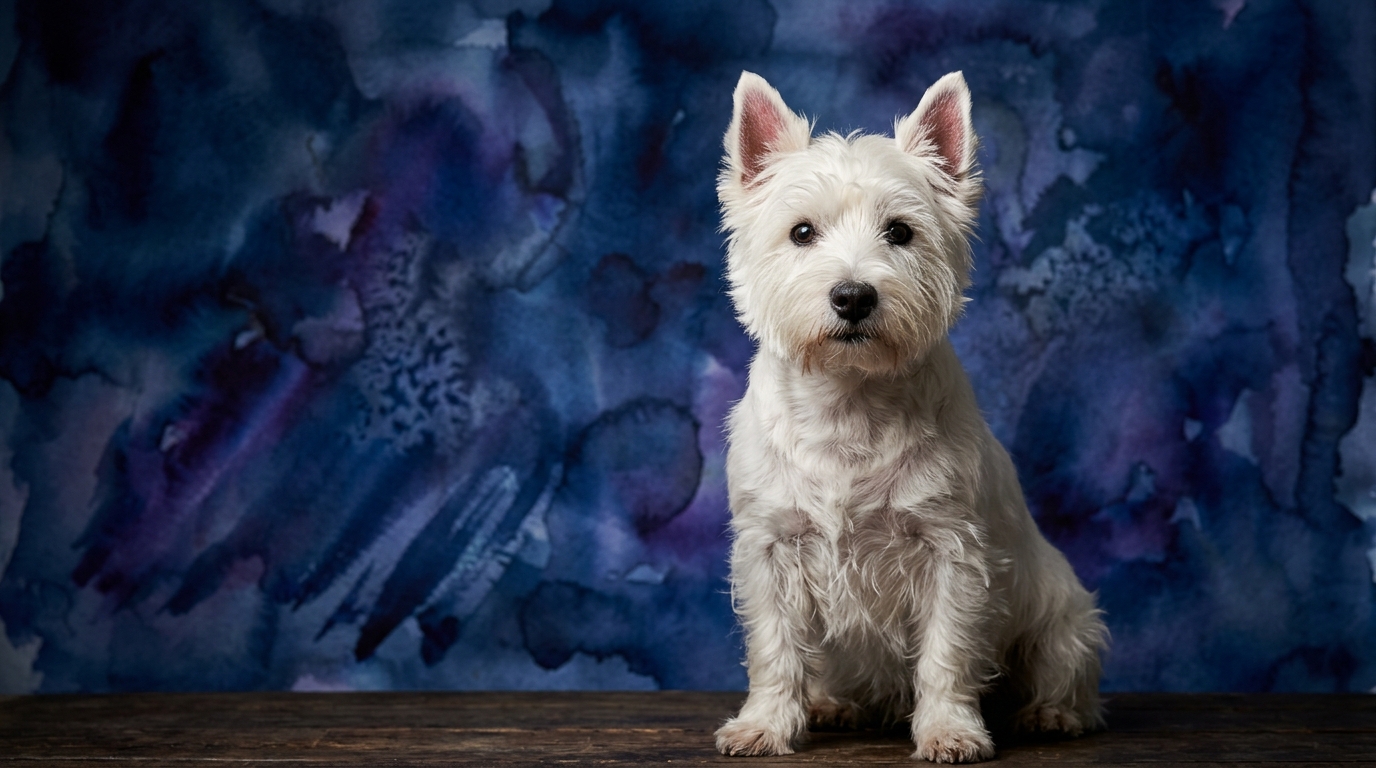
**West Highland White Terrier (WHWT) – The Spirited Strategist:**
**Coren Rank #47:** Also in the 'Above Average Working/Obedience Intelligence' group, Westies are capable of learning and adapting, though often filtered through their distinct terrier temperament, which can introduce independent thought.
**Problem Solving (3/5):** Westies share a moderate problem-solving aptitude. They are resourceful, often using trial-and-error, especially if the solution involves gaining access to something interesting. Their terrier tenacity can drive persistence.
**Training Speed (3/5):** Westies learn new commands at a steady, reliable pace. Training challenges often stem from their independent spirit rather than learning capacity; they understand but may choose to comply based on their own assessment. Consistency is crucial.
**Social Intelligence (3/5):** Westies exhibit moderate social intelligence. They are affectionate with family, forming strong bonds, but are generally less overtly 'people-pleasing' than Cavaliers. Their social interactions are direct, less focused on emotional mirroring.
**Instinctive Drive (3/5):** Their terrier heritage brings a manageable 3/5 instinctive drive, manifesting as keen interest in digging, chasing small prey, and exploration. While present, it allows them to integrate well with proper outlets and training, but can make them persistent.
**Memory (4/5):** The Westie excels with a superior memory. They strongly recall past experiences, learned behaviors, and locations. This enhanced memory means commands are less likely to be forgotten once mastered, aiding long-term retention.
Where Cavalier King Charles Spaniel Wins Cognitively
The Cavalier King Charles Spaniel's undeniable cognitive strength lies overwhelmingly in its exceptional social intelligence. With a perfect 5/5 score, the Cavalier demonstrates an unparalleled ability to perceive, interpret, and respond to human emotions and social cues. This isn't merely about being friendly; it's a sophisticated capacity for empathy and connection. A Cavalier can often anticipate its owner's mood, offering comfort during distress or joining in celebratory moments without explicit commands. This deep emotional attunement makes them incredibly intuitive companions, creating a bond built on mutual understanding and subtle communication. They excel in environments where reading human intent and fostering emotional harmony are paramount, making them natural therapy dogs or simply devoted family members who understand the unspoken language of their people.
Where West Highland White Terrier Wins Cognitively
In the cognitive arena, the West Highland White Terrier distinguishes itself with a superior memory, scoring 4/5 compared to the Cavalier's 3/5. This enhanced recall means Westies are highly effective at retaining learned information, whether it's a series of commands, the layout of their environment, or past experiences. Once a Westie has grasped a concept or a rule, it tends to stick with them, making them less prone to 'forgetting' previously mastered behaviors. This strong memory can be a double-edged sword; while it aids in cementing good habits, it also means they remember less desirable learned behaviors or negative associations with equal tenacity. For an owner who values a dog that remembers its training consistently over time, the Westie's cognitive architecture offers a distinct advantage.
Which is Easier to Train and Why
While both breeds share a 3/5 rating for training speed, the underlying dynamics of their cognitive profiles suggest differing training experiences. The Cavalier King Charles Spaniel often presents as 'easier' to train for many owners primarily due to its outstanding social intelligence. Their deep desire to connect and please their human companions makes them highly motivated to cooperate. A Cavalier is more likely to engage readily with training sessions, responding well to positive reinforcement and the sheer joy of interaction. Their lower instinctive drive also means fewer distractions from deeply ingrained behaviors like digging or intense prey drive, allowing them to focus more on the task at hand. In contrast, the West Highland White Terrier's training, while equally effective in terms of learning capacity, can require a more nuanced approach. Their moderate social intelligence means they are less driven by the sole desire to please and more by their own independent assessment. While their excellent memory ensures retention, their terrier tenacity means they might test boundaries or require more consistent, firm, and engaging methods to maintain their interest and compliance. They understand commands but might choose to obey on their own terms, making patience and creativity essential.
Which Suits Active Owners vs Relaxed Owners
For owners who prefer a more relaxed lifestyle, the Cavalier King Charles Spaniel is often the more fitting choice. Their moderate instinctive drive and profound social intelligence mean they are content with a comfortable routine that heavily features human companionship. While they enjoy gentle walks and playtime, their primary joy stems from being near their family, making them excellent companions for quiet evenings or indoor activities. Their lower energy levels and adaptable nature allow them to thrive in various home environments, as long as they receive consistent affection and attention. The West Highland White Terrier, while also adaptable, leans slightly more towards suiting active owners. Despite their 3/5 instinctive drive, their terrier heritage imbues them with a zest for exploration and a need for mental engagement. They benefit from regular, stimulating walks, opportunities for safe digging, and interactive play that taps into their problem-solving instincts. Owners who enjoy outdoor adventures or who can provide structured activities that channel the Westie's natural curiosity and tenacity will find a highly engaged and enthusiastic partner. Their superior memory also makes them excellent candidates for learning complex tricks or participating in dog sports, appealing to those who enjoy structured mental activities with their pets.
The Verdict
Choose the Cavalier King Charles Spaniel if your priority is an emotionally intuitive companion who thrives on deep social connection and offers unwavering affection, ideal for a more relaxed home environment.
Opt for the West Highland White Terrier if you appreciate a tenacious, intelligent dog with excellent memory, suited for owners who enjoy consistent training and providing engaging activities for a spirited companion.
🧠 Find Your Pet's IQ Score
Our Pet IQ Lab assessment covers 25+ tests across 5 cognitive dimensions — personalized to your breed.
Take the Full IQ Test →Frequently Asked Questions
Is a Cavalier King Charles Spaniel good with children?
Yes, the Cavalier King Charles Spaniel's high social intelligence and gentle temperament typically make them excellent companions for children. They are patient and adaptable, often forming strong, affectionate bonds with young family members, though supervision is always recommended.
Do West Highland White Terriers bark a lot?
West Highland White Terriers can be prone to barking, a trait often linked to their terrier vigilance and communication style. While not excessive for all, their inclination to alert to perceived threats or novelties means consistent training is beneficial to manage this behavior.
How much exercise does each breed need daily?
Cavalier King Charles Spaniels generally require moderate daily exercise, such as a couple of short walks and indoor play, satisfied with around 30-60 minutes. West Highland White Terriers, despite their size, benefit from more vigorous activity, including longer walks, play sessions, and mental stimulation, often needing 60-90 minutes of engagement.