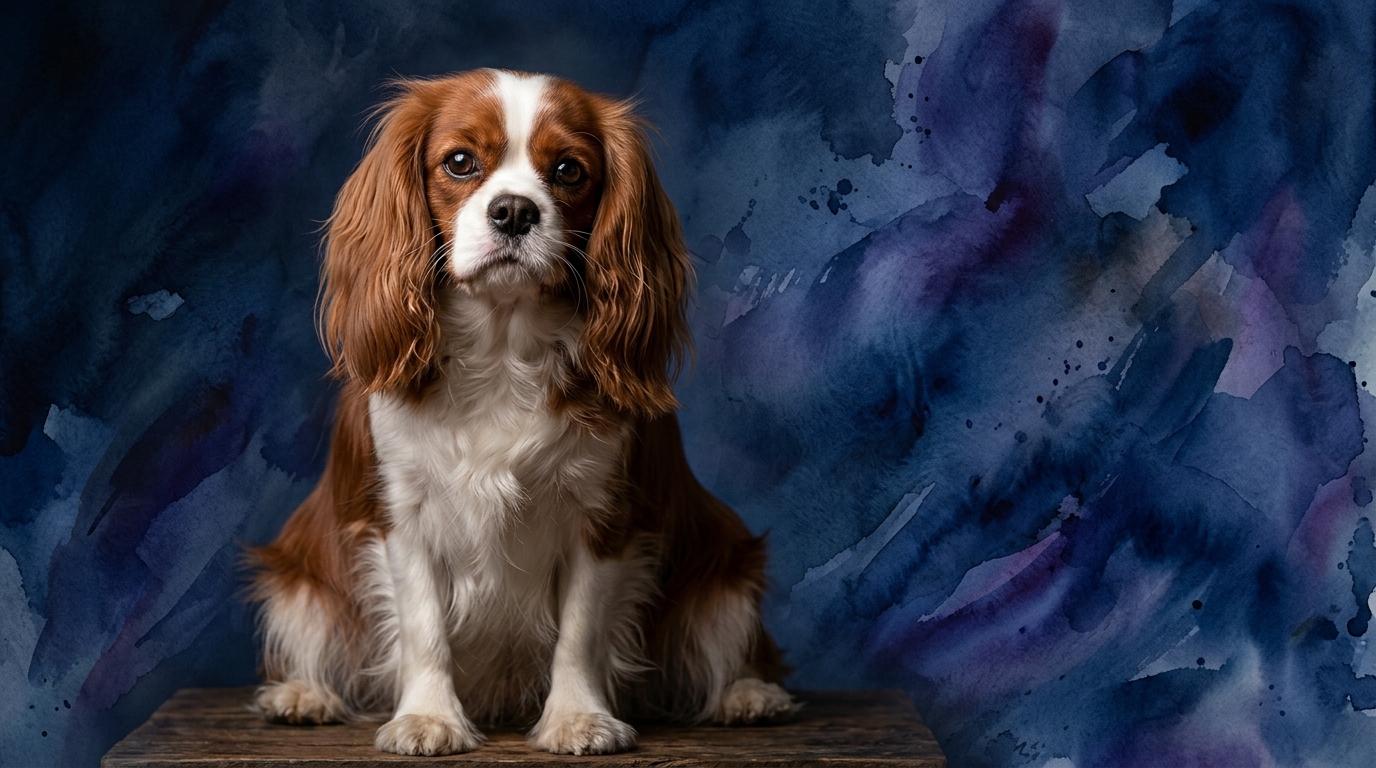
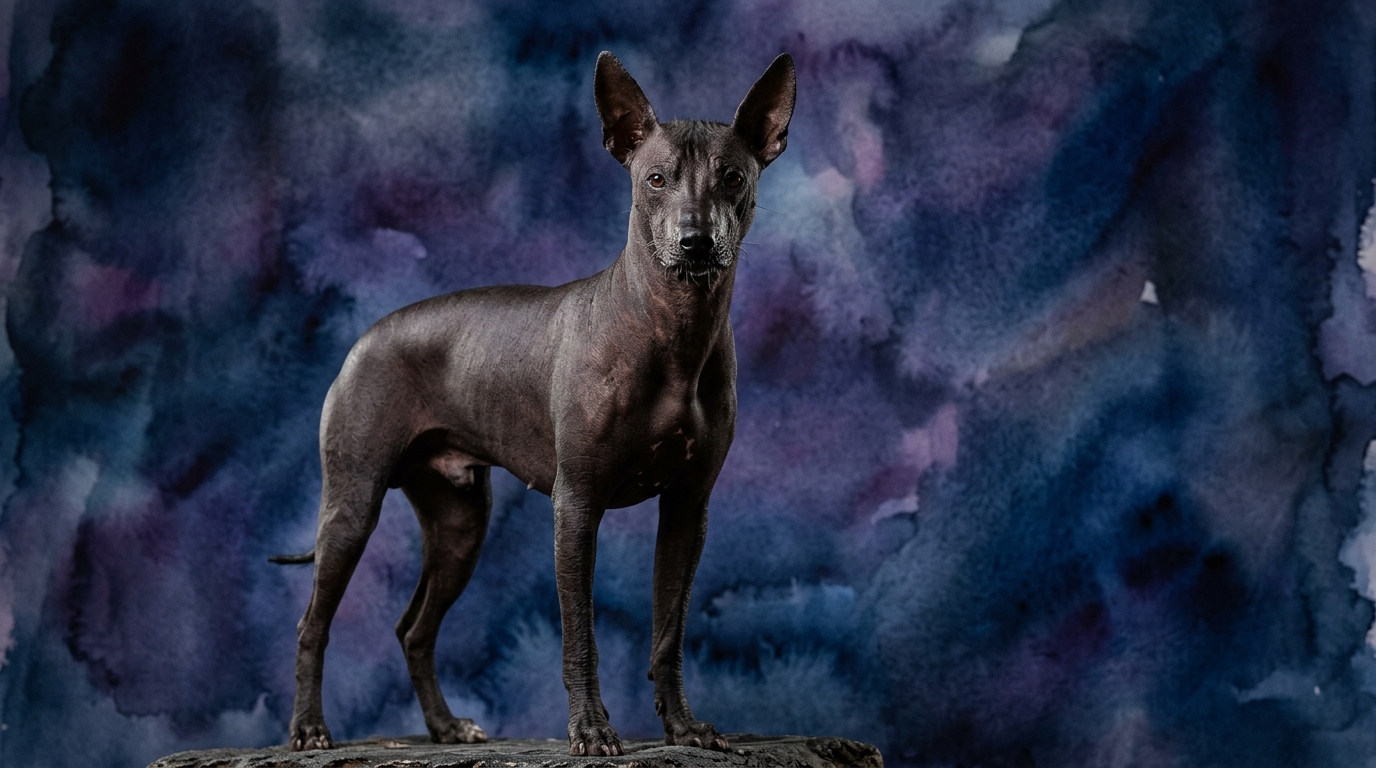
Side-by-Side IQ Profile: A Tale of Two Canines
The Cosmic Pet Pet IQ Lab offers a comprehensive look at canine intelligence across five critical dimensions. For the Cavalier King Charles Spaniel, categorized as a Toy breed and holding a Coren rank of #44 among working and obedience intelligence, we observe a Problem Solving score of 3/5, indicating a moderate capacity to navigate novel situations and figure out solutions independently. Its Training Speed is also 3/5, suggesting it learns new commands at an average pace. Where the Cavalier truly shines is its Social Intelligence, scoring a perfect 5/5, reflecting an exceptional ability to understand human emotions, cues, and social dynamics. Instinctive Drive stands at 3/5, meaning a balanced expression of natural canine behaviors like chasing or guarding, while its Memory is rated 3/5, indicating a solid ability to recall learned information and experiences.
In contrast, the Xoloitzcuintli, a Non-Sporting breed not featured in Coren's ranking, presents a more uniform cognitive profile. Its Problem Solving ability is rated 3/5, aligning with the Cavalier in its capacity for independent thought in challenges. Training Speed also mirrors the Cavalier at 3/5, suggesting a similar rate of command acquisition. However, the Xoloitzcuintli's Social Intelligence is 3/5, indicating a more reserved or independent approach to human interaction compared to the Cavalier's effusive nature. Its Instinctive Drive is 3/5, similar to the Cavalier, and its Memory is also 3/5. This side-by-side view immediately highlights the striking difference in social engagement, which profoundly influences how each breed interacts with its environment and its people.
Where Cavalier King Charles Spaniel Wins Cognitively
The Cavalier King Charles Spaniel's undeniable cognitive strength lies in its profound Social Intelligence, scoring an exceptional 5/5. This isn't merely about friendliness; it signifies an acute sensitivity to human emotional states and an innate desire to connect and please. A Cavalier can often anticipate its owner's mood, offering comfort or initiating play with remarkable accuracy. This high social IQ makes them incredibly adaptable family members, thriving on companionship and intuitively understanding the nuances of household dynamics. Their Coren ranking of #44 further underscores their capacity for adaptive learning within a human-centric environment, demonstrating a strong inclination to cooperate and respond to direction, largely driven by this deep social bond. This means they are often more forgiving of inconsistent training methods and more resilient to changes in routine, relying on their bond with their human to navigate new situations.
Furthermore, this exceptional social cognition translates into a greater ease in integrating into diverse social settings, whether it's meeting new people, other dogs, or adapting to travel. Their cognitive framework is built around harmonious interaction, making them less prone to social anxieties or territorial displays born from misunderstanding social cues. While their problem-solving and training speed scores are moderate, their ability to 'read the room' and respond appropriately to human guidance often makes them appear more compliant and 'smarter' in day-to-day living, as they are constantly seeking to align their behavior with human expectations and desires for connection.
Where Xoloitzcuintli Wins Cognitively
While the Xoloitzcuintli's IQ scores are uniformly 3/5, this doesn't imply a deficit but rather a distinct cognitive style rooted in its ancient lineage and more independent nature. The Xolo's strength lies in a robust, self-reliant intelligence that is less dependent on constant human validation. Its 3/5 in Problem Solving and Instinctive Drive, combined with a moderate 3/5 Social Intelligence, suggests a dog capable of assessing situations and making decisions based on its own internal logic, rather than immediately seeking human input. This can manifest as a quiet observational intelligence, where a Xolo processes its environment and potential challenges with a calm, discerning focus.
The Xoloitzcuintli's cognitive 'win' is in its discerning independence and resilience. It often exhibits a keen awareness of its surroundings and a natural self-preservation instinct, making it an excellent watchdog without necessarily being overtly aggressive. This breed's cognitive make-up allows it to thrive in environments where it can exercise its own judgment and doesn't require constant emotional hand-holding. Its moderate social intelligence means it forms deep, selective bonds, offering loyalty to its chosen few rather than seeking universal affection. This independence, a hallmark of many ancient breeds, gives the Xolo a unique cognitive strength in its ability to be self-possessed and emotionally stable, provided its needs for structure and respect are met.
Which is Easier to Train and Why
When considering ease of training, the Cavalier King Charles Spaniel clearly holds an advantage, primarily due to its 5/5 Social Intelligence compared to the Xoloitzcuintli's 3/5. While both breeds share a 3/5 Training Speed, meaning they acquire new commands at a similar pace, the Cavalier's profound desire to please and its sensitivity to human emotional cues make the *process* of training significantly smoother and more rewarding for the owner. A Cavalier will actively seek to understand what is being asked of it, responding well to positive reinforcement delivered with warmth and enthusiasm. Their high social intelligence means they are more likely to offer behaviors that elicit positive human attention, making them highly receptive and cooperative students.
The Xoloitzcuintli, with its moderate social intelligence, approaches training with a different mindset. While capable of learning at an average speed, it may not possess the same inherent drive to please or the acute sensitivity to subtle human emotional shifts. Training a Xolo often requires more consistency, clear and concise commands, and a patient, confident leader. They might question the 'why' behind a command more, or simply choose not to comply if they don't see the immediate benefit or if the human's communication is unclear. This isn't a lack of ability, but a difference in motivation; a Xolo responds best to respect and clear structure, whereas a Cavalier thrives on shared connection and affection during training sessions. Therefore, for most owners, the Cavalier will feel 'easier' to train due to its innate desire for collaborative engagement.
Which Suits Active Owners vs Relaxed Owners
For owners seeking a more relaxed lifestyle, the Cavalier King Charles Spaniel is often the more suitable choice, largely thanks to its exceptional social intelligence. These dogs thrive on companionship and are content to be near their humans, whether that involves a leisurely stroll, a quiet evening on the couch, or simply observing family activities. While they enjoy moderate exercise, their primary cognitive and emotional need is human interaction and affection. Their adaptability means they can easily adjust to varying daily routines, making them ideal for individuals or families whose activity levels might fluctuate, or who simply prefer a calm, affectionate presence that seamlessly integrates into a relaxed home environment.
The Xoloitzcuintli, with its more independent cognitive profile and robust physical nature, may appeal more to owners who appreciate a dog with a distinct personality and who are prepared to provide structured engagement. While not necessarily requiring marathon runs, Xolos benefit from consistent mental stimulation and exploring new environments. Their 3/5 instinctive drive and problem-solving abilities suggest they appreciate activities that challenge their minds, such as scent work, puzzle toys, or obedience training that respects their self-assured temperament. An 'active' owner for a Xolo might not be one who runs miles every day, but one who actively engages with their dog's independent spirit, provides clear boundaries, and offers opportunities for exploration and mental challenge, rather than expecting constant cuddles. They suit owners who appreciate a reserved but deeply loyal companion who values their personal space and requires thoughtful interaction.
The Verdict: When to Choose Each Companion
The Verdict
Choose the Cavalier King Charles Spaniel if you seek an exceptionally social, affectionate, and adaptable companion that thrives on human connection and emotional harmony.
Opt for the Xoloitzcuintli if you appreciate a reserved, independent, and robust companion that forms deep, selective bonds and thrives with consistent structure and respectful engagement.
🧠 Find Your Pet's IQ Score
Our Pet IQ Lab assessment covers 25+ tests across 5 cognitive dimensions — personalized to your breed.
Take the Full IQ Test →Frequently Asked Questions
Is the Cavalier King Charles Spaniel truly better at understanding human emotions?
Yes, with a Social Intelligence score of 5/5, the Cavalier King Charles Spaniel exhibits a superior ability to interpret human emotions and cues compared to many other breeds. This makes them highly empathetic companions who often seem to intuitively understand their owners' feelings.
Does the Xoloitzcuintli's moderate social intelligence mean it's not affectionate?
Not at all; a Xoloitzcuintli's 3/5 social intelligence indicates a more reserved and independent nature, but they form incredibly deep and loyal bonds with their chosen family. Their affection is often expressed more subtly and selectively, valuing close proximity and quiet companionship over effusive displays.
Are Xoloitzcuintli difficult to train because they are not Coren-ranked?
The Xoloitzcuintli's absence from Coren's ranking and its 3/5 training speed suggest it learns at an average pace, but its moderate social intelligence means it may require more consistent, clear, and structured training methods. They respond best to a confident leader and clear communication rather than relying solely on emotional appeals.