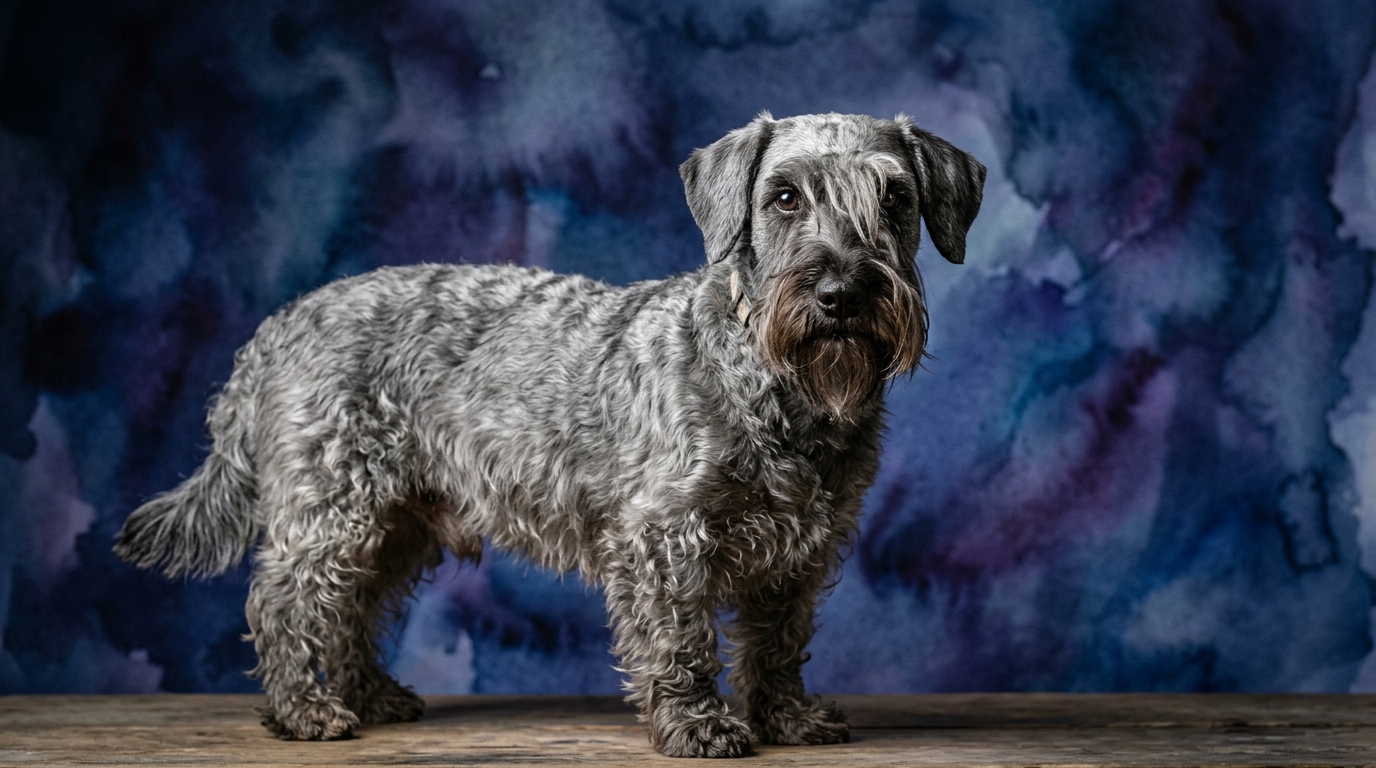
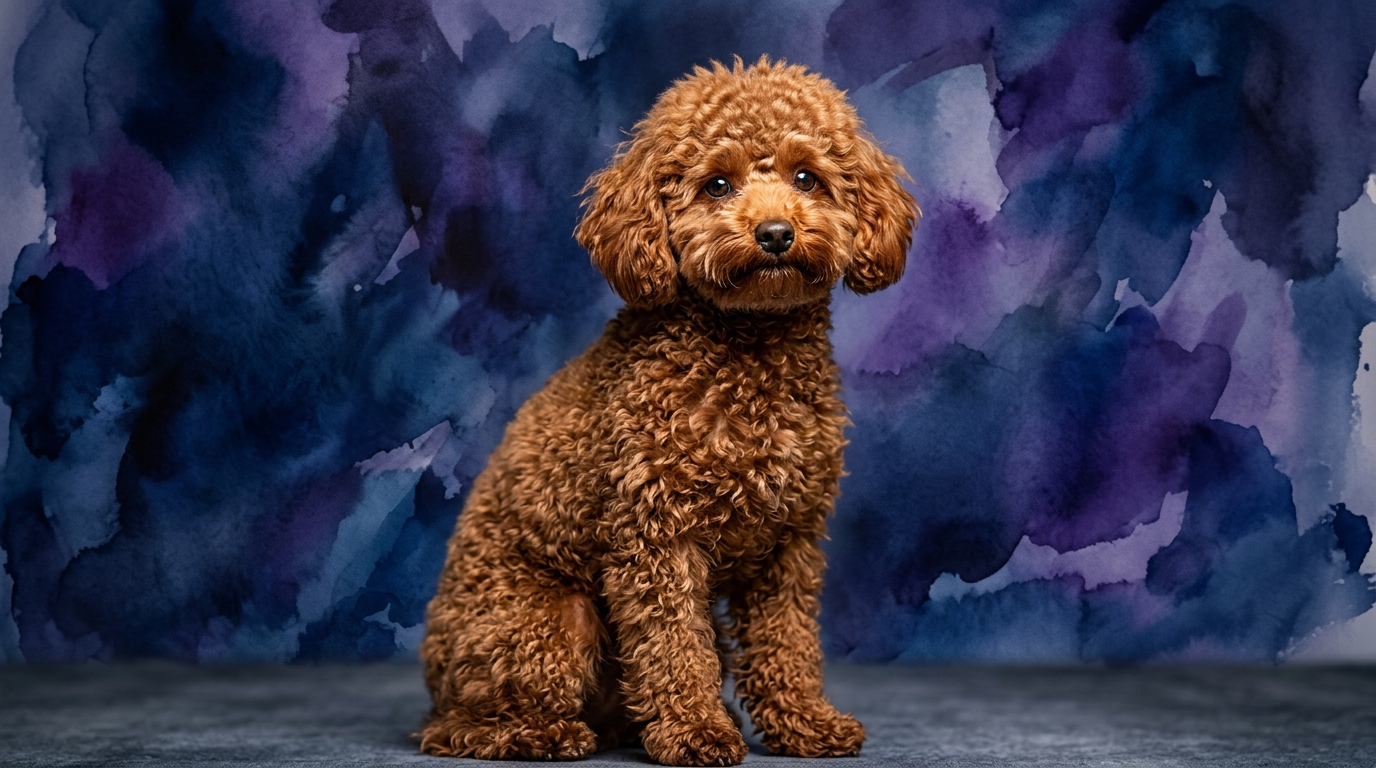
Side-by-Side Cognitive Profiles: Cesky Terrier vs. Toy Poodle
The Cosmic Pet Pet IQ Lab provides a structured lens through which to examine the cognitive strengths and inclinations of different dog breeds. For the Cesky Terrier, a robust and less common breed, its profile paints a picture of balanced, practical intelligence. Its Problem Solving is rated at 3/5, indicating a methodical approach to challenges, capable of figuring things out but often requiring a few attempts or clear, sequential guidance. Training Speed also sits at 3/5, suggesting that while the Cesky is certainly trainable, it learns at a moderate pace, benefiting significantly from consistent repetition and patient instruction. Social Intelligence is likewise 3/5; these dogs are attuned to the cues of their immediate family but can be reserved or discerning with strangers, preferring established bonds. An Instinctive Drive of 3/5 signifies a moderate expression of typical terrier behaviors like scent tracking or digging, present but generally manageable with appropriate outlets. Finally, its Memory at 3/5 means the Cesky retains information reasonably well, though less frequently practiced commands might need occasional refreshers.
In stark contrast, the Toy Poodle presents a cognitive profile marked by exceptional mental agility and rapid processing. With a Problem Solving score of 5/5, the Toy Poodle rapidly assesses novel situations, innovates solutions, and excels at generalizing learned concepts to new contexts. Their Training Speed is an impressive 5/5, meaning they absorb new commands and routines with remarkable swiftness, often mastering behaviors with minimal repetitions. Interestingly, their Social Intelligence is rated at 3/5, similar to the Cesky. This suggests they are highly sensitive to their handler's mood and intentions and form strong bonds, but might need structured socialization to confidently navigate complex or unfamiliar social dynamics with other dogs or diverse groups of people. An Instinctive Drive of 3/5 points to a moderate drive for retrieving, play, and often water activities, reflecting their heritage, but typically without the intense prey drive seen in some other breeds. Crucially, their Memory is rated 5/5, indicating excellent long-term recall of commands, routines, and experiences, even after extended periods without practice, making them highly reliable in performance.
Where the Cesky Terrier Shines Cognitively
While the Toy Poodle often outpaces the Cesky Terrier in sheer speed of learning and problem-solving, the Cesky's cognitive profile suggests a different kind of strength: durable, practical persistence. Their 3/5 rating in Problem Solving, for instance, translates into a methodical, determined approach rather than a rapid, often trial-and-error method. This means a Cesky might take longer to grasp a new concept, but once they do, their understanding is often deeply ingrained, built on focused repetition and a robust, independent thought process. This tenacity can be particularly advantageous in scenarios requiring sustained effort or a degree of self-reliance, where a dog needs to work through a challenge without constant human intervention. Their balanced 3/5 across most dimensions also indicates a certain cognitive equilibrium, potentially leading to a more consistently resilient temperament, less prone to the subtle anxieties that can sometimes accompany exceptionally quick thinkers who are highly attuned to environmental changes. The Cesky's social intelligence, while not universally effusive, fosters deep, reliable bonds with their chosen family, valuing consistency and predictable interactions.
Where the Toy Poodle Demonstrates Cognitive Superiority
The Toy Poodle's cognitive strengths are evident in their exceptional scores, particularly in Problem Solving (5/5), Training Speed (5/5), and Memory (5/5). This combination allows them to grasp new commands, complex sequences, and abstract concepts with remarkable swiftness, often requiring only a few repetitions to solidify a new behavior. Their high problem-solving acumen means they excel at figuring out novel situations, adapting to new environments, and even manipulating their surroundings to achieve a desired outcome, making them highly capable companions for intricate activities like agility, obedience trials, or even service work. The Toy Poodle's superior memory ensures that once a lesson is learned, it is retained for extended periods, contributing to their reputation for consistency and reliability in performance. This mental agility also makes them incredibly versatile, able to transition between different tasks or learning objectives with ease, showcasing a profound capacity for cognitive flexibility. Their capacity for rapid learning and retention positions them as formidable partners for anyone seeking to engage deeply in advanced canine disciplines.
Training Dynamics: Which Breed is Easier to Train?
Based on their respective IQ profiles, the Toy Poodle generally presents as the easier breed to train. Their 5/5 scores in Training Speed and Memory mean they absorb new information with impressive rapidity and retain it effectively over time. This cognitive predisposition often translates into a dog that is eager to engage in learning sessions, quickly connecting actions with desired outcomes, and requiring fewer repetitions to master a command. Their adaptability allows them to generalize learned behaviors across different environments with greater ease, making them a joy for positive reinforcement trainers. In contrast, the Cesky Terrier, with a 3/5 in Training Speed and Memory, will require a more patient, consistent, and perhaps more frequent approach to training. While capable of learning, their terrier independence and moderate instinctive drives mean they might not always prioritize human directives over their own interesting scents or impulses. Training a Cesky often involves breaking down tasks into smaller steps and providing clear, consistent motivation, acknowledging their more deliberate pace and ensuring their attention is fully captured. The Poodle's inherent drive to please and mental quickness often streamline the training process significantly, making them a more straightforward choice for novice trainers or those seeking rapid progress in complex disciplines.
Matching Breeds to Owner Lifestyles: Active vs. Relaxed
The suitability of each breed for active versus relaxed owners hinges not just on physical stamina, but crucially on their cognitive needs. An active owner, particularly one who enjoys engaging in dog sports, advanced obedience, or wants a companion for intricate tasks, might find the Toy Poodle an exceptional match. Their 5/5 Problem Solving and Training Speed mean they thrive on constant mental stimulation, learning new tricks, or participating in agility courses. They are keen to work alongside their human and will flourish with opportunities to engage their sharp minds. Conversely, a Cesky Terrier might appeal to an active owner who appreciates a dog with a more independent streak, perhaps one who enjoys exploring trails or engaging in scent work where their moderate instinctive drive (3/5) can be channelled. They require consistent physical exercise to satisfy their terrier nature but may not demand the same intensity of novel mental challenges as a Poodle. For a more relaxed owner, the Cesky Terrier might be manageable if their physical exercise needs are met with regular walks and opportunities for sniffing, as their cognitive demands are less about constant novel learning and more about fulfilling inherent drives. A relaxed owner considering a Toy Poodle, however, must be prepared to substitute intense physical activity with consistent mental enrichment, such as puzzle toys, daily training refreshers, or interactive games, to prevent boredom and potential behavioral issues stemming from their unchanneled mental energy. Without adequate mental engagement, a Poodle's quick mind can become restless, irrespective of physical activity levels.
The Verdict
Opt for the Cesky Terrier if you appreciate a robust, independent companion with a methodical approach to learning, and you are prepared for consistent, patient training to channel their moderate terrier drives effectively.
Select the Toy Poodle if you seek a highly adaptable, rapidly learning dog for complex tasks, valuing a companion who thrives on continuous mental engagement and close partnership in training.
🧠 Find Your Pet's IQ Score
Our Pet IQ Lab assessment covers 25+ tests across 5 cognitive dimensions — personalized to your breed.
Take the Full IQ Test →Frequently Asked Questions
Are Cesky Terriers good with children?
Cesky Terriers, with their 3/5 social intelligence, can be good family companions, often forming strong bonds with their human family. However, like many terriers, they appreciate respect and calm interactions, and thorough socialization from a young age is important, especially with younger, boisterous children.
Do Toy Poodles bark a lot?
Toy Poodles, while having moderate social intelligence, can be prone to barking due to their alert nature and sensitivity to their environment. Early training and consistent management of their mental stimulation needs are key to moderating excessive vocalization.
What are the grooming needs for these breeds?
The Cesky Terrier has a silky, wavy coat that requires regular hand-stripping or clipping to maintain its texture and health, along with routine brushing to prevent mats. The Toy Poodle's non-shedding, curly coat needs daily brushing to prevent tangles and professional grooming every 4-6 weeks to keep it healthy and mat-free, demanding significant commitment.