
Side-by-Side Cognitive Profiles
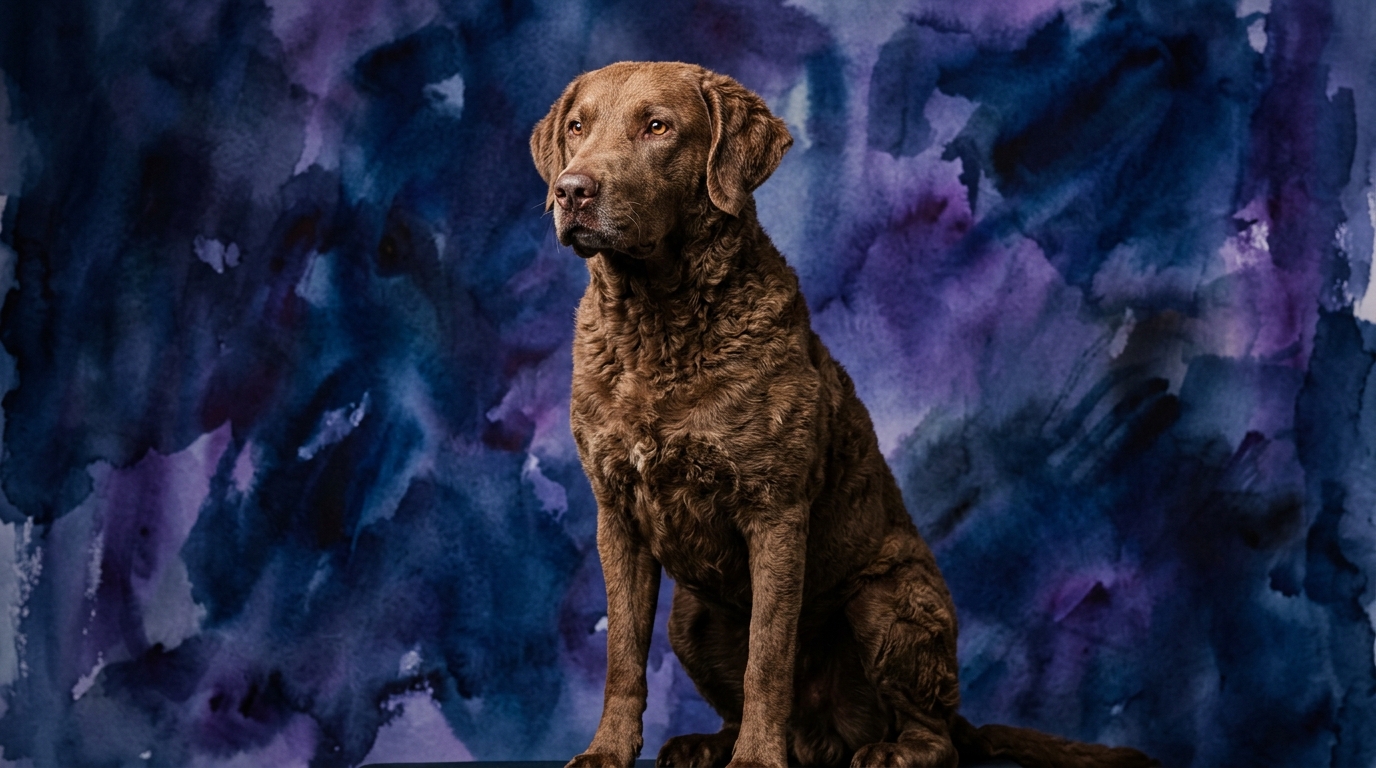
The Chesapeake Bay Retriever, a member of the Sporting group and ranked #27 by Coren for working obedience and instinctive intelligence, showcases a cognitive design optimized for demanding outdoor tasks. Their Problem Solving is rated 4/5, indicative of their resourcefulness in navigating complex environments to achieve specific goals, such as finding downed game. A Training Speed of 4/5 means they absorb and retain commands with remarkable efficiency, enjoying structured learning. Their Social Intelligence at 3/5 suggests they form deep bonds within their family but can be reserved with strangers, understanding pack dynamics keenly. An Instinctive Drive of 3/5 highlights their powerful retrieving instincts and affinity for water, while their 4/5 Memory ensures they recall commands, locations, and learned experiences with precision.
In contrast, the Affenpinscher, a spirited Toy breed not individually ranked by Coren, presents a cognitive profile suited for companionship and domestic life. Their Problem Solving is rated 3/5, demonstrating an ability to figure out simple puzzles or household challenges, though less inclined towards multi-step, complex tasks. A Training Speed of 3/5 means they learn at a moderate pace, often requiring engaging, consistent methods to maintain their interest due to an independent streak. Their Social Intelligence also stands at 3/5, manifesting as an engaging and sometimes watchful demeanor with their family, discerning subtle human cues. An Instinctive Drive of 3/5 points to their curiosity and a desire to guard their territory, along with some historical vermin-hunting drive. Finally, their 3/5 Memory allows them to recall routines and familiar faces, though perhaps not complex sequences with the same retention as a working breed.
Where the Chesapeake Bay Retriever Wins Cognitively
The Chesapeake Bay Retriever, purpose-bred for demanding waterfowl retrieval, exhibits a distinct cognitive advantage in areas demanding sequential processing, environmental mastery, and sustained focus. Their 4/5 rating in Problem Solving reflects an impressive capacity to navigate intricate scenarios, such as locating and retrieving game from dense cover or icy waters, requiring more than simple rote memorization. This isn't just about finding an object; it’s about adapting to changing conditions, evaluating obstacles, and executing a plan with purpose. Similarly, their 4/5 Training Speed highlights their aptitude for rapidly acquiring and retaining complex command sets, crucial for coordinating with a handler in dynamic outdoor environments. They process new information efficiently, linking actions to outcomes with precision. This quick learning is bolstered by their 4/5 Memory, allowing them to recall specific locations of retrieves, previously learned commands, and even the nuances of a handler's signals over extended periods. For tasks requiring sustained focus, robust recall, and strategic execution, the Chesapeake Bay Retriever’s cognitive architecture is remarkably well-suited.
Where the Affenpinscher Wins Cognitively
While the Affenpinscher’s individual IQ scores may not numerically surpass the Chesapeake Bay Retriever's in the given dimensions, their cognitive strengths lie in areas often valued differently within a companion breed context. Their 3/5 in Social Intelligence, while matching the Chessie's, manifests uniquely; it's about discerning subtle shifts in family moods, providing comfort, and engaging in playful, reciprocal interactions within a close-knit human pack. They often display a keen observational intelligence, quickly learning household routines and anticipating family members' actions, not for a working task but for companionship and engagement. Their problem-solving, rated 3/5, often revolves around domestic challenges like figuring out how to reach a treat on a high shelf or manipulating objects for play, demonstrating a resourceful, albeit smaller-scale, ingenuity. Furthermore, their spirited independence, a hallmark of many terrier-type breeds, suggests a cognitive resilience and self-reliance that allows them to thrive without constant direction, a different kind of cognitive robustness compared to the Chessie’s directed focus. This breed's intelligence often shines in their ability to charm, entertain, and adapt intimately to a home environment, leveraging their curiosity and expressive nature.
Which is Easier to Train and Why
Determining which breed is 'easier' to train hinges on understanding their inherent motivations and cognitive styles. The Chesapeake Bay Retriever, with its 4/5 Training Speed and 4/5 Memory, generally presents a more straightforward training experience for owners prepared to provide structure. These dogs possess a profound desire to work alongside their human companions, a trait deeply ingrained from their retrieving heritage. They absorb commands rapidly, remember sequences, and are eager to please, making them highly responsive to consistent positive reinforcement and task-oriented learning. Their robust attention span allows for longer training sessions focused on complex commands or multi-step activities. However, their drive means they require mental engagement; without it, their considerable problem-solving ability might be redirected into less desirable behaviors.
In contrast, the Affenpinscher, rated 3/5 across Training Speed, Problem Solving, and Memory, demands a different approach. While capable of learning, their independent, sometimes whimsical nature means training sessions must be kept short, fun, and highly rewarding to maintain their interest. They are less inclined towards repetitive drills and can become bored or stubborn if not adequately engaged. Their training requires patience, creativity, and a strong understanding of positive reinforcement to harness their curiosity without overwhelming their independent spirit. Therefore, while the Chessie's cognitive profile lends itself to efficient, task-oriented training, the Affenpinscher requires a more nuanced, relationship-focused approach to yield consistent results.
Active Owners vs. Relaxed Owners
The decision between a Chesapeake Bay Retriever and an Affenpinscher significantly depends on an owner's lifestyle and energy levels. Active owners seeking a canine partner for demanding outdoor pursuits will find the Chesapeake Bay Retriever to be an exceptional match. Their robust 3/5 Instinctive Drive for retrieving, coupled with their strong problem-solving and memory capabilities, means they thrive when given a 'job' and ample physical exertion. These dogs are built for long hikes, swimming, hunting, and dog sports like agility or obedience trials. An owner who can provide consistent, vigorous exercise and mental challenges will see their Chessie flourish, channeling their considerable cognitive and physical energy productively. Without sufficient outlets, their ingenuity and stamina can lead to boredom and destructive behaviors.
Conversely, the Affenpinscher is an ideal companion for more relaxed owners or those with smaller living spaces. While they enjoy daily walks and playtime, their exercise requirements are significantly less intense than the Chessie's. Their 3/5 instinctive drive is more about engaging with their immediate environment and family, rather than extensive outdoor work. They are content with indoor games, short strolls, and cuddling on the couch, making them perfectly suited for apartment living or a more sedentary lifestyle. Their cognitive engagement comes more from social interaction and observing their human family rather than complex physical tasks.
The Verdict
Choose the Chesapeake Bay Retriever if you are an active, experienced owner ready to channel a powerful, focused intellect into demanding outdoor activities, advanced training, and a deep, working partnership. This breed excels when challenged physically and mentally, thriving on purpose and consistent engagement.
Opt for the Affenpinscher if you seek a charming, spirited companion for a more relaxed home environment, appreciating an independent personality that offers endearing social interactions and moderate daily activity. This breed provides lively companionship and adapts well to a less demanding lifestyle.
🧠 Find Your Pet's IQ Score
Our Pet IQ Lab assessment covers 25+ tests across 5 cognitive dimensions — personalized to your breed.
Take the Full IQ Test →Frequently Asked Questions
Are Affenpinschers generally easy to live with for new dog owners?
Affenpinschers can be good for first-time owners who are prepared for their independent and sometimes stubborn streak. Their moderate exercise needs and adaptability to smaller spaces make them manageable, but consistent positive reinforcement training is key to navigating their strong personality.
How do Chesapeake Bay Retrievers typically interact with other animals in a household?
Chesapeake Bay Retrievers can coexist peacefully with other pets, especially if socialized from a young age. Their strong prey drive means careful introductions are necessary with smaller animals, but they often form strong bonds with canine companions when properly managed.
Beyond physical exercise, what kind of mental stimulation is crucial for these two breeds?
Chesapeake Bay Retrievers thrive on complex obedience work, scent games, and puzzle toys that challenge their problem-solving and memory skills. Affenpinschers benefit from interactive play, trick training, and novel toys that engage their curiosity and prevent boredom, channeling their spirited nature positively.