Side-by-Side IQ Profile: Cosmic Pet Pet IQ Lab Scores
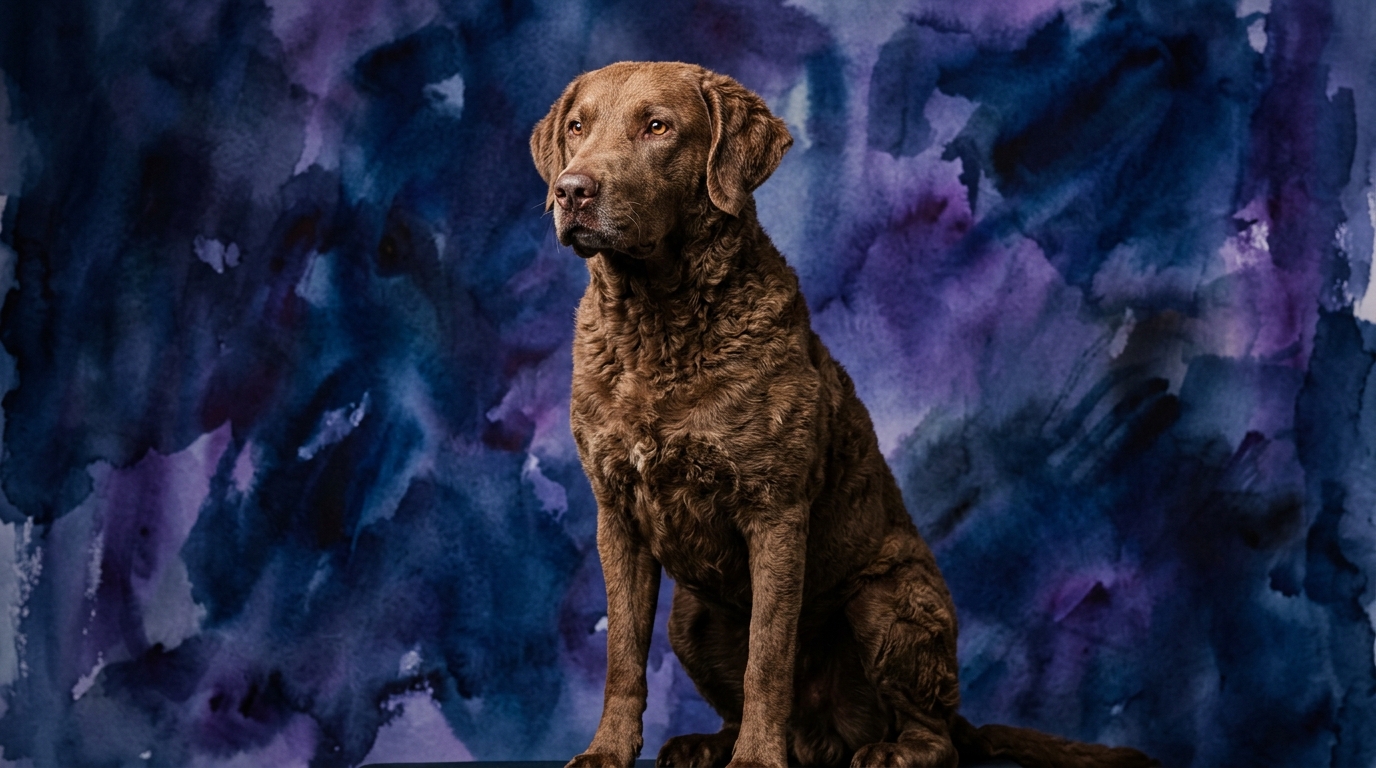
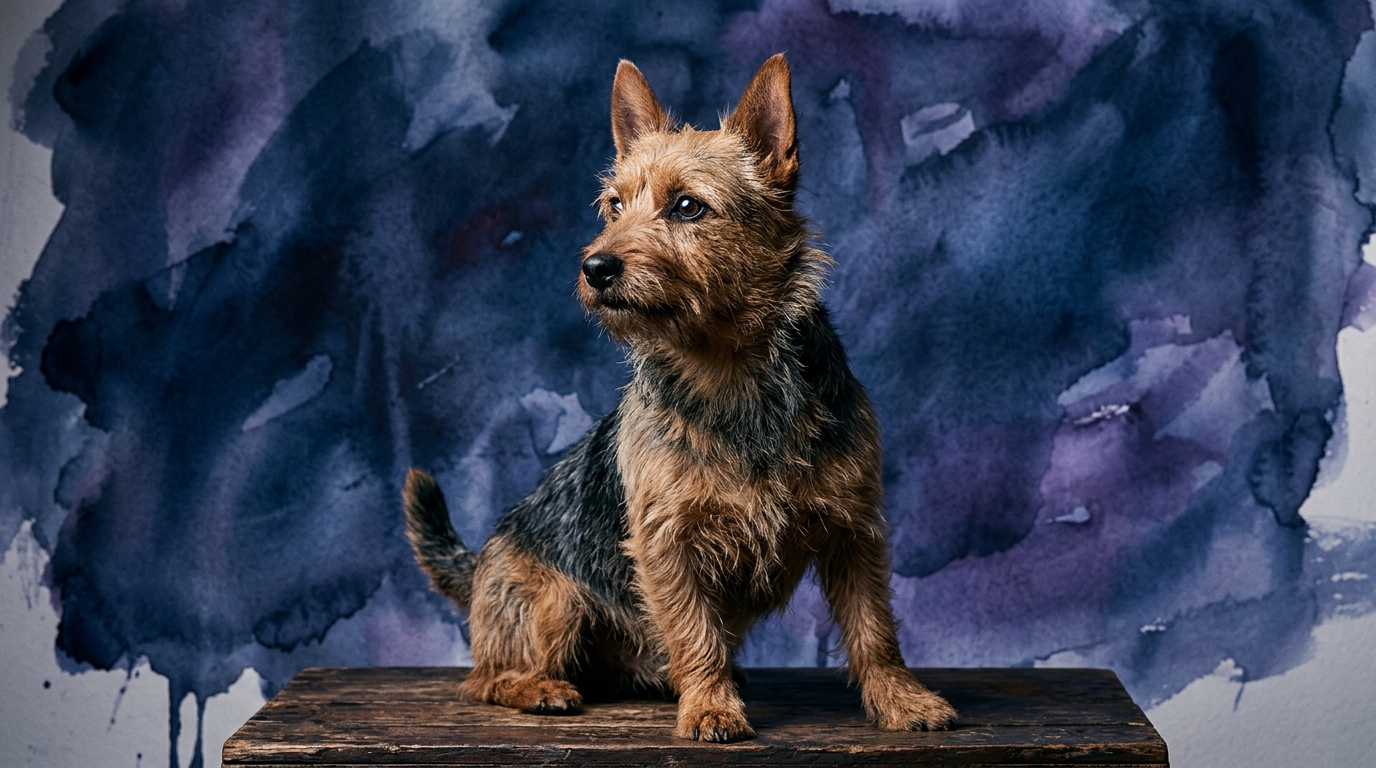
The Cosmic Pet Pet IQ Lab evaluates canine intelligence across five crucial dimensions, offering a nuanced understanding beyond simple 'smart' labels. These dimensions — Problem Solving, Training Speed, Social Intelligence, Instinctive Drive, and Memory — provide a framework for comparing breeds with diverse evolutionary paths and working roles. The Chesapeake Bay Retriever, a robust Sporting Group member, holds a notable Coren rank of #27, indicating a high capacity for learning and obedience, while the Australian Terrier, a plucky Terrier Group dog, is not specifically ranked by Coren, reflecting a different set of cognitive priorities.
The Chesapeake Bay Retriever presents a cognitive profile optimized for complex tasks and retention: Problem Solving 4/5, Training Speed 4/5, Social Intelligence 3/5, Instinctive Drive 3/5, and Memory 4/5. This suggests a dog adept at understanding and navigating challenges, quick to grasp new concepts, and capable of retaining vast amounts of information. Their balanced social intelligence and instinctive drive speak to a cooperative yet self-reliant nature, geared towards their historical role as a dedicated retriever.
In contrast, the Australian Terrier showcases a tenacious and independent intellectual makeup: Problem Solving 3/5, Training Speed 3/5, Social Intelligence 3/5, Instinctive Drive 3/5, and Memory 3/5. While these scores are generally a point lower than the Chessie's in most categories, they reflect a breed that is certainly capable and resourceful, but perhaps less inclined towards human-directed complex problem-solving or rapid, rote memorization. Their scores indicate a breed with a solid foundation in learning and social interaction, driven by instinct but adaptable to companionship.
Where the Chesapeake Bay Retriever Wins Cognitively
The Chesapeake Bay Retriever's superior scores in Problem Solving (4/5) and Memory (4/5) are significant cognitive advantages. This breed excels at understanding multi-step commands, navigating intricate environments to retrieve objects, and remembering routines or specific locations with remarkable accuracy. Their ability to strategize and adapt to new obstacles, such as retrieving a downed bird from challenging terrain, demonstrates a sophisticated level of cognitive flexibility and spatial awareness. This higher memory score means they not only learn quickly but also retain that learning over extended periods, making them exceptionally reliable in their specialized tasks.
Furthermore, the Chessie's Training Speed score of 4/5 is a clear indicator of its mental agility and eagerness to learn from human instruction. This breed processes new commands and concepts rapidly, often requiring fewer repetitions than many other breeds to achieve proficiency. This quick uptake, combined with their strong memory, makes them highly responsive and capable of mastering a wide array of commands and advanced skills, from intricate obedience routines to complex field trials. Their focus and attentiveness during training sessions are hallmarks of their cognitive strength in this area.
Where the Australian Terrier Wins Cognitively
While the Australian Terrier's scores might appear numerically lower, its cognitive strengths are perfectly aligned with its terrier heritage and purpose. Its 3/5 in Problem Solving is not a deficit, but rather reflects a different type of problem-solving—one geared towards independent action and resourcefulness, often in the pursuit of vermin. This breed displays a tenacious, self-reliant intelligence, adept at figuring out how to get what it wants or overcome small obstacles using cunning and persistence, rather than relying solely on human direction. Their cognitive strength lies in their ability to think for themselves, often displaying a cleverness that is both endearing and challenging.
The Australian Terrier's consistent 3/5 across Social Intelligence and Instinctive Drive highlights a balanced cognitive approach for a companion terrier. Their social intelligence allows them to form strong bonds and read human emotions, albeit with a degree of independent thought that prevents them from being overly subservient. Their instinctive drive, also 3/5, is channelled into focused activities like digging or chasing, demonstrating a specific, rather than broad, application of their mental energy. This focused drive requires a distinct type of cognitive engagement, where quick reactions and unwavering determination are paramount, showcasing a different but equally valid form of intelligence.
Which is Easier to Train and Why
Based on their Cosmic Pet Pet IQ Lab scores, the Chesapeake Bay Retriever is unequivocally easier to train. Its 4/5 in Training Speed and 4/5 in Memory mean it grasps new commands quickly and remembers them reliably, even with distractions. This breed typically exhibits a strong desire to cooperate and please its human companions, a trait essential for efficient learning. Their focused attention and ability to process complex sequences make them excellent candidates for advanced obedience, intricate field work, and service roles, where consistent performance and rapid learning are critical. Their cooperative nature means they often seek to understand and execute directions rather than question them.
The Australian Terrier, with its 3/5 in both Training Speed and Memory, presents a more nuanced training experience. While certainly capable of learning, their terrier independence and strong instinctive drive (3/5) mean training requires more patience, consistency, and creative motivation. They may take longer to master commands and might occasionally choose to follow their own nose rather than a directive, especially if something more interesting captures their attention. Their intelligence is channeled into self-directed pursuits, meaning trainers must work to make human-led tasks more engaging and rewarding to maintain their focus against their natural inclination for independent exploration.
Which Suits Active Owners vs. Relaxed Owners
The Chesapeake Bay Retriever is an ideal match for active owners who can meet its substantial mental and physical needs. Its 4/5 in Problem Solving and Instinctive Drive, coupled with its robust physicality, means this breed thrives on engaging activities like hunting, competitive dog sports (agility, obedience, dock diving), long hikes, and even retrieving games in water. Owners who appreciate a dog capable of complex learning and consistent performance will find a rewarding partnership, as the Chessie requires regular, structured outlets for its considerable energy and cognitive capacity to prevent boredom and ensure well-being. A sedentary lifestyle would be detrimental to this breed's mental and physical health.
The Australian Terrier, while possessing the characteristic terrier zest, is better suited for moderately active owners. Its smaller size and cognitive profile (3/5 across the board) mean its activity requirements, while consistent, are less demanding than the Chessie's. Regular walks, interactive play sessions, and opportunities for sniffing and exploring in a secure yard are usually sufficient. They enjoy puzzle toys and short, engaging training sessions that tap into their problem-solving and instinctive drives in a fun, less formal way. While they need mental stimulation to prevent destructive behaviors, it doesn't necessarily need to be in the form of rigorous, human-directed 'work' on the same scale as a retriever.
The Verdict
Choose the Chesapeake Bay Retriever if you are an active individual or family seeking a highly trainable, mentally agile companion for complex tasks, outdoor adventures, and consistent performance in dog sports.
Opt for the Australian Terrier if you seek a spirited, independent, and clever companion for moderate activity, who thrives on engagement and a strong bond, bringing a unique blend of tenacity and affection.
🧠 Find Your Pet's IQ Score
Our Pet IQ Lab assessment covers 25+ tests across 5 cognitive dimensions — personalized to your breed.
Take the Full IQ Test →Frequently Asked Questions
Does the Chesapeake Bay Retriever's high memory score make it easier to house-train?
Yes, a 4/5 memory score significantly aids in house-training. Chesapeake Bay Retrievers quickly learn and remember routines, appropriate elimination spots, and house rules, making the process generally smoother and more consistent than for breeds with lower memory scores.
How does the Australian Terrier's 3/5 instinctive drive manifest in daily life?
The Australian Terrier's 3/5 instinctive drive often manifests as a strong prey drive, leading them to chase small animals or insects, and a propensity for digging. This drive requires appropriate outlets, like supervised play in a secure yard or engaging toys, to prevent unwanted behaviors and keep them mentally stimulated.
Can an Australian Terrier excel in dog sports despite its lower training speed score?
Absolutely. While an Australian Terrier's 3/5 training speed means they might take longer to learn complex sequences, their tenacity and independent problem-solving (3/5) can make them surprisingly effective in sports like agility or earthdog trials. Success hinges on consistent, positive reinforcement and making the training engaging to suit their spirited nature.