
Side-by-side IQ profile
The Chesapeake Bay Retriever, a Sporting group member, displays a cognitive profile built for purpose and partnership. Their Problem Solving is rated at 4/5, indicating a strong capacity to navigate complex situations, whether retrieving game or figuring out new challenges. Training Speed also stands at 4/5, suggesting a quick grasp of commands and routines, often eager to learn when properly motivated. Social Intelligence is a solid 3/5, meaning they are generally attuned to human cues and family dynamics, though perhaps not as overtly expressive as some breeds. Their Instinctive Drive, at 3/5, reflects their strong natural retrieving instincts, which can be channeled effectively. Finally, Memory is rated 4/5, allowing them to retain learned behaviors and recall past experiences with commendable accuracy.
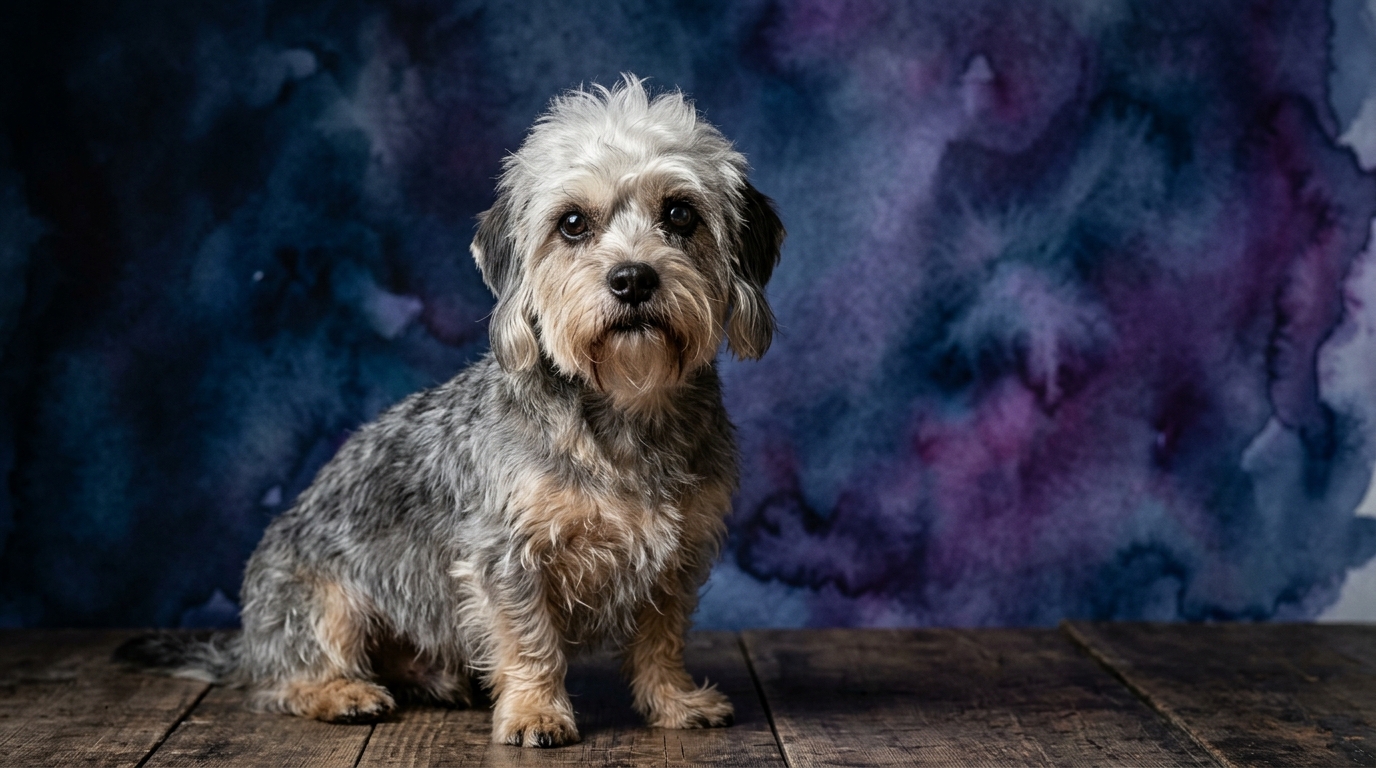
In contrast, the Dandie Dinmont Terrier, a charming member of the Terrier group, presents a different cognitive landscape. With a Problem Solving score of 3/5, they are capable of navigating their environment and overcoming obstacles, often with a clever, independent streak. Their Training Speed is 3/5, meaning they can learn effectively, though their inherent terrier stubbornness might require more consistent and engaging methods. Social Intelligence is 3/5, indicating an ability to form bonds and understand household dynamics, often with a discerning loyalty to their chosen people. An Instinctive Drive of 3/5 highlights their historical role as tenacious vermin hunters, a drive that manifests as curiosity and a desire to explore. Memory is 3/5, enabling them to recall learned behaviors and routines, though perhaps not with the same precision as a Chessie.
Where Chesapeake Bay Retriever wins cognitively
The Chesapeake Bay Retriever clearly edges out the Dandie Dinmont Terrier in several cognitive domains, particularly those involving active partnership and complex task execution. Their superior Problem Solving (4/5) means they are more likely to independently figure out how to retrieve a dropped item from a tricky spot or navigate an agility course with minimal guidance once concepts are grasped. This breed excels at understanding multi-step commands and adapting to changing environmental conditions during tasks, a direct reflection of their working dog heritage. Furthermore, their higher Training Speed (4/5) implies a faster acquisition of new skills and commands, translating to fewer repetitions needed during training sessions. This cognitive advantage makes them highly receptive to advanced obedience, field work, and competitive dog sports where rapid learning and execution are paramount. Their 4/5 Memory also contributes significantly, allowing them to retain vast repertoires of commands and experiences, making their learned behaviors more reliable over time and across different contexts.
Where Dandie Dinmont Terrier wins cognitively
While the Dandie Dinmont Terrier may not boast the same scores in speed and complex problem-solving as the Chessie, their cognitive strengths lie in a different, equally valuable arena: tenacity and independent thought, characteristic of the terrier group. Their 3/5 Problem Solving, combined with a robust Instinctive Drive (3/5), means they are exceptionally adept at tasks requiring persistence and a singular focus, such as tracking a scent or methodically investigating a perceived disturbance. They possess a self-reliant intelligence, often preferring to tackle a challenge on their own terms rather than waiting for human direction. This manifests as cleverness in navigating their immediate environment, finding ways to access interesting spots, or outsmarting small prey. Their social intelligence, also 3/5, is often expressed through a discerning loyalty and a keen ability to read the emotional states of their close family members, making them surprisingly empathetic companions, despite their sometimes-independent demeanor. Their strengths are less about rapid execution of complex human-directed tasks and more about resourceful, self-motivated exploration and determination.
Which is easier to train and why
Comparing the ease of training between these two breeds reveals distinct approaches required from the handler. The Chesapeake Bay Retriever, with its 4/5 Training Speed and 4/5 Memory, is generally considered easier to train for obedience and complex tasks. Their strong desire to work alongside their human and their capacity for quick learning mean they typically pick up commands with fewer repetitions. They thrive on positive reinforcement and clear, consistent instruction, often displaying an eagerness to please that streamlines the training process. Their higher problem-solving aptitude also allows them to generalize learned behaviors to new situations more readily. In contrast, the Dandie Dinmont Terrier, with 3/5 ratings across Problem Solving, Training Speed, and Memory, requires a different training philosophy. While capable of learning, their inherent terrier independence and self-directed nature mean they might not always see the immediate benefit of complying with a command. Training a Dandie often involves more patience, creativity, and the ability to make learning feel like a fun game rather than a chore. Their strong instinctive drive means they can be easily distracted by scents or sounds, necessitating a focus on engagement and making training highly rewarding to counteract their independent spirit. They learn best when sessions are short, varied, and end on a high note, preventing boredom or stubbornness from setting in.
Which suits active owners vs relaxed owners
The cognitive profiles of these breeds strongly influence their suitability for different owner lifestyles. The Chesapeake Bay Retriever, with its high problem-solving ability, rapid training speed, and robust memory, thrives with active owners who can provide consistent mental and physical engagement. They excel in environments where they have a 'job' to do, whether it's retrieving, participating in dog sports like agility or obedience, or accompanying owners on long hikes and swims. Their cognitive capacity means they can become bored and potentially destructive if not adequately challenged, making them a better fit for individuals or families committed to an active, structured routine. Conversely, the Dandie Dinmont Terrier, while certainly enjoying activity, can adapt more readily to a somewhat more relaxed pace, provided their innate curiosity and desire for exploration are met. Their independent streak and moderate instinctive drive mean they appreciate regular walks and opportunities to investigate their surroundings, but they don't typically demand the same intensity or duration of structured work as a Chessie. They are well-suited for owners who appreciate a dog with a unique personality, enjoy engaging in shorter bursts of play and training, and can provide a comfortable home environment with ample mental stimulation through toys and supervised garden access, rather than constant, high-octane physical exertion.
The Verdict
Choose the Chesapeake Bay Retriever if you are an experienced, active owner seeking a highly trainable, enthusiastic partner for outdoor adventures, dog sports, or a working role.
Choose the Dandie Dinmont Terrier if you appreciate a charming, independent companion with a spirited personality, capable of learning but requiring a patient, engaging training approach, and suited to a moderately active household.
🧠 Find Your Pet's IQ Score
Our Pet IQ Lab assessment covers 25+ tests across 5 cognitive dimensions — personalized to your breed.
Take the Full IQ Test →Frequently Asked Questions
Do Chesapeake Bay Retrievers need a lot of mental stimulation?
Yes, with their 4/5 problem-solving and memory scores, Chesapeake Bay Retrievers require significant mental engagement to prevent boredom. Activities like puzzle toys, obedience training, and learning new tricks are crucial for their cognitive well-being.
Is a Dandie Dinmont Terrier good for first-time dog owners?
A Dandie Dinmont Terrier can be suitable for a first-time owner who is prepared for their independent terrier nature. While they are affectionate, their 3/5 training speed and instinctive drive mean consistency and positive, engaging methods are vital for successful training.
How do their instinctive drives differ in daily life?
The Chessie's 3/5 instinctive drive often manifests as a strong desire to retrieve and work alongside humans, making them prone to carrying objects or enjoying water. The Dandie's 3/5 instinctive drive, stemming from hunting, typically appears as curiosity, a keen interest in scents, and a confident, sometimes tenacious, exploration of their environment.