Side-by-Side IQ Profile: Sporting vs. Working Mindsets
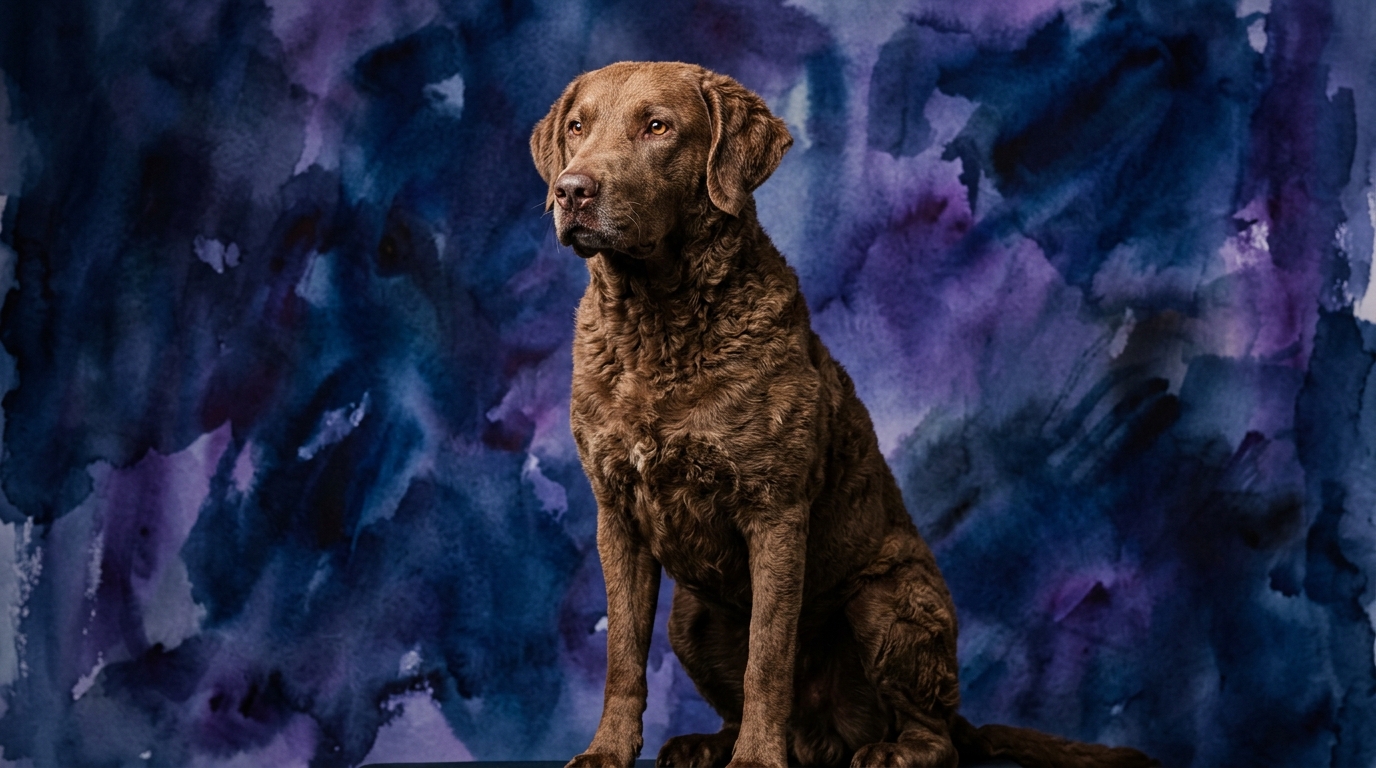
The Cosmic Pet Pet IQ Lab employs a five-dimensional framework to assess canine intelligence, offering a nuanced view beyond simplistic 'smart' labels. For the Chesapeake Bay Retriever, a Sporting group member, its profile reveals a compelling blend of mental agility and focus. Its Problem Solving ability scores a strong 4 out of 5, indicating a capacity for navigating complex situations and devising solutions to obstacles. Training Speed also registers at 4 out of 5, suggesting a quick uptake of new commands and routines. Social Intelligence, representing its ability to interpret and respond to human and other animal cues, stands at 3 out of 5, a solid but not exceptional score. Instinctive Drive, crucial for its retrieving heritage, is rated 3 out of 5, reflecting a purposeful, task-oriented nature. Finally, Memory, vital for retaining complex sequences and learned behaviors, achieves an impressive 4 out of 5.
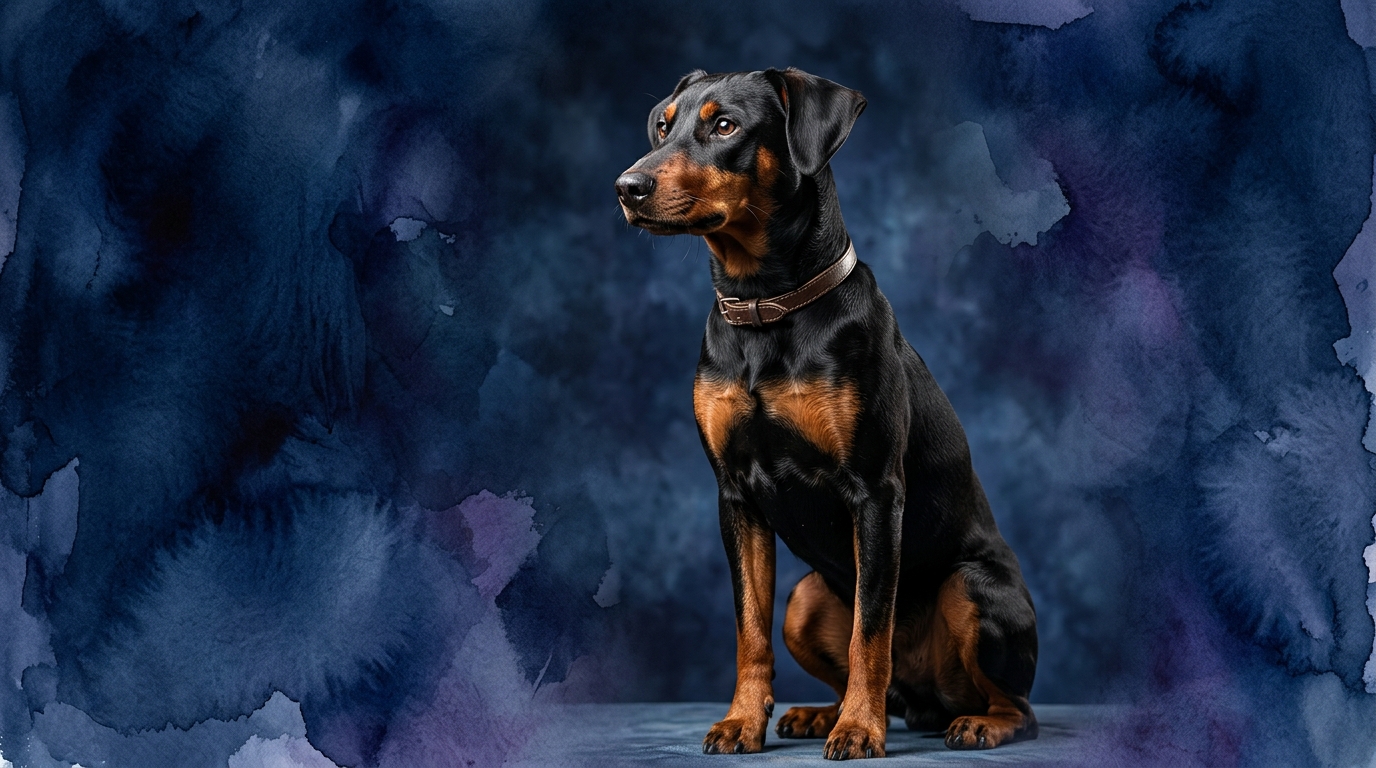
In contrast, the German Pinscher, a vigilant member of the Working group, presents a consistent and balanced cognitive profile. Its Problem Solving capability is rated 3 out of 5, indicating a practical, direct approach to challenges without necessarily seeking intricate solutions. Training Speed aligns at 3 out of 5, suggesting a steady learning pace that benefits from clear, consistent instruction. Social Intelligence also comes in at 3 out of 5, reflecting a competent understanding of social dynamics, though perhaps with a more independent interpretation. Instinctive Drive, in line with its guarding and vermin control history, is 3 out of 5, indicating a focused, innate purpose. Memory, essential for maintaining learned behaviors and vigilance, also scores 3 out of 5. While the German Pinscher does not appear in Stanley Coren's ranking, its balanced scores paint a picture of a capable, reliable, and consistent canine mind.
Where the Chesapeake Bay Retriever Excels Cognitively
The Chesapeake Bay Retriever distinctly outpaces the German Pinscher in areas demanding higher cognitive processing and retention. With a Problem Solving score of 4/5, the Chessie demonstrates a superior ability to figure out novel tasks, adapt to changing environments, and overcome physical or mental hurdles independently. This translates into a dog that can more readily learn complex retrieve patterns, navigate challenging terrain to find game, or even manipulate latches and puzzles. Its 4/5 in Training Speed means it grasps new commands, tricks, or multi-step tasks with remarkable efficiency, often requiring fewer repetitions than many other breeds. This rapid acquisition is invaluable for advanced obedience, competitive dog sports, or specialized working roles.
Furthermore, the Chesapeake Bay Retriever's Memory at 4/5 ensures that once a lesson is learned or a routine established, it is retained with remarkable fidelity. This isn't just about remembering basic commands; it extends to recalling intricate scent trails, the locations of fallen birds, or complex sequences of actions. This robust memory, coupled with its problem-solving prowess, allows a Chessie to build a vast repertoire of learned behaviors and apply them intelligently, making it an exceptionally capable partner in demanding scenarios where precision and recall are paramount.
Where the German Pinscher’s Cognitive Profile Shines Uniquely
While the German Pinscher's individual scores of 3/5 don't surpass the Chesapeake Bay Retriever's higher marks, its cognitive profile shines through its remarkable consistency and practicality, perfectly aligning with its historical working roles. Its balanced Problem Solving (3/5), Training Speed (3/5), and Memory (3/5) suggest a dog that is reliably capable without being overly prone to independent, complex reasoning that might deviate from an owner's directive. This consistent cognitive output means a German Pinscher is less likely to overthink or attempt to outmaneuver its handler, favoring a direct and efficient approach to tasks.
The German Pinscher's cognitive strength lies in its steadfast application of its intelligence. Its 3/5 Instinctive Drive, combined with its consistent learning and memory, fosters a dog that is perpetually aware and vigilant, making it an excellent watchdog and protector. It processes information sufficiently to perform its duties reliably, absorbing commands at a steady pace and retaining them consistently. This breed's intelligence is geared towards purposeful action and dependable execution within a structured environment, making it an ideal companion for owners who value a clear-headed, consistent, and less overtly complex thinking partner.
Training Dynamics: Which Breed Learns More Readily?
When it comes to ease of training, the Chesapeake Bay Retriever holds a distinct advantage due to its higher scores in Training Speed (4/5), Problem Solving (4/5), and Memory (4/5). A Chessie will typically grasp new commands and complex tasks more quickly, requiring fewer repetitions to solidify learning. Their strong problem-solving ability often means they can generalize learned behaviors to new situations with less direct instruction, and their superior memory ensures these lessons are retained for the long term. This makes them highly responsive to advanced obedience, intricate scent work, or multi-stage tasks, often showing an eagerness to engage and figure things out alongside their handler. However, their drive means training needs to be engaging to prevent them from becoming bored.
The German Pinscher, with its consistent 3/5 scores across Problem Solving, Training Speed, and Memory, requires a different approach. While certainly capable of learning, their pace will be steadier, necessitating more consistent repetition and clear, unambiguous instructions. They may not independently 'figure out' solutions as readily as a Chessie, relying more on direct guidance. Their inherent independence and vigilant nature, while excellent for guarding, can sometimes translate into a 'what's in it for me?' attitude during training. Owners will find success with positive reinforcement, short, engaging sessions, and a firm, fair hand that respects their direct cognitive style. While they might not be as quick to pick up every nuance, what they learn, they tend to retain reliably, making them a consistent if not lightning-fast learner.
Matching Cognitive Profiles to Owner Lifestyles
For active owners seeking a deeply engaged and mentally stimulating partnership, the Chesapeake Bay Retriever is an ideal match. Its 4/5 scores in Problem Solving, Training Speed, and Memory mean this breed thrives on challenges that exercise both body and mind. Owners who enjoy competitive dog sports like obedience, agility, field trials, or even search and rescue will find a Chessie to be an enthusiastic and capable participant. Their desire to work and solve problems means they need more than just physical exercise; they require consistent mental puzzles and learning opportunities to prevent boredom and channel their considerable cognitive energy productively. A relaxed owner might find a Chessie's intense need for mental engagement overwhelming, potentially leading to undesired behaviors if not adequately stimulated.
The German Pinscher, with its balanced 3/5 cognitive profile, suits active owners who appreciate a dog with a clear purpose and a consistent, no-nonsense approach to life. While they need regular physical activity, their mental stimulation requirements are often more about consistency and vigilance than complex, multi-layered problem-solving. Owners who enjoy structured routines, consistent training, and a dog that is alert and protective will find the German Pinscher a rewarding companion. They excel in roles where their balanced intelligence supports their instinctive drive for guarding and companionship, making them suitable for active households that can provide clear leadership and consistent engagement. A relaxed owner who cannot provide this structure and activity might find the German Pinscher's self-possessed nature and vigilance challenging to manage, as they thrive on having a 'job' and clear boundaries.
The Verdict
Choose the Chesapeake Bay Retriever if you are an active owner prepared to provide extensive mental challenges and thrive on a highly interactive, problem-solving canine partnership.
Opt for the German Pinscher if you value a consistent, vigilant, and direct-thinking companion who excels with clear structure, purpose, and steady engagement rather than intricate mental games.
🧠 Find Your Pet's IQ Score
Our Pet IQ Lab assessment covers 25+ tests across 5 cognitive dimensions — personalized to your breed.
Take the Full IQ Test →Frequently Asked Questions
Is the Chesapeake Bay Retriever good for first-time dog owners?
The Chesapeake Bay Retriever's high problem-solving and training speed, coupled with its strong drive, means it requires consistent, experienced handling and extensive mental stimulation. First-time owners might find their intensity and need for engagement challenging without proper guidance and commitment to training.
Do German Pinschers require a lot of exercise?
Yes, German Pinschers are an active working breed that requires a good amount of daily exercise to stay physically and mentally healthy. This includes brisk walks, playtime, and opportunities to engage their vigilant nature, though their needs are often more about consistent activity than extreme endurance.
How do these breeds interact with children and other pets?
Chesapeake Bay Retrievers, with their 3/5 social intelligence, can be good with children and other pets if properly socialized from a young age, often viewing them as part of their 'pack.' German Pinschers, also at 3/5 social intelligence, are generally tolerant but often prefer older, respectful children and may have a stronger prey drive towards smaller pets if not introduced carefully and consistently.