Side-by-Side Cognitive Profile
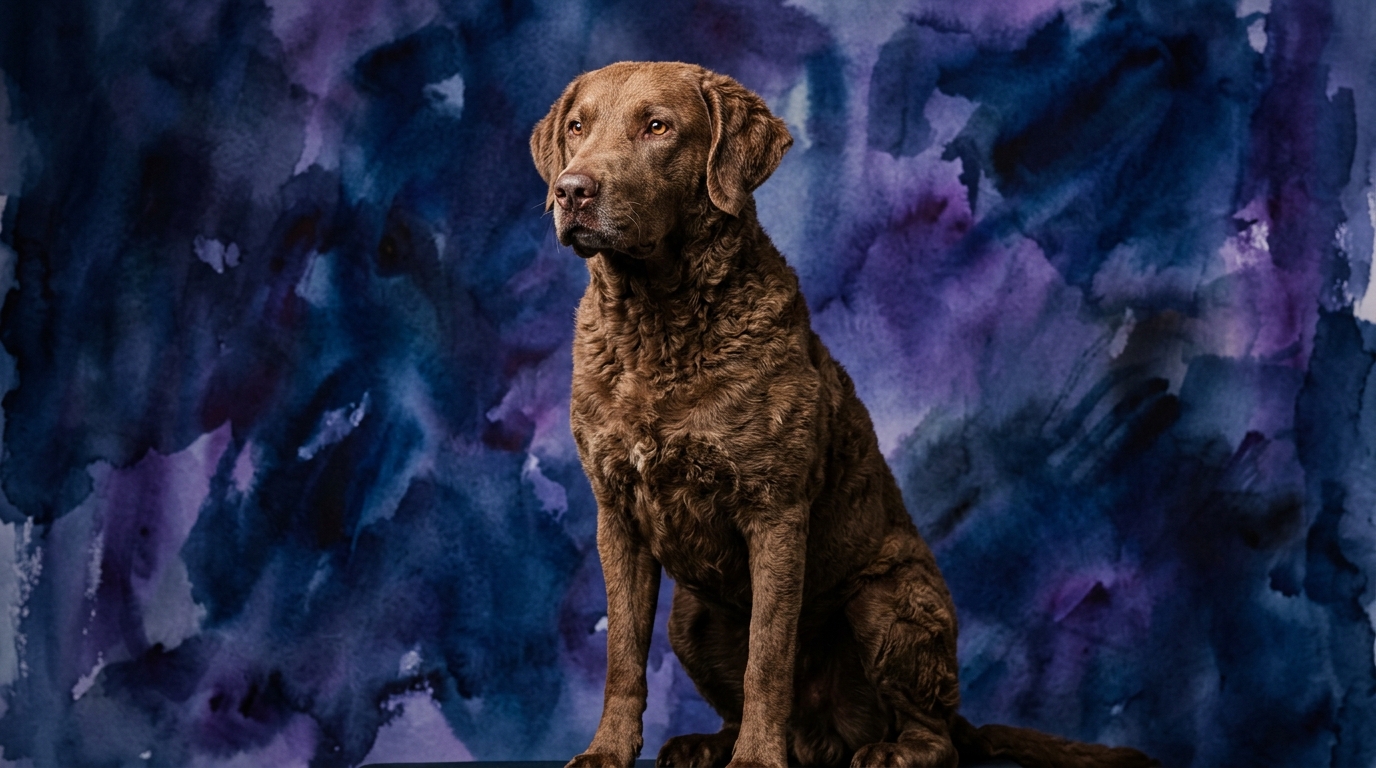
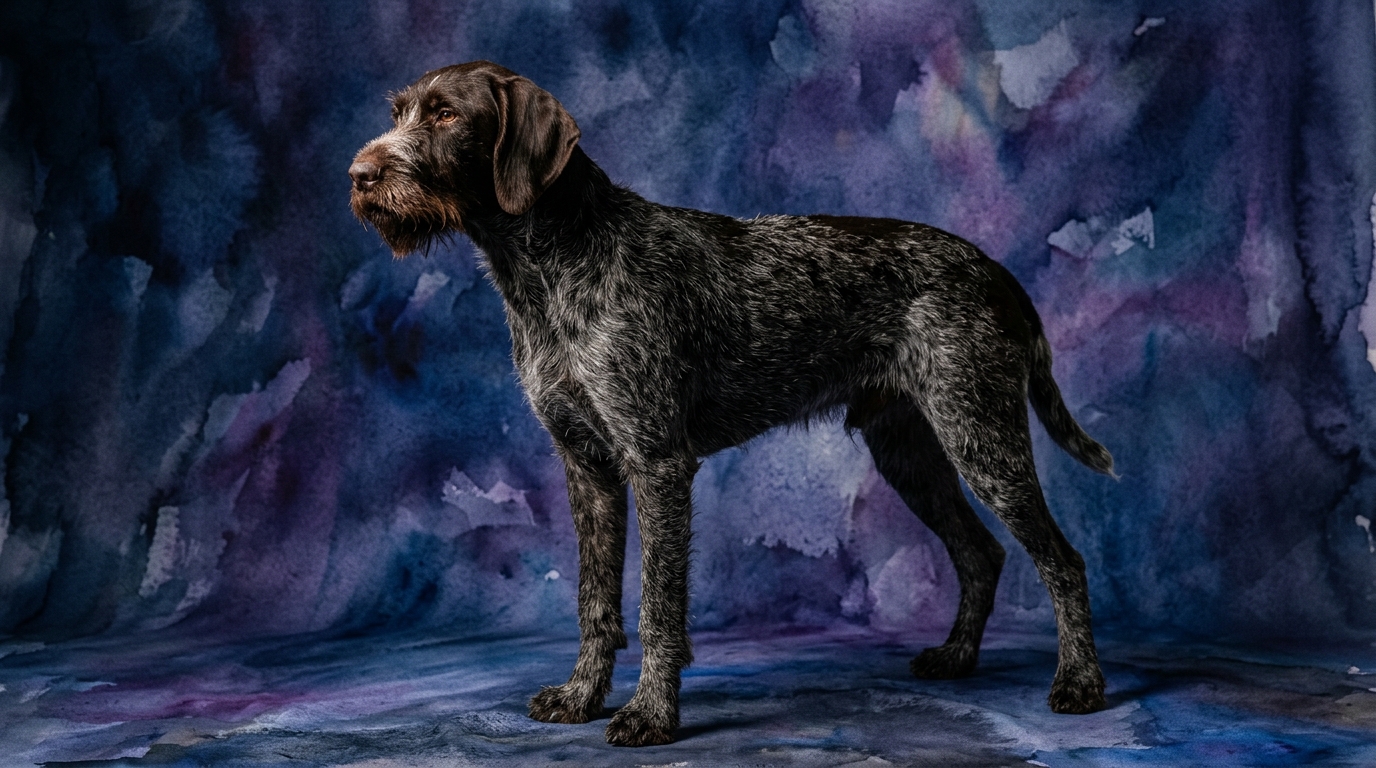
Delving into The Cosmic Pet Pet IQ Lab data reveals a striking similarity in the core cognitive abilities of both the Chesapeake Bay Retriever (CBR) and the German Wirehaired Pointer (GWP). Each breed scores identically across five critical dimensions, yet their historical roles dictate how these abilities are uniquely expressed.
For Problem Solving, both breeds earn a 4/5. The CBR often applies this by independently navigating complex retrieving scenarios in challenging environments, relying on self-sufficiency to achieve a goal. The GWP, conversely, uses its problem-solving to adapt quickly to diverse hunting situations, often working in close, cooperative partnership with a handler across varied terrains and game types.
Training Speed is also a match at 4/5. CBRs absorb new commands quickly, but their independent nature means consistent, engaging methods are crucial to ensure compliance. GWPs likewise learn rapidly, often driven by an eagerness to please, which makes them highly receptive to a broad spectrum of commands essential for their versatile field work.
Social Intelligence stands at 3/5 for both. CBRs tend to be reserved with strangers, forming deep, loyal bonds with their immediate family, and their social interactions are typically purposeful or within their trusted circle. GWPs are generally more outgoing than the Chessie, yet maintain a focused demeanor, especially when engaged in tasks, exhibiting a practical social intelligence that facilitates effective teamwork with a human partner.
Their Instinctive Drive is rated 3/5. The CBR possesses an intense, highly specialized drive for water retrieving, showcasing exceptional endurance and grit in harsh conditions like icy water. The GWP exhibits a strong, versatile hunting drive, adept at pointing, retrieving, and tracking across land and water, demonstrating a broader application of its natural instincts.
Finally, Memory scores 4/5 for both. CBRs demonstrate excellent retention for complex retrieve patterns, marking multiple falls, and navigating familiar territories, which is vital for their independent work in demanding conditions. GWPs also show strong memory for commands, scent trails, and learned routines, crucial for their multi-faceted roles that require recalling various tasks and signals in the field.
Where the Chesapeake Bay Retriever Excels Cognitively
The Chesapeake Bay Retriever's cognitive strengths truly shine in scenarios demanding independent thought and unwavering resolve. While both breeds score 4/5 in Problem Solving, the Chessie often applies this ability with a distinct self-reliance. For instance, when faced with a complex retrieve across challenging terrain or through dense cover, a Chessie might independently devise a route, leveraging their spatial memory (4/5) and inherent tenacity to complete the task without constant handler guidance. Their exceptional memory allows them to recall multiple fall locations of game, even after significant time or distraction, a critical advantage in waterfowl hunting.
This breed's instinctive drive (3/5), though numerically similar to the GWP, manifests as an almost singular focus on retrieving, allowing them to block out distractions and persist through discomfort, turning a challenge into a solved puzzle. Their resilience, which can sometimes be interpreted as stubbornness in training, is a profound cognitive asset in environments where the dog must make decisions autonomously to succeed.
Where the German Wirehaired Pointer Excels Cognitively
Conversely, the German Wirehaired Pointer's cognitive edge emerges in their remarkable versatility and their eager partnership with a handler. While sharing a 4/5 Problem Solving score, the GWP often applies this skill in a more adaptive, multi-tasking fashion. They excel at quickly transitioning between pointing, flushing, and retrieving across varied landscapes, demonstrating a flexible cognitive approach to different challenges within a single hunt.
Their 4/5 Training Speed, combined with a generally more cooperative social intelligence (3/5, but expressed as handler-focused), means they readily absorb and apply a wide array of commands essential for their diverse roles. A GWP's memory (4/5) is not just for marking falls but for remembering complex sequences of commands and handler signals, allowing for sophisticated team-based problem-solving in the field. This breed's instinctive drive (3/5) is broadly applied, enabling them to process and act upon multiple sensory inputs simultaneously – tracking scent, responding to handler whistles, and marking game – showcasing a dynamic cognitive processing superior for varied hunting demands.
Training Dynamics: Chesapeake Bay Retriever vs. German Wirehaired Pointer
Assessing which breed is 'easier' to train requires understanding their distinct cognitive approaches. Both the Chesapeake Bay Retriever and the German Wirehaired Pointer boast an impressive 4/5 in Training Speed, indicating they absorb new information rapidly. However, the *application* of this speed differs significantly based on their inherent dispositions.
The GWP, with its inherently more cooperative nature and desire to work closely with its handler, often presents as more biddable. Their versatility demands a willingness to learn many tasks, and they typically respond with an eager-to-please attitude, making initial training stages and complex command sequences flow smoothly. Their problem-solving often involves looking to the handler for cues, which streamlines the training process.
The Chessie, while learning just as quickly, often approaches training with a more independent mindset. Their problem-solving might involve trying to figure things out on their own before consulting the handler, which can be interpreted as stubbornness. Effective Chessie training requires immense patience, consistency, and creative methods to engage their independent spirit and leverage their strong memory, rather than simply dictating commands. While both learn fast, the GWP's inherent responsiveness generally makes the training journey feel more straightforward for many owners.
Owner Suitability: Active vs. Engaged
Both the Chesapeake Bay Retriever and the German Wirehaired Pointer are purpose-bred sporting dogs, meaning neither is truly suited for a 'relaxed' or sedentary lifestyle. They both possess a 3/5 instinctive drive that demands an outlet. However, the *type* of activity and owner engagement differs, making them suitable for different active lifestyles.
The GWP thrives with owners who can provide consistent, varied activities that tap into their versatile hunting instincts. They excel in dog sports like agility, obedience, and especially hunt tests, where their cooperative nature and quick training speed can be fully utilized. An active owner who enjoys structured outdoor pursuits and values a canine partner eager to participate will find the GWP an excellent match for their engaged lifestyle.
The Chessie also requires significant physical and mental exercise, but their independent problem-solving and deep-seated retrieving drive often mean they excel in activities that allow for more self-directed work, such as long retrieves, swimming, or even scent work where they can focus intently on a task. An active owner who appreciates a dog with a strong, self-reliant character, and is prepared to engage that mind through challenging, purpose-driven activities, will find the Chessie profoundly rewarding. Neither breed is content with mere backyard access; both require daily, vigorous engagement to prevent boredom and channel their considerable cognitive energies constructively.
The Verdict
Choose the Chesapeake Bay Retriever if you value an independent, resilient partner for challenging outdoor pursuits, especially water-centric activities, and are prepared to engage their self-reliant problem-solving with consistent, creative training. Their deep loyalty is reserved for those who earn it through mutual respect.
Opt for the German Wirehaired Pointer if you seek a versatile, biddable, and eager-to-please companion for a wide range of outdoor adventures and dog sports, valuing a cooperative partner who thrives on varied tasks and handler interaction. They adapt readily to diverse activities with enthusiasm.
🧠 Find Your Pet's IQ Score
Our Pet IQ Lab assessment covers 25+ tests across 5 cognitive dimensions — personalized to your breed.
Take the Full IQ Test →Frequently Asked Questions
Do Chesapeake Bay Retrievers and German Wirehaired Pointers have similar energy levels?
Yes, both breeds are high-energy sporting dogs requiring significant daily exercise and mental stimulation. Their instinctive drives, rated 3/5, mean they are not suited for sedentary lifestyles and need active engagement to prevent boredom and destructive behaviors. They thrive when given a job or consistent, vigorous activity.
Which breed is generally better with children and other pets?
Both breeds, with their 3/5 social intelligence, can be good family dogs, but their approaches differ. Chessies tend to be more reserved and require careful socialization, often forming strong bonds with their immediate family. GWPs are generally more outgoing and adaptable, often integrating well into active family dynamics, though both require proper introductions and supervision with children and other pets, especially given their strong prey drives.
Are there significant health differences between the two breeds that might influence owner choice?
While specific health concerns vary, both breeds are generally robust. Chessies can be prone to hip and elbow dysplasia, progressive retinal atrophy, and sometimes bloat. GWPs share concerns like hip dysplasia and eye conditions, but also genetic issues like von Willebrand's disease. Prospective owners should research breed-specific health screenings and choose reputable breeders to ensure a healthy companion.