Side-by-Side Cognitive Profile
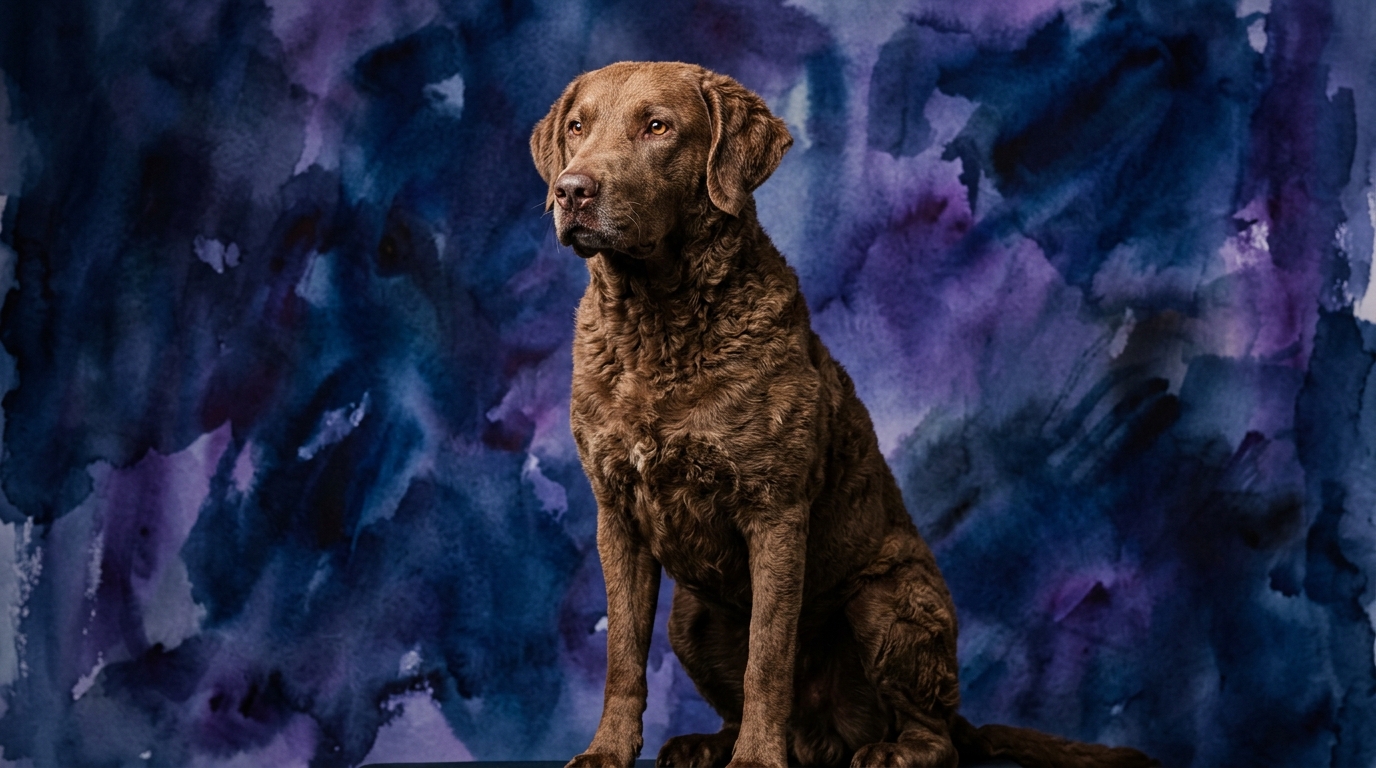
The Chesapeake Bay Retriever, or Chessie, stands at Coren rank #27, a testament to its cognitive prowess. Its Problem Solving is rated at 4/5, indicating a strong capacity for independent thought and navigating complex situations. Training Speed also sits at 4/5, suggesting a quick grasp of new commands and concepts. Social Intelligence is 3/5, meaning it forms moderate bonds and understands social cues, while its Instinctive Drive is 3/5, reflecting a balanced but present urge for its retrieving heritage. Memory, crucial for retaining learned behaviors and experiences, is a robust 4/5.
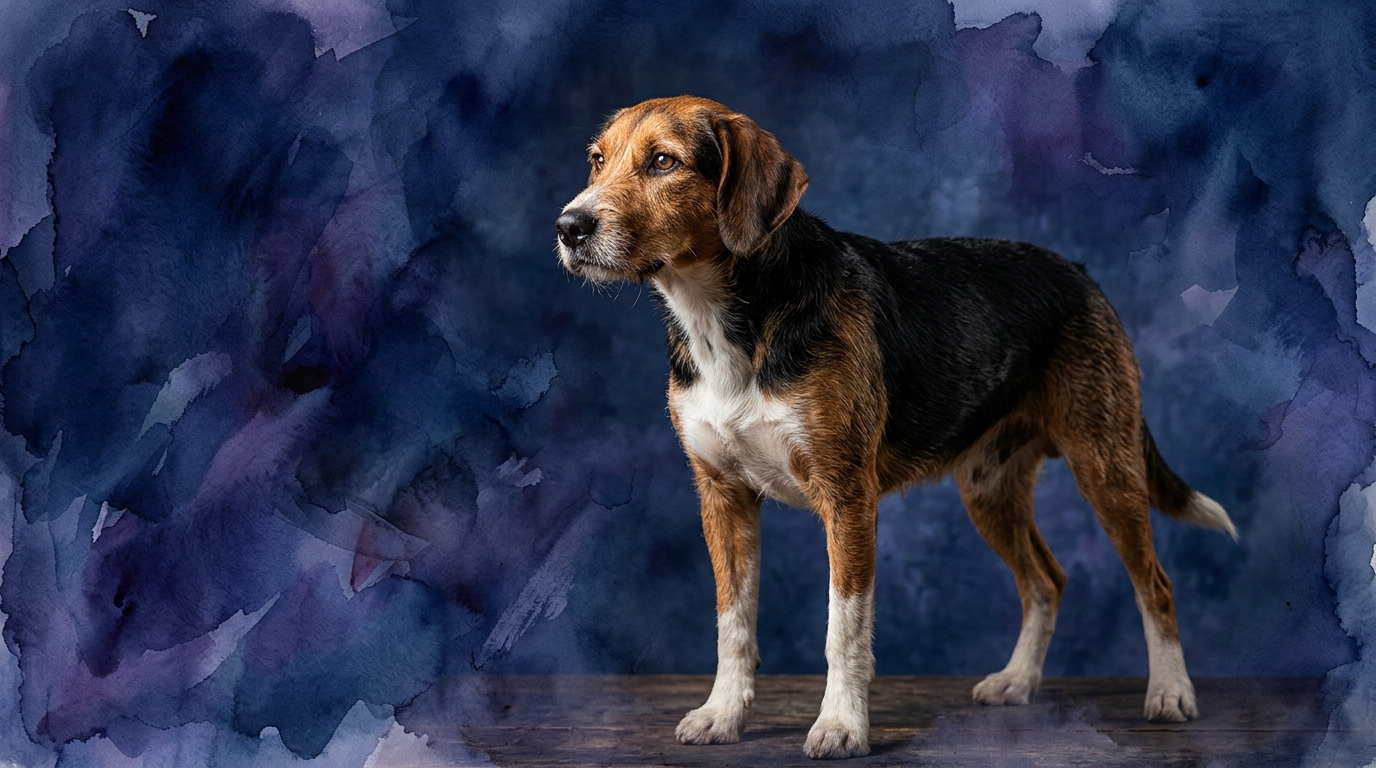
The Harrier, a member of the Hound group, is not Coren-ranked, yet possesses a distinct cognitive makeup tailored to its hunting role. Its Problem Solving is 3/5, indicating an average ability to navigate novel challenges. Training Speed is also 3/5, meaning it learns at a steady, consistent pace rather than rapid acquisition. Social Intelligence is 3/5, similar to the Chessie, suggesting moderate social engagement. Instinctive Drive is 3/5, reflecting its strong, inherent drive for scent work and tracking. Memory is rated at 3/5, indicating a standard capacity for retaining information and experiences.
Where the Chesapeake Bay Retriever Excels Cognitively
The Chesapeake Bay Retriever's cognitive profile showcases several areas where it demonstrates a clear advantage. Its superior Problem Solving ability (4/5) means a Chessie is adept at figuring out solutions to environmental puzzles or adapting to new task parameters without constant human intervention. This makes them particularly effective in complex working scenarios, such as navigating varied terrain to retrieve game or excelling in advanced obedience and utility trials where independent decision-making is valued. They aren't just following commands; they are often processing the situation and choosing the most efficient path to success.
Furthermore, the Chessie's elevated Training Speed (4/5) and Memory (4/5) work in tandem, allowing them to acquire and retain a wide array of commands and behaviors with remarkable efficiency. This cognitive synergy enables them to build a vast repertoire of skills and consistently apply them, even after periods of inactivity. Owners often observe a Chessie recalling intricate sequences or retrieving specific items from memory, showcasing a depth of understanding that goes beyond simple rote learning. This combination of strong problem-solving, rapid learning, and enduring memory makes the Chessie a formidable partner for intricate tasks and dog sports.
Where the Harrier's Cognitive Strengths Shine
While the Harrier's numerical scores in problem solving, training speed, and memory are consistently 3/5, its cognitive strengths are best understood through the lens of its specialized purpose: persistent scent trailing. Its Instinctive Drive, also rated at 3/5, is profoundly channeled into an unwavering focus on scent. This isn't necessarily about complex problem-solving in the abstract sense, but rather a highly specialized form of cognitive dedication where the 'problem' is a lost scent trail and the 'solution' is relentlessly following it, often over long distances and challenging terrains.
The Harrier's social intelligence (3/5), while numerically matching the Chessie's, is distinctly expressed within a pack dynamic. Harriers historically operate in groups, and their social cognition is geared towards cooperative hunting and communication within the pack structure. This means their 'intelligence' often manifests in their ability to work seamlessly with other hounds and human hunters, contributing to a collective effort rather than individual, independent task completion. Their steady memory and training speed, combined with this specific instinctive drive, allow them to reliably perform their scent-tracking duties with an endurance and tenacity that defines their unique cognitive niche.
Which is Easier to Train and Why
When evaluating ease of training, the Chesapeake Bay Retriever generally presents a more straightforward path for owners seeking a highly compliant and versatile companion. Its Training Speed of 4/5 indicates a quicker uptake of new commands and concepts, meaning fewer repetitions are often required before a behavior is learned. Coupled with a strong Memory (4/5) and Problem Solving ability (4/5), Chessies are not only quick to learn but also adept at understanding the 'why' behind commands, allowing for greater generalization of learned behaviors across different environments and situations. This cognitive framework makes them highly responsive to consistent, positive reinforcement training methods, eager to engage in structured learning sessions.
The Harrier, with its Training Speed and Memory both at 3/5, requires a more patient and consistent training approach. While perfectly capable of learning, their progress may be steadier rather than rapid. The Harrier's strong Instinctive Drive (3/5), primarily focused on scent, can be a significant factor in training; once a compelling scent is detected, their focus can become singularly directed, potentially overriding previously learned commands. Effective training for a Harrier often involves harnessing this drive, integrating scent work into their learning, and employing high-value rewards to maintain their attention. Owners must understand that their cognitive wiring prioritizes following a trail, which requires dedicated effort to consistently redirect their focus to human-initiated tasks.
Which Suits Active Owners vs. Relaxed Owners
Neither the Chesapeake Bay Retriever nor the Harrier are breeds suited for truly relaxed or sedentary owners; both require significant engagement, albeit with different nuances. The Chessie, with its high problem-solving capacity and vigorous retrieving drive, thrives with owners who can provide consistent mental stimulation alongside physical exercise. These dogs excel in structured activities like obedience, agility, dock diving, or field trials, and require an owner who enjoys teaching complex tasks and engaging in active, purpose-driven outings. An owner who appreciates a thinking partner for outdoor adventures would find a Chessie highly rewarding, but one expecting a couch potato will be met with a bored and potentially destructive companion.
The Harrier, while also an active breed, demands a different kind of owner engagement. Its primary need is for outlets for its powerful scent-driven instincts and endurance. Owners who enjoy long hikes, trail running, or engaging in scent work activities like tracking or nose work will find a Harrier a fantastic partner. While they might not require the same level of intricate task-learning as a Chessie, their physical stamina and need to follow their nose mean they are not content with short walks. A Harrier owner must be prepared for consistent, often lengthy, outdoor excursions that allow the dog to explore and utilize its natural abilities. For owners who prefer a less structured, more exploratory form of activity with their canine, the Harrier’s cognitive drive for discovery through scent is a perfect match.
The Verdict
Opt for a Chesapeake Bay Retriever if you seek a highly trainable, problem-solving companion eager to master complex tasks and excel in dog sports or working roles, thriving on structured mental and physical challenges.
Choose a Harrier if you appreciate a persistent, scent-driven partner for extensive outdoor adventures, valuing its endurance and unwavering focus on discovery through smell, even if it requires more patience in formal training.
🧠 Find Your Pet's IQ Score
Our Pet IQ Lab assessment covers 25+ tests across 5 cognitive dimensions — personalized to your breed.
Take the Full IQ Test →Frequently Asked Questions
Do Chesapeake Bay Retrievers make good family pets?
Chesapeake Bay Retrievers can be devoted family members, particularly with active households experienced with strong-willed, intelligent breeds. Their social intelligence of 3/5 means they form good bonds, but they benefit from early socialization and consistent training to integrate well into family life and interact appropriately with children and other pets.
Are Harriers good off-leash dogs?
Harriers possess a formidable instinctive drive for scent, rated at 3/5, which means they are highly prone to following a compelling scent trail once detected. While they can be trained for off-leash reliability, their strong natural inclination makes secure fencing and consistent recall training absolutely essential. Owners should exercise extreme caution in unfenced areas.
How much exercise does a Chesapeake Bay Retriever need?
Given their robust physical build and cognitive capacity for problem-solving and training speed, Chesapeake Bay Retrievers require substantial daily exercise, typically 60-90 minutes of vigorous activity. This should include both physical exertion, like retrieving or swimming, and mental stimulation through training or puzzle toys, to keep their intelligent minds engaged and prevent boredom.