Side-by-Side IQ Profile: Chesapeake Bay Retriever vs. Miniature Bull Terrier
The Cosmic Pet Pet IQ Lab employs a five-dimensional framework to assess canine intelligence, moving beyond simple obedience to encompass problem-solving, training speed, social acumen, instinctive drive, and memory. Understanding these dimensions for both the Chesapeake Bay Retriever and the Miniature Bull Terrier illuminates their inherent capabilities and tendencies.
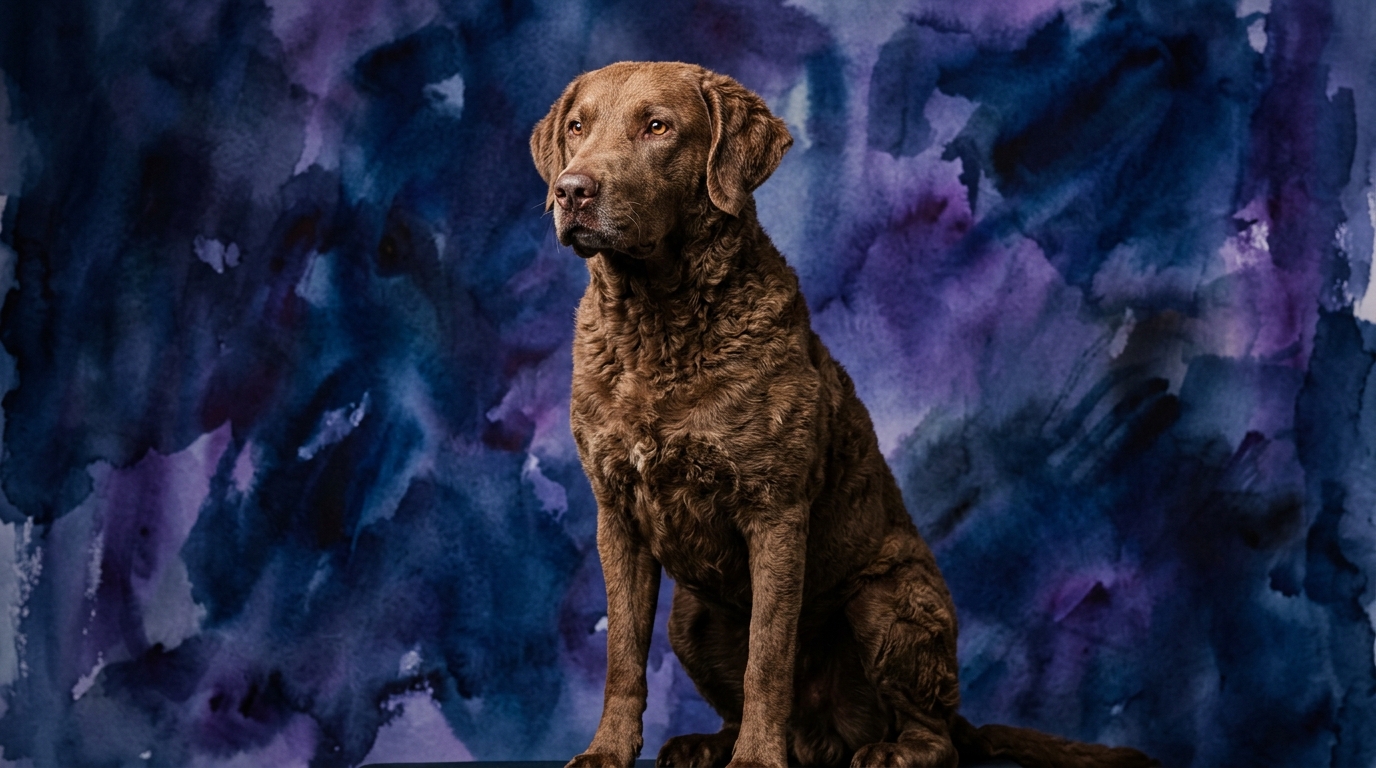
The **Chesapeake Bay Retriever**, a Sporting breed, is Coren-ranked at #27, indicating a significant capacity for learned intelligence and obedience. Their profile includes: **Problem Solving (4/5)**, demonstrating adeptness at navigating complex environments for retrieval, often requiring independent thought to overcome obstacles like currents or dense cover, focused on efficient task completion. **Training Speed (4/5)**, showing a strong inclination to learn and retain commands quickly, especially when tasks align with their retrieving instincts, thriving on consistent, goal-oriented instruction. **Social Intelligence (3/5)**, forming strong bonds but can be reserved with strangers, focusing interactions primarily on their handler and core family. **Instinctive Drive (3/5)**, possessing a powerful drive for retrieving, water work, and scent tracking, manifesting as focused persistence in tasks. **Memory (4/5)**, exhibiting excellent recall for learned commands, retrieved item locations, and routines, crucial for complex working roles.
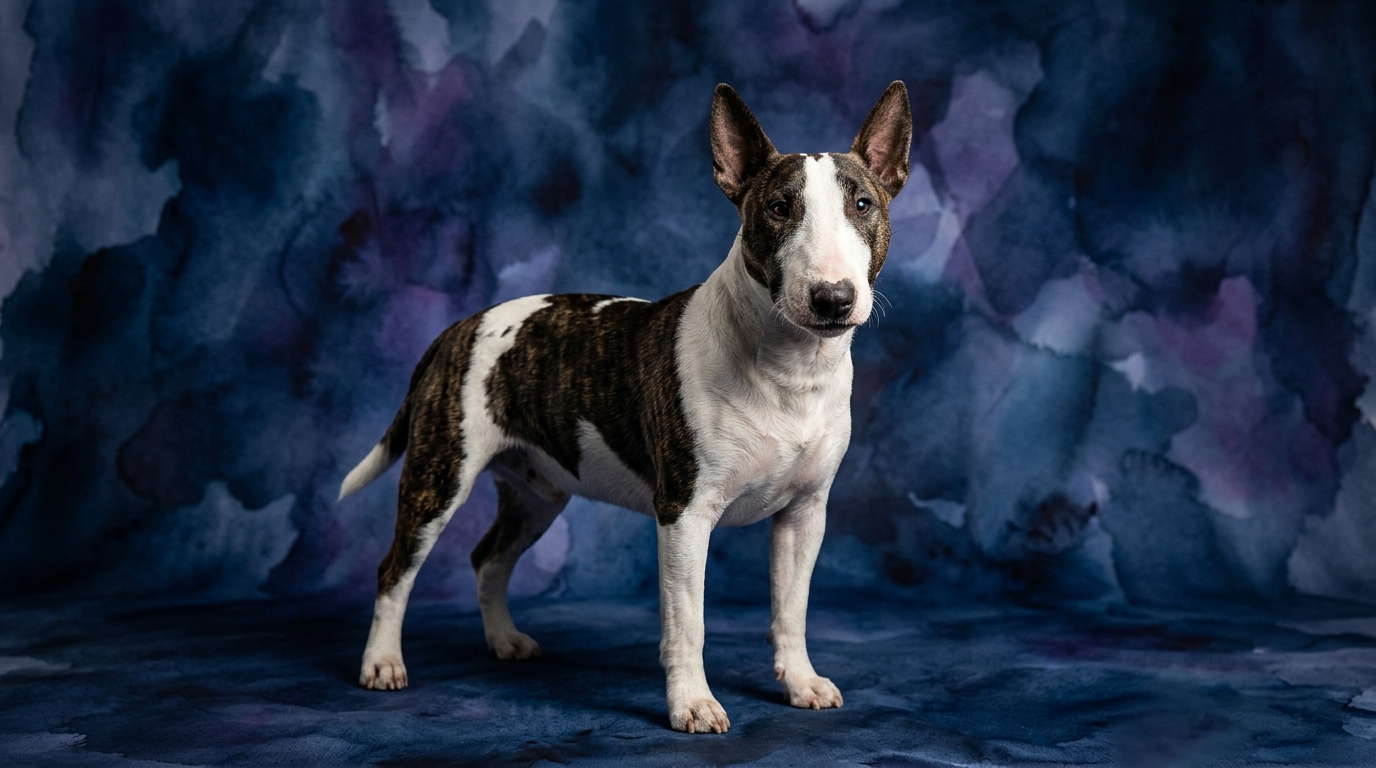
The **Miniature Bull Terrier**, a Terrier breed, is not Coren-ranked, suggesting a different cognitive emphasis. Their profile is: **Problem Solving (3/5)**, approaching challenges with determination and often unique strategies, being inventive in achieving their own goals, though their methods may not always be direct. **Training Speed (3/5)**, capable of learning, but their independent nature and occasional stubbornness make training a deliberate process, responding best to engaging, varied methods. **Social Intelligence (3/5)**, generally affable and enjoys interaction, often displaying a playful, clownish demeanor, reading cues adequately but sometimes pushing boundaries. **Instinctive Drive (3/5)**, exhibiting a strong terrier drive for digging, chasing, and protection, with formidable persistence rooted in their ancestry. **Memory (3/5)**, possessing respectable memory for commands and routines, but their independent thought means they might 'choose' not to recall a command if a more stimulating option arises.
Where the Chesapeake Bay Retriever Excels Cognitively
The Chesapeake Bay Retriever's cognitive strengths distinctly outshine the Miniature Bull Terrier in areas demanding structured cooperation and efficient task execution. With a 4/5 in Problem Solving compared to the Miniature Bull Terrier's 3/5, the Chessie excels at navigating complex scenarios to achieve a specific goal, such as retrieving a downed bird from challenging terrain or icy waters. Their solutions are typically direct and purpose-driven, honed by generations of working alongside humans. Furthermore, their superior Memory (4/5 versus 3/5) allows them to retain intricate command sequences and recall specific locations with remarkable accuracy, making them highly reliable in repetitive or multi-step tasks. This cognitive profile lends itself to a dog that consistently aims to understand and fulfill its handler's expectations.
Where the Miniature Bull Terrier Shows Unique Cognitive Strengths
While not scoring higher in the Coren-derived metrics, the Miniature Bull Terrier possesses a distinct cognitive flair that differentiates it. Their 3/5 in Problem Solving manifests as a unique brand of ingenuity and tenacity; they are remarkably resourceful in achieving their own objectives, whether it's outsmarting a gate latch or creatively soliciting attention. This isn't about cooperative problem-solving, but rather independent, often whimsical, strategizing. Their 3/5 in Instinctive Drive, while matching the Chessie, fuels an unyielding persistence in pursuits that genuinely interest them, making them resilient and often surprisingly clever in their self-appointed missions. This breed's intelligence lies in its independent spirit and ability to adapt situations to its own advantage, presenting challenges with a charming, sometimes mischievous, twist.
Trainability: Which Breed Learns More Readily?
When it comes to ease of training, the Chesapeake Bay Retriever holds a clear advantage. Their 4/5 Training Speed and cooperative nature mean they are typically eager to please and quick to grasp new commands and routines. They thrive on consistent direction and purpose-driven tasks, making them responsive partners in obedience, hunting, or dog sports. Their superior memory ensures commands are retained reliably, leading to predictable and consistent behavior under instruction. The Chessie’s focus on their handler and their desire to work collaboratively makes the training process generally smoother and more rewarding for both parties.
In contrast, the Miniature Bull Terrier, with a 3/5 Training Speed, requires a more patient and creative approach. Their independent streak and terrier tenacity mean they need to be convinced that training is fun and rewarding, often seeing it as a negotiation rather than an instruction. While capable, their focus can waver, especially if something more stimulating is available, requiring engaging, varied sessions and positive reinforcement to maintain interest and overcome their occasional stubbornness. Their learning isn't slower, but their willingness to comply is more selective, demanding an owner who understands their unique motivations and can make training a compelling game.
Matching Canine Cognition to Owner Lifestyle
The Chesapeake Bay Retriever is an ideal match for active owners who relish outdoor adventures and structured activities. They demand consistent physical exercise, like swimming, long hikes, or field work, coupled with mental engagement through training or dog sports. Their cooperative nature makes them excellent partners for owners seeking a reliable companion for shared endeavors, thriving in environments where their working drive is harnessed and directed. A Chessie will be happiest with an owner who provides consistent purpose and ample opportunity to expend their considerable energy in a structured manner.
Conversely, the Miniature Bull Terrier, while also requiring an active lifestyle, suits owners who appreciate a dog with a strong, independent personality and a playful, sometimes mischievous, spirit. They thrive with owners who can channel their boundless energy and unique problem-solving into constructive outlets, enjoying their humorous antics and providing creative mental stimulation beyond rote obedience. Owners who enjoy a dog with a distinct personality, who can laugh at their antics, and who are prepared for a dog that sometimes operates on its own agenda will find a fulfilling partnership with a Mini Bull Terrier. They need engagement, but on their own terms, often initiating play or mischief.
The Verdict
Choose the Chesapeake Bay Retriever if you desire a dedicated, cooperative working companion for structured outdoor activities and value reliable obedience and a strong drive to please.
Opt for the Miniature Bull Terrier if you seek an independent, resilient, and often comical companion, and you're prepared to engage with a dog that approaches life with distinctive ingenuity and tenacity.
🧠 Find Your Pet's IQ Score
Our Pet IQ Lab assessment covers 25+ tests across 5 cognitive dimensions — personalized to your breed.
Take the Full IQ Test →Frequently Asked Questions
Are Chesapeake Bay Retrievers good with children?
Chesapeake Bay Retrievers can be good with older, respectful children, especially if raised with them. Their sometimes reserved nature and strong work drive mean they prefer calm interactions and may not tolerate rough play, requiring supervision.
Do Miniature Bull Terriers bark a lot?
Miniature Bull Terriers are not typically excessive barkers, but they will use their voice to alert to strangers or express excitement. Their vocalizations are often varied, including grumbles and "woo-woos," adding to their unique charm and character.
Which breed is better for first-time dog owners?
The Chesapeake Bay Retriever, with its cooperative nature and higher trainability, is generally a better fit for dedicated first-time owners willing to commit to consistent training and exercise. The Miniature Bull Terrier's independence and strong will can be challenging for inexperienced owners.