Side-by-Side IQ Profile: Dissecting Canine Cognition
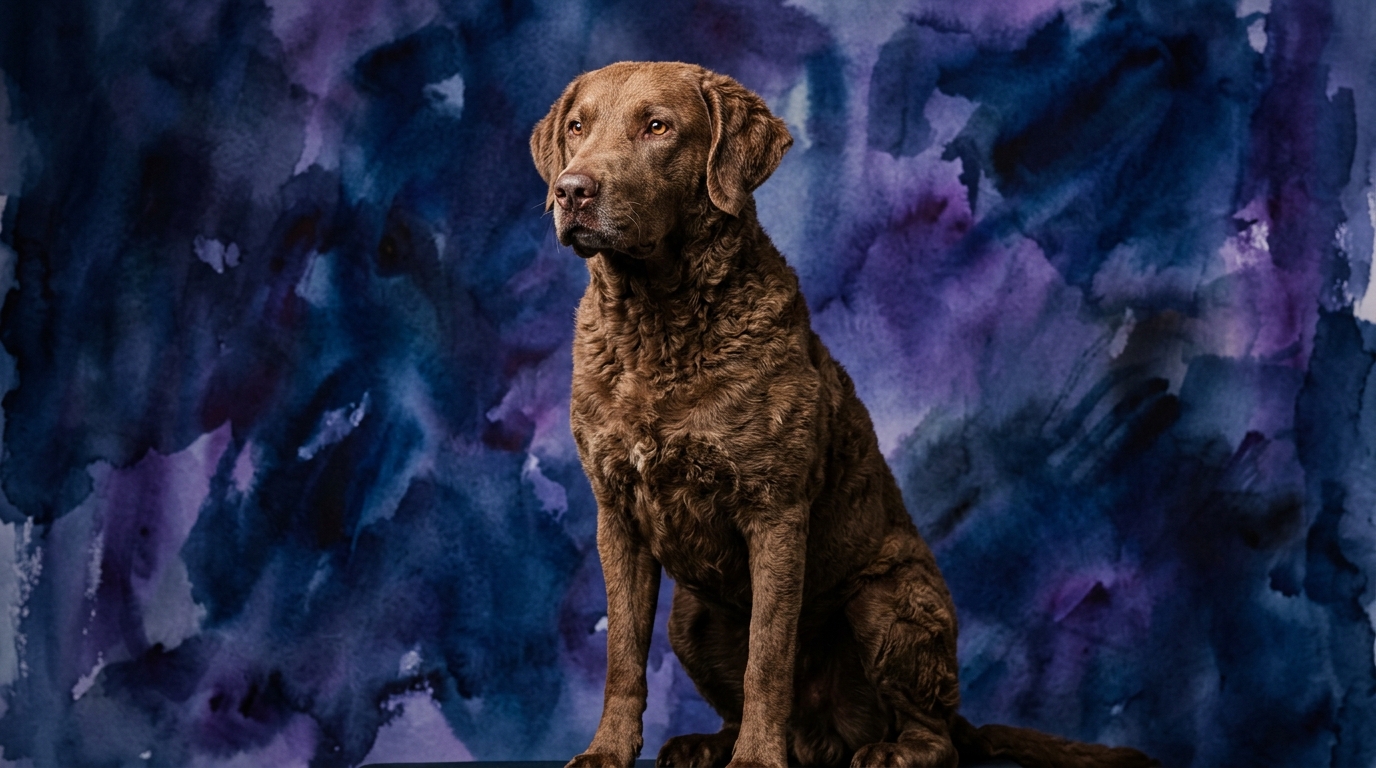
The Cosmic Pet Pet IQ Lab employs a five-dimensional framework to assess canine intelligence, moving beyond simple obedience to encompass a broader spectrum of mental prowess. For the Chesapeake Bay Retriever, a Sporting group dog, its Coren rank of #27 places it among breeds recognized for efficient learning and task execution. Its IQ scores reflect this: Problem Solving 4/5, Training Speed 4/5, Social Intelligence 3/5, Instinctive Drive 3/5, and Memory 4/5.
These scores paint a picture of a dog adept at understanding complex situations and retaining information. A 4/5 in Problem Solving indicates a capacity to navigate novel challenges, such as finding a hidden retrieve object or figuring out how to open a gate. Its 4/5 Training Speed suggests it picks up new commands and routines with relative swiftness, making it responsive in structured environments. The 3/5 Social Intelligence points to a dog that can read cues and interact appropriately within its established social circle, while a 3/5 Instinctive Drive underscores its inherent inclination towards specific breed-typical behaviors like retrieving. Finally, a 4/5 Memory means it can recall learned behaviors and past experiences over extended periods.
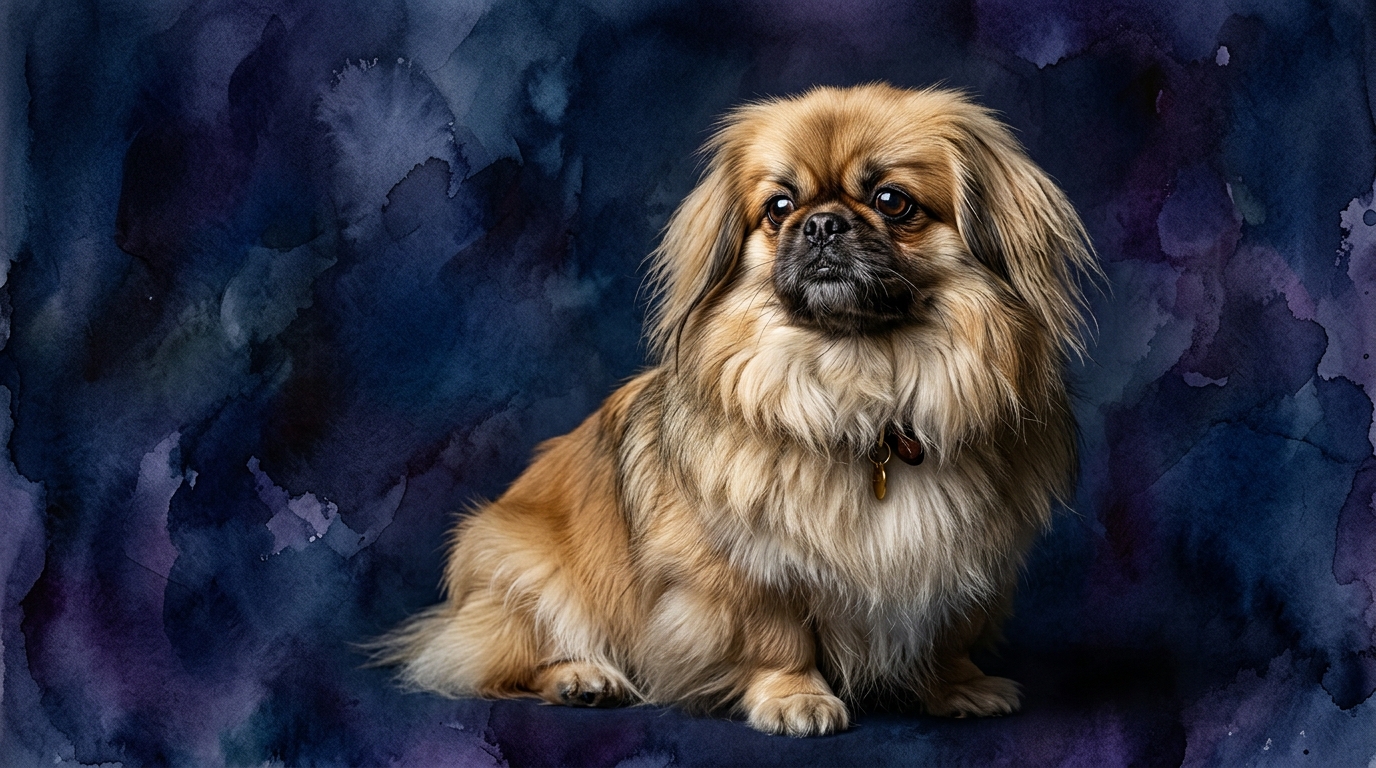
In contrast, the Pekingese, a Toy group dog, holds a Coren rank of #77, suggesting a different cognitive emphasis. Its IQ profile is uniformly rated at 3/5 across all five dimensions: Problem Solving 3/5, Training Speed 3/5, Social Intelligence 3/5, Instinctive Drive 3/5, and Memory 3/5. This consistent scoring indicates a balanced, though perhaps less overtly performance-driven, cognitive toolkit.
A 3/5 in Problem Solving for the Pekingese means it can resolve common domestic challenges, like maneuvering around furniture or getting to a desired sunny spot, without requiring extensive human intervention. Its 3/5 Training Speed suggests it learns at a moderate pace, capable of mastering basic commands with patient, consistent effort. The 3/5 Social Intelligence implies it can form strong bonds and understand human emotional states, though perhaps with a preference for a more intimate social circle. A 3/5 Instinctive Drive reflects its inclination towards companionship and perhaps a degree of self-sufficiency, rather than strong prey drive or working urges. Lastly, a 3/5 Memory indicates it can retain important routines and relationships, ensuring continuity in its daily life.
Where the Chesapeake Bay Retriever Excels Cognitively
The Chesapeake Bay Retriever's cognitive strengths are particularly evident in scenarios demanding applied intelligence and consistent performance. Its 4/5 Problem Solving combined with a 4/5 Memory makes it exceptionally capable in multi-step tasks, such as navigating a complex field to retrieve a bird, remembering the fall location of multiple objects, and executing a series of commands in sequence. This breed thrives when given a 'job' that requires active thought and recall, often displaying an impressive ability to adapt its approach based on previous attempts.
Consider a situation where a Chessie is tasked with finding a specific toy hidden in a new environment. Its superior problem-solving allows it to systematically explore and strategize, while its robust memory helps it recall similar past searches or the location of previously encountered obstacles. This combination makes them highly effective in activities like scent work, advanced obedience, and various dog sports where quick thinking and retention of complex patterns are rewarded. Their cognitive profile supports a dog that doesn't just follow instructions, but actively processes and remembers the context of those instructions, leading to more independent and effective task completion.
Where the Pekingese Demonstrates Unique Cognitive Strengths
While the Pekingese may not boast the same raw scores in problem-solving or training speed, its consistent 3/5 across all dimensions signifies a different kind of cognitive efficiency, particularly suited to its role as a companion. Its 3/5 Problem Solving is often channeled into navigating its immediate domestic environment with considerable resourcefulness. A Pekingese might not retrieve a duck from icy waters, but it can expertly figure out how to get attention from its owner, manipulate a toy for extended periods, or find the warmest sunbeam in the house. This demonstrates an effective application of its cognitive resources within its typical domain.
The Pekingese's 3/5 Social Intelligence, though not as high as some intensely people-focused breeds, manifests as a nuanced ability to form deep, personal bonds and communicate subtle desires to its chosen humans. They are often quite adept at reading their owner's moods and reacting accordingly, offering comfort or seeking interaction when appropriate. Their 3/5 Instinctive Drive, geared towards companionship rather than intense work, allows them to be content with less external stimulation, relying on their internal world and close human relationships for fulfillment. This self-contained cognitive approach makes them remarkably self-sufficient in a home setting, requiring less constant direction or complex mental engagement from their owners.
Training Dynamics: Chesapeake Bay Retriever vs. Pekingese
When it comes to ease of training, the Chesapeake Bay Retriever generally presents a more straightforward path for an owner willing to invest time and consistency, primarily due to its 4/5 Training Speed and 4/5 Memory. Chessies are typically eager to learn and retain commands quickly, especially when training is engaging and taps into their natural retrieving instincts. Their capacity to remember sequences and associate actions with rewards means they can progress rapidly through obedience levels, mastering intricate routines and complex tasks with relative efficiency. However, their 3/5 Instinctive Drive also means they can be independent thinkers, sometimes requiring firm, consistent guidance to channel their drive appropriately.
The Pekingese, with its 3/5 Training Speed and 3/5 Memory, requires a different approach. While capable of learning all essential commands, they may take longer to grasp new concepts and require more repetition. Their training often benefits from positive reinforcement methods that are gentle, consistent, and make learning feel like a game rather than a chore. Behavioral differences stemming from their breed purpose mean they are less likely to be driven by a desire to 'work' for their owner and more by the desire for connection or a desirable reward. Owners might find that a Pekingese can be quite opinionated, requiring patience and creative motivation to ensure cooperation, as their independence can sometimes be mistaken for stubbornness during training sessions.
Matching Canine Cognition to Owner Lifestyles
The distinct cognitive profiles of these two breeds naturally align with different owner lifestyles. The Chesapeake Bay Retriever, with its high Problem Solving and Memory, coupled with a moderate Instinctive Drive, is an ideal fit for active owners who relish engaging their dog in mentally stimulating activities. These dogs thrive with challenges like advanced obedience, agility, flyball, or extensive field work. Owners who enjoy long hikes, water sports, and structured training sessions will find a Chessie to be an enthusiastic and capable partner. Their cognitive needs demand an owner who can consistently provide outlets for their mental and physical energy, preventing boredom which can sometimes lead to undesirable behaviors.
Conversely, the Pekingese, with its balanced 3/5 scores across the board, is perfectly suited for more relaxed owners who appreciate a dog's independent spirit and charming companionship without the demand for intense mental or physical exertion. Their cognitive abilities are well-met by a stimulating home environment, interactive toys, and consistent, gentle social interaction. Owners who prefer quiet evenings, short strolls, and cuddling on the couch will find a Pekingese to be a content and affectionate companion. Their social intelligence and moderate drive mean they are often satisfied with a smaller, more intimate social circle and less emphasis on rigorous, structured activities, making them excellent apartment dwellers or companions for those with a less active routine.
The Verdict
Choose a Chesapeake Bay Retriever if you are an active owner seeking a highly trainable, problem-solving partner for structured activities and outdoor adventures.
Opt for a Pekingese if you desire a charming, independent companion well-suited to a relaxed home life, valuing self-sufficiency and deep personal bonds over intense training demands.
🧠 Find Your Pet's IQ Score
Our Pet IQ Lab assessment covers 25+ tests across 5 cognitive dimensions — personalized to your breed.
Take the Full IQ Test →Frequently Asked Questions
Do Chesapeake Bay Retrievers require a lot of mental stimulation?
Yes, with 4/5 in Problem Solving and Memory, Chesapeake Bay Retrievers benefit greatly from consistent mental challenges. They need engaging activities like puzzle toys, advanced training, and opportunities to 'work' to prevent boredom and ensure a well-adjusted temperament.
Are Pekingese difficult to train due to their lower IQ scores?
Pekingese are not inherently 'difficult' to train; rather, their 3/5 Training Speed means they learn at a moderate pace and respond best to patient, positive reinforcement. They may require more repetition and motivation tailored to their companion-oriented nature compared to high-drive working breeds.
How do their social intelligence scores impact their family life?
Both breeds have a 3/5 Social Intelligence score, indicating they can form strong bonds and interact appropriately within their social circles. The Chesapeake Bay Retriever might be more broadly tolerant of new people given its working background, while the Pekingese often prefers a close-knit family, forming deep attachments with a select few.