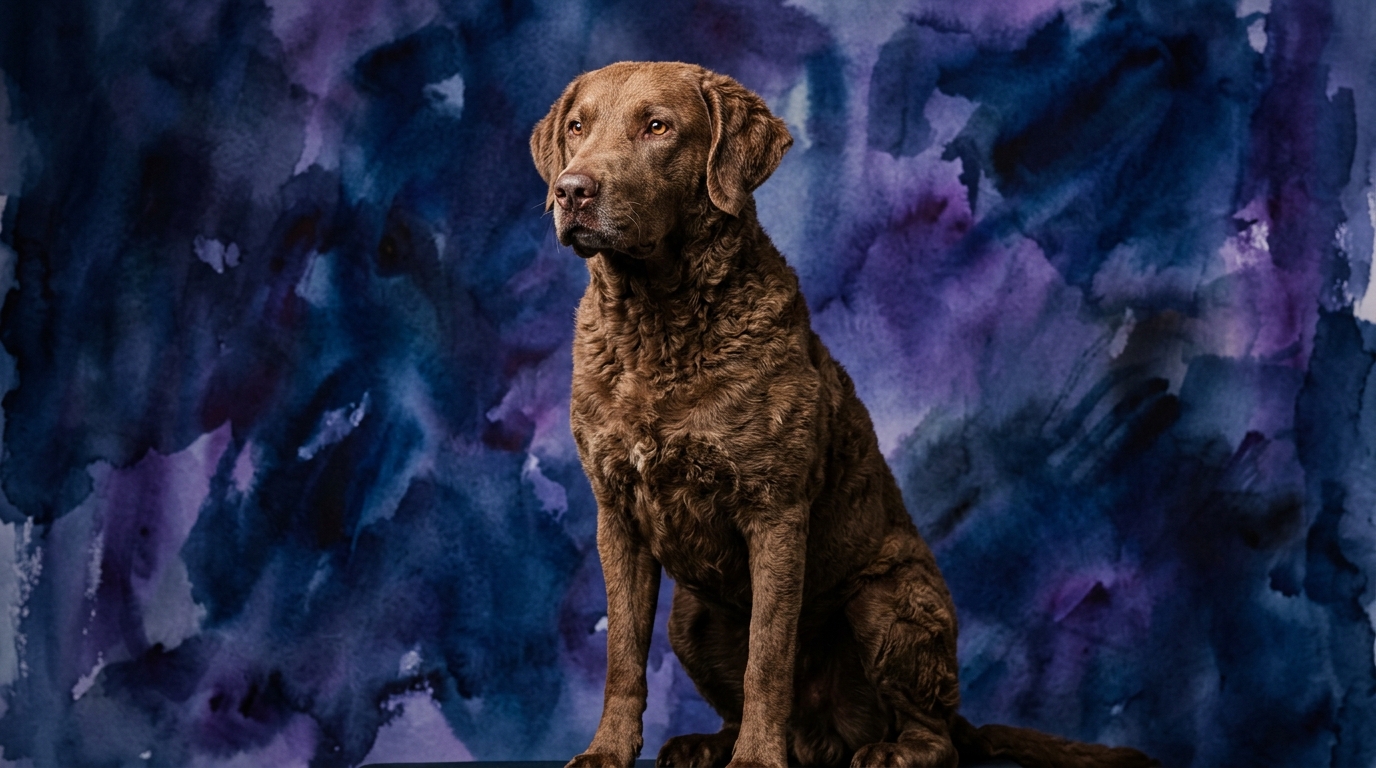
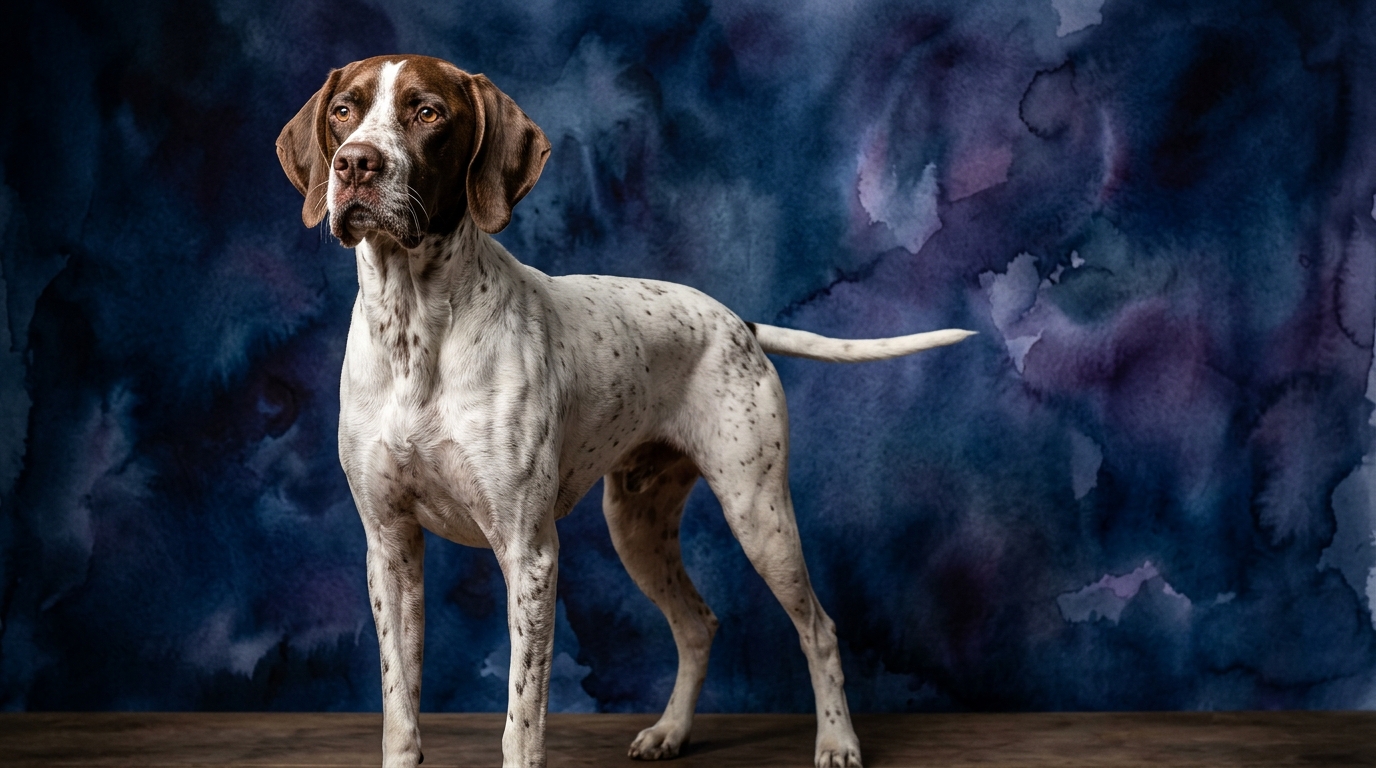
Side-by-Side Cognitive Profiles
The Cosmic Pet Pet IQ Lab assesses canine intelligence across five critical dimensions, offering a nuanced view beyond simplistic labels. For the Chesapeake Bay Retriever, or "Chessie," we observe a robust Problem Solving score of 4/5, indicating a strong capacity for independent thought and navigating complex scenarios. Their Training Speed also stands at 4/5, suggesting a quick grasp of new commands and an eagerness to learn intricate routines. Social Intelligence is rated 3/5, reflecting a balanced ability to read human cues and interact appropriately without being overly dependent or aloof. Instinctive Drive, at 3/5, points to a solid foundation for their retrieving work, while a Memory score of 4/5 underscores their capacity to retain learned behaviors and recall specific locations or sequences over time.
In contrast, the Pointer presents a different cognitive landscape. Their Problem Solving ability is rated 3/5, signifying a competent but perhaps less innovative approach to novel challenges compared to the Chessie. Training Speed also sits at 3/5, meaning they are trainable but may require more repetition to solidify new skills. Like the Chessie, their Social Intelligence is 3/5, indicating a similar level of responsiveness to human interaction and social cues. Instinctive Drive for the Pointer is also 3/5, reflecting their core purpose as a scent-driven hunting companion, though this drive often manifests with intense focus on game. Finally, their Memory score is 3/5, suggesting they retain information adequately for their tasks but might not excel in recalling highly complex sequences as readily as a Chessie. This side-by-side view highlights that while both are capable working dogs, their cognitive strengths are distributed differently, influencing their learning styles and overall adaptability.
Where the Chesapeake Bay Retriever Excels Cognitively
The Chesapeake Bay Retriever truly shines in scenarios demanding advanced cognitive processing and recall. Their 4/5 score in Problem Solving means they are adept at figuring out solutions to obstacles, such as navigating tricky terrain to retrieve fallen game or deciphering multi-step commands. This isn't just about brute force; it's about evaluating a situation and adapting their approach. This higher problem-solving capacity also synergizes with their 4/5 Memory score. A Chessie can remember not only *what* to do but also *how* they successfully did it before, allowing them to apply past learning to new, similar challenges. For instance, if they've learned a particular route through a dense thicket to retrieve a dummy, they are more likely to recall and replicate that efficient path when faced with similar cover, even if the exact target location changes. This allows for a more independent and resourceful working style, where they can often "think through" a task rather than waiting for explicit direction for every variable. Owners who appreciate a dog that can anticipate and resolve minor issues on their own will find the Chessie's cognitive profile particularly rewarding.
Where the Pointer Excels Cognitively
While the Pointer's scores might appear lower in direct comparison, their cognitive strengths are perfectly tailored to their primary function, manifesting as a win in focused application rather than broad adaptability. The Pointer's 3/5 in Problem Solving and Memory, paired with a 3/5 in Instinctive Drive, creates a dog optimized for sustained, single-minded pursuit. Their cognitive "win" lies in their unwavering focus on scent and the hunt, minimizing distractions. They are less prone to overthinking or getting sidetracked by complex environmental stimuli that might challenge a more problem-solving-oriented breed. Instead, their cognitive resources are channeled into interpreting scent trails, maintaining a steady, methodical pace, and holding a precise point. This directness, rather than a deficit, ensures efficiency in their specific field tasks. For example, while a Chessie might strategize the quickest path to a retrieve, a Pointer's cognitive architecture excels at methodically sweeping a field, processing olfactory information with singular dedication, and then freezing into an unyielding point, a task requiring immense mental discipline and sustained attention rather than creative problem-solving. Their strength is in the relentless, focused execution of their core instinct.
Training Dynamics: Chesapeake Bay Retriever vs. Pointer
When it comes to ease of training, the Chesapeake Bay Retriever holds an edge due to its higher Training Speed of 4/5 and superior Problem Solving (4/5) and Memory (4/5) scores. A Chessie typically picks up new commands and intricate sequences more quickly, requiring fewer repetitions to achieve proficiency. Their capacity for problem-solving means they can often generalize learned behaviors to new contexts with minimal guidance, and their robust memory helps them retain a large repertoire of commands and routines over time. This makes them highly adaptable to various training methodologies, from basic obedience to advanced field work or even competitive dog sports. They often possess a strong desire to work alongside their handler, which translates into a willingness to engage in training sessions.
The Pointer, with a Training Speed of 3/5, will certainly learn, but often requires more consistent repetition and a patient, clear approach. Their cognitive profile suggests they might take a bit longer to grasp complex multi-step commands and may need more practice to solidify new behaviors. Real behavioral differences stem from their instinctive drive; while both are sporting dogs, the Pointer's intense focus on scent and game can sometimes mean their primary attention is directed outwards towards the environment rather than solely on the handler during training. This doesn't mean they are untrainable; rather, training needs to be structured to harness their natural instincts effectively, often by integrating their prey drive into the learning process. They may also be less inclined to engage in purely abstract obedience drills if they don't see an immediate purpose or connection to their natural inclinations.
Suitability for Active vs. Relaxed Lifestyles
Both the Chesapeake Bay Retriever and the Pointer are undeniably breeds for active owners, but the *nature* of that activity and the owner's desired involvement differ. The Chesapeake Bay Retriever, with its high energy levels and cognitive scores in Problem Solving and Training Speed, thrives with owners who are prepared for multifaceted engagement. They need rigorous physical exercise, such as long runs, swimming, or retrieving sessions, but also demand mental stimulation through complex training, puzzle toys, and varied activities. Owners who enjoy teaching intricate commands, participating in dog sports like agility or obedience, or involving their dog in extensive outdoor adventures will find the Chessie an eager and capable partner. Their cognitive makeup means they can become bored and destructive if their minds aren't challenged as much as their bodies.
The Pointer also requires significant physical activity, often needing vast spaces to run and exercise their powerful legs and keen nose. However, their cognitive profile suggests they might be more suited to owners whose primary "activity" involves allowing the dog to fulfill its instinctive drive, such as extensive hiking, long-distance running, or actual hunting. While they benefit from training, their mental stimulation might be satisfied more by scent work and independent exploration within safe boundaries, rather than constant interactive problem-solving games with their owner. A Pointer's intensity in the field means they can become restless without an outlet for their energy and instincts, but their cognitive needs might be simpler to meet than a Chessie's if the primary goal is physical exertion and instinctual fulfillment. Neither breed is suitable for truly "relaxed" owners who prefer a largely sedentary lifestyle, as both will develop undesirable behaviors without sufficient outlets for their energy and mental faculties.
The Verdict
Opt for the Chesapeake Bay Retriever if you desire a highly trainable, versatile companion eager to engage in complex problem-solving and diverse activities, and if you can provide consistent mental challenges alongside robust physical exercise.
Select the Pointer if your primary interest lies in a focused, enduring field companion that excels in scent work and sustained physical activity, and if you are prepared for training that emphasizes channeling their strong instinctive drives.
🧠 Find Your Pet's IQ Score
Our Pet IQ Lab assessment covers 25+ tests across 5 cognitive dimensions — personalized to your breed.
Take the Full IQ Test →Frequently Asked Questions
Can a Pointer be trained for retrieving tasks like a Chesapeake Bay Retriever?
While a Pointer has some retrieving instinct, their primary drive is pointing and scent tracking. Training them for complex retrieves like a Chessie would be significantly more challenging due to their lower Problem Solving and Memory scores, requiring immense patience and redirection of their natural focus.
Do Chesapeake Bay Retrievers make good family pets despite their working drive?
Yes, Chessies can be wonderful family pets, especially with active families who understand their need for physical and mental engagement. Their 3/5 Social Intelligence means they interact well, but they thrive best when integrated into family activities that challenge their cognitive and physical abilities.
Is one breed more prone to separation anxiety than the other?
Both breeds, if not adequately stimulated or left alone for excessive periods, can develop separation anxiety or destructive behaviors. The Chessie's higher cognitive capacity might lead to more complex coping mechanisms when bored, while a Pointer might express anxiety through relentless pacing or vocalization, though neither is inherently more prone than the other if needs are met.