
Side-by-Side IQ Profile
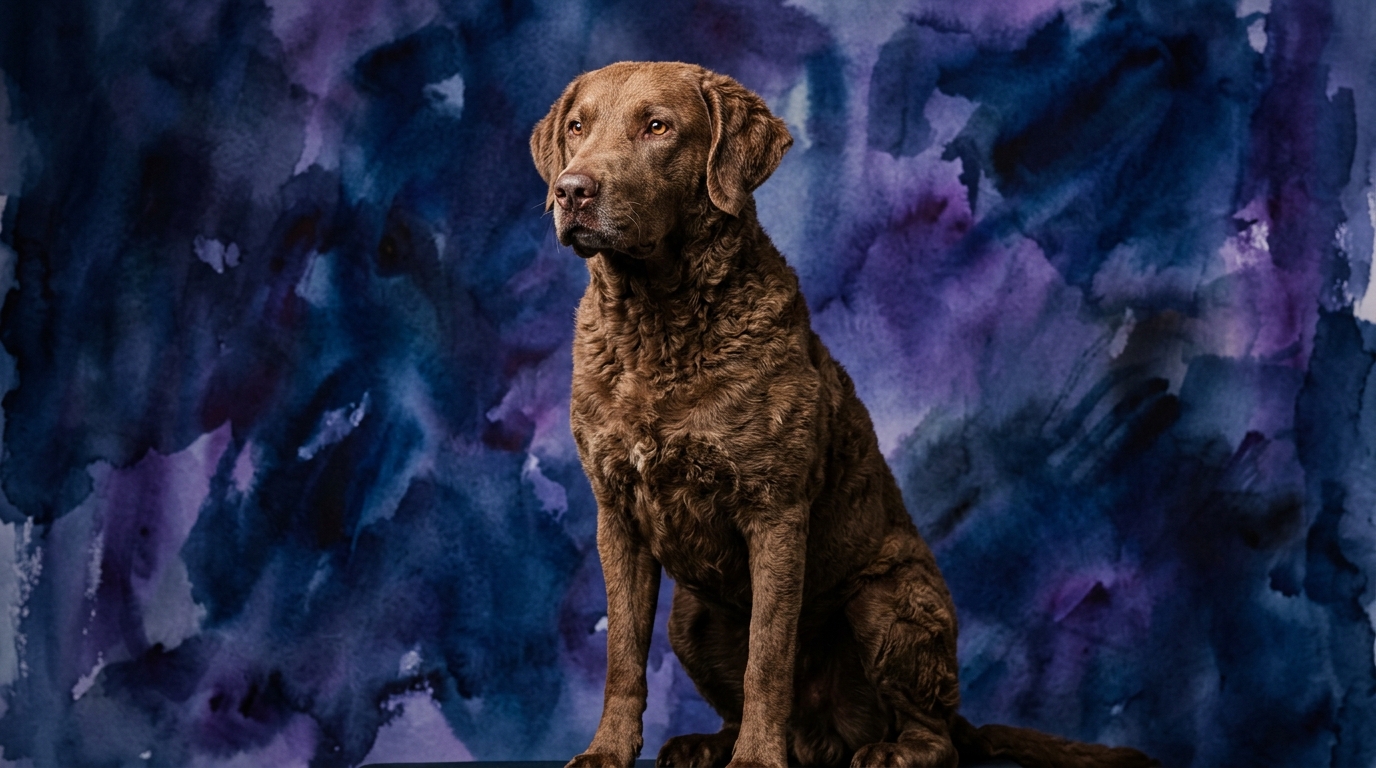
**Chesapeake Bay Retriever (Coren rank #27):** This hardy retriever exhibits a potent cognitive blend. Its Problem Solving at 4/5 indicates a capacity for independent thought and creative solutions to environmental puzzles, while a Training Speed of 4/5 suggests a readiness to absorb and execute commands efficiently. Social Intelligence, rated 3/5, points to a balanced understanding of human cues and pack dynamics, without being overly dependent or aloof. An Instinctive Drive of 3/5 reflects its inherent retrieving and working tendencies, channeled effectively. Finally, its Memory, at 4/5, allows for excellent retention of learned behaviors and experiences, making complex routines manageable.
**Sussex Spaniel (Coren rank #62):** The Sussex Spaniel presents a more uniformly consistent cognitive profile. Its Problem Solving at 3/5 suggests competence in navigating familiar challenges, though perhaps with less spontaneous innovation than the Chessie. A Training Speed of 3/5 indicates a steady learning pace, requiring clear, consistent instruction to master new tasks. Social Intelligence, also 3/5, denotes an agreeable nature and an ability to form strong bonds, responding well to human interaction. Its Instinctive Drive, 3/5, speaks to its heritage as a flushing spaniel, possessing a steady desire to work the field. Memory, rated 3/5, ensures it retains training and routines reliably, though perhaps not with the same detailed recall as its retriever counterpart.
Where Chesapeake Bay Retriever Wins Cognitively
The Chesapeake Bay Retriever's cognitive strengths shine particularly in areas requiring adaptive thinking and rapid skill acquisition. With a Problem Solving score of 4/5, a Chessie is more likely to independently strategize its way through a new obstacle, such as figuring out how to open a child-proof gate or retrieving a dropped item from an awkward space by nudging it with its nose. This higher aptitude for novel situations means owners often observe them "thinking through" a challenge rather than simply relying on learned responses. Their 4/5 Training Speed complements this, allowing them to grasp multi-step commands and complex sequences with fewer repetitions. For instance, teaching a Chessie an intricate agility course or a nuanced retrieving pattern will generally progress faster, as they not only remember the steps (Memory 4/5) but also quickly connect actions to desired outcomes. This superior recall means once a behavior is learned, it is deeply ingrained, making them highly reliable in performing intricate tasks over time.
Where Sussex Spaniel Wins Cognitively
While the Sussex Spaniel's individual scores might be slightly lower, its cognitive "wins" lie in its consistency, focus, and perhaps a more grounded approach to environmental stimuli. Its consistent 3/5 across Problem Solving, Training Speed, Social Intelligence, Instinctive Drive, and Memory suggests a balanced and predictable mental architecture. Unlike breeds with higher problem-solving scores that might occasionally "outsmart" their owners or devise independent solutions, the Sussex Spaniel tends to be more reliably directed by human instruction once trained. This can be a distinct advantage for owners who prefer a dog that consistently follows established routines rather than constantly innovating. Its focused instinctive drive, paired with its moderate problem-solving, means it applies its energy directly to tasks like flushing game without excessive deviation or overthinking. This translates to a dog that is less prone to "freelancing" and more dedicated to the task at hand, making it a dependable, if not overtly flashy, working companion.
Which Is Easier to Train and Why
Based on their respective IQ profiles, the Chesapeake Bay Retriever is generally easier to train. Its 4/5 Training Speed indicates a quicker uptake of new commands and concepts, meaning fewer repetitions are typically needed for a Chessie to master a skill. This is further supported by its 4/5 Memory, ensuring that once learned, behaviors are retained effectively over time. A Chessie’s 4/5 Problem Solving also contributes to training ease; they are often more adept at understanding the "why" behind an action, making them quicker to generalize learned behaviors to new contexts. For example, a Chessie might quickly learn to "stay" in various environments, understanding the core command rather than just associating it with one specific spot. In contrast, the Sussex Spaniel's 3/5 Training Speed and Memory suggest that while perfectly trainable, it may require more consistent, patient repetition to solidify new behaviors. Its 3/5 Problem Solving means it might rely more on direct instruction and established patterns rather than independently applying solutions, making foundational obedience a steady, methodical process.
Which Suits Active Owners vs. Relaxed Owners
The cognitive profile of the Chesapeake Bay Retriever makes it an ideal match for active owners. Its higher Problem Solving (4/5) and robust Instinctive Drive (3/5) mean it thrives on mental and physical challenges, requiring consistent engagement to prevent boredom. Owners who enjoy activities like advanced obedience, dog sports, hunting, or long, varied outdoor adventures will find the Chessie’s capacity for learning and its drive to work incredibly rewarding. A less active owner might find the Chessie's need for mental stimulation and physical exertion overwhelming, potentially leading to destructive behaviors born from boredom. The Sussex Spaniel, with its consistent 3/5 scores across the board, presents a more adaptable profile, making it suitable for owners who are active but perhaps not intensely so, or those who appreciate a more relaxed pace. While still a Sporting dog with an Instinctive Drive of 3/5, its moderate problem-solving and training speed mean its needs for mental stimulation can be met with regular training, moderate walks, and engaging play sessions, without the same intensity or complexity required by a Chessie. It can comfortably settle into a home that offers consistent, but not necessarily extreme, physical and mental activity.
The Verdict
For owners seeking a highly adaptable, quick-learning companion eager for complex challenges and robust activity, the Chesapeake Bay Retriever is the clear choice. Its superior problem-solving and rapid training speed make it a fulfilling partner for advanced training and demanding outdoor pursuits.
If you prefer a dog with a consistent, agreeable temperament that thrives on predictable routines and moderate activity, the Sussex Spaniel offers a steadfast and charming presence. It excels as a loyal companion for those who appreciate a steady learning pace and a less intensely demanding cognitive profile.
🧠 Find Your Pet's IQ Score
Our Pet IQ Lab assessment covers 25+ tests across 5 cognitive dimensions — personalized to your breed.
Take the Full IQ Test →Frequently Asked Questions
Do Chesapeake Bay Retrievers require more mental exercise than Sussex Spaniels?
Yes, generally. The Chesapeake Bay Retriever's 4/5 problem-solving and memory scores indicate a greater capacity and need for complex mental stimulation, such as puzzle toys, advanced training, and varied routines, compared to the Sussex Spaniel's 3/5 scores.
How does social intelligence differ between these two breeds?
Both breeds score 3/5 in Social Intelligence, suggesting they are equally capable of forming strong bonds and understanding human cues. This means both are generally agreeable companions, neither overly dependent nor excessively independent in their social interactions within a family setting.
Can a Sussex Spaniel excel in dog sports despite its lower training speed?
Absolutely. While its 3/5 training speed means a Sussex Spaniel may take more consistent repetition to master skills, its steady instinctive drive and reliable memory (both 3/5) allow it to become proficient in sports like obedience or scent work with patient and positive reinforcement.