Side-by-Side IQ Profile: Chesapeake Bay Retriever vs. Welsh Springer Spaniel
The Cosmic Pet Pet IQ Lab employs a five-dimensional framework to assess canine intelligence, offering a granular view beyond simple rankings. For the Chesapeake Bay Retriever, ranked #27 by Coren, and the Welsh Springer Spaniel, ranked #31, their profiles reveal intriguing similarities and subtle divergences.
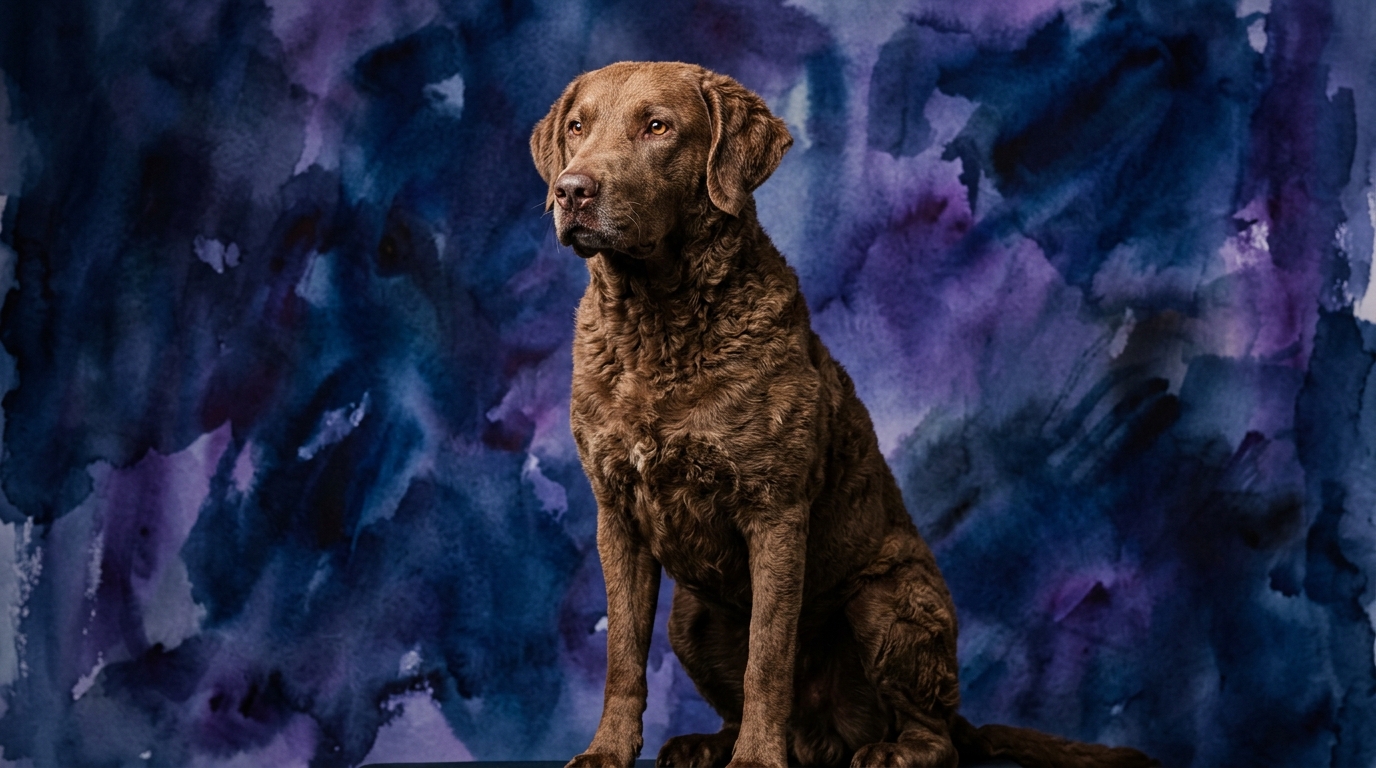
The Chesapeake Bay Retriever (CBR) demonstrates a Problem Solving score of 4/5, indicating a strong aptitude for independent thought and strategic action, particularly in complex retrieval scenarios where they assess environmental cues to overcome obstacles. Their Training Speed also rates at 4/5, reflecting a keen readiness to learn and internalize commands swiftly, though their independent streak means motivation must be well-calibrated. In Social Intelligence, the CBR scores 3/5, tending to be reserved with strangers and other animals, prioritizing their immediate human pack. Their Instinctive Drive is 3/5, channeled towards practical tasks like retrieving, swimming, and scent work. Finally, their Memory is strong at 4/5, crucial for retaining complex sequences of actions and detailed instructions over extended periods.
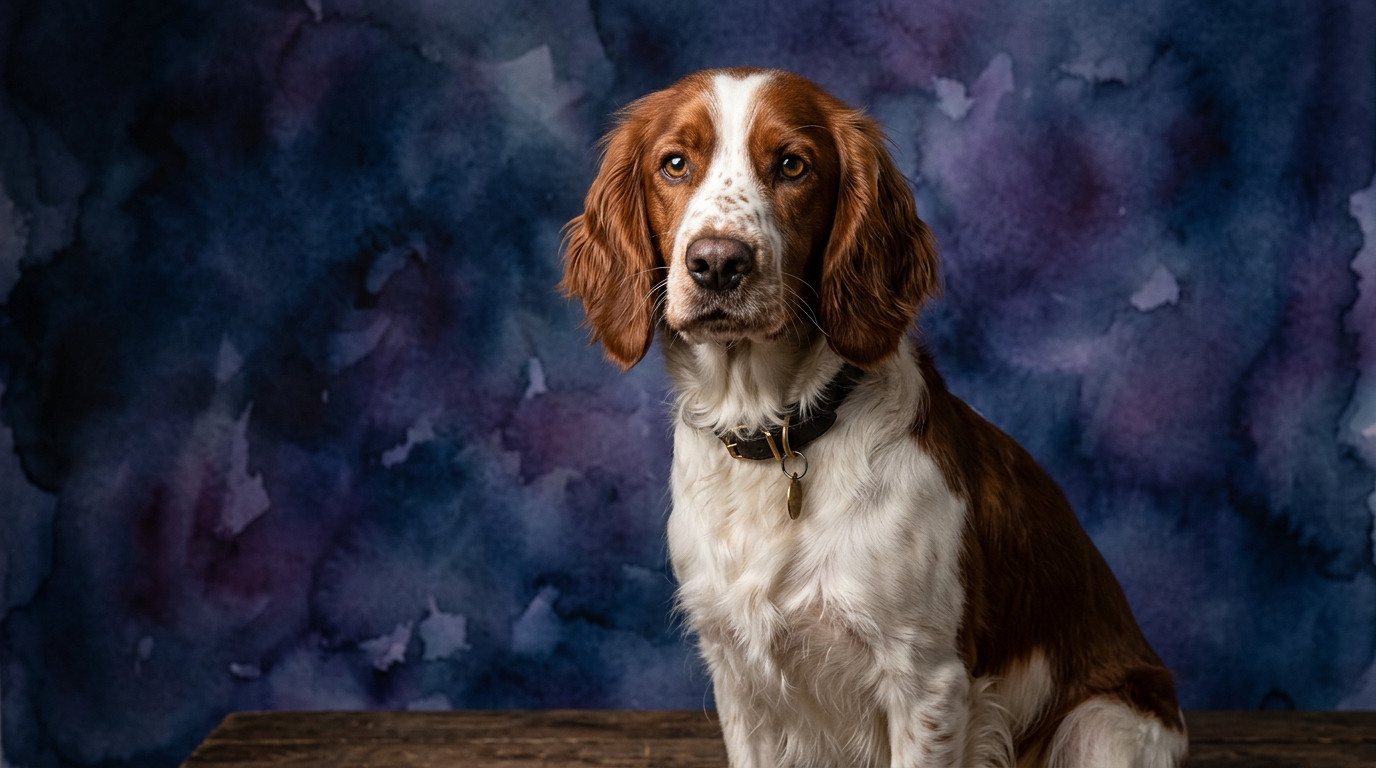
The Welsh Springer Spaniel (WSS), with a Coren rank of #31, also achieves a Problem Solving score of 4/5, displaying an impressive capacity for figuring out solutions through persistence and trial-and-error, particularly in navigating varied terrain for flushing game. Their Training Speed matches the CBR at 4/5; these spaniels are generally eager to please and respond well to positive reinforcement, leading to quick learning curves. Their Social Intelligence is likewise 3/5; while affable with family, they may show initial shyness with unfamiliar faces or situations until comfortable. The WSS's Instinctive Drive is 3/5, expressed through a pronounced natural drive for scenting, quartering fields, and retrieving. Their Memory also stands at 4/5, exhibiting robust recall for commands, routines, and specific locations, aiding consistency in obedience and daily interactions.
Where the Chesapeake Bay Retriever Wins Cognitively
While both breeds score identically in our IQ dimensions, the Chesapeake Bay Retriever's cognitive edge often manifests in scenarios demanding independent resilience and a singular focus. Their problem-solving, rated 4/5, is particularly geared towards overcoming physical obstacles in harsh environments, such as breaking through ice or navigating dense cover to retrieve waterfowl. This isn't just about figuring out a path; it's about a tenacious mental fortitude to persist when conditions are difficult, without constant human direction. Their memory (4/5) supports this by allowing them to recall complex, multi-stage retrieval plans and execute them reliably, even after distractions or significant time lapses. This combination of independent problem-solving and steadfast memory gives them a distinct advantage in roles requiring self-sufficiency and unwavering determination against external challenges, making them less prone to wavering under pressure or seeking immediate human reassurance during a task.
Where the Welsh Springer Spaniel Wins Cognitively
The Welsh Springer Spaniel, despite identical IQ scores, often shines brighter in cognitive areas emphasizing cooperative effort and nuanced responsiveness. Their problem-solving (4/5) is frequently applied to dynamic situations requiring quick adjustments and keen observation of human cues, such as quartering a field in precise patterns dictated by a handler. Unlike the CBR's independent tenacity, the WSS excels at adapting their strategy in real-time based on subtle signals, demonstrating a partnership-oriented approach to tasks. Their training speed (4/5) benefits from a strong desire to please and a more openly communicative social intelligence (3/5), which, while reserved with strangers, makes them highly receptive to their owner's guidance. This translates to a quicker understanding of complex commands that involve interaction and precise execution, making them exceptionally pliable and responsive partners in activities that require fluid communication and shared objectives, rather than solitary, brute-force problem-solving.
Which is Easier to Train and Why
Both the Chesapeake Bay Retriever and the Welsh Springer Spaniel achieve an impressive 4/5 for training speed, indicating a strong capacity for learning. However, the *ease* of training often diverges due to their underlying behavioral tendencies. The Welsh Springer Spaniel's inherent desire to please and their more outwardly cooperative nature often make them appear easier to train for the average owner. They are generally more sensitive to handler feedback and eager to engage in joint activities, which translates to a more fluid and less challenging training experience. Their social intelligence, while rated the same, manifests as a greater willingness to work *with* their human, often seeking approval and responding well to positive reinforcement.
In contrast, the Chesapeake Bay Retriever, with its deep-seated independence and sometimes stubborn nature, requires a more experienced and consistent hand. While they learn quickly, their strong will means an owner must establish clear leadership and maintain firm, fair boundaries from the outset. Their drive to complete a task independently can sometimes be perceived as resistance if not channeled correctly, meaning while they *can* learn just as fast, the *process* of getting them to consistently perform can demand more dedication and understanding of their unique mental framework.
Which Suits Active Owners vs. Relaxed Owners
Both breeds originate from the Sporting Group, implying a need for regular activity, but their ideal energy outlets cater to slightly different lifestyles. The Chesapeake Bay Retriever thrives with owners who embrace a highly active, outdoor-centric life, particularly those interested in challenging pursuits like hunting, competitive dog sports, or long-distance hiking in varied terrain. Their robust physique and independent problem-solving mean they excel in environments where they can engage their physical and mental stamina for extended periods, often in less structured, more exploratory ways. A CBR requires significant, purposeful exercise that taps into their working drive, making them less suitable for owners seeking a purely relaxed companion whose exercise needs are met with short daily walks.
The Welsh Springer Spaniel, while equally active, is often better suited for owners who enjoy consistent, engaging activities that involve more direct interaction. They thrive on brisk walks, retrieving games in the yard, agility, or obedience training, and enjoy being a constant companion in daily routines. While they need substantial exercise, their cooperative nature means they are generally content with a varied schedule of physical and mental stimulation that involves their human, making them a better fit for active families who want a highly integrated canine partner rather than one that operates more independently.
The Verdict
Choose a Chesapeake Bay Retriever if you are an experienced, highly active owner seeking a rugged, independent partner for demanding outdoor adventures and a dog that excels at tenacious, self-directed problem-solving in challenging environments.
Opt for a Welsh Springer Spaniel if you desire a cooperative, responsive, and equally active companion who thrives on shared activities, consistent interaction, and a partnership-oriented approach to training and daily life.
🧠 Find Your Pet's IQ Score
Our Pet IQ Lab assessment covers 25+ tests across 5 cognitive dimensions — personalized to your breed.
Take the Full IQ Test →Frequently Asked Questions
Do Chesapeake Bay Retrievers and Welsh Springer Spaniels get along with other pets?
Chesapeake Bay Retrievers tend to be more reserved and may require careful, early socialization to coexist peacefully with other pets, often preferring the company of their human family. Welsh Springer Spaniels, while initially reserved with strangers, are generally more amenable and can often integrate well into multi-pet households with proper introductions and supervision.
What are the grooming requirements for these breeds?
The Chesapeake Bay Retriever has a short, dense, oily coat that requires minimal grooming, primarily occasional brushing to remove loose hair and maintain coat health. The Welsh Springer Spaniel possesses a medium-length, silky coat with feathering that needs regular brushing, typically several times a week, to prevent matting and keep it in good condition, along with periodic trimming.
Are these breeds good for first-time dog owners?
The Welsh Springer Spaniel, with its eager-to-please nature and cooperative disposition, can be a suitable choice for dedicated first-time owners willing to invest in consistent training and socialization. The Chesapeake Bay Retriever, due to its independent streak and strong will, is generally recommended for experienced dog owners who understand how to manage a robust, working breed.