Side-by-Side IQ Profile: Diving into Canine Cognition
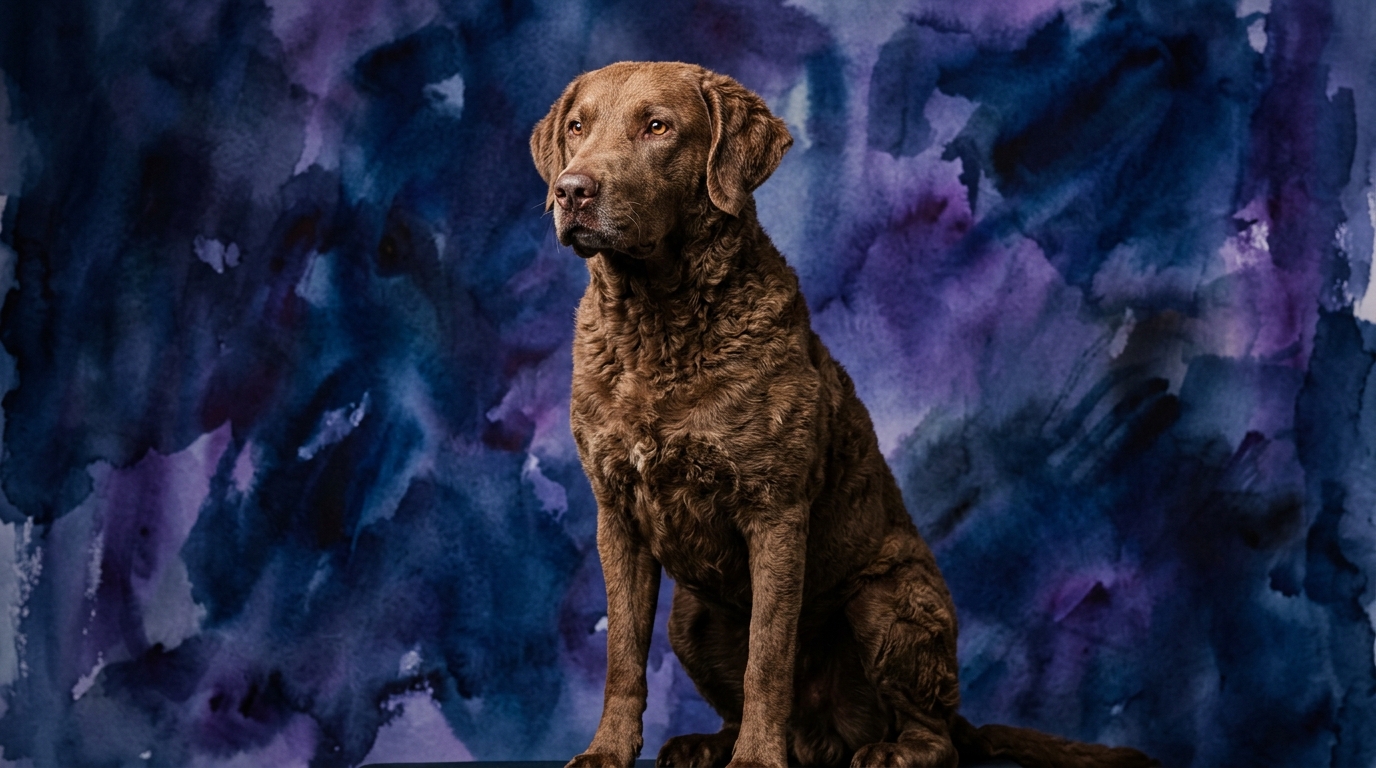
The Chesapeake Bay Retriever (CBR) exhibits a robust cognitive profile tailored for its working heritage. Their Problem Solving is rated 4/5, indicating a strong capacity for figuring out complex tasks, often involving environmental navigation or retrieval challenges. Training Speed is also 4/5, reflecting their eagerness to learn and retain new commands efficiently. In Social Intelligence, they score 3/5, typically reserved with strangers but deeply loyal to their family. Their Instinctive Drive, rated 3/5, is channeled purposefully towards tasks like fetching and water work, showing focused persistence. Finally, their Memory is 4/5, serving them well in recalling complex sequences and locations during work.
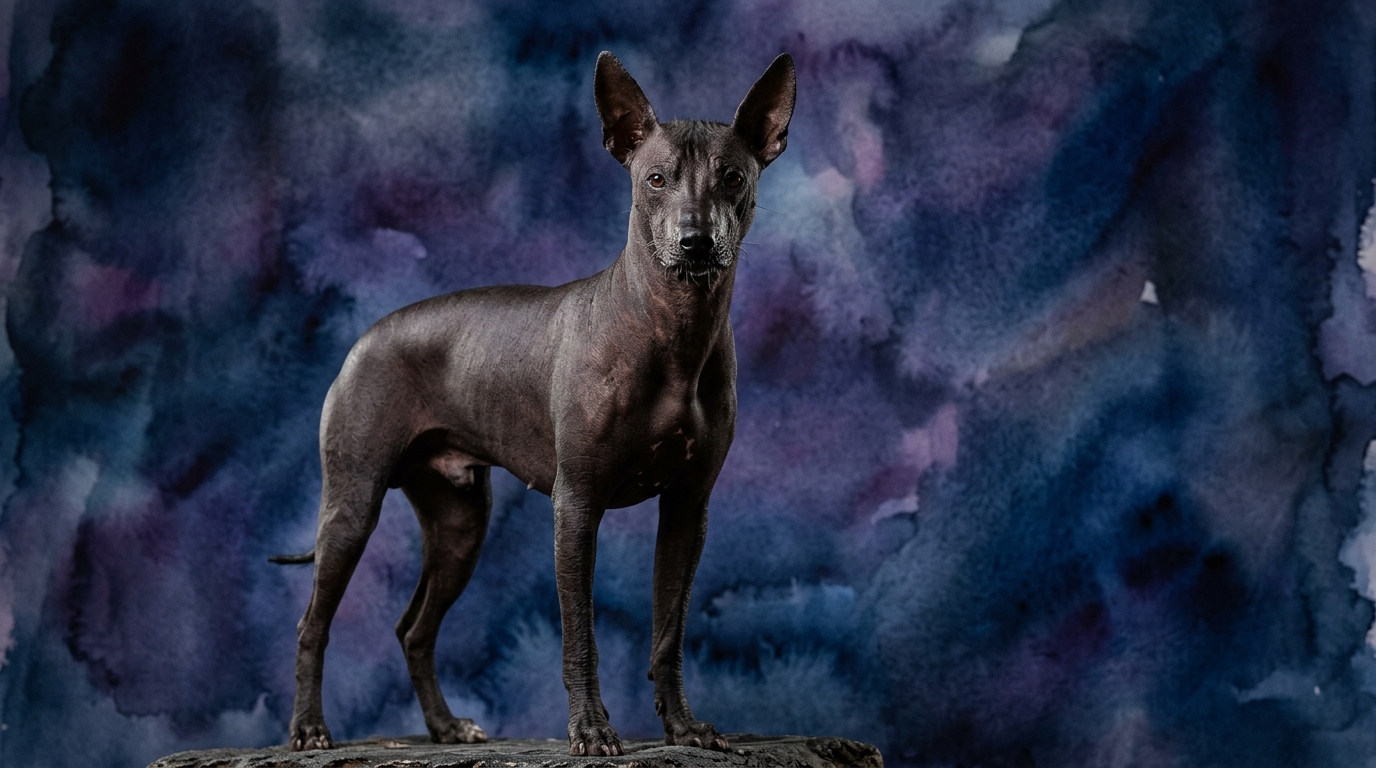
The Xoloitzcuintli (Xolo) presents a different, more nuanced cognitive landscape. Their Problem Solving is 3/5, suggesting a thoughtful, observational approach rather than overt physical determination. Training Speed is 3/5, meaning they learn steadily but require patient, engaging methods due to an independent streak. Social Intelligence for Xolos is 3/5; they are profoundly devoted to their inner circle but often aloof with outsiders. Their Instinctive Drive, also 3/5, manifests as natural alertness and a moderate prey drive, often expressed as vigilance and territorial awareness. Their Memory is rated 3/5, sound for routines and familiar environments, though perhaps less immediate for complex, multi-stage tasks.
Where the Chesapeake Bay Retriever Excels Cognitively
The Chesapeake Bay Retriever clearly demonstrates a cognitive edge in areas demanding focused task execution and retention. Their superior problem-solving skills, rated 4/5, allow them to dissect complex environmental challenges, such as navigating dense cover or icy waters to retrieve. This isn't just about physical ability; it's about making quick, effective decisions under pressure, learning from each attempt, and adapting their strategy.
Coupled with a 4/5 rating in training speed, CBRs absorb new information and commands with impressive efficiency, turning lessons into ingrained habits quickly. Their strong memory, also rated 4/5, reinforces this, enabling them to recall intricate sequences of tasks or locations with remarkable accuracy, making them highly dependable in demanding working roles. This combination of swift learning, practical problem-solving, and robust memory makes them particularly adept at roles requiring consistent, detail-oriented performance.
Where the Xoloitzcuintli Shines Cognitively
While the Xoloitzcuintli may not match the Chesapeake Bay Retriever's task-oriented metrics, its cognitive strengths lie in its nuanced social awareness within its chosen family and an independent problem-solving approach. With a social intelligence rating of 3/5, the Xolo builds profound, almost intuitive bonds with its immediate human companions, often anticipating needs and moods with subtle cues.
Their problem-solving, also rated 3/5, manifests as a thoughtful, observational intelligence. Instead of direct, forceful action, a Xolo might quietly assess a situation, exploring different angles or waiting for an opportunity, demonstrating a cleverness that relies on perception and strategy rather than sheer drive. This breed's intelligence is often understated, expressed through deep loyalty, acute sensory perception, and a discerning nature that makes them excellent, albeit reserved, companions.
Which is Easier to Train and Why
The Chesapeake Bay Retriever generally presents as the more straightforward breed to train due to its higher scores in Training Speed (4/5) and a strong desire for engagement. Their inherent eagerness to work and retrieve means they are often highly motivated by tasks and praise, making them receptive to consistent instruction. A CBR will typically pick up new commands and routines with fewer repetitions and demonstrate a more consistent recall, driven by their instinctive drive to perform and please.
In contrast, the Xoloitzcuintli, with a 3/5 rating in Training Speed, requires a more patient and nuanced approach. Xolos possess an independent streak and can be less overtly eager to please, meaning trainers must focus on making sessions engaging and rewarding to maintain their interest. While capable of learning, their progress might be slower, and their responses more considered, requiring trainers to understand their thoughtful, sometimes aloof, nature rather than expecting immediate, enthusiastic compliance.
Suits Active Owners vs. Relaxed Owners
The cognitive profiles of these breeds suggest clear preferences for owner lifestyles. The Chesapeake Bay Retriever, with its strong problem-solving and training speed, coupled with its instinctive drive, thrives with active owners who can provide consistent mental and physical challenges. Owners who enjoy outdoor activities like hiking, swimming, or dog sports, and who are prepared to engage in regular, structured training sessions, will find a CBR to be a highly fulfilling companion. Their intelligence is best utilized when given a "job" to do, even if that job is fetching a ball repeatedly or mastering complex obedience.
Conversely, the Xoloitzcuintli, with its more moderate scores across the board and deep social intelligence focused on its immediate family, is better suited for owners who appreciate a more relaxed, yet deeply bonded, companionship. While they enjoy walks and playtime, their mental stimulation often comes from observation and interaction within the home. A Xolo owner appreciates a devoted, discerning presence who values quiet companionship and intellectual engagement that doesn't necessarily involve high-octane physical demands.
The Verdict
Choose the Chesapeake Bay Retriever if you seek a dedicated, task-oriented canine partner eager for structured activity and consistent challenges.
Opt for the Xoloitzcuintli if you prefer a thoughtful, deeply loyal companion whose intelligence manifests in nuanced social bonds and quiet observation within a calmer home environment.
🧠 Find Your Pet's IQ Score
Our Pet IQ Lab assessment covers 25+ tests across 5 cognitive dimensions — personalized to your breed.
Take the Full IQ Test →Frequently Asked Questions
Does a higher Coren ranking mean a dog is inherently "smarter"?
Coren's ranking primarily assesses "working and obedience intelligence," focusing on trainability and command acquisition. While valuable, it doesn't encompass all facets of canine cognition, such as problem-solving in natural environments or social-emotional intelligence.
How does a Xoloitzcuintli's natural instinct manifest compared to a Chesapeake Bay Retriever's?
A Xolo's instincts often lean towards vigilance, observation, and deep bonding with its family, acting as a discerning guardian. A Chesapeake Bay Retriever's instincts are strongly geared towards retrieving, water work, and persistent task completion in challenging outdoor settings.
Can a Xoloitzcuintli participate in dog sports despite its lower training speed score?
Absolutely, Xoloitzcuintlis can excel in dog sports like agility or obedience, particularly with patient, positive reinforcement and a focus on building engagement. Their lower training speed score simply indicates they may require more repetition and motivation than a breed like the Chesapeake Bay Retriever, not an inability to learn.