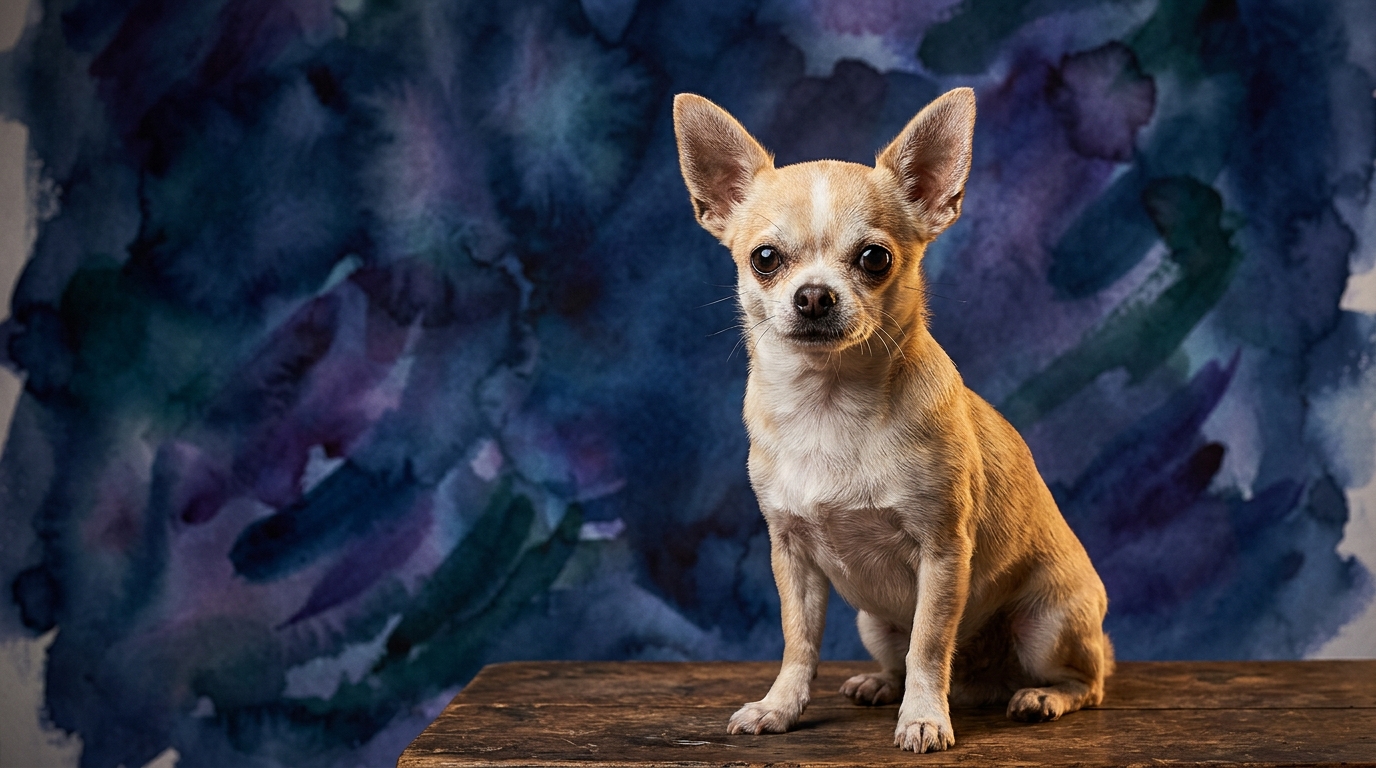
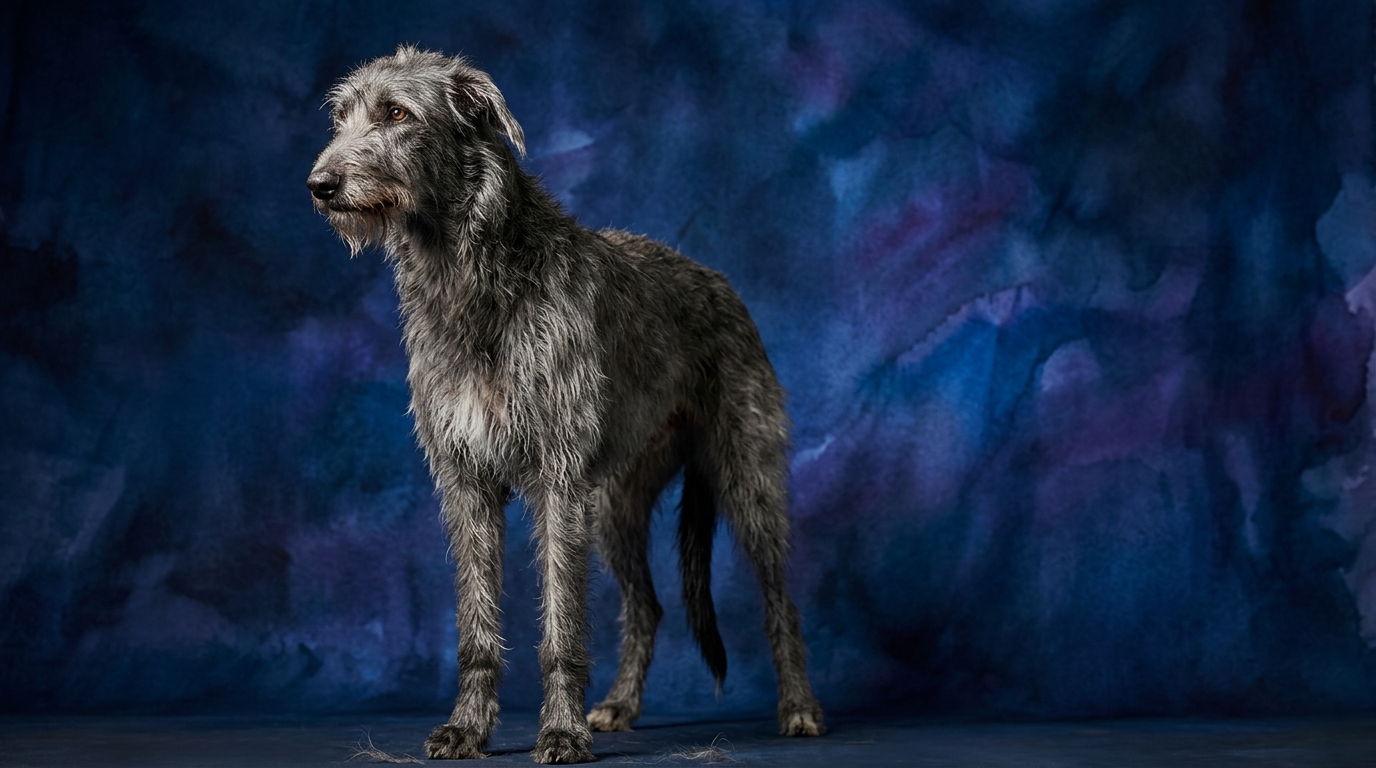
Side-by-Side IQ Profile: Chihuahua vs. Scottish Deerhound
The Cosmic Pet Pet IQ Lab assesses canine intelligence across five key dimensions, offering a nuanced view beyond simple obedience scores. Here's how the Chihuahua and Scottish Deerhound compare.
**Chihuahua (Toy Group, Coren Rank #67):** Problem Solving 3/5, Training Speed 3/5, Social Intelligence 4/5, Instinctive Drive 3/5, Memory 4/5.
**Problem Solving (3/5):** Chihuahuas show an average capacity for navigating new challenges, often applying learned patterns rather than inventing novel solutions. They can manage simple puzzles but may find multi-step or abstract tasks more demanding.
**Training Speed (3/5):** Their receptiveness to training is moderate, demanding consistent, positive reinforcement. While capable of learning commands, their motivation might decrease if training lacks engagement or immediate rewards.
**Social Intelligence (4/5):** This breed excels at interpreting human cues and emotional states, frequently forming deep, empathetic connections. They are adept at discerning subtle body language and vocal tones, making them highly responsive companions.
**Instinctive Drive (3/5):** Chihuahuas possess a moderate instinctive drive, often expressed as territoriality or a strong desire for companionship. Their drive focuses less on complex tasks and more on securing comfort and their social standing within the family.
**Memory (4/5):** Their strong memory enables them to retain commands, routines, and experiences effectively. This contributes to their ability to learn household rules and remember individuals or locations over time, even after extended periods.
**Scottish Deerhound (Hound Group, Not Coren-Ranked):** Problem Solving 3/5, Training Speed 3/5, Social Intelligence 3/5, Instinctive Drive 3/5, Memory 3/5.
**Problem Solving (3/5):** Scottish Deerhounds display an average problem-solving ability, capable of handling practical challenges in their environment. Their solutions are typically direct and goal-oriented, especially when tied to their natural instincts.
**Training Speed (3/5):** Like Chihuahuas, their training speed is moderate. They can learn commands, but their independent hound nature necessitates patience and understanding, often responding best to methods respecting their free-thinking spirit.
**Social Intelligence (3/5):** While affectionate with their families, Scottish Deerhounds show a moderate social intelligence, meaning they are generally attuned to their immediate human companions but might be less overtly expressive or universally engaging with strangers.
**Instinctive Drive (3/5):** Their instinctive drive, rated 3/5, is strongly rooted in their sighthound heritage, encompassing a powerful prey drive and a yearning for open spaces. This drive is a fundamental aspect of their behavior.
**Memory (3/5):** Scottish Deerhounds possess an average memory, allowing them to recall familiar routes, individuals, and basic commands. They can retain learned behaviors, but perhaps not with the same depth or longevity as breeds with higher scores.
Where the Chihuahua Wins Cognitively
Chihuahuas demonstrate a clear cognitive edge in two key areas: social intelligence and memory. Their 4/5 social intelligence rating indicates a superior capacity to interpret human emotions, intentions, and subtle cues. This manifests in their remarkable ability to comfort owners during distress, anticipate needs, or even subtly influence situations to their advantage through charm. They are often profoundly attuned to the household's emotional climate, acting as sensitive barometers, making them exceptional emotional support companions capable of intricate communication patterns with their human counterparts that extend beyond simple command-response.
Furthermore, their 4/5 memory score means Chihuahuas retain learned information and experiences with impressive clarity and duration. They are quick to recall routines, household rules, and specific training commands, making them reliable in established environments. This strong recall also contributes to their ability to recognize individuals and remember past interactions, fostering deep, lasting bonds. A Chihuahua might remember a specific hiding spot for treats or a particular person who always offers extra affection, demonstrating a sustained recollection of positive associations.
Where the Scottish Deerhound Wins Cognitively
While not outscoring the Chihuahua in any specific dimension, the Scottish Deerhound’s cognitive strengths lie in the *application* of its balanced 3/5 scores, particularly when these align with its inherent breed purpose. Their problem-solving, training speed, and instinctive drive, while individually average, coalesce into a focused intelligence for their sighthound role. For instance, their instinctive drive, though rated 3/5, is powerfully directed towards pursuit and independent thought in the field. This translates to an acute awareness of their environment, an impressive ability to spot distant movement, and the cognitive processing speed to initiate pursuit without human command.
This isn't about solving complex puzzles, but about rapid, effective decision-making in real-world, high-stakes scenarios. Their average memory, combined with their drive, allows them to learn vast territories and remember prey patterns, a critical cognitive function for a hunting breed. Furthermore, their problem-solving, though 3/5, is often demonstrated through navigating varied terrain or anticipating the movements of quarry, requiring a different kind of cognitive agility than a toy breed might display. They win in the realm of practical, independent, and environmentally-aware cognition, where self-reliance and acute sensory processing are paramount.
Which is Easier to Train and Why
Assessing ease of training between these two breeds requires understanding their distinct motivations and behavioral underpinnings. The Chihuahua, with its 3/5 training speed, can be moderately receptive to learning. Their higher social intelligence (4/5) and strong memory (4/5) are significant advantages. Chihuahuas are often highly motivated by pleasing their primary caregiver and receiving affection or food rewards. Their strong memory helps them retain commands and routines quickly, reducing the need for constant repetition once a concept is grasped. However, their small size and sometimes feisty personality mean they can be easily distracted or, if not properly socialized, become defensive, requiring a patient approach. Positive reinforcement methods work best, leveraging their desire for connection.
In contrast, the Scottish Deerhound also has a 3/5 training speed, but their independent hound mentality presents different challenges. Their instinctive drive (3/5), particularly their prey drive, means they can be easily distracted by scents or movement in their environment, making off-leash reliability a significant training hurdle. They are less driven by a need to please and more by their own internal motivations, requiring trainers to make lessons engaging and to understand the hound's perspective. While they can learn, it might take more creative and persistent effort to override their natural inclinations. Therefore, for general obedience within a home environment, the Chihuahua might be perceived as *easier* to train due to their strong desire to please and superior memory, which translate into more consistent adherence to learned behaviors, provided their focus is maintained. The Deerhound demands a trainer who respects their independent spirit and can tap into their intrinsic drives in a productive way.
Which Suits Active Owners vs. Relaxed Owners
The choice between a Chihuahua and a Scottish Deerhound based on owner lifestyle preferences is quite distinct. The Chihuahua, despite its lively personality, generally suits more relaxed owners. Their exercise needs are modest, often satisfied with short walks or indoor play. Their social intelligence (4/5) means they thrive on close human companionship and are content to be lap dogs for much of the day, making them ideal for individuals or families seeking a constant, affectionate presence. While they enjoy mental stimulation, this can often be provided through interactive toys, puzzle feeders, or short training sessions within the home. Their adaptability to apartment living and lower energy output aligns perfectly with a more sedentary or home-centric lifestyle.
Conversely, the Scottish Deerhound is a better match for active owners. Despite their calm demeanor indoors, their sighthound heritage and instinctive drive (3/5) demand significant opportunities for running and stretching their long legs in a safe, enclosed space. They require regular, vigorous exercise to be truly content and to prevent boredom-related behaviors. While their training speed and social intelligence are moderate, they do form deep bonds and enjoy being part of family activities that involve the outdoors. Owners who enjoy long hikes, secure off-leash opportunities, or even participate in canine sports like lure coursing will find their Deerhound a willing and capable partner. They need space to truly express their physicality, making them less suitable for owners with limited outdoor access or those who prefer minimal daily exercise commitments.
The Verdict
Opt for a Chihuahua if you seek a highly perceptive, emotionally attuned companion with a strong memory, content with a relaxed lifestyle and providing consistent affection and charm.
Select a Scottish Deerhound if you are an active owner who can provide ample space and regular vigorous exercise, appreciating a dignified, independent companion whose intelligence excels in practical, outdoor-oriented scenarios.
🧠 Find Your Pet's IQ Score
Our Pet IQ Lab assessment covers 25+ tests across 5 cognitive dimensions — personalized to your breed.
Take the Full IQ Test →Frequently Asked Questions
Are Chihuahuas good at learning tricks?
Yes, Chihuahuas can be quite good at learning tricks, leveraging their moderate training speed, strong memory (4/5), and desire to please their owners. Short, positive training sessions with tasty rewards will yield the best results for teaching them a variety of fun behaviors.
Do Scottish Deerhounds require a lot of mental stimulation?
While not typically requiring complex puzzle-solving, Scottish Deerhounds do benefit from mental stimulation that taps into their natural instincts. Activities like scent work, exploring new environments, or lure coursing can satisfy their cognitive needs and keep them engaged.
How do their social intelligence scores impact their interactions with other pets?
A Chihuahua's higher social intelligence (4/5) often means they are adept at navigating social dynamics, potentially forming strong bonds with other household pets if properly socialized. A Scottish Deerhound's moderate social intelligence (3/5) suggests they might be more reserved or selective in their animal friendships, though they can certainly live harmoniously with other well-matched pets.