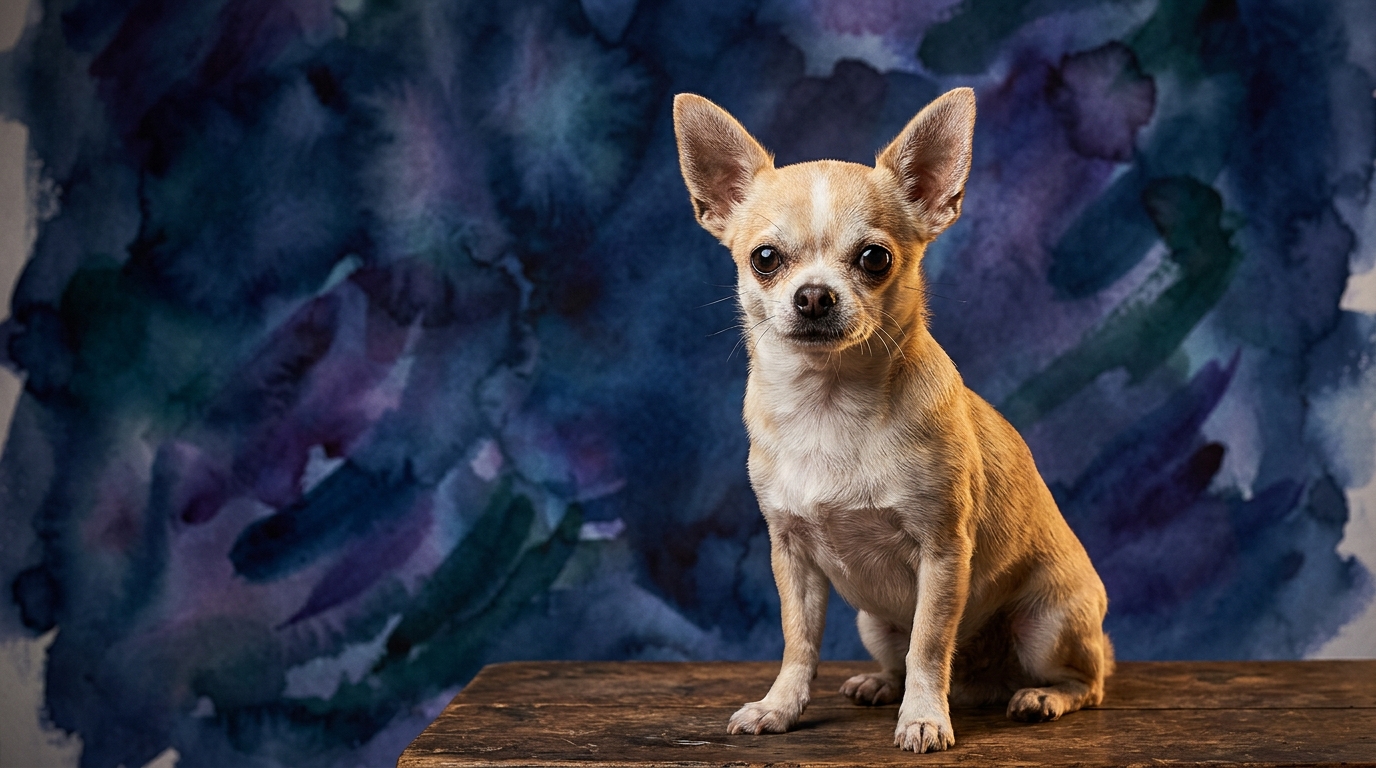
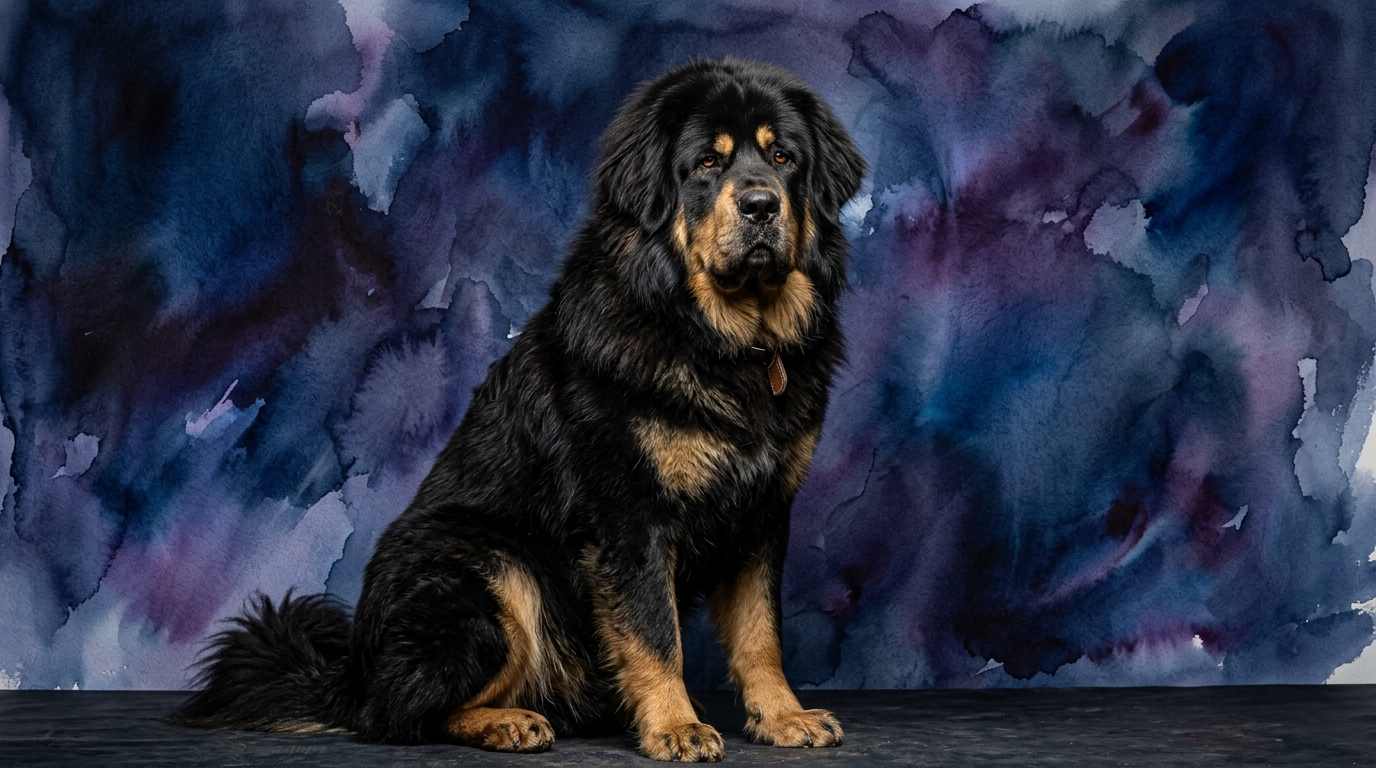
Side-by-Side Cognitive Profiles
Our Cosmic Pet Pet IQ Lab's assessment reveals intriguing insights into the cognitive make-up of the Chihuahua and the Tibetan Mastiff, offering a deeper understanding than traditional obedience rankings alone. While Stanley Coren's intelligence rankings place the Chihuahua at #67, reflecting a respectable capacity for obedience learning, the Tibetan Mastiff remains unranked, common for breeds whose roles emphasize independent judgment over strict adherence to human commands.
Delving into specific dimensions, the Chihuahua exhibits a 'Problem Solving' score of 3/5, indicating a moderate ability to navigate novel situations or obstacles. Its 'Training Speed' also sits at 3/5, suggesting a reasonable pace for acquiring new behaviors. It truly shines in 'Social Intelligence' at 4/5, demonstrating keen perception of human emotions and cues, complemented by a strong 'Memory' at 4/5, allowing effective retention of learned experiences. Its 'Instinctive Drive' is rated 3/5, pointing to a balanced expression of innate behaviors.
The Tibetan Mastiff, revered for ancient guardianship, presents a consistent cognitive profile. It shares the Chihuahua's 'Problem Solving' (3/5) and 'Training Speed' (3/5), suggesting similar foundational capabilities. However, its 'Social Intelligence' is rated 3/5, indicating more selective or reserved engagement, particularly outside its immediate family. Its 'Instinctive Drive' matches at 3/5, reflecting powerful, intrinsic guardian behaviors, while 'Memory' is 3/5, implying solid but perhaps less nuanced recall. This profile paints a picture of intelligence deeply rooted in its purpose.
Chihuahua's Cognitive Edge
The Chihuahua clearly demonstrates a cognitive advantage in areas vital for close companionship and intricate social bonding. Its superior 'Social Intelligence' at 4/5 allows it to finely tune into human moods, intentions, and subtle shifts in household dynamics. This acute sensitivity fosters profound connection, enabling Chihuahuas to anticipate owner needs or react appropriately to emotional states, making them exceptionally empathetic companions.
Furthermore, the Chihuahua's 4/5 'Memory' score provides a significant edge in learning and adapting within a domestic environment. This robust memory means they quickly recall commands, associate specific words with actions, and remember routines. This strong recall, combined with their social acumen, facilitates smoother daily living and more nuanced communication with their human family, remembering subtle cues or preferred pathways.
Tibetan Mastiff's Unique Cognitive Strengths
While the Tibetan Mastiff's scores might not surpass the Chihuahua's, its cognitive architecture excels in a different, equally vital domain: the application of intelligence to its primary, ancient role as a formidable guardian. Its 'Problem Solving' (3/5) and 'Instinctive Drive' (3/5), though numerically similar, are channeled through a distinct evolutionary lens, focusing on independent decision-making in complex, high-stakes scenarios.
The Tibetan Mastiff's cognitive strength lies in independently assessing threats and executing protective strategies without constant human direction. Its 3/5 'Problem Solving' isn't about puzzle toys; it’s about discerning between a friendly visitor and an intruder, or evaluating environmental changes. This requires specific situational awareness and decisive action. Similarly, its 3/5 'Instinctive Drive' manifests as unwavering territorial defense, a powerful, self-directed cognitive function underpinning its identity as a guardian.
Trainability: A Tale of Two Temperaments
Both breeds score 3/5 for 'Training Speed,' suggesting a similar foundational capacity to learn commands at a moderate pace. However, real-world trainability is significantly influenced by temperament and motivation. The Chihuahua, with its 4/5 'Social Intelligence' and 4/5 'Memory,' tends to be highly motivated by human interaction and praise, making positive reinforcement a powerful tool. They often enjoy learning new tricks as it deepens their bond and provides mental engagement.
The Tibetan Mastiff, despite the same 3/5 'Training Speed,' presents a different training challenge due to its inherent independence and reserved 'Social Intelligence' (3/5). Bred for autonomous guarding decisions, they are not typically eager to please like a companion breed. Their motivation stems from respect. Training a Tibetan Mastiff requires immense patience, consistency, and understanding of their guardian mindset, focusing on building a trusting relationship where they respect your leadership. Their 'Instinctive Drive' for guarding can sometimes override a learned command if a threat is perceived.
Ideal Owners: Active Engagement vs. Thoughtful Management
The choice between these breeds often comes down to an owner's lifestyle and capacity to meet distinct needs. The Chihuahua, while enjoying walks, is well-suited for more relaxed owners or those with limited outdoor space. Their exercise needs are modest, often satisfied with indoor play and short strolls. Their 'Social Intelligence' thrives on constant companionship, making them ideal for owners who are home frequently and enjoy a constant, affectionate presence.
Conversely, the Tibetan Mastiff demands an owner prepared for thoughtful, consistent management and significant commitment. While not needing to run for miles, their mental and physical well-being relies on ample secure space, consistent socialization, and understanding of their guardian instincts. Owners must manage their powerful 'Instinctive Drive' (3/5) and ensure their environment allows them to fulfill their inherent need to observe and protect, without becoming overprotective. They are not for casual owners, but for those appreciating majestic independence and committed to a structured, secure environment.
The Verdict
Choose a Chihuahua if you seek a highly perceptive, affectionate companion whose keen social intelligence and memory will enrich your daily life in a smaller living space.
Opt for a Tibetan Mastiff if you are an experienced, dedicated owner prepared to respect and manage a majestic, independent guardian whose intelligence is rooted in protection and territorial awareness.
🧠 Find Your Pet's IQ Score
Our Pet IQ Lab assessment covers 25+ tests across 5 cognitive dimensions — personalized to your breed.
Take the Full IQ Test →Frequently Asked Questions
Is a Chihuahua easier to train than a Tibetan Mastiff?
While both breeds score similarly in training speed, the Chihuahua's higher social intelligence and eagerness to please often make it more responsive to positive reinforcement. The Tibetan Mastiff's independent nature and strong guardian instincts require a more patient, consistent approach focused on building respect rather than simple obedience.
Do Chihuahuas or Tibetan Mastiffs have better memory?
According to our Cosmic Pet Pet IQ Lab, Chihuahuas have a superior memory score of 4/5 compared to the Tibetan Mastiff's 3/5. This suggests Chihuahuas are generally more adept at recalling commands, routines, and past associations, which aids in their adaptability as companion animals.
Which breed is better for a family with children?
This largely depends on the specific dog's temperament and the children's behavior. Chihuahuas, with their delicate stature, can be easily injured by rough play and may become nippy if not handled gently. Tibetan Mastiffs, while potentially protective, are large and powerful, requiring careful supervision and extensive socialization to ensure appropriate interactions with children. Neither is inherently 'better' without considering individual circumstances and extensive training.