
Side-by-Side IQ Profile: Interpreting the Scores
Both the Chow Chow and the Xoloitzcuintli register a consistent 3 out of 5 across all five cognitive dimensions in The Cosmic Pet Pet IQ Lab. This identical scoring suggests neither breed is a cognitive outlier, but rather possesses a functional, practical intelligence suited to their historical purposes and inherent dispositions. For the Chow Chow, a '3/5' in problem-solving often translates to an independent, self-sufficient approach, where they might assess situations and devise solutions based on their own judgment rather than seeking human direction, reflecting their ancient roles as guardians and companions in secluded environments. Their training speed at '3/5' indicates they are capable learners, but their famed aloofness means motivation must be carefully cultivated, as they are not inherently eager to please and may require consistent, patient methods to internalize commands. Social intelligence at '3/5' for the Chow Chow manifests as deep loyalty to their immediate family, combined with a reserved, sometimes wary, demeanor towards strangers, indicating a discerning social filter. Their instinctive drive at '3/5' points to a moderate but present guarding instinct and a desire for routine, without the intense prey drive or herding impulses of some other breeds. Finally, their memory at '3/5' suggests they retain learned behaviors and social interactions effectively, particularly those tied to their established routines and household members.
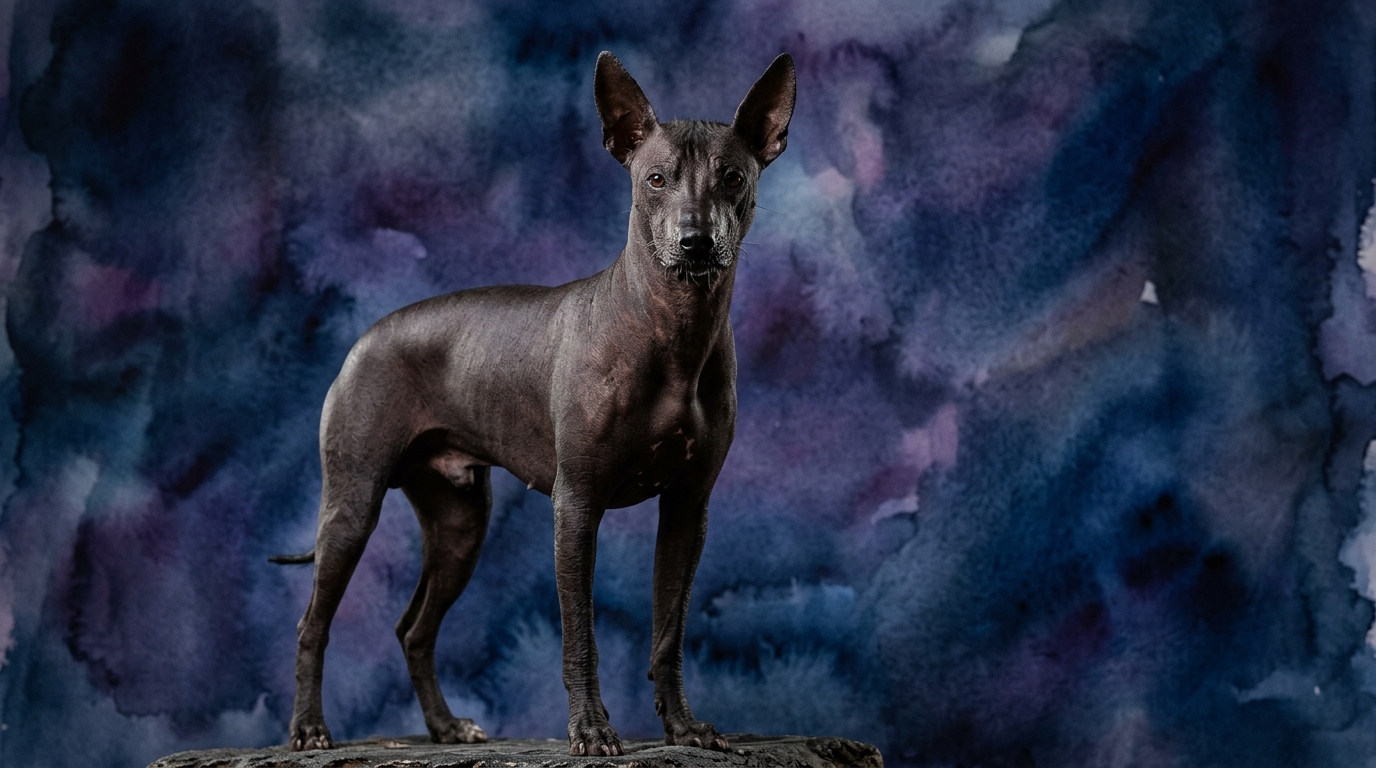
The Xoloitzcuintli, with its matching '3/5' scores, expresses these cognitive dimensions through a different lens. Their problem-solving at '3/5' often appears as adaptability and resourcefulness within their environment, perhaps figuring out how to get comfortable or manipulate objects to their advantage, stemming from their ancient role as companion and healer. Training speed at '3/5' for the Xolo indicates a dog that learns at a steady pace, but one whose sensitivity and strong bond with their primary human means training success often hinges on positive reinforcement and trust, as harsh methods can be counterproductive. Their social intelligence at '3/5' is characterized by an intense devotion to their family, often displaying a heightened awareness of human emotions and a tendency to 'shadow' their chosen people, while remaining reserved or cautious with outsiders, similar to the Chow Chow but perhaps with a more pronounced need for proximity. Instinctive drive at '3/5' for the Xolo is typically expressed as a moderate prey drive, often paired with a strong desire for physical closeness and a 'pack' mentality within their human family. Their memory, also at '3/5', is reliable for commands and routines, particularly when those routines involve their beloved humans, demonstrating their capacity to recall specific interactions and established household norms.
Where the Chow Chow's Cognition Shines
The Chow Chow's specific cognitive strengths lie in their independent problem-solving and discerning social intelligence. While both breeds score 3/5, the Chow Chow's ancestral role as a guardian in diverse, often solitary, settings has likely honed a unique form of self-reliance. This means they are often adept at assessing situations and making decisions without constant human input, particularly regarding their territory or family's perceived safety. For instance, a Chow Chow might independently decide the best vantage point to observe their surroundings or identify a novel object as something to be approached with caution, rather than immediately seeking handler guidance. This translates into a dog that can be trusted to 'think for itself' in certain contexts, requiring less micromanagement once boundaries are established.
Furthermore, their social intelligence, while appearing aloof to strangers, is profound within their family unit. They possess a keen memory for who belongs and who does not, and they are quick to pick up on shifts in household dynamics or perceived threats. This isn't just about recognizing faces; it's about remembering specific interactions, assessing intentions, and reacting accordingly, offering a quiet, watchful presence that many owners find deeply reassuring. Their cognitive strength here lies in a highly selective social filter, allowing them to dedicate their full emotional and intellectual capacity to their inner circle, making them exceptional, if reserved, family protectors.
Where the Xoloitzcuintli's Cognition Excels
The Xoloitzcuintli's cognitive advantages often manifest in their unique blend of social acuity and adaptable problem-solving, even with a 3/5 score across the board. Their ancient history as companion and often 'healing' dogs in various cultures has fostered a heightened sensitivity to human emotions and routines. A Xolo might excel at picking up on subtle cues from their owner, demonstrating an intuitive understanding of mood or needs that goes beyond simple command recognition. This social intelligence allows them to adapt their behavior to fit the emotional climate of the home, often seeking to comfort or simply be present when their human is distressed, a testament to their deep-seated empathy and observational skills.
In problem-solving, the Xolo's strength lies in their adaptability and resourcefulness within a domestic setting. While not necessarily devising complex solutions to abstract puzzles, they are often clever at navigating their environment to maximize comfort or achieve a desired outcome, such as figuring out how to get under a blanket or gently 'herd' their owner towards the couch for cuddles. Their memory, while rated 3/5, is particularly strong for routines and social interactions that reinforce their bond with their human family. They tend to remember specific people, places, and established household patterns with remarkable precision, which contributes to their overall sense of security and well-being, and makes them excellent at anticipating daily events like meal times or walks.
Training Dynamics: Chow Chow vs. Xoloitzcuintli
Despite both breeds scoring 3/5 in training speed, the *experience* of training them can differ significantly due to their inherent temperaments. The Chow Chow's independent nature means they are often not intrinsically motivated by a desire to please. They understand commands and learn routines, but they may weigh whether obeying is worth their effort or if their own inclination is more appealing. This requires an owner who is patient, consistent, and creative in finding high-value motivators, often food-based, and who understands that a Chow Chow's compliance is earned, not simply given. Training a Chow Chow is less about speed and more about building a respectful relationship where the dog chooses to cooperate, knowing what's expected but retaining their distinct personality.
The Xoloitzcuintli, while also scoring 3/5, often presents a different training dynamic rooted in their sensitivity and strong bond with their primary human. They are generally more eager to engage with their owner and respond well to positive reinforcement methods. However, their sensitivity means they can become easily discouraged or shut down by harsh corrections or inconsistency. Training a Xolo requires a gentle touch, clear communication, and an emphasis on building confidence. While they may not learn complex tricks at lightning speed, their desire for companionship often makes them more willing participants in training sessions, provided the environment is supportive and trusting. Therefore, while both learn at a moderate pace, the Xolo's emotional responsiveness can make the training journey feel smoother for an owner willing to invest in a gentle, bond-focused approach.
Lifestyle Match: Active vs. Relaxed Owners
When considering which breed aligns with an owner's lifestyle, their energy levels and social needs become paramount. The Chow Chow, while not a couch potato, is generally suited for owners who prefer a more relaxed pace. Their exercise requirements are moderate; a daily walk or two and some yard time are usually sufficient. They are not typically high-energy dogs that demand constant activity or engagement. What they do require is a calm, consistent home environment and owners who respect their independent nature. They thrive in homes where they can observe their surroundings, enjoy their personal space, and receive affection on their own terms, making them a good fit for individuals or families who appreciate a dignified, self-contained companion and are not seeking an overly effusive or demanding canine partner.
The Xoloitzcuintli, on the other hand, despite often being described as calm indoors, has higher exercise needs and a stronger desire for active companionship. They benefit from regular, vigorous exercise, such as long walks, jogs, or engaging playtime. Their intelligence and sensitivity mean they also thrive on mental stimulation and consistent interaction with their human family. A Xolo is more likely to be an 'active participant' in an owner's life, shadowing them from room to room and seeking physical closeness. Therefore, they are better suited for active owners who enjoy incorporating their dog into daily activities, are prepared for consistent training and socialization, and desire a highly bonded, engaged companion who thrives on shared experiences and close physical proximity.
The Verdict
Choose a Chow Chow if you value a dignified, independent companion with moderate exercise needs and appreciate a dog that offers deep loyalty on its own terms.
Opt for a Xoloitzcuintli if you are an active owner seeking a highly bonded, sensitive, and adaptable companion who thrives on consistent interaction and physical closeness.
🧠 Find Your Pet's IQ Score
Our Pet IQ Lab assessment covers 25+ tests across 5 cognitive dimensions — personalized to your breed.
Take the Full IQ Test →Frequently Asked Questions
Are Chow Chows difficult to train?
Chow Chows are not inherently difficult to train, but their independent nature means they require patient, consistent methods and strong motivation. They learn at a moderate pace (3/5 training speed) but may prioritize their own inclinations over immediate obedience, so building a respectful relationship is key.
Do Xoloitzcuintlis have high energy levels?
Xoloitzcuintlis generally have moderate to high energy levels, especially when young, and benefit from regular, vigorous exercise. While they can be calm indoors, they thrive on activity and mental stimulation, making them suitable for active owners who can meet their needs.
Which breed is better with children?
Both breeds can be good with children when properly socialized and raised, but their temperaments differ. Chow Chows are often more reserved and prefer older, respectful children, while Xoloitzcuintlis, with their strong family bonds, can be very devoted to children within their immediate family, though their sensitivity means interactions should always be supervised.