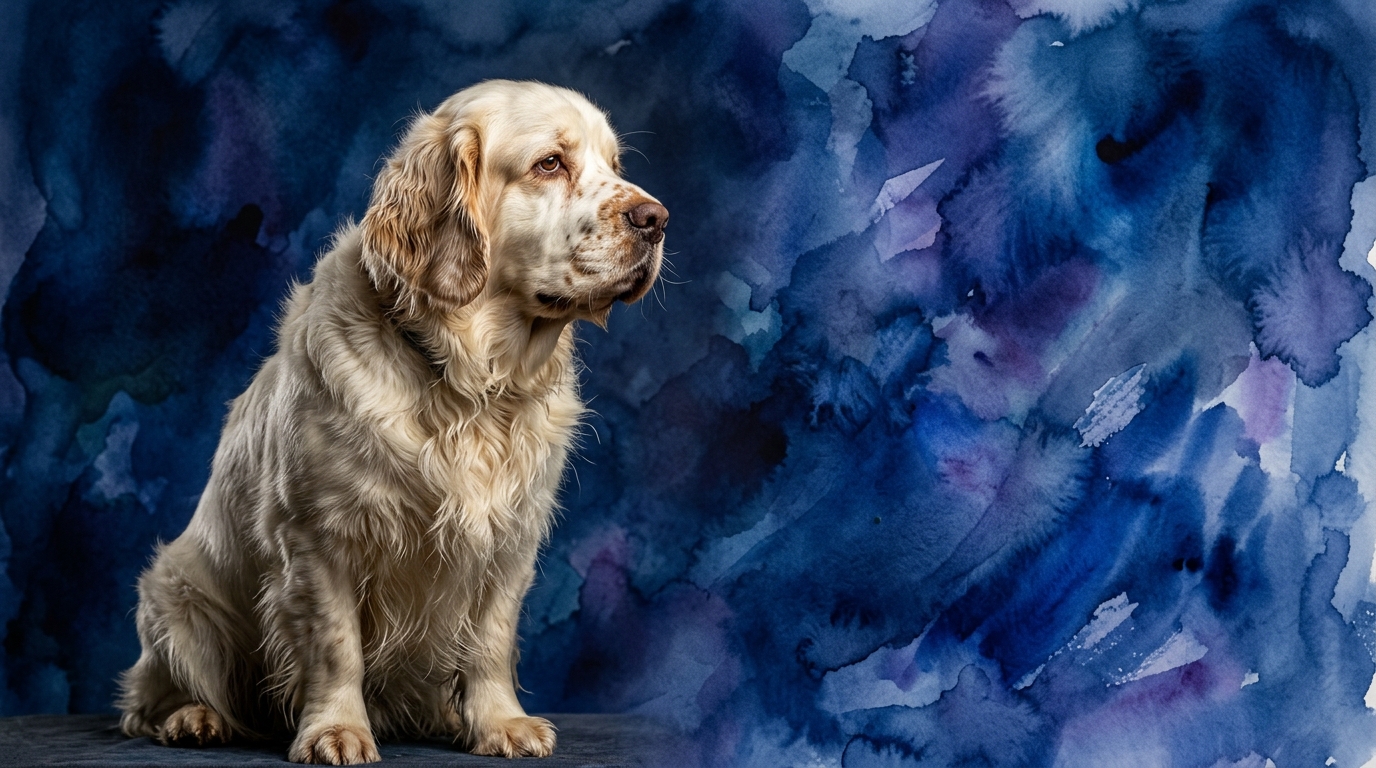

Side-by-Side IQ Profile: Clumber Spaniel vs. Basset Hound
The Cosmic Pet Pet IQ Lab provides a standardized framework for evaluating canine intelligence across five critical dimensions. While both the Clumber Spaniel (Sporting, Coren rank #55) and the Basset Hound (Hound, Coren rank #71) register a consistent 3/5 across all categories, a closer look at their breed-specific interpretations of these scores reveals their unique cognitive landscapes.
For the **Clumber Spaniel**:
**Problem Solving (3/5):** Clumbers demonstrate a methodical, persistent approach to challenges, often relying on their scenting abilities and physical attributes to navigate obstacles. They might not immediately grasp complex multi-step puzzles but will systematically work through them, showing patience rather than quick insight. Their sporting heritage means they excel at tasks requiring focus and endurance in the field.
**Training Speed (3/5):** These spaniels are generally willing to learn but require consistent, positive reinforcement. They can be a bit independent, not always rushing to comply, but once a command is understood and its purpose clear, they retain it well. Their slightly reserved nature means building a strong bond is key to unlocking their training potential.
**Social Intelligence (3/5):** Clumbers are observant of their human companions and often form deep, loyal bonds. They can read moods and respond with gentle affection, though they might not be overtly demonstrative. With other dogs, they are typically placid and tolerant, preferring harmony over conflict, reflecting their role as cooperative hunting partners.
**Instinctive Drive (3/5):** Their primary drive revolves around scent work and retrieving. They possess a strong desire to follow a trail and work game, which translates into a persistent curiosity about their environment. This drive is focused and purposeful, rather than broadly exploratory, making them excellent at tasks requiring sustained attention to a specific sensory input.
**Memory (3/5):** Clumbers possess a solid memory for commands, routines, and locations. Once they've learned something, it tends to stick. This reliability makes them consistent companions, though they may hold onto negative associations if training isn't handled with patience and fairness.
For the **Basset Hound**:
**Problem Solving (3/5):** Bassets approach problems with a singular focus: their nose. They are masters at navigating complex scent trails, demonstrating incredible determination to follow a lead. However, when a problem doesn't involve scent, their motivation can wane, and they might appear less interested in human-devised puzzles. Their “problem-solving” is often about persistence in a sensory task.
**Training Speed (3/5):** While capable of learning, Basset Hounds are famously independent and can be perceived as stubborn. They learn at their own pace, often weighing whether a command is worth their effort. Training requires immense patience, consistency, and highly motivating rewards. They will learn, but on their terms, making their “speed” a reflection of their willingness rather than their cognitive capacity.
**Social Intelligence (3/5):** Bassets are generally gregarious and friendly, enjoying the company of both humans and other animals. They are adept at using their charm (and soulful eyes) to get what they want. They might not be as finely tuned to subtle human emotional shifts as some breeds, but they thrive on companionship and positive interactions.
**Instinctive Drive (3/5):** The Basset Hound's instinctive drive is almost entirely dominated by their unparalleled sense of smell and the desire to track. This drive is incredibly powerful, often overriding other commands or distractions. Once on a scent, they become singularly focused, demonstrating immense endurance and tenacity.
**Memory (3/5):** Bassets remember scent trails and the locations of interesting smells with remarkable fidelity. They also remember routines, especially those involving food or comfort. However, their memory for human-imposed commands can seem selective, again tied to their motivation and the perceived reward for compliance.
Where the Clumber Spaniel Wins Cognitively
While their IQ scores appear identical, the Clumber Spaniel often shows a broader applicability of its cognitive skills. Their adaptability to varied tasks beyond pure scent tracking gives them an edge in environments requiring diverse engagement. Their sporting background means they are inherently more inclined to apply their problem-solving to a wider range of activities, from retrieving to navigating complex terrains, rather than solely focusing on a scent trail.
Clumbers also exhibit a stronger inclination towards cooperative learning. Their disposition as a gundog fosters a desire to work *with* a human partner, making them more receptive to understanding and executing multi-step commands that require sustained teamwork. This cooperative spirit, while not an explicit IQ dimension, significantly enhances their practical cognitive performance in a family setting.
Furthermore, Clumbers tend to integrate environmental information beyond just scent more actively in their problem-solving. While exceptional sniffers, they also use their sight and hearing to build a more holistic understanding of their surroundings, offering a more comprehensive approach to navigating challenges compared to the Basset's often singular reliance on olfaction.
Where the Basset Hound Wins Cognitively
The Basset Hound's cognitive prowess truly shines in its single-minded persistence in scent work. No other breed, perhaps, can match the Basset's unwavering focus and determination once they've locked onto a scent. Their problem-solving in this domain is unparalleled; they will meticulously unravel a complex scent puzzle with incredible endurance, demonstrating a specialized cognitive strength that few can rival.
Paradoxically, their independent decision-making, often perceived as stubbornness in training, is a significant cognitive strength in their original purpose. A Basset on a trail makes its own autonomous decisions, navigating terrain and distractions to follow the scent. This demonstrates an independent problem-solving ability that is highly effective within their specialized field, even if it challenges human-directed control.
Bassets also possess a distinct form of social intelligence: leveraging charm for desired outcomes. While both breeds score 3/5, the Basset's gregarious nature and soulful eyes make them masters at subtly influencing situations to their benefit, whether it's securing an extra treat or more attention. This ability to 'work' their humans for social outcomes is a specific cognitive advantage in managing their environment and companions.
Which is Easier to Train and Why
When it comes to ease of training, the Clumber Spaniel generally holds an advantage. Their Sporting group heritage means they are selectively bred to work in close partnership with humans, fostering a cooperative spirit. Their training speed, while rated 3/5, benefits significantly from their desire to please and their attentive nature. Clumbers are less likely to become singularly focused on external distractions, allowing for more consistent engagement during training sessions. They respond well to positive reinforcement and consistency, reliably retaining commands once learned, making them a more straightforward training partner.
The Basset Hound, in contrast, presents a more significant training challenge due to its pronounced independence and powerful instinctive drive. Their 3/5 training speed is often hampered by their tendency to prioritize captivating scents over human commands. Training a Basset requires immense patience, unwavering consistency, and highly motivating rewards. A Basset will certainly learn, but they will consistently evaluate whether the reward for compliance outweighs the irresistible allure of a captivating smell. Their perceived 'stubbornness' isn't a lack of cognitive ability but rather a strong prioritization of their innate hound instincts, demanding a different approach from their trainers.
Which Suits Active Owners vs. Relaxed Owners
The **Clumber Spaniel** is well-suited for owners who enjoy moderate activity. While not hyperactive, they require regular walks, opportunities for engaging scent work or retrieving games, and consistent mental engagement. They thrive in environments where they can be integral to family activities and have a 'job' to do, even if it's just a daily puzzle toy or an extended sniffy walk. Clumbers are adaptable but need consistent stimulation to prevent boredom and ensure their well-being.
The **Basset Hound** is best suited for relaxed owners who appreciate their calm, lounging demeanor but are also prepared for bursts of activity when a compelling scent presents itself. They are not high-energy dogs for sustained periods but necessitate daily, albeit leisurely, walks to satisfy their powerful sniffing instincts. Owners must be particularly vigilant about secure yards and always using a leash during walks due to their overwhelming drive to follow a scent. Bassets are excellent companions for quiet evenings, but their noses require dedicated time and opportunity for exploration.
The Verdict
Choose the Clumber Spaniel if you seek a cooperative, gentle companion who enjoys a mix of mental and physical engagement, and is generally more amenable to structured training across various tasks. They fit well into a moderately active household that appreciates a loyal, observant partner willing to work alongside them.
Choose the Basset Hound if you admire an independent, charming dog with an unparalleled sense of smell and a laid-back home demeanor, and you are prepared for the unique training challenges and the unwavering pull of their tracking instincts. They are ideal for owners who appreciate a dog's strong natural drives and can provide secure, scent-rich environments.
🧠 Find Your Pet's IQ Score
Our Pet IQ Lab assessment covers 25+ tests across 5 cognitive dimensions — personalized to your breed.
Take the Full IQ Test →Frequently Asked Questions
Are Clumber Spaniels better at learning tricks?
Clumber Spaniels generally show more enthusiasm for learning and performing tricks due to their cooperative nature and desire to engage with their owners. Their focus during training sessions is often more consistent than a Basset's, making them more receptive to multi-step commands required for tricks.
Do Basset Hounds ever stop following a scent?
Once a Basset Hound is on a scent, their instinctive drive can be incredibly powerful, making it very difficult to divert their attention. They will typically follow the trail until it ends or they are physically restrained, which is why secure leashes and yards are crucial for their safety.
Which breed is more adaptable to apartment living?
Both breeds can adapt to apartment living with proper exercise, but the Basset Hound might be slightly more suitable due to its lower sustained energy levels and preference for lounging. However, both require daily walks and mental stimulation; a Basset's nose needs "work" even in a small space.