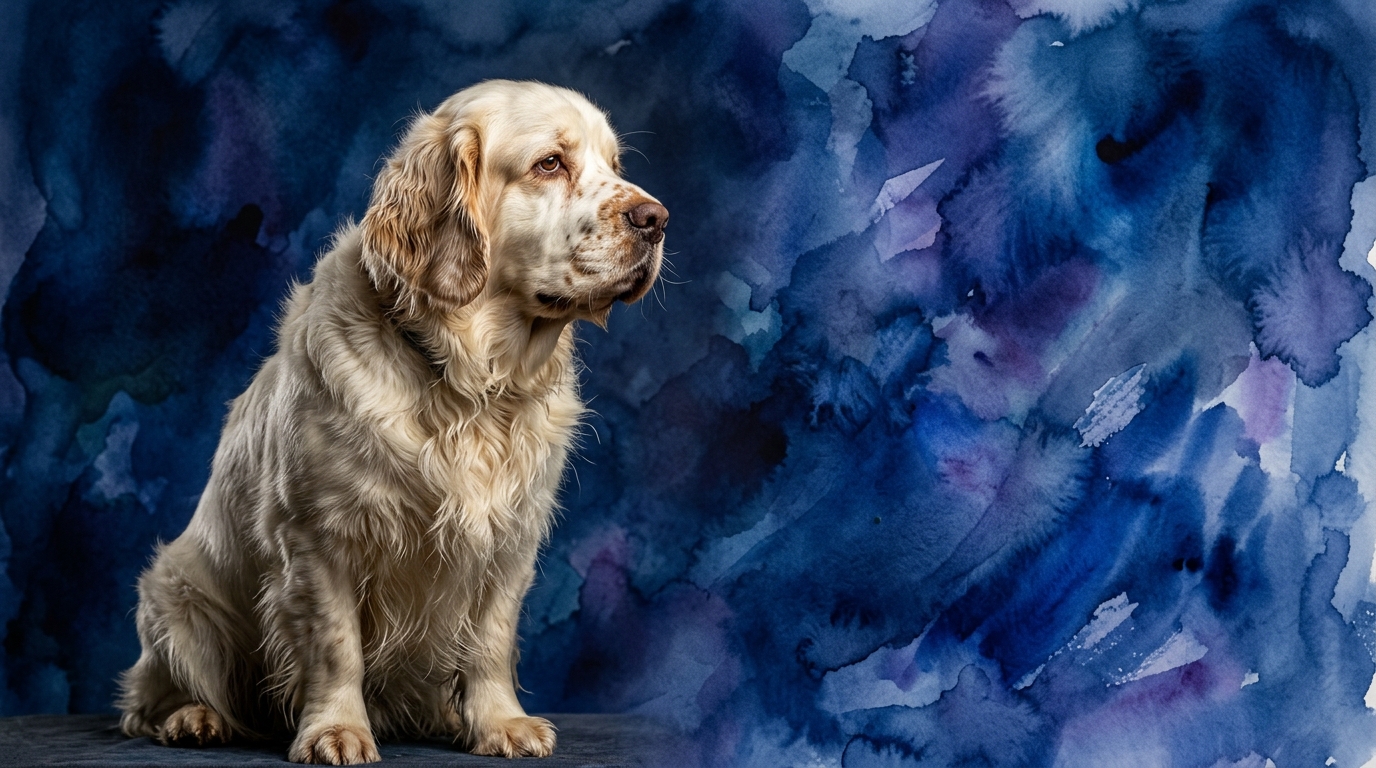

Side-by-Side Cognitive Profiles: A Deeper Look at Identical Scores
Both the Clumber Spaniel and the Dandie Dinmont Terrier register a consistent 3/5 across all five dimensions of our Cosmic Pet Pet IQ Lab assessment: Problem Solving, Training Speed, Social Intelligence, Instinctive Drive, and Memory. While these identical scores might suggest similar cognitive experiences, the reality is far more intricate, reflecting their divergent histories and inherent temperaments. For the Clumber Spaniel, a Sporting group dog bred to flush game quietly and methodically, a 3/5 in Problem Solving likely translates to a deliberate, sustained approach to challenges, preferring to work through a puzzle rather than impulsively reacting. Its 3/5 Training Speed indicates a capacity for learning new commands at a steady pace, often motivated by a desire to please its handler, while Social Intelligence at 3/5 suggests a strong understanding of family dynamics and human emotions, expressed with a calm dignity.
Conversely, the Dandie Dinmont Terrier, a spirited member of the Terrier group originally bred for hunting badgers and otters, expresses its 3/5 scores with a distinct terrier tenacity. Its Problem Solving at 3/5 might manifest as independent, resourceful thinking, where it quickly assesses a situation and devises a solution, often with a touch of stubborn determination. A 3/5 in Training Speed means it can grasp new concepts efficiently, but its independent streak might require more creative motivation and consistency from its trainer. Its Social Intelligence at 3/5 often involves a keen awareness of its environment and the individuals within it, allowing it to navigate social situations with a confident, sometimes assertive, demeanor. For both breeds, a 3/5 in Instinctive Drive reflects a moderate, inherent inclination towards their historical working roles—flushing for the Clumber, and hunting for the Dandie—while Memory at 3/5 signifies a solid ability to recall learned behaviors and routines, albeit perhaps with different triggers and contexts.
Where the Clumber Spaniel Excels Cognitively
The Clumber Spaniel's cognitive strengths, even with a 3/5 profile, often lie in areas demanding sustained focus and a methodical approach. Its heritage as a gundog that works closely with hunters in dense cover means it developed a capacity for quiet observation and patient execution. In problem-solving scenarios, a Clumber is more likely to engage with a task with calm perseverance, systematically exploring options rather than resorting to impulsive trial-and-error. This translates into an advantage in activities requiring prolonged attention, such as scent work that demands tracking a specific trail without distraction, or complex obedience routines where precision over speed is paramount.
Furthermore, the Clumber's social intelligence, while rated similarly, often manifests as a deep, quiet attunement to its immediate family. They are adept at picking up on subtle emotional cues from their primary caregivers, and their memory serves them well in recalling specific routines and preferences of their human companions. This makes them particularly responsive to consistent household structures and creates a stable, predictable environment that allows their cognitive abilities to flourish in a supportive context. Their unhurried nature allows for a more contemplative engagement with their surroundings, leading to thoughtful rather than reactive responses.
Where the Dandie Dinmont Terrier Shows a Cognitive Edge
The Dandie Dinmont Terrier, true to its terrier lineage, often demonstrates cognitive advantages in areas demanding quick, independent decision-making and tenacity. Its historical role of hunting vermin in challenging underground environments fostered a sharp, alert mind capable of rapid assessment and decisive action. When faced with a novel problem, a Dandie is more prone to innovative, sometimes audacious, attempts to solve it, often leveraging its physical capabilities and a strong sense of self-reliance. This makes them particularly adept at navigating complex or changing environments, quickly adapting to new situations, and finding creative ways to achieve their objectives, such as figuring out how to access a desired toy or treat.
The Dandie's instinctive drive, while also a 3/5, is channeled through a persistent, fearless spirit. This translates into a cognitive tenacity that fuels their problem-solving and learning. If a task sparks their interest or challenges their intellect, they are likely to pursue it with remarkable focus until a solution is found, even if it requires repeated attempts. Their social intelligence, though not overtly demonstrative like some breeds, is often expressed through a shrewd understanding of hierarchies and boundaries, allowing them to navigate complex social situations with other animals or people, often asserting their presence with a subtle, confident resolve. Their memory is particularly strong for routes, hiding places, and the effectiveness of past actions, making them highly efficient once they've learned a successful strategy.
Training Dynamics: Compliance vs. Creativity
When it comes to training, both breeds score a 3/5 in Training Speed, indicating a moderate ability to pick up new commands. However, the *approach* to training differs significantly due to their behavioral predispositions. The Clumber Spaniel, with its biddable nature and desire to work cooperatively, often responds well to traditional positive reinforcement methods. They thrive on clear instructions, consistency, and a calm, patient trainer. Their motivation often stems from pleasing their handler and the satisfaction of a job well done, making formal obedience and sequential task learning generally straightforward. They are less likely to challenge commands and more inclined to repeat behaviors that have yielded positive results, making them a steady and reliable training partner.
The Dandie Dinmont Terrier, while capable of learning just as quickly, presents a different training challenge. Their independent and sometimes stubborn terrier spirit means that training must be engaging, varied, and highly motivating. They require a trainer who can make learning feel like a game or a challenge, rather than a rote exercise. Repetitive drills might bore them, leading to disengagement or a display of their characteristic defiance. Success with a Dandie often hinges on understanding their motivations, using high-value rewards, and maintaining a sense of humor, as they will often try to 'outsmart' their trainer. While they learn quickly, getting them to *consistently perform* a command, especially if they perceive a better alternative, requires a deeper understanding of their personality and a commitment to making training a positive, stimulating experience.
Matching Breeds to Lifestyles: Active vs. Relaxed Owners
Considering their cognitive and behavioral profiles, the Clumber Spaniel and Dandie Dinmont Terrier appeal to different owner lifestyles. The Clumber Spaniel is an excellent fit for owners who appreciate a calm, steady companion. Their moderate instinctive drive and deliberate problem-solving nature make them well-suited for relaxed country walks, gentle family activities, and quiet evenings at home. They require regular, but not intense, exercise and thrive in an environment that values tranquility and routine. Owners who enjoy a dog that is present and affectionate without being overly demanding of constant stimulation will find a Clumber Spaniel to be a delightful and intelligent companion. Their consistent temperament makes them predictable and easy to integrate into a peaceful household.
The Dandie Dinmont Terrier, on the other hand, is better suited for owners who enjoy a more spirited, alert, and sometimes challenging companion. Their independent problem-solving and tenacious instinctive drive mean they benefit from varied activities, mental puzzles, and opportunities to explore. While not requiring hours of high-impact exercise, they thrive on mental engagement, consistent training, and opportunities to use their natural terrier instincts in a safe manner, such as digging in a designated sandpit or engaging in scent games. Owners who appreciate a dog with a strong personality, a mischievous streak, and a keen intelligence that keeps them on their toes will find the Dandie Dinmont Terrier to be a rewarding, albeit sometimes demanding, partner in life's adventures.
The Verdict
Choose the Clumber Spaniel if you seek a calm, thoughtful companion who excels in methodical tasks and offers a dignified, consistent presence in a quiet home.
Choose the Dandie Dinmont Terrier if you desire a spirited, independent partner whose quick wit and tenacious problem-solving thrive with engaging challenges and a lively lifestyle.
🧠 Find Your Pet's IQ Score
Our Pet IQ Lab assessment covers 25+ tests across 5 cognitive dimensions — personalized to your breed.
Take the Full IQ Test →Frequently Asked Questions
Do Clumber Spaniels or Dandie Dinmont Terriers get bored easily?
Both breeds, scoring 3/5 in problem-solving and memory, benefit from mental engagement to prevent boredom. While Clumbers prefer consistent routines, Dandies, with their independent streak, may require more varied and stimulating activities to keep their sharp minds occupied and prevent them from devising their own 'entertainment'.
Are these breeds good for first-time dog owners?
The Clumber Spaniel's biddable nature and desire to please generally make them a suitable choice for first-time owners willing to commit to consistent positive reinforcement. The Dandie Dinmont Terrier, due to its independent and sometimes stubborn personality, might be more challenging for a novice owner, requiring a dedicated and creative approach to training and socialization.
How do their instinctive drives impact their daily behavior?
The Clumber Spaniel's 3/5 instinctive drive for flushing game often translates into a keen interest in scent work and retrieving, making them excellent partners for gentle outdoor activities. The Dandie Dinmont Terrier's 3/5 instinctive drive for hunting vermin means they possess a strong prey drive and enjoy digging, which requires secure fencing and appropriate outlets for these natural behaviors.