
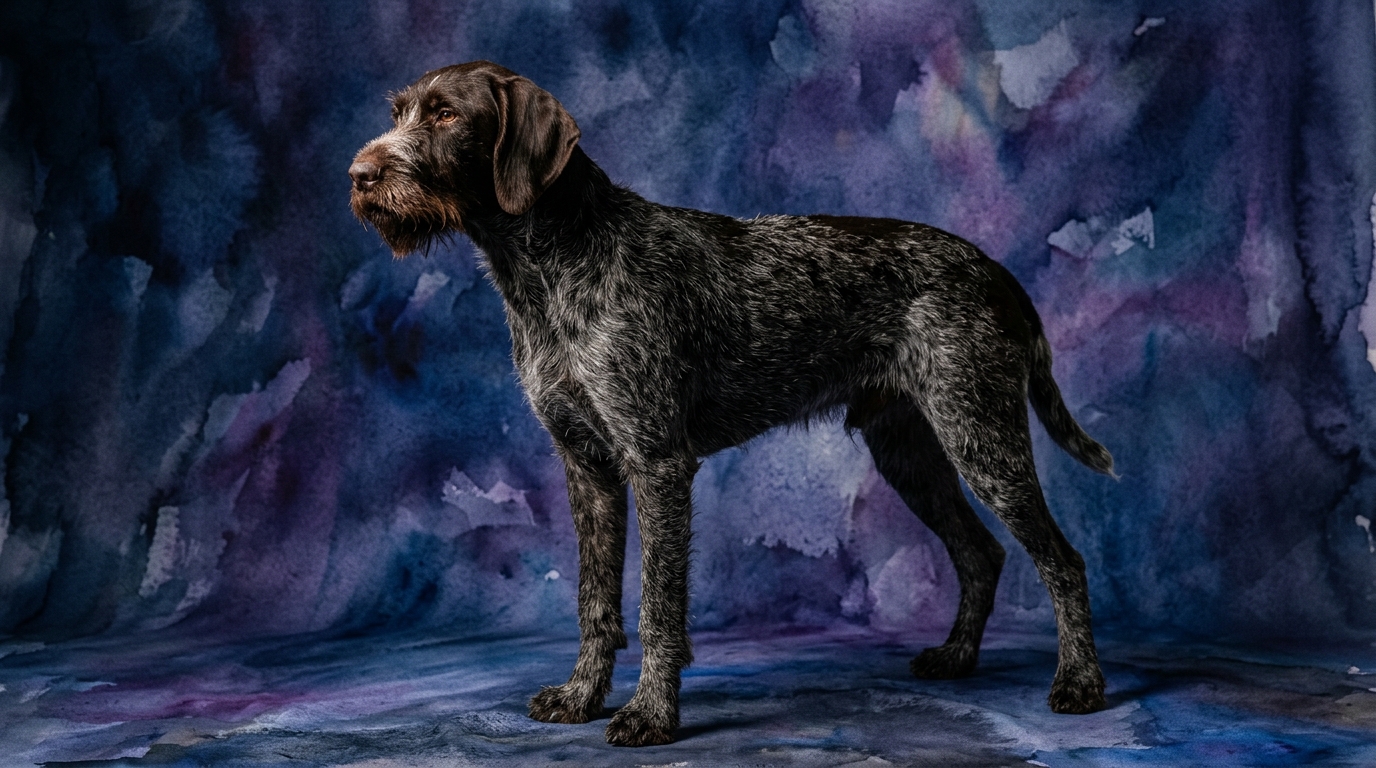
Side-by-Side Cognitive Profiles
**Cocker Spaniel (Coren Rank #20):** This charming breed demonstrates a moderate aptitude for independent problem-solving (3/5), typically navigating straightforward puzzles and learning from direct experience rather than innovative solutions. Their training speed (4/5) is impressive, driven by an eagerness to please and responsiveness to positive reinforcement, allowing for swift acquisition of new commands. A standout trait is their exceptional social intelligence (5/5), making them remarkably empathetic and attuned to human emotions and social cues, fostering deep bonds. Their instinctive drive (4/5) to flush and retrieve is pronounced, manifesting as a keen interest in scents and a desire to explore. Finally, Cocker Spaniels exhibit a robust memory (4/5) for commands, routines, and past experiences, ensuring consistency in learned behaviors.
**German Wirehaired Pointer (Coren Rank #28):** The GWP showcases a strong capacity for problem-solving (4/5), approaching new situations with investigative curiosity and a methodical nature, often devising resourceful solutions. Their training speed (4/5) is also commendable, as they learn commands efficiently when motivated by engaging methods, though their independent streak can sometimes require a firmer, consistent approach. Social intelligence (3/5) is more moderate; while affectionate with family, they might not be as overtly attuned to subtle human emotional shifts, often valuing a clear working relationship. Their instinctive drive (3/5) is purposeful, channeled towards seeking and pointing game, rather than generalized, continuous exploration. GWPs possess a reliable memory (4/5), enabling them to retain complex sequences of commands and learned behaviors over time, crucial for their working roles.
Where the Cocker Spaniel Cognitively Excels
The Cocker Spaniel truly shines in the realm of social intelligence, earning a perfect 5/5 score. This means they possess an exceptional ability to read and respond to human emotions and social cues, making them extraordinarily empathetic and intuitive companions. Unlike the GWP, whose social intelligence is rated at 3/5, a Cocker Spaniel is often one step ahead, anticipating a family member's mood or needs, offering comfort, or engaging in playful interaction at just the right moment. This profound understanding fosters a deeper, more nuanced emotional bond, making them unparalleled at integrating seamlessly into the emotional fabric of a household. Their strong desire for interaction, paired with this cognitive strength, means they are consistently seeking connection and feedback from their human counterparts, enriching the daily lives of their families with their sensitive presence.
Where the German Wirehaired Pointer Cognitively Excels
Conversely, the German Wirehaired Pointer demonstrates a superior aptitude in problem-solving, rated at 4/5 compared to the Cocker Spaniel's 3/5. This breed exhibits a more independent and analytical approach to challenges, often displaying ingenuity in figuring out how to achieve objectives. Whether it’s strategizing how to retrieve a toy from under furniture or navigating a complex scent trail, the GWP uses its cognitive resources to devise solutions rather than simply relying on learned responses. This strength suggests a dog capable of more autonomous thought and resourcefulness in novel situations. While the Cocker might seek human assistance or repeat a learned behavior, the GWP is more likely to pause, assess, and then execute a strategic action, making them particularly adept at tasks requiring independent decision-making in the field or creative thinking at home.
Training Dynamics: Which is Easier and Why
When evaluating ease of training, both breeds score a 4/5 for Training Speed, indicating they are generally responsive students. However, the *nature* of their training experience can differ significantly due to their other cognitive strengths and drives. The Cocker Spaniel's exceptional social intelligence (5/5) and strong desire to please make them highly compliant and eager partners in training. They thrive on positive reinforcement and direct interaction, often making rapid progress because they are so attuned to their handler's cues and emotional responses. Their pronounced instinctive drive (4/5) for flushing and retrieving can be effectively channeled into structured retrieve games or scent work, providing clear motivation.
Conversely, the German Wirehaired Pointer, while equally capable of learning quickly, brings a stronger problem-solving inclination (4/5) and a more moderate social intelligence (3/5) to the training arena. This means they might question commands or seek to understand the 'why' behind an instruction, sometimes requiring a more patient and consistent approach to ensure compliance. Their instinctive drive (3/5) is also present, but their independent thinking means training often benefits from making tasks engaging and purposeful, appealing to their innate resourcefulness rather than solely relying on a desire to please. Therefore, while both learn quickly, the Cocker Spaniel often presents a smoother, more emotionally reciprocal training journey, whereas the GWP might challenge a trainer to be more creative and understand their independent thought process.
Matching Breeds to Lifestyles: Active vs. Relaxed Owners
The cognitive profiles and inherent drives of these breeds paint clear pictures for lifestyle compatibility. The German Wirehaired Pointer, with its stronger problem-solving skills and purposeful instinctive drive, is undeniably suited for active owners who can provide ample mental and physical stimulation. Their resourcefulness and capacity for independent thought mean they thrive on challenges, whether it's navigating complex hunting scenarios, participating in dog sports like agility or obedience, or embarking on long, exploratory hikes. A GWP requires an owner who understands their need for a 'job' and can channel their cognitive strengths into productive activities, preventing boredom and potential mischief.
Conversely, the Cocker Spaniel, while possessing a notable instinctive drive (4/5) for activity, particularly flushing and retrieving, aligns beautifully with owners who appreciate a blend of moderate activity and profound companionship. Their exceptional social intelligence (5/5) means they are deeply fulfilled by close interaction and being an integral part of family life. While they enjoy walks and games, their cognitive strengths lean towards emotional connection and social engagement, making them equally content curling up on the couch for quality time after a good play session. They thrive in environments where their sensitive nature and desire for connection are met, making them an excellent choice for owners who seek a loyal, emotionally responsive companion without the relentless demand for independent problem-solving challenges.
The Verdict
For those seeking a deeply empathetic, emotionally intelligent companion who thrives on close social bonds and is a joy to train with positive reinforcement, the Cocker Spaniel is an ideal choice.
If your lifestyle embraces rigorous outdoor activity, complex problem-solving tasks, and a more independent but dedicated canine partner, the German Wirehaired Pointer will be a rewarding match.
🧠 Find Your Pet's IQ Score
Our Pet IQ Lab assessment covers 25+ tests across 5 cognitive dimensions — personalized to your breed.
Take the Full IQ Test →Frequently Asked Questions
Is a Cocker Spaniel better with children than a German Wirehaired Pointer?
The Cocker Spaniel's superior social intelligence (5/5) makes them often more naturally attuned to the nuances of family dynamics and children's emotions, fostering a gentle and adaptable presence. While GWPs can be good family dogs, their more moderate social intelligence (3/5) means they might not be as intuitively sensitive to a child's subtle cues.
Which breed requires more mental stimulation?
The German Wirehaired Pointer generally requires more structured mental stimulation due to their stronger problem-solving aptitude (4/5) and independent thinking. They thrive on tasks that challenge their intellect and resourcefulness, whereas the Cocker Spaniel's mental stimulation often revolves more around interactive games and social engagement.
Do both breeds shed a lot?
Both breeds do shed, but their coat types differ. Cocker Spaniels have a lush, dense double coat that requires regular grooming to prevent matting and manage shedding. German Wirehaired Pointers have a harsh, wiry outer coat and a dense undercoat, which sheds moderately but benefits from regular brushing and occasional hand-stripping to maintain coat health.