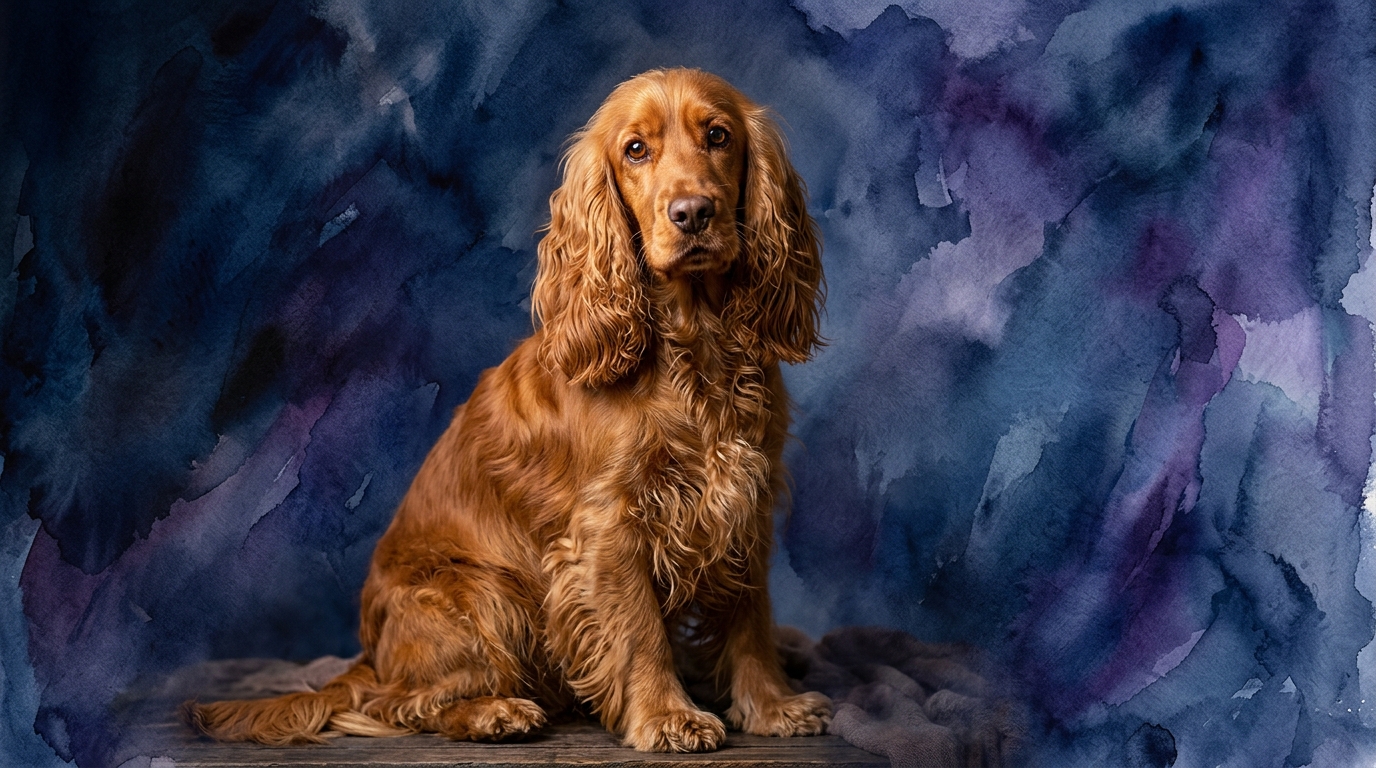
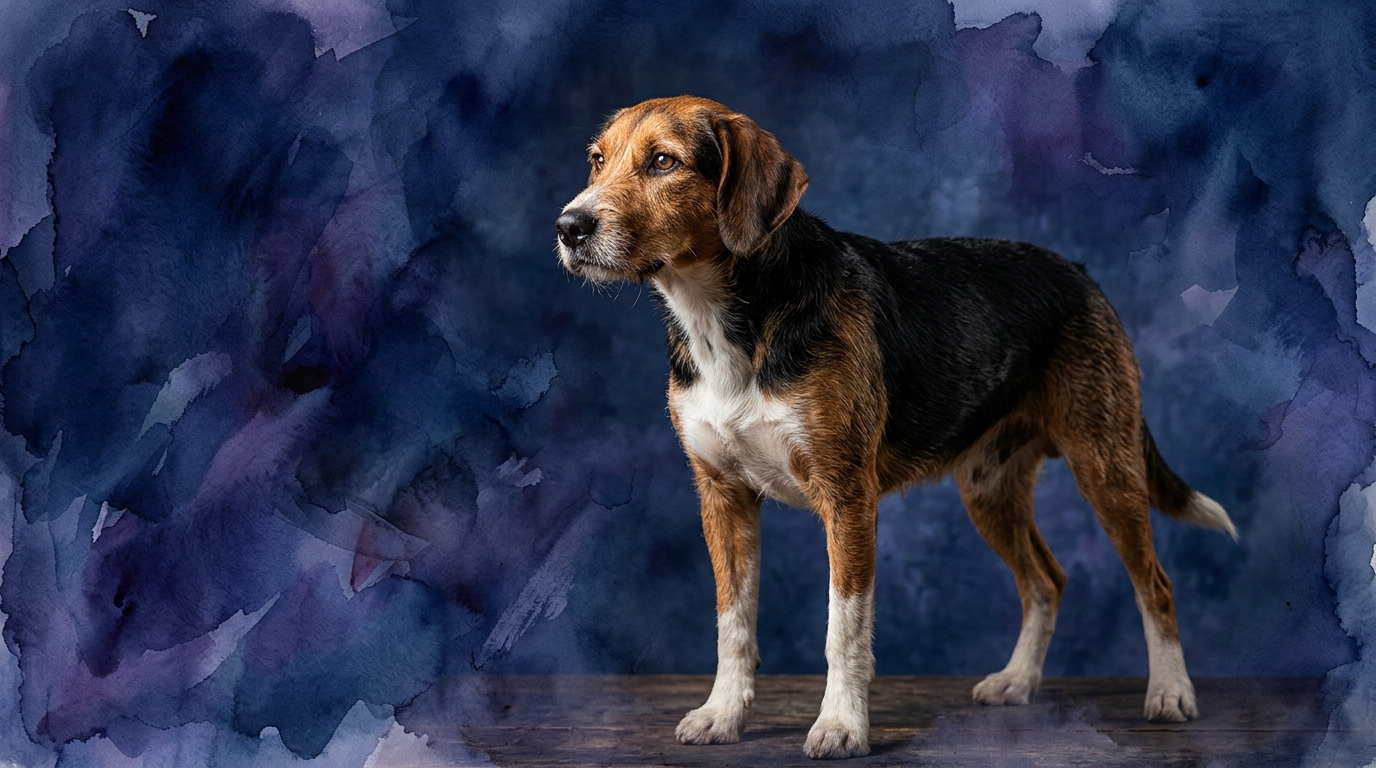
Side-by-Side IQ Profile: Cocker Spaniel vs. Harrier
The Cosmic Pet Pet IQ Lab employs a five-dimensional framework to assess canine intelligence, providing a nuanced understanding beyond simple scores. For the Cocker Spaniel, ranked #20 by Coren, and the unranked Harrier, these dimensions highlight distinct cognitive strengths.
The Cocker Spaniel, a Sporting breed, demonstrates a Problem Solving score of 3/5, adept at navigating domestic complexities and achieving desired outcomes. Their Training Speed is 4/5, indicating a quick grasp of new commands, while their Social Intelligence stands at an exceptional 5/5, showing profound understanding of human emotions. An Instinctive Drive of 4/5 reflects their cooperative retrieving heritage, and their Memory is also strong at 4/5, ensuring consistent retention of learned behaviors. This profile paints a picture of a dog oriented towards close human interaction and structured learning.
In contrast, the Harrier, a Hound breed, registers a Problem Solving score of 3/5, primarily focused on environmental navigation and trail deciphering. Their Training Speed is 3/5, suggesting a more patient approach is needed for learning new cues. Social Intelligence is 3/5; they are sociable but less attuned to nuanced individual human emotions. Their Instinctive Drive is 3/5, dominated by their powerful scent-hunting motivation, and their Memory is 3/5, functional for their specific tasks but perhaps less robust for arbitrary commands. This breed's cognitive make-up emphasizes independence and sustained focus on scent work.
Where the Cocker Spaniel Wins Cognitively
The Cocker Spaniel distinctly outshines the Harrier in areas directly related to human partnership and structured learning. Their Training Speed score of 4/5, compared to the Harrier's 3/5, highlights their quicker grasp of commands and readiness to perform. This difference stems from their historical role as flushing dogs, requiring close cooperation and rapid response to handler cues in the field, making them highly receptive to training exercises and often requiring fewer repetitions.
Furthermore, the Cocker Spaniel's exceptional Social Intelligence (5/5 vs. Harrier's 3/5) means they possess a profound ability to interpret human cues, emotional states, and intentions, making them remarkably empathetic and intuitive companions. This allows them to anticipate desires and adapt behavior, fostering a deep bond. Their superior Memory (4/5 vs. 3/5) also contributes to this, allowing them to retain a vast repertoire of learned behaviors and social etiquette, making them consistently reliable in various interactive scenarios.
Where the Harrier Wins Cognitively
While the Harrier's general cognitive scores might appear lower, their specific type of intelligence is uniquely suited to their purpose and environment, allowing them to excel in ways a Cocker Spaniel might not. The Harrier's Problem Solving score of 3/5, while matching the Cocker, manifests differently; it is heavily weighted towards independent decision-making and persistence in complex outdoor tracking scenarios.
Their ability to autonomously follow a cold scent trail over varied terrain, navigating obstacles and making tactical decisions without human direction, showcases a robust, self-reliant form of practical intelligence. This involves intricate spatial reasoning and unwavering focus on a specific goal. Their Instinctive Drive (3/5) is a powerful cognitive asset for their breed, fueling tireless pursuit and an almost obsessive dedication to the hunt. This drive, while sometimes challenging for domestic training, represents a profound capacity for sustained, goal-oriented work, demonstrating a specialized cognitive endurance critical for a working hound.
Which is Easier to Train and Why
Without question, the Cocker Spaniel is generally easier to train than the Harrier, primarily due to fundamental differences in their social intelligence and training speed. Cocker Spaniels, with their 4/5 Training Speed and 5/5 Social Intelligence, are inherently motivated to please their human companions and possess a strong desire for cooperative interaction. They quickly form associations between commands and actions, and their keen observational skills allow them to pick up on subtle cues. This biddability means they often respond well to positive reinforcement methods and thrive on structured learning environments, making them highly receptive students.
In contrast, Harriers, scoring 3/5 in both Training Speed and Social Intelligence, are bred for independent thought and action, particularly when on a scent trail. Their natural inclination is to follow their nose, which can make them appear stubborn or distracted during training sessions. While capable of learning, they often require more repetition, patience, and creative engagement to maintain focus, as their primary drive isn't necessarily to comply with human directives but rather to fulfill their powerful hunting instincts. Their independence, while valuable in the field, presents a greater challenge for consistent obedience domestically.
Which Suits Active Owners vs. Relaxed Owners
For active owners seeking a highly engaged and interactive companion, both breeds offer robust energy levels, but their ideal activities diverge significantly. An active owner who enjoys structured activities like obedience trials, agility, or retrieving games, and desires a dog that is highly responsive to direction, would find the Cocker Spaniel an excellent match. Their strong social intelligence and desire to work collaboratively mean they thrive on joint activities that involve problem-solving with their human partner. They are energetic and enjoy long walks, but their exercise can often be integrated with training and play.
For owners whose activity involves long, exploratory hikes, trail running, or field work allowing independent scent-following, the Harrier is a more suitable, demanding partner. Harriers require substantial physical exercise that engages their powerful instinctive drive to track and explore. A relaxed owner, however, would likely struggle with the Harrier's relentless energy and independent nature, which can lead to destructive behaviors if not adequately channeled. While a Cocker Spaniel also requires regular activity, their higher biddability and desire for companionship make them more adaptable to varied lifestyles, allowing for more relaxed periods provided their core needs for interaction and moderate exercise are met.
The Verdict
Choose a Cocker Spaniel if you seek an emotionally intelligent, highly trainable companion eager for cooperative activities and close human interaction.
Opt for a Harrier if you are an experienced, active owner prepared to manage a dog with powerful independent hunting instincts and a need for extensive, scent-driven exercise.
🧠 Find Your Pet's IQ Score
Our Pet IQ Lab assessment covers 25+ tests across 5 cognitive dimensions — personalized to your breed.
Take the Full IQ Test →Frequently Asked Questions
Are Harriers difficult to train?
Harriers are not inherently difficult, but their independent nature and strong scent drive mean they require consistent, patient training and high-value motivation. They are less focused on pleasing humans compared to some breeds, necessitating an understanding of hound psychology.
Do Cocker Spaniels need a lot of exercise?
Cocker Spaniels are active dogs requiring moderate daily exercise, including walks and playtime, to keep them physically and mentally stimulated. While not as relentlessly energetic as a Harrier, they thrive on engagement and benefit from activities that utilize their retrieving instincts.
How do their hunting instincts differ in a home environment?
A Cocker Spaniel's hunting instinct often manifests as a desire to retrieve toys or 'flush' items in play, generally manageable through training. A Harrier's instinct is a powerful, persistent drive to track by scent, which can lead to wandering, ignoring calls, and a strong prey drive if not properly managed.