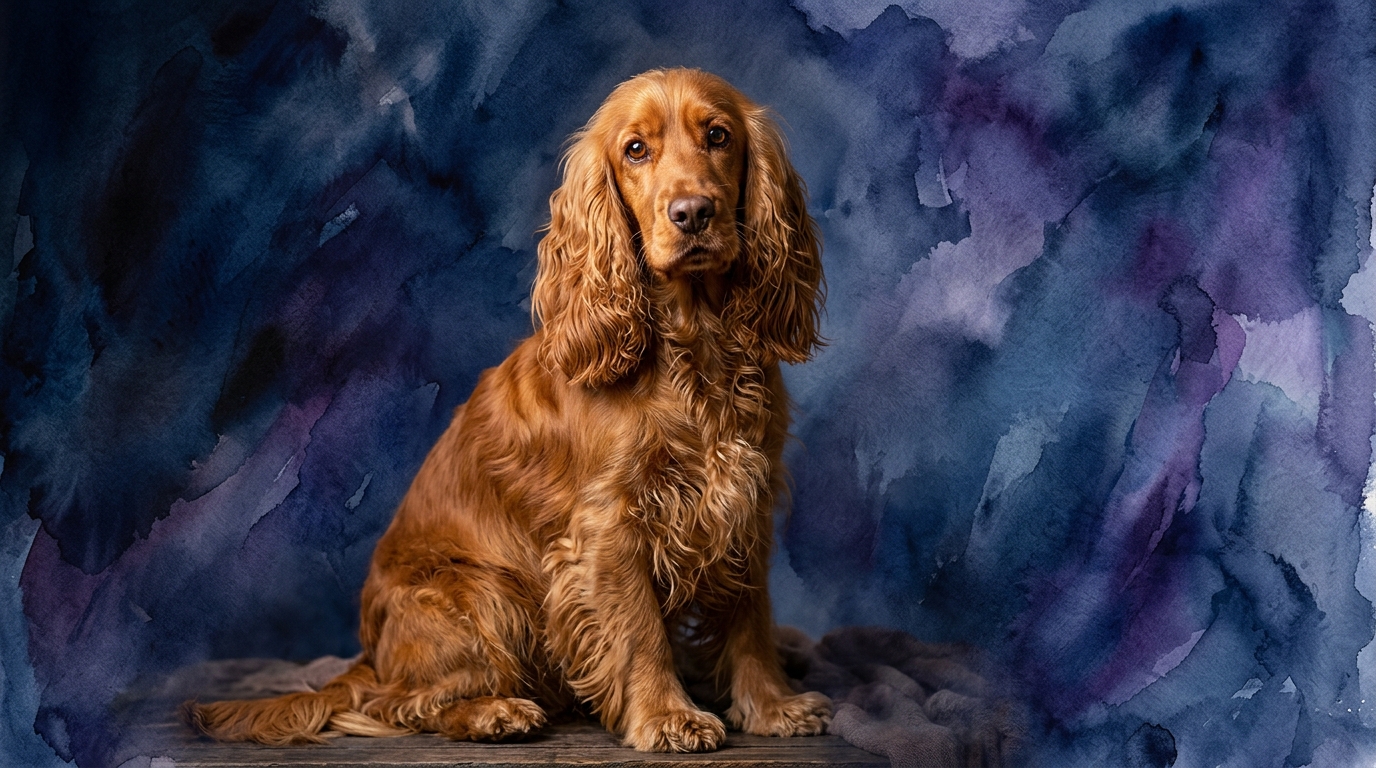

A Side-by-Side Look at Cognitive Profiles
The Cosmic Pet Pet IQ Lab evaluates canine intelligence across five dimensions, offering a nuanced understanding beyond simple rankings. The Cocker Spaniel, Coren rank #20, showcases a well-rounded cognitive profile reflecting its gundog heritage, while the Pug, ranked #57, embodies traits of a devoted, low-maintenance companion.
For the Cocker Spaniel, problem-solving is 3/5, indicating a capacity for independent thought and navigating complex tasks, like locating hidden objects. Their training speed is 4/5, suggesting a quick grasp of commands and routines, eager to please. Social intelligence is a perfect 5/5, highlighting exceptional ability to read human cues and form strong bonds. An instinctive drive of 4/5 speaks to their innate desire to work, explore, and engage, often manifesting as prey drive or love for retrieving. Finally, their memory stands at 4/5, enabling retention of training and recall of experiences with impressive accuracy.
In contrast, the Pug's profile reflects its lapdog role. Problem-solving is 2/5; they might require more guidance with novel challenges, often relying on humans for solutions. Training speed is 2/5, indicating they may take longer to learn commands, requiring repetition and patience, sometimes displaying a charming stubbornness. Like the Cocker, social intelligence is 5/5, underscoring their profound connection to people and aptitude for companionship. An instinctive drive of 2/5 suggests lower motivation for intense activity, preferring comfort. Memory at 3/5 means they remember routines and people, though with less detailed recall of specific events.
Where the Cocker Spaniel Cognitively Excels
The Cocker Spaniel's cognitive strengths are particularly evident in areas requiring independent thought and active engagement. Their 3/5 problem-solving score means they are more inclined to experiment with solutions for puzzles or obstacles, adapting quickly to new environments or learning complex action sequences for activities like agility. Their impressive 4/5 training speed directly reflects their eagerness to learn and rapid grasp of concepts, often needing fewer repetitions to master new skills. This quick acquisition makes them highly responsive and a joy to teach, fostering a strong working partnership. Furthermore, their 4/5 instinctive drive, rooted in their sporting heritage, provides natural motivation for scent work or retrieving, engaging both mind and body. This drive, coupled with a 4/5 memory, allows them to remember complex routines or scent trails over extended periods, making them formidable partners in activities requiring sustained mental effort.
The Pug's Unique Cognitive Strengths
While the Pug's profile might suggest less 'active' intelligence in traditional working dog terms, their exceptional 5/5 social intelligence is their paramount cognitive strength. This isn't merely about being friendly; it's a profound ability to understand and respond to human emotions and desires, often with a subtle glance. Pugs are masters of non-verbal communication, using expressive faces to solicit attention or comfort. Their cognitive efforts are largely channeled into maintaining social harmony and closeness, making them incredibly attuned to their family's mood. This social acuity allows them to integrate seamlessly into diverse households. Their 3/5 memory is perfectly adequate for remembering family members, daily schedules, and treat locations, reinforcing their role as cherished companions. Their lower instinctive drive (2/5) means they are less prone to destructive behaviors from boredom, preferring comfort and company, a cognitive advantage for owners seeking a calm, devoted presence.
Training Ease: Cocker Spaniel vs. Pug
When it comes to formal training, the Cocker Spaniel generally presents a more straightforward experience due to their higher training speed (4/5) and problem-solving (3/5). Their inherent desire to please and quick grasp of concepts means they often pick up basic commands with fewer repetitions. They thrive on positive reinforcement and mental stimulation, viewing training as an engaging activity. Their higher instinctive drive (4/5) also motivates them for activities like retrieving, making training effective and enjoyable. In contrast, the Pug's training speed of 2/5 and problem-solving of 2/5 indicate patience and consistency are paramount. While trainable, Pugs may require more frequent, shorter sessions and high-value rewards to maintain focus. Their social intelligence (5/5) can be leveraged by making training a positive bonding experience, but their lower instinctive drive (2/5) means they might prefer comfort over compliance if not properly motivated. Real behavioral differences include the Cocker Spaniel's sustained task focus versus the Pug's occasional 'selective hearing' or easy distraction.
Lifestyle Match: Active vs. Relaxed Owners
The cognitive profiles of the Cocker Spaniel and Pug strongly dictate their ideal lifestyles. The Cocker Spaniel, with its 4/5 instinctive drive and 4/5 training speed, is an ideal match for active owners who enjoy regular outdoor adventures or dog sports. Their cognitive makeup demands consistent mental and physical stimulation; without it, problem-solving skills might be channeled into less desirable behaviors. Owners who appreciate a dog capable of learning complex tasks and engaging in interactive play will find a deep connection, as their intelligence flourishes with purpose. Conversely, the Pug, with its 2/5 instinctive drive, is perfectly suited for more relaxed owners. Their cognitive energy is primarily invested in social interaction and close physical proximity to humans, rather than vast exploration. Owners seeking a devoted lap companion content with shorter, leisurely strolls and ample cuddle time will find the Pug's disposition a perfect fit. Their lower drive means they are less likely to become destructive from boredom, preferring to observe and participate in calm home life.
The Verdict
Choose a Cocker Spaniel if you seek an intelligent, eager-to-please companion for active pursuits, complex training, and a deep working bond. Their cognitive strengths thrive with engaging challenges and consistent mental stimulation.
Opt for a Pug if your priority is a profoundly social, relaxed, and charming companion who excels at companionship and requires less intense physical or mental engagement. Their intelligence shines through their devotion and expressive communication.
🧠 Find Your Pet's IQ Score
Our Pet IQ Lab assessment covers 25+ tests across 5 cognitive dimensions — personalized to your breed.
Take the Full IQ Test →Frequently Asked Questions
Are Cocker Spaniels easy to train for complex tasks?
Yes, Cocker Spaniels generally excel at complex tasks due to their 4/5 training speed and 3/5 problem-solving abilities. Their strong memory and instinctive drive make them quick learners who enjoy mental challenges, making them suitable for advanced obedience or dog sports.
Do Pugs have a good memory for their owners?
Pugs possess a 3/5 memory, which is certainly sufficient for remembering their beloved owners, daily routines, and where their favorite sleeping spots are. Their exceptional social intelligence further strengthens their bond, ensuring they recognize and cherish their human family.
Which breed is better for a first-time dog owner?
Both breeds can suit a first-time owner, but their needs differ. A Cocker Spaniel might require more dedicated time for training and exercise, while a Pug's lower physical demands and profound social nature can be very forgiving, making them a good choice for someone seeking a less demanding companion, provided patience is applied to training.