
A Side-by-Side Look at Canine Cognition
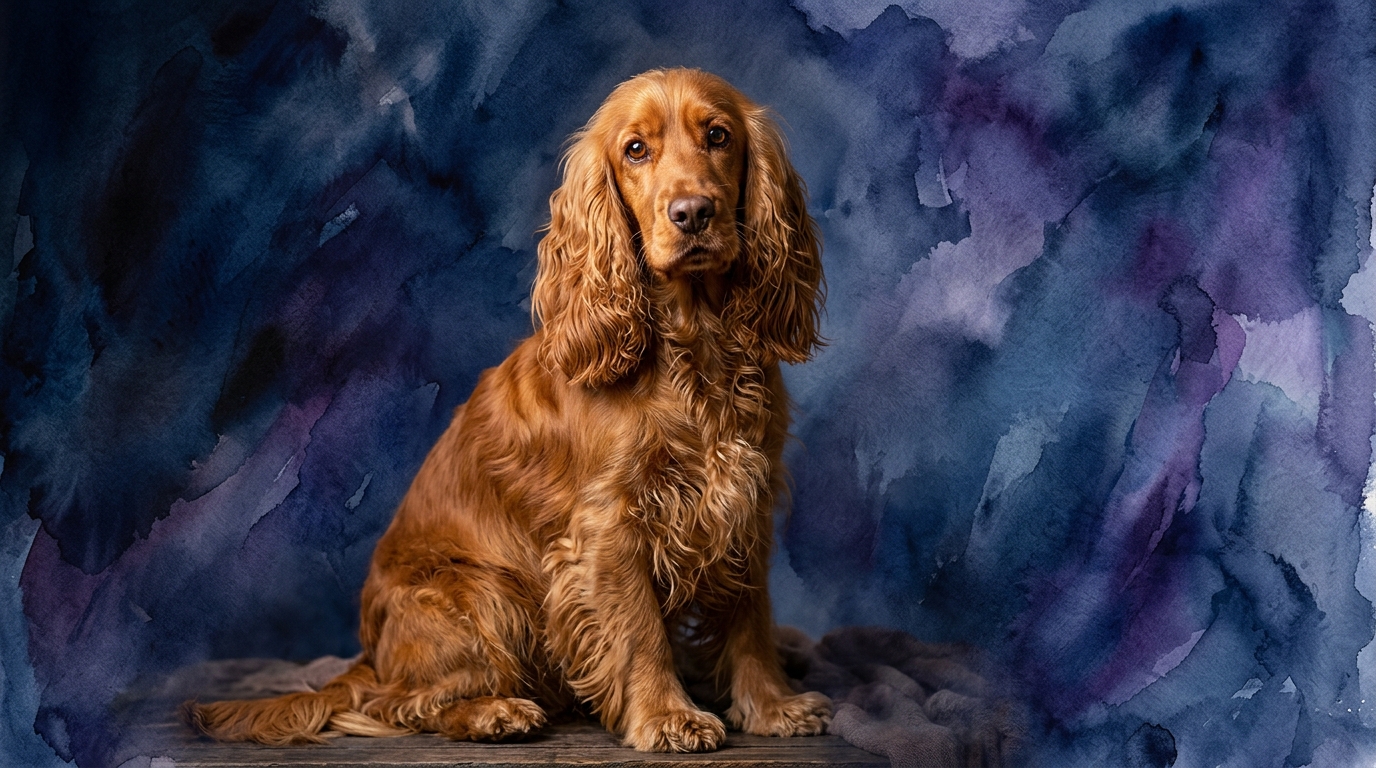
**Cocker Spaniel (Sporting Group, Coren Rank #20)**: This breed showcases a balanced yet distinctly cooperative cognitive profile. Their Problem Solving is rated 3/5, indicating an ability to navigate moderate challenges, often within a structured context, though perhaps not pioneering novel solutions independently. Training Speed scores an impressive 4/5, suggesting a quick grasp of new commands and routines, making them generally responsive learners. A standout Social Intelligence at 5/5 highlights their exceptional ability to read human cues, cooperate, and form strong communicative bonds. Their Instinctive Drive, rated 4/5, points to a strong internal motivation for tasks like retrieving and scent work, typical of their sporting heritage. Finally, a Memory score of 4/5 means they retain learned behaviors and social interactions effectively over time, contributing to their consistent performance.
**Rat Terrier (Terrier Group, Not Coren-Ranked)**: The Rat Terrier presents a more independent and focused cognitive makeup, characteristic of their working roots. Their Problem Solving is also 3/5, but this often manifests as persistent, trial-and-error approaches to physical obstacles or prey-related tasks rather than abstract puzzles. Training Speed is 3/5, indicating they can learn, but might require more repetition or motivation than some other breeds, reflecting a less immediate drive to please. Social Intelligence at 3/5 suggests they are capable of forming bonds but might be less attuned to subtle human emotional states or less driven by constant human interaction compared to highly social breeds. An Instinctive Drive of 3/5 points to a moderate but present prey drive and exploratory urge, less intense than some working breeds but still significant. Their Memory, rated 3/5, allows them to recall basic commands and routines, though perhaps with less long-term retention for complex sequences or infrequent tasks.
Where the Cocker Spaniel Shines Cognitively
The Cocker Spaniel’s cognitive profile clearly excels in areas demanding human-canine partnership and nuanced communication. Their exceptional 5/5 Social Intelligence means they are remarkably adept at interpreting human body language, vocal tones, and intentions, making them intuitive companions who anticipate needs and respond appropriately in social settings. This high social acumen translates into a dog that not only understands commands but genuinely seeks to engage and cooperate, fostering a profound connection. Coupled with a 4/5 Training Speed, they absorb new information and modify behavior swiftly, making complex obedience, agility, or therapy work well within their grasp. Their 4/5 Memory further supports this, allowing them to build upon previous lessons and recall intricate sequences of actions or social protocols with impressive consistency. For instance, a Cocker Spaniel can learn a multi-step retrieve pattern or a sequence of tricks with fewer repetitions and retain that knowledge for longer periods, demonstrating a clear advantage in structured learning environments where precise execution and consistent recall are paramount.
The Rat Terrier's Unique Cognitive Strengths
While the Rat Terrier's scores might appear numerically lower in several categories, their cognitive strengths are distinct and highly effective within their operational domain. Their 3/5 Problem Solving, though numerically identical to the Cocker's, manifests differently; it's often applied with a tenacious, independent spirit towards physical challenges, such as figuring out how to access a hidden toy or navigating an obstacle course through sheer persistence rather than waiting for human direction. This breed's lower 3/5 Social Intelligence can actually be an advantage in situations requiring self-reliance, where a dog needs to make decisions based on its own assessment rather than constantly seeking human approval. For tasks like pest control, where independent hunting strategies are crucial, this independent problem-solving and self-assured decision-making are invaluable. Their Instinctive Drive of 3/5, combined with their terrier tenacity, means they possess a focused determination to pursue and accomplish tasks they deem important, even if it requires repeated effort. This mental fortitude, a kind of cognitive resilience, allows them to stay on task with single-minded purpose, even when faced with frustration or distraction, making them uniquely suited for roles demanding grit and individual initiative.
Ease of Training: A Clear Distinction
When evaluating ease of training, the Cocker Spaniel holds a distinct advantage due to its higher scores in both Training Speed (4/5) and Social Intelligence (5/5). A Cocker Spaniel's profound social intelligence means they are inherently more inclined to tune into their human partners, eager to please and quick to pick up on subtle cues. They thrive on positive reinforcement and the opportunity to work collaboratively, resulting in faster acquisition of commands and a more willing attitude during training sessions. Their strong memory (4/5) ensures that once a lesson is learned, it is retained effectively, reducing the need for constant review. In contrast, the Rat Terrier's 3/5 Training Speed and 3/5 Social Intelligence suggest a more independent learning curve. While certainly capable of learning, they may require more patience, consistency, and varied motivational techniques. Their terrier inclination for self-directed activity means they might be less motivated by human praise alone and more by the intrinsic reward of the task itself, or by tangible incentives. This independence, while valuable in certain working contexts, can translate to moments of selective hearing or a preference for pursuing their own interests over immediate compliance during a training drill.
Matching Energy Levels: Active Engagement vs. Independent Exploration
Both the Cocker Spaniel and the Rat Terrier are active breeds, but their ideal owner matches differ in the type of activity and engagement they seek. The Cocker Spaniel, with its 4/5 Instinctive Drive and 5/5 Social Intelligence, is an ideal companion for active owners who enjoy structured activities and shared experiences. They thrive on engagement that involves their human, such as retrieving games, scent work, or participation in dog sports like agility and obedience. Their cooperative nature means they are often happiest when working alongside their person, making them a superb fit for owners who want a partner in their active pursuits. A “relaxed owner” for a Cocker might still need to provide consistent mental and physical stimulation, but the dog's social drive means they will readily participate in family activities and enjoy being the center of attention. The Rat Terrier, conversely, with its 3/5 Instinctive Drive and more independent problem-solving approach, suits active owners who appreciate a dog with self-directed interests and a drive for exploration. They might enjoy long hikes where they can investigate scents independently, or puzzle toys that challenge their persistence. While they are active and enjoy play, their engagement might be less about pleasing their human and more about satisfying their own innate curiosity and drive. For a “relaxed owner,” a Rat Terrier might be more content with a secure yard to patrol and explore, as long as their mental and physical needs are met through independent play and opportunities for scent work. They may be less demanding of constant human-led interaction but still require an outlet for their terrier energy.
The Verdict
Choose the Cocker Spaniel if you seek a highly cooperative, socially attuned companion who thrives on shared activities, learns quickly, and excels in structured training environments where consistent performance and deep human-canine bonds are paramount.
Opt for the Rat Terrier if you appreciate an independent, tenacious companion with a self-reliant problem-solving approach, well-suited for owners who value a dog's individual drive for exploration and grit in pursuing tasks, even if it means a less immediate response to training cues.
🧠 Find Your Pet's IQ Score
Our Pet IQ Lab assessment covers 25+ tests across 5 cognitive dimensions — personalized to your breed.
Take the Full IQ Test →Frequently Asked Questions
Does the Cocker Spaniel's high social intelligence make them prone to separation anxiety?
While their strong social bonds mean they prefer companionship, proper training and early socialization can mitigate separation anxiety. Their dependence on human interaction means they do best in homes where they aren't left alone for extended periods without mental and physical enrichment.
Is a Rat Terrier's lower training speed an indication they are difficult to train?
Not necessarily; it indicates they may require more patience, consistency, and varied motivational techniques than some other breeds. Their independent nature means they respond well to positive reinforcement and training that taps into their innate drives, like scent work or agility.
Given their instinctive drives, which breed is better with small pets?
The Cocker Spaniel, with its higher social intelligence and less pronounced prey drive compared to a terrier, is generally more adaptable to living with small pets, especially with early socialization. The Rat Terrier, bred for vermin control, possesses a stronger prey drive, requiring careful introductions and supervision around smaller, non-canine animals.