
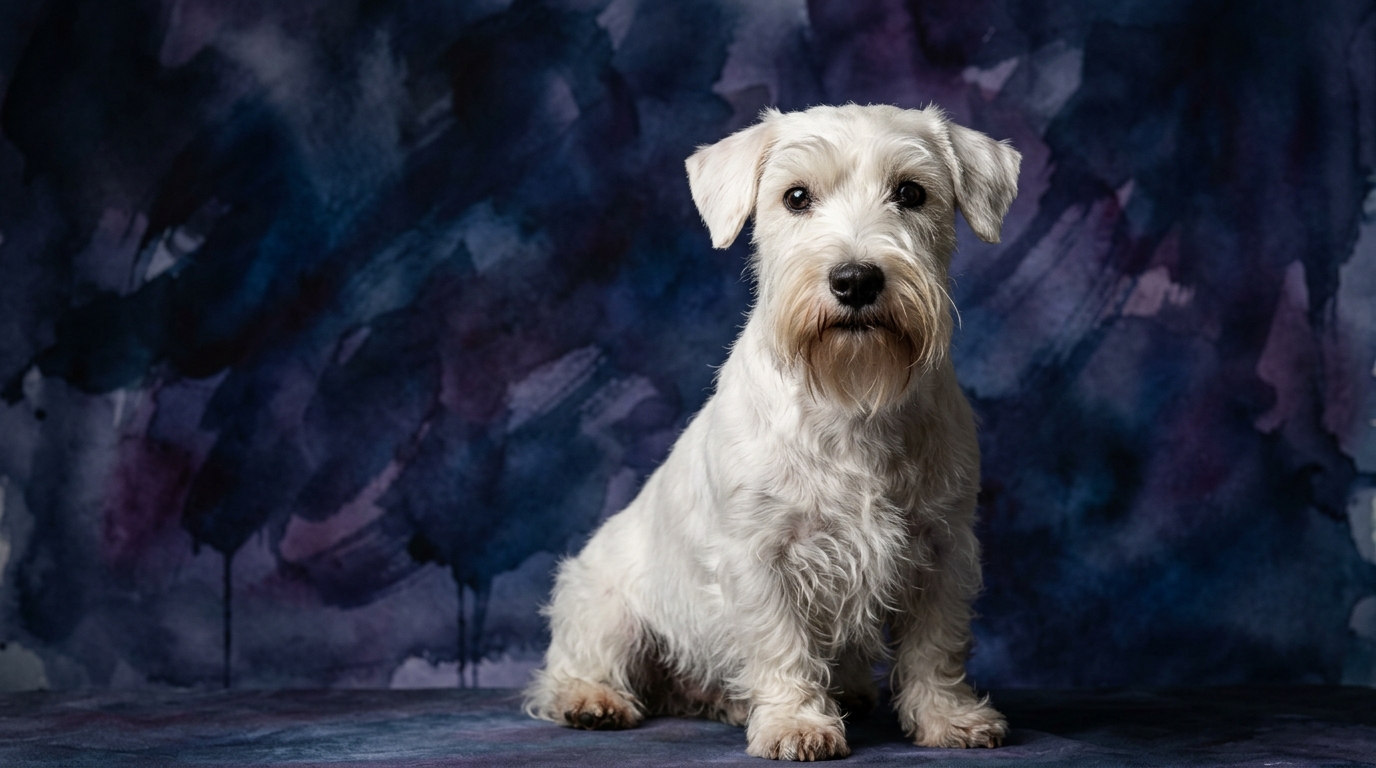
Side-by-Side Cognitive Profiles
The Cosmic Pet Pet IQ Lab employs a multi-dimensional framework to assess canine intelligence, moving beyond simple obedience metrics. For the Cocker Spaniel, a Sporting group dog with a Coren rank of #20, its profile highlights a balanced intellect with particular strengths in social dynamics. Its problem-solving ability scores a solid 3 out of 5, indicating a capacity for navigating novel challenges effectively. Where it truly shines is in social intelligence, earning a perfect 5 out of 5, reflecting its deep attunement to human cues and strong desire for partnership. This is complemented by a training speed of 4 out of 5, suggesting a quick grasp of new commands, an instinctive drive of 4 out of 5 indicative of its working heritage, and a memory score of 4 out of 5, enabling retention of learned behaviors and experiences.
In contrast, the Sealyham Terrier, a member of the Terrier group and not Coren-ranked, presents a profile rooted in independence and tenacity. Its problem-solving ability matches the Cocker Spaniel at 3 out of 5, but often manifests differently, focusing on self-reliant strategizing. The Sealyham’s training speed is rated 3 out of 5, indicating a moderate pace for learning new tasks, while its social intelligence also scores 3 out of 5, suggesting a more independent nature compared to the highly people-focused Spaniel. Its instinctive drive is rated 3 out of 5, reflecting a focused, persistent drive specific to its original purpose, and its memory also stands at 3 out of 5, providing a functional retention for its tasks.
These scores paint a picture of two breeds with distinct cognitive architectures. The Cocker Spaniel’s profile suggests a highly cooperative, adaptable companion, eager to engage and learn alongside its human. Its strengths lie in areas that foster partnership and responsiveness. The Sealyham Terrier, while possessing comparable problem-solving skills, leans towards a more self-sufficient, focused approach to its environment, with its cognitive functions geared towards independent task execution rather than broad social engagement. Understanding these nuances is key to appreciating each breed's unique intellectual contributions.
Where the Cocker Spaniel Excels Cognitively
The Cocker Spaniel’s cognitive strengths are particularly evident in its exceptional social intelligence, scoring a perfect 5 out of 5. This translates into a profound ability to interpret human emotions, body language, and vocal inflections, making them incredibly intuitive companions. Their eagerness to please and strong desire for connection mean they are highly motivated by human interaction and praise, which significantly impacts their overall trainability and adaptability to various social settings. This high social IQ allows them to seamlessly integrate into family life, often anticipating their owner's moods and preferences.
Furthermore, the Cocker Spaniel's training speed of 4 out of 5, coupled with its strong memory (4/5), provides a significant advantage in learning and retaining complex sequences of commands. Their background as gundogs required them to work closely with handlers, responding to intricate signals in dynamic environments. This historical role has refined their capacity for rapid association and recall, making them adept at mastering obedience, agility, and other structured activities. Their problem-solving ability (3/5) is often applied in the context of cooperation, figuring out how to achieve a desired outcome through interaction with their human partner rather than purely independent action.
Where the Sealyham Terrier Shines Cognitively
While the Sealyham Terrier's overall scores might appear more modest, its cognitive profile reflects a distinct set of strengths rooted in its tenacious Terrier heritage. Its problem-solving ability, rated 3 out of 5, manifests as a persistent, independent approach to challenges. Unlike the Cocker Spaniel which might look to its handler for guidance, a Sealyham is more inclined to methodically work through an obstacle on its own, utilizing determination and a focused drive to achieve its objective, such as navigating a complex scent trail or retrieving a hidden toy.
The Sealyham’s instinctive drive, also rated 3 out of 5, while numerically lower than the Cocker's, is characterized by its singular intensity and specificity. This drive is not broadly applied but laser-focused on tasks like digging, tracking, or engaging with small "prey" items, reflecting its origins as a working terrier. This focused determination means that when a Sealyham is engaged in an activity that taps into its inherent drives, its cognitive resources are deployed with remarkable perseverance and concentration, making them excellent partners for specific scent work or earthdog trials where this intrinsic motivation is paramount. Their resilience and independent thought process are key cognitive assets.
Ease of Training: Cocker Spaniel vs. Sealyham Terrier
When considering ease of training, the Cocker Spaniel generally presents a more straightforward experience for owners due to its higher scores in training speed (4/5) and social intelligence (5/5). These breeds typically exhibit a strong desire to please their human companions, making them highly receptive to positive reinforcement and eager to engage in training sessions. Their excellent memory (4/5) ensures that once a command is learned, it is retained effectively, leading to consistent performance. A Cocker Spaniel is often motivated by praise and the opportunity to work alongside its owner, thriving on cooperative tasks.
The Sealyham Terrier, with scores of 3/5 in both training speed and social intelligence, requires a more nuanced approach. While capable of learning, their independent nature and strong will mean they might not always see the immediate value in complying with a command if it doesn't align with their own agenda. Training a Sealyham often involves patience, consistency, and finding creative ways to motivate them, often by tapping into their natural drives and making training feel like a game or a puzzle they can solve independently. Their intelligence is present, but their willingness to cooperate is often conditional on their interest and perceived benefit, making them less inherently "easy" to train in a traditional obedience sense compared to the more biddable Cocker.
Suiting Active vs. Relaxed Owners
The Cocker Spaniel, with its instinctive drive of 4 out of 5 and a history as a gundog, is best suited for owners who can provide a moderate to active lifestyle. They require regular exercise beyond simple potty breaks, including daily walks, play sessions, and mental stimulation through training or puzzle toys. Their high social intelligence means they thrive on interaction and being part of family activities, making them excellent companions for owners who enjoy including their dog in daily outings and adventures. While they enjoy downtime with their family, neglecting their need for activity and engagement can lead to boredom and potential behavioral issues.
The Sealyham Terrier, with an instinctive drive of 3 out of 5, also benefits from purposeful activity, but its needs might manifest differently. While they enjoy walks and playtime, their activity often revolves around focused tasks that engage their terrier instincts, such as exploring new scents, digging in a designated area, or engaging in vigorous play with toys. They can adapt to a slightly more relaxed home environment than a high-drive Spaniel, provided their mental stimulation needs are met through structured activities or independent exploration. Owners who appreciate a dog with a distinct personality and a flair for independent investigation, and who are prepared to channel their terrier's specific drives, will find a rewarding companion in the Sealyham.
The Verdict
Choose a Cocker Spaniel if you seek a highly cooperative, socially attuned companion eager to learn and engage in activities with you, thriving on partnership and consistent interaction. They are generally easier to train and adapt well to a family-oriented, moderately active lifestyle where they can be involved in daily routines.
Choose a Sealyham Terrier if you appreciate an independent, tenacious companion with a strong will and a focused, purposeful drive, well-suited for owners who can provide consistent, engaging training that taps into their problem-solving instincts. They thrive with owners who understand and channel their unique terrier spirit into specific activities.
🧠 Find Your Pet's IQ Score
Our Pet IQ Lab assessment covers 25+ tests across 5 cognitive dimensions — personalized to your breed.
Take the Full IQ Test →Frequently Asked Questions
Are Sealyham Terriers stubborn during training?
Sealyham Terriers can exhibit an independent streak, which some owners might interpret as stubbornness. Their 3/5 training speed and social intelligence mean they require consistent, engaging methods that appeal to their natural drives, rather than simply expecting rote obedience.
Do Cocker Spaniels need a lot of exercise?
Cocker Spaniels, with their 4/5 instinctive drive, require regular, moderate exercise, including daily walks, playtime, and mental stimulation. They thrive on activity and engagement with their owners to prevent boredom and maintain their physical and mental well-being.
Which breed is better for first-time dog owners?
The Cocker Spaniel is generally a more forgiving choice for first-time owners due to its higher social intelligence and eagerness to please, making training and integration into family life smoother. Sealyham Terriers, while wonderful companions, benefit from owners experienced in handling independent terrier temperaments.