
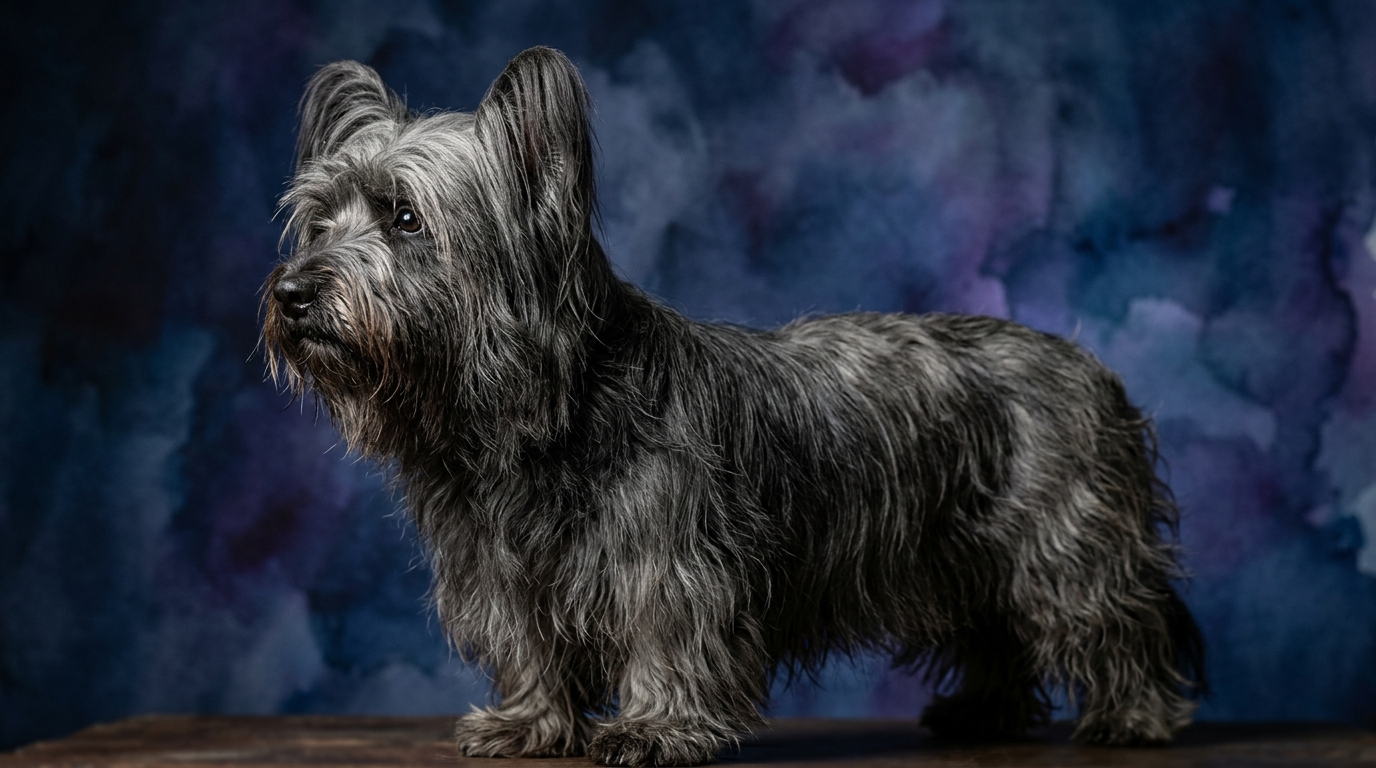
Side-by-Side IQ Profile: Cocker Spaniel vs. Skye Terrier
At The Cosmic Pet Pet IQ Lab, we assess canine cognition across five crucial dimensions, providing a nuanced understanding of each breed's mental strengths. For the Cocker Spaniel, a Sporting group member with a Coren rank of #20, their profile paints a picture of a highly adaptable and socially attuned companion. Their Problem Solving is rated 3/5, indicating an ability to navigate familiar scenarios and tackle straightforward puzzles, though more complex, multi-step challenges might require additional guidance. The Cocker Spaniel's Training Speed shines at 4/5, reflecting an eagerness to please and a quick grasp of new commands, making training sessions generally productive and rewarding. Their Social Intelligence is an exceptional 5/5, signifying a profound attunement to human emotions and social cues, allowing them to form deep, empathetic bonds with their family. An Instinctive Drive of 4/5 points to their strong retrieve and hunting instincts, displaying focused determination in scent work or fetching tasks. Finally, their Memory at 4/5 ensures they retain learned commands and routines effectively over time, recalling past experiences and associations with ease.
In contrast, the Skye Terrier, a distinctive member of the Terrier group and not specifically Coren-ranked, presents a unique cognitive makeup. Their Problem Solving also stands at 3/5, demonstrating an independent capacity to find practical solutions to immediate issues, though they might be less inclined towards abstract or human-initiated puzzles. The Skye Terrier's Training Speed is 3/5, indicating a moderate learning pace that often necessitates consistent, patient repetition, influenced by their inherent independence and occasional stubbornness. Their Social Intelligence is 3/5, meaning they form deep connections with their chosen human family but can exhibit reservation or wariness towards strangers, highlighting the importance of early and broad socialization. An Instinctive Drive of 3/5 reflects their pronounced terrier predispositions for digging, chasing small prey, and guarding, instincts that are deeply rooted in their historical working role. Lastly, their Memory is 3/5, allowing them to recall routines and basic commands, but they might benefit from refreshers for less frequently practiced tasks, aligning with their more self-reliant learning style.
Where the Cocker Spaniel Wins Cognitively
The Cocker Spaniel clearly distinguishes itself in areas that foster close human-canine partnership. Their exceptional 5/5 Social Intelligence means they are remarkably attuned to their owners' moods and intentions, often anticipating needs or responding to subtle cues that other breeds might miss. This deep emotional understanding translates into a highly responsive and empathetic companion, making them natural therapy dogs or simply intuitive family members. Furthermore, their 4/5 Training Speed, coupled with a general eagerness to please, allows them to absorb new commands and complex sequences with relative swiftness. This makes them particularly adept at obedience, agility, and other structured activities where precise execution and quick learning are paramount. Their 4/5 Memory reinforces this, enabling them to build upon past lessons consistently, leading to a reliable repertoire of behaviors and a strong recall even after periods of inactivity. This combination of social awareness, rapid learning, and robust memory positions the Cocker Spaniel as a highly cooperative and intellectually engaging partner for those seeking a dog deeply integrated into their daily lives and activities.
Where the Skye Terrier Wins Cognitively
While the Skye Terrier's cognitive profile emphasizes a different set of strengths, these are no less valuable, particularly for owners who appreciate a more independent and self-reliant canine. Their 3/5 Problem Solving, though not geared towards abstract puzzles, is highly effective in practical, real-world scenarios, allowing them to assess situations and find their own solutions, a trait crucial for their historical role as vermin hunters. This independence can manifest as a tenacious persistence in tasks they deem important, such as investigating an interesting scent or navigating a challenging environment without constant human direction. Their 3/5 Instinctive Drive, while moderate, is deeply ingrained and specific, driving them with a focused determination when engaged in activities that tap into their terrier heritage, like scent tracking or supervised digging. This means they possess a specialized kind of intelligence for their original purpose. The Skye Terrier's cognitive resilience allows them to handle unexpected situations with a degree of self-sufficiency, relying on their own wits rather than constantly seeking human guidance. They are masters of their immediate environment, often demonstrating a shrewd understanding of their surroundings and the most efficient path to their objectives.
Which is Easier to Train and Why
Based on The Cosmic Pet Pet IQ Lab's assessments, the Cocker Spaniel is generally easier to train than the Skye Terrier. The Cocker Spaniel's 4/5 Training Speed and exceptional 5/5 Social Intelligence create a highly receptive student. They possess a strong desire to please their human companions, making them highly motivated by praise, treats, and positive reinforcement. This inherent eagerness to connect and cooperate means they actively seek to understand and respond to human directives. They thrive on interactive training, quickly forming associations between commands and actions, and their strong memory ensures these lessons are retained. This makes them amenable to a wide range of training, from basic obedience to complex tricks and even competitive dog sports.
The Skye Terrier, with a 3/5 Training Speed and 3/5 Social Intelligence, presents a more independent and discerning learner. Their terrier heritage instills a sense of self-reliance and sometimes a 'what's in it for me?' attitude. While capable of learning, they may require more patience, consistency, and a deeper understanding of their motivations. They are less likely to blindly follow commands and might challenge an owner who doesn't establish clear, respectful leadership. Training a Skye Terrier often involves convincing them that the desired action aligns with their own interests, rather than relying solely on their desire to please. Their moderate memory also means that less frequently practiced commands might need occasional refreshing. Owners of Skye Terriers often find success by making training sessions engaging, varied, and short, leveraging their intelligence without engaging in power struggles.
Which Suits Active Owners vs. Relaxed Owners
The Cocker Spaniel, with its robust 4/5 Instinctive Drive and eager-to-please nature, is an excellent fit for active owners who enjoy interactive engagement and structured activities. They thrive on daily walks, fetch games, and opportunities to use their scenting abilities, such as scent work or even casual 'find it' games in the yard. Owners who are keen on obedience training, agility, or rally will find a willing and capable partner in a Cocker Spaniel, as their high training speed and social intelligence make them excel in these areas. Their desire for companionship also means they appreciate being involved in family outings and adventures, making them ideal for individuals or families with an active, inclusive lifestyle.
The Skye Terrier, while not a couch potato, might be a better match for owners who appreciate a more independent companion and a less frenetic pace. Their 3/5 Instinctive Drive is more focused on specific terrier pursuits rather than constant, high-energy output. They enjoy a good walk and opportunities to explore their surroundings, but they are not typically candidates for marathon runs or intense, highly structured dog sports requiring constant human direction. Relaxed owners who enjoy quiet companionship, a dog that is content to observe from a comfortable spot, and who are prepared for occasional bursts of terrier-specific activity (like digging or patrolling the yard) will find the Skye Terrier a rewarding companion. They appreciate quality time with their chosen people but don't demand constant entertainment, making them suitable for those with a moderately active, yet more independent, lifestyle.
The Verdict
Choose a Cocker Spaniel if you seek a highly connected, trainable, and socially aware companion eager to participate in family life and structured activities, thriving on interaction and cooperation.
Opt for a Skye Terrier if you appreciate an independent, resilient, and discerning companion, prepared for a more patient training journey and a dog with a strong, self-reliant character.
🧠 Find Your Pet's IQ Score
Our Pet IQ Lab assessment covers 25+ tests across 5 cognitive dimensions — personalized to your breed.
Take the Full IQ Test →Frequently Asked Questions
Is the Cocker Spaniel always easier to train than the Skye Terrier?
Generally, yes, due to their higher training speed and social intelligence, making them more responsive to human direction and eager to please. However, consistent positive reinforcement and clear communication are crucial for success with both breeds.
Do Skye Terriers require less mental stimulation than Cocker Spaniels?
Not necessarily less, but different types. Skye Terriers benefit from tasks that engage their natural terrier instincts like scent work or supervised digging, while Cocker Spaniels thrive on interactive games, obedience challenges, and social engagement.
How does Coren's ranking relate to The Cosmic Pet IQ Lab scores?
Coren's ranking primarily reflects obedience and working intelligence, aligning closely with our 'training speed' and 'problem solving' dimensions. Our lab, however, provides a broader, multi-faceted cognitive assessment, including social intelligence and instinctive drives, for a more comprehensive view.