
Side-by-Side IQ Profile
The Cocker Spaniel, a delightful Sporting group member, presents a cognitive profile geared towards companionship and cooperation. Its Problem Solving is rated 3/5, suggesting it navigates everyday challenges adequately but might not independently devise complex solutions. Training Speed at 4/5 indicates a responsive learner, quick to pick up new commands and routines. Where the Cocker truly shines is Social Intelligence, scoring a perfect 5/5, reflecting its deep understanding of human cues and strong desire for interaction. Instinctive Drive, at 4/5, points to a natural inclination for retrieving and following scents, while Memory, also 4/5, ensures it retains learned behaviors and associations effectively.
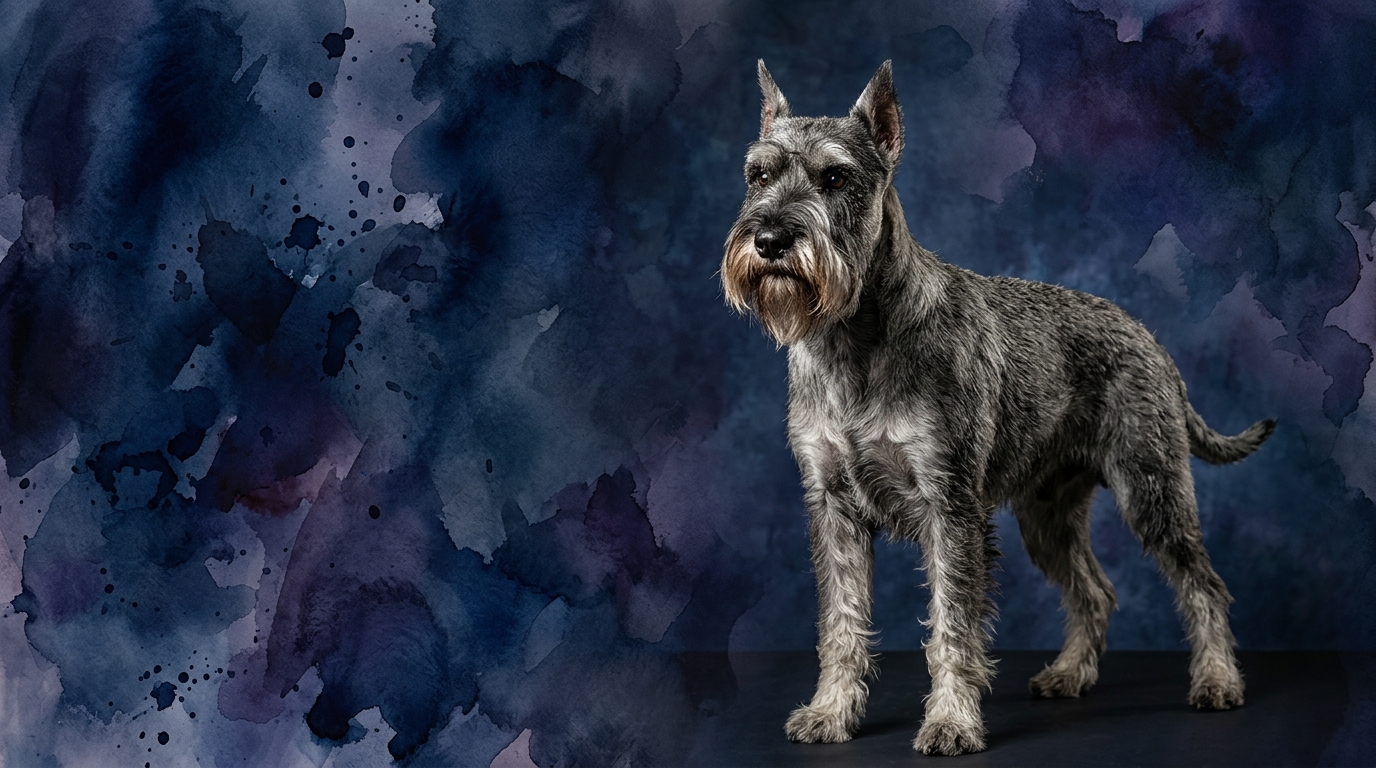
In contrast, the Standard Schnauzer, a robust Working dog, showcases a more independent and analytical mind. Its Problem Solving capabilities are rated higher at 4/5, indicating a breed that can figure out puzzles or work through obstacles with more self-reliance. Training Speed matches the Cocker at 4/5, signifying an equally capable learner in terms of command acquisition. However, its Social Intelligence stands at 3/5, suggesting a more reserved or selective engagement with people, valuing purpose over constant interaction. Instinctive Drive is 3/5, less focused on traditional sporting tasks and more on guarding or purposeful work, while Memory, like the Cocker, is a strong 4/5, allowing it to remember complex sequences and boundaries.
Where Cocker Spaniel Wins Cognitively
The Cocker Spaniel's cognitive edge lies profoundly in its superior Social Intelligence, rated 5/5. This breed excels at interpreting human emotions, gestures, and vocal tones, making them exceptionally attuned companions. This manifests in their ability to anticipate owner needs, offer comfort instinctively, or adjust their behavior based on the subtle shifts in household mood, such as settling down quietly when they sense stress. Furthermore, their 4/5 Instinctive Drive, primarily focused on scent work and retrieving, coupled with their social aptitude, makes them highly responsive and eager participants in interactive games like fetch or scent-tracking activities where they work closely and cooperatively with a handler. Their strong memory (4/5) reinforces these social learning patterns, allowing them to recall specific social cues and appropriate responses, like remembering which family member prefers a gentle nudge over a boisterous greeting.
Where Standard Schnauzer Wins Cognitively
The Standard Schnauzer's primary cognitive strength resides in its robust Problem Solving ability, rated 4/5. This suggests a dog that is adept at navigating environmental challenges, figuring out how to open gates, retrieve hidden toys from complex setups, or devising strategies to work through obstacles independently. Unlike the Cocker, which might look to its owner for guidance when faced with a new puzzle, the Schnauzer is more likely to assess a situation, experiment with different approaches, and formulate its own solution. This self-reliance is a hallmark of its working dog heritage, where independent thought and initiative were crucial for tasks like vermin control or guarding. While its social drive is lower, this problem-solving prowess means it can entertain itself with complex puzzle toys or engage in tasks that require sustained mental effort and persistence without constant human prompting, often outsmarting simpler containment methods.
Which is Easier to Train and Why
While both breeds share a Training Speed score of 4/5, implying they learn new commands and routines at a similar pace, the Cocker Spaniel often *feels* easier to train due to its exceptional Social Intelligence (5/5). A Cocker's deep desire to please its human, stemming from this high social score, makes it highly motivated by praise, attention, and positive interaction. This eagerness translates into a dog that actively seeks to understand and comply, often requiring fewer repetitions and showing greater enthusiasm during sessions. For instance, a Cocker will likely maintain consistent eye contact, readily offer behaviors, and respond quickly to verbal cues and body language, perceiving training as a collaborative game to earn approval and affection. Their instinctive drive (4/5) also makes them naturally inclined to retrieve or follow instructions in a sporting context, further aiding training.
The Standard Schnauzer, with its 3/5 Social Intelligence, is equally capable of learning commands quickly but approaches training with a more independent and sometimes discerning mindset. It might require more varied and high-value motivation, perhaps a specific toy or a very appealing treat, as human approval alone may not be as compelling as for a Cocker. Its strong problem-solving nature (4/5) means it might try to "outsmart" the trainer, test boundaries, or find shortcuts if the training isn't consistent, engaging, and clearly purposeful. While both breeds learn efficiently, the Cocker's innate social drive makes the *process* of training often smoother and more overtly cooperative from the owner's perspective, whereas the Schnauzer demands a trainer who appreciates its independent spirit, can channel its problem-solving drive productively, and maintain a clear, consistent leadership role.
Which Suits Active Owners vs Relaxed Owners
For owners seeking a highly interactive and socially engaged companion, the Cocker Spaniel is an ideal fit. Its moderate instinctive drive (4/5) for scent work and retrieving, combined with its high social intelligence, means it thrives on shared activities like long walks exploring new smells, fetch in the park, or even canine sports where it works closely and cooperatively with its owner. They appreciate consistent attention and thrive in environments where their social needs are met through daily interaction, such as snuggling on the couch, participating in family activities, or engaging in gentle obedience work. These traits make them suitable for active owners who enjoy bonding through shared experiences and relaxed owners willing to dedicate ample time to cuddles and interactive play.
The Standard Schnauzer, with its working heritage and independent problem-solving skills, requires a more structured and purpose-driven active lifestyle. Its instinctive drive (3/5) is less about continuous social interaction and more about engaging in tasks that challenge its mind and body, such as agility, advanced obedience, or protection work. These dogs excel with owners who can provide consistent mental stimulation and vigorous physical exercise, like daily challenging runs, complex puzzle toys, or training that involves problem-solving and decision-making. They are better suited for active owners who appreciate a dog with independent thought, a strong will, and are prepared to channel its energy and intelligence into productive, often challenging, outlets, rather than relaxed owners seeking a purely docile lap dog.
The Verdict
Choose a Cocker Spaniel if you prioritize a deeply social, cooperative companion eager to please and thrive on shared affection and interactive play.
Opt for a Standard Schnauzer if you value an independent, problem-solving partner who excels with structured mental and physical challenges and appreciates a purposeful bond.
🧠 Find Your Pet's IQ Score
Our Pet IQ Lab assessment covers 25+ tests across 5 cognitive dimensions — personalized to your breed.
Take the Full IQ Test →Frequently Asked Questions
Do Cocker Spaniels get along well with other pets?
Yes, Cocker Spaniels generally possess high social intelligence, extending to their interactions with other animals. Early socialization is key, but their natural inclination for harmonious living often makes them excellent multi-pet household members.
Are Standard Schnauzers prone to destructive behavior if not exercised enough?
Standard Schnauzers, with their strong problem-solving skills and working dog background, require significant mental and physical engagement. Insufficient exercise or mental stimulation can lead to boredom-driven behaviors like chewing or digging, as they seek outlets for their energy and intellect.
How do their memory scores impact daily life and training?
Both breeds have a 4/5 memory score, indicating excellent retention of commands, routines, and experiences. This means both can reliably remember training cues and household rules, making consistent reinforcement highly effective for long-term behavioral shaping.