
Side-by-Side Cognitive Profiles
The Cosmic Pet Pet IQ Lab employs a five-dimensional framework to assess canine intelligence, offering a granular view beyond generic labels. For the Cocker Spaniel, a Sporting Group dog, we observe a Coren rank of #20, placing them in the “Excellent Working Dogs” category, which signifies a strong aptitude for obedience and working commands. Their individual IQ scores are: Problem Solving 3/5, Training Speed 4/5, Social Intelligence 5/5, Instinctive Drive 4/5, and Memory 4/5. This profile paints a picture of a perceptive, people-oriented companion with a clear drive for purposeful activity.
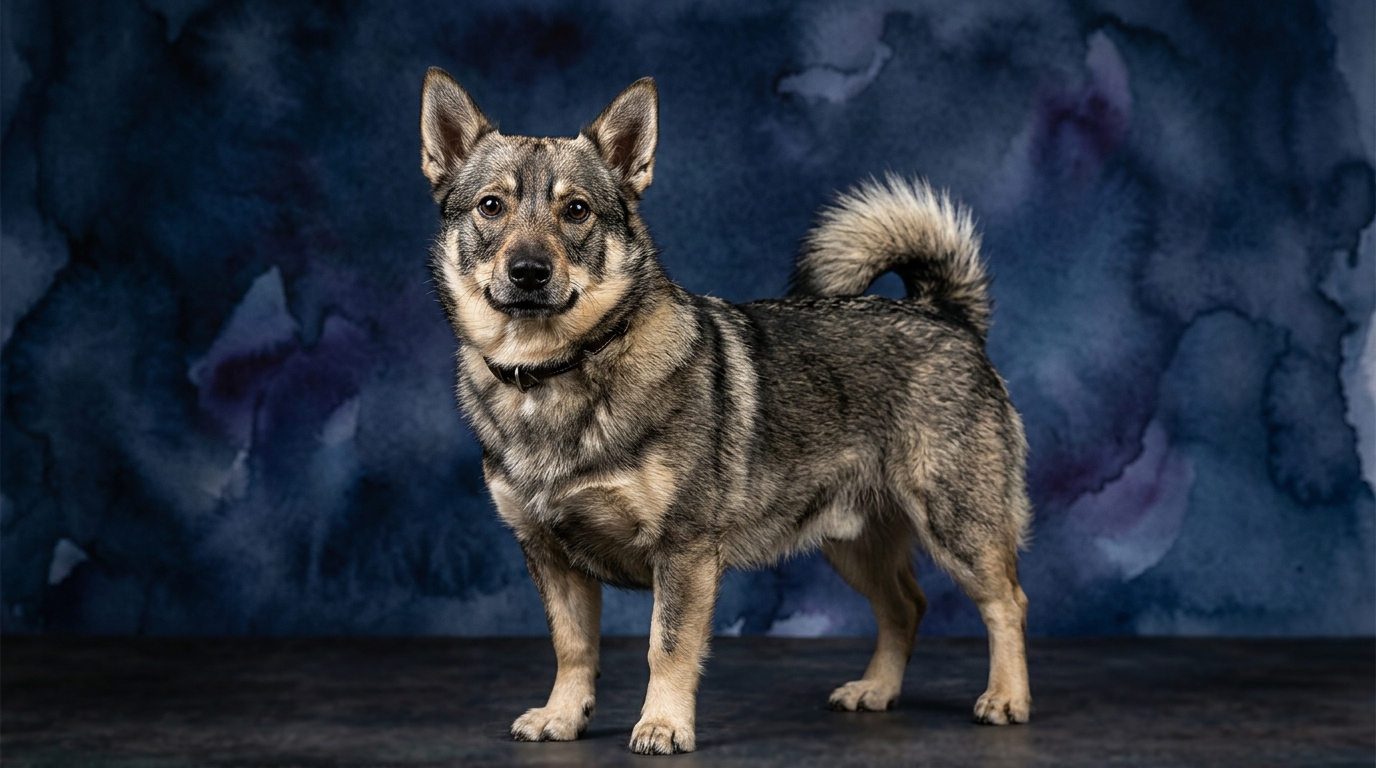
In contrast, the Swedish Vallhund, a Herding Group dog, is not Coren-ranked, which is often due to their relative rarity or their primary working roles diverging from competitive obedience circuits. Their IQ scores show a more balanced, albeit slightly lower, distribution across the board: Problem Solving 3/5, Training Speed 3/5, Social Intelligence 3/5, Instinctive Drive 3/5, and Memory 3/5. This suggests a capable but perhaps more independent learner, whose cognitive strengths are deeply tied to their historical herding role rather than broad social engagement or rapid obedience.
Delving into the specifics, both breeds share a Problem Solving score of 3/5. This indicates a moderate capacity for navigating novel situations or figuring out how to achieve a goal. Neither breed is expected to invent complex solutions to abstract problems, but both can learn to apply strategies effectively, whether it's a Cocker figuring out how to retrieve a toy from a tricky spot or a Vallhund strategizing to move livestock within a confined space.
Training Speed is where the Cocker Spaniel begins to pull ahead with a 4/5 compared to the Vallhund’s 3/5. A 4/5 suggests the Cocker is a responsive learner, often eager to please, and quick to grasp new commands and routines. This aligns with their sporting heritage, where precision and immediate response to handler cues are paramount. The Vallhund’s 3/5 means they are capable learners but might require more repetition or specific motivation to solidify new behaviors, reflecting a more thoughtful or independent learning style.
The most significant divergence lies in Social Intelligence, with the Cocker Spaniel scoring a perfect 5/5 against the Vallhund’s 3/5. A 5/5 indicates profound attunement to human cues, emotions, and social dynamics. Cocker Spaniels thrive on interaction and feedback, often anticipating owner desires. The Vallhund’s 3/5 suggests they are capable of social interaction but might be more self-reliant, less overtly expressive of their need for human approval, and potentially less sensitive to nuanced emotional shifts, often prioritizing task over pure relational engagement.
Instinctive Drive also varies: Cocker Spaniel at 4/5 and Swedish Vallhund at 3/5. The Cocker’s drive is rooted in flushing and retrieving, manifesting as a keen interest in scent work, chasing, and carrying objects. This translates into a strong desire to work collaboratively in the field. The Vallhund’s 3/5 drive is geared towards herding—nipping at heels, circling, and controlling movement. While present, the 3/5 suggests it might be a more focused, less universally intense drive than some other herding breeds, or perhaps more easily channeled into specific tasks.
Finally, Memory scores show the Cocker Spaniel at 4/5 and the Vallhund at 3/5. The Cocker’s 4/5 implies good retention for learned commands and experiences, aiding in complex training sequences and long-term behavioral consistency. The Vallhund’s 3/5 suggests functional memory, but possibly requiring more frequent refreshers or stronger initial imprinting for long-term recall, especially for tasks not directly tied to their innate herding purpose.
Where the Cocker Spaniel Excels Cognitively
The Cocker Spaniel’s cognitive profile shines brightest in areas demanding strong social engagement and rapid learning. Their perfect 5/5 Social Intelligence score means they are exceptionally adept at reading human emotions and intentions, making them remarkably intuitive companions. This deep understanding allows them to anticipate needs and respond to subtle cues, fostering a profound bond with their owners. This isn't just about being friendly; it's about a sophisticated capacity for interspecies communication.
Coupled with their 4/5 Training Speed and 4/5 Memory, Cocker Spaniels demonstrate a remarkable ability to not only grasp new commands quickly but also to retain them consistently over time. This cognitive synergy makes them highly trainable for a wide array of activities, from complex obedience routines to intricate scent work. Their eagerness to please, fueled by their high social intelligence, translates into a desire to engage in collaborative learning, making training sessions productive and enjoyable. Their strong instinctive drive (4/5) for flushing and retrieving also means they are naturally motivated by activities involving pursuit and retrieval, readily channeling this energy into structured tasks.
Where the Swedish Vallhund's Cognitive Strengths Lie
While the Swedish Vallhund's scores are consistently at 3/5, this does not indicate a lack of cognitive ability, but rather a different prioritization of mental resources, optimized for their historical role. Their Problem Solving (3/5) combined with their Instinctive Drive (3/5) for herding demonstrates a practical intelligence focused on task execution. They are adept at understanding and navigating spatial challenges inherent in moving livestock, requiring strategic thinking and independent decision-making rather than constant human direction.
The Vallhund’s 3/5 Social Intelligence, while lower than the Cocker, speaks to a different kind of social contract. They are observant and capable of working alongside humans, but often with a greater degree of independence. Their cognitive strength lies in their self-reliance and the ability to process information related to their environment and tasks without constant human reassurance. This breed excels when given a job that taps into their innate herding instincts, where their moderate training speed and memory are effectively utilized within a specific, purposeful context, making them efficient and reliable workers in their niche.
Training Dynamics: Cocker Spaniel vs. Swedish Vallhund
When considering ease of training, the Cocker Spaniel generally presents a more straightforward experience due to their higher Training Speed (4/5) and exceptional Social Intelligence (5/5). Their natural inclination to please their human companions means they are often highly motivated by positive reinforcement and respond quickly to verbal cues and body language. A Cocker is likely to pick up a new command within a few repetitions, eager for the praise and connection that comes with successful learning. Their strong memory (4/5) ensures that once a behavior is learned, it tends to stick, reducing the need for constant refreshers.
The Swedish Vallhund, with a Training Speed of 3/5 and Social Intelligence of 3/5, may require a more patient and consistent approach. Their greater independence means they might not be as overtly eager to please and may assess whether a command is truly worthwhile before complying. Training a Vallhund often necessitates clear, consistent boundaries and motivation that taps into their working drive. While they are certainly capable of learning, their memory (3/5) and training speed mean that new commands might take more repetitions to solidify, and occasional refreshers are beneficial to maintain proficiency. Behavioral differences like the Vallhund’s occasional stubbornness, a trait sometimes associated with herding breeds needing to make independent decisions, can make training feel more like a negotiation than a collaboration compared to the highly amenable Cocker.
Matching Breeds to Lifestyles: Active vs. Relaxed Owners
For owners seeking an active lifestyle with a deeply integrated canine companion, the Cocker Spaniel is an excellent match. Their 5/5 Social Intelligence means they thrive on constant human interaction and participation in family activities. They are not content to be mere bystanders; they want to be involved, making them ideal for owners who enjoy hiking, running, or engaging in dog sports like agility or obedience. Their 4/5 Instinctive Drive ensures they have the stamina and enthusiasm for such pursuits, and their collaborative nature makes them joyful partners in any adventure. They are a good fit for owners who desire a dog that is always 'on' and eager to share experiences, offering both physical activity and profound emotional connection.
The Swedish Vallhund also suits active owners, but with a different dynamic. Their 3/5 Social Intelligence means they appreciate their human companions but often display a greater degree of independence. They are robust, energetic dogs with a 3/5 Instinctive Drive for herding that needs an outlet. This means they excel with owners who can provide structured activities that engage their working brain, such as herding trials, nose work, or advanced obedience. While they need significant physical exercise, they might not demand the same level of constant, overt emotional interaction as a Cocker. For owners who are active but appreciate a dog that can also entertain itself or work independently, the Vallhund can be a rewarding choice. For 'relaxed' owners in the sense of minimal engagement, neither breed would be truly suitable, as both require mental and physical stimulation to prevent boredom and potential behavioral issues, but the Vallhund might tolerate slightly more independent activity.
The Verdict
Choose the Cocker Spaniel if you seek a highly socially attuned, eager-to-please companion for collaborative activities and a deeply integrated family life, appreciating their quick learning and strong memory.
Opt for the Swedish Vallhund if you appreciate a more independent, robust breed with a keen working drive for specific tasks, requiring consistent, patient guidance and an outlet for their herding instincts.
🧠 Find Your Pet's IQ Score
Our Pet IQ Lab assessment covers 25+ tests across 5 cognitive dimensions — personalized to your breed.
Take the Full IQ Test →Frequently Asked Questions
Is a Cocker Spaniel a good choice for first-time dog owners?
Yes, Cocker Spaniels can be an excellent choice for first-time dog owners due to their high social intelligence and eagerness to please, which makes them generally easier to train and integrate into a family. Their desire for companionship means they thrive on interaction and are often very forgiving.
Do Swedish Vallhunds bark a lot?
Swedish Vallhunds can be prone to barking, especially if their herding instincts are not adequately channeled or if they are left without sufficient mental and physical stimulation. Their territorial nature and role as farm guardians can also contribute to their vocal tendencies, requiring consistent training to manage.
Which breed requires more grooming, the Cocker Spaniel or the Swedish Vallhund?
The Cocker Spaniel generally requires more extensive grooming than the Swedish Vallhund. Their long, silky coats need regular brushing to prevent matting, along with periodic trimming, especially around the ears, feet, and belly. The Vallhund has a shorter, double coat that requires less intensive grooming, primarily regular brushing to manage shedding.