
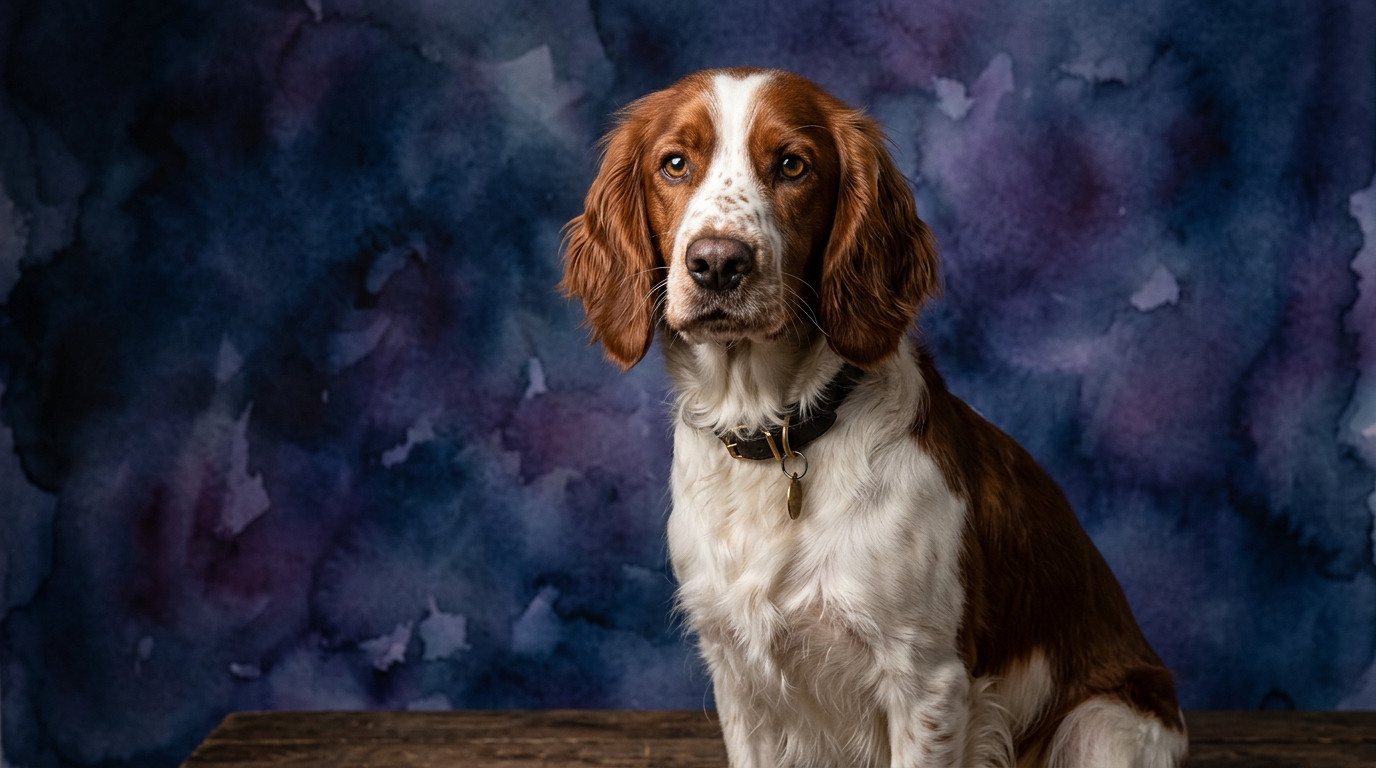
Side-by-Side Cognitive Profiles: Cocker vs. Welsh Springer
At The Cosmic Pet Pet IQ Lab, we dissect canine intelligence across five key dimensions. The Cocker Spaniel, with a Coren ranking of #20, and the Welsh Springer Spaniel, ranked #31, present distinct profiles that illuminate their inherent aptitudes. Understanding these differences moves beyond superficial observations, offering a deeper appreciation for their individual mental architectures.
The Cocker Spaniel’s profile highlights strong social attunement and a responsive nature. Their Problem Solving is rated 3/5, indicating competence in navigating straightforward challenges but perhaps less inclination for complex, independent strategizing. Training Speed stands at a robust 4/5, reflecting their eagerness and capacity to absorb new commands efficiently. Where they truly shine is Social Intelligence, scoring a perfect 5/5, signifying an exceptional ability to interpret human cues and emotional states. Their Instinctive Drive is a solid 4/5, pointing to a well-developed natural inclination for their original working roles, while Memory is also strong at 4/5, ensuring consistent recall of learned behaviors and experiences.
In contrast, the Welsh Springer Spaniel presents a profile leaning towards independent thought and practical application. Their Problem Solving excels at 4/5, suggesting a greater aptitude for figuring out novel situations and devising solutions without constant human intervention. Training Speed matches the Cocker at 4/5, demonstrating their own rapid learning capacity. However, their Social Intelligence is rated 3/5, indicating a more self-reliant disposition and less dependence on human emotional feedback compared to the Cocker. Instinctive Drive is rated 3/5, still present but perhaps less intense than their English counterparts. Like the Cocker, their Memory is strong at 4/5, allowing them to retain information effectively over time.
Where the Cocker Spaniel Excels Cognitively
The Cocker Spaniel’s exceptional 5/5 Social Intelligence is their paramount cognitive advantage. This isn't merely about affection; it's about a profound ability to read and react to human emotions, intentions, and subtle body language. This makes them incredibly intuitive companions, often anticipating their owner's needs or moods. This high social attunement translates directly into their 4/5 Training Speed, as they are naturally motivated to please and respond to human direction, making the training process feel highly collaborative and rewarding. Their 4/5 Instinctive Drive further supports this, providing a consistent eagerness to participate in activities alongside their human partners, whether it’s a game of fetch or a scent-work challenge.
Where the Welsh Springer Spaniel Excels Cognitively
The Welsh Springer Spaniel distinguishes itself with a superior 4/5 Problem Solving capacity. This indicates a breed that is more inclined to independently analyze and navigate complex situations, often demonstrating ingenuity in finding solutions. For instance, a Welsh Springer might be more adept at figuring out how to open a tricky gate or retrieve a toy from an unusual spot without explicit instruction. This cognitive strength suggests a mind that thrives on mental challenges that require independent thought rather than relying solely on learned responses. While their Social Intelligence is 3/5, this slight independence fuels their problem-solving drive, making them less prone to 'learned helplessness' and more likely to experiment with solutions.
Trainability: Nuances Beyond Speed
Both breeds share an impressive 4/5 Training Speed, meaning they generally pick up new commands and routines quickly. However, the 'why' and 'how' of their learning differ significantly. The Cocker Spaniel's 5/5 Social Intelligence means they are often highly motivated by praise, attention, and the desire to work in harmony with their human. This makes them exceptionally responsive to positive reinforcement and creates a strong feedback loop during training sessions. They are eager to cooperate and their focus is frequently directed towards their handler, making them feel very biddable.
The Welsh Springer Spaniel, while equally quick to learn at 4/5, approaches training with a more independent spirit, influenced by their 4/5 Problem Solving and 3/5 Social Intelligence. They might learn a command efficiently, but could also, at times, decide if executing it aligns with their current interest or if there's a more 'efficient' way to achieve the desired outcome from their perspective. This doesn't mean they are difficult, but rather that training might require more engaging, varied methods to maintain their interest and channel their problem-solving intellect. They respond well to clear, consistent instruction but may not be as overtly 'people-pleasing' as a Cocker, requiring an owner who appreciates their independent thought process.
Matching Cognitive Profiles to Lifestyles: Active vs. Relaxed Owners
For the truly active owner, both breeds offer robust companionship, but with different dynamics. The Cocker Spaniel, with its 4/5 Instinctive Drive and 5/5 Social Intelligence, thrives in activities that involve close partnership and a strong working bond, such as obedience, agility, or scent work where they can constantly interact with their handler. Their eagerness to please makes them exceptional teammates for competitive sports or extensive outdoor adventures. They are energetic and require daily physical and mental engagement, but their motivation is often tied to shared activity.
The Welsh Springer Spaniel, with its 4/5 Problem Solving and 3/5 Instinctive Drive, is also suited for active owners, particularly those who appreciate a dog with a more independent streak. They enjoy tasks that allow them to think and explore, such as challenging hikes, complex retrieve games, or field work where they can utilize their scenting abilities and problem-solving skills to navigate terrain. While they need ample exercise, their independent nature means they might be content to investigate an interesting scent on their own for a while, rather than constantly checking in with their owner. For more relaxed owners, neither breed is a couch potato. However, the Cocker's intense social needs might make them a better fit for a home where companionship and interaction are constant, even during downtime. A Welsh Springer might be slightly more content with independent puzzle toys or quiet exploration if human interaction isn't constant, but they still demand significant engagement to prevent boredom.
The Verdict
Choose the Cocker Spaniel if you desire a highly socially attuned, eager-to-please companion who thrives on close partnership and excels in activities where teamwork and responsiveness are key.
Opt for the Welsh Springer Spaniel if you value a dog with strong independent problem-solving skills, who enjoys mental challenges and a slightly more self-reliant approach to tasks and exploration.
🧠 Find Your Pet's IQ Score
Our Pet IQ Lab assessment covers 25+ tests across 5 cognitive dimensions — personalized to your breed.
Take the Full IQ Test →Frequently Asked Questions
Which spaniel is better for a first-time dog owner?
The Cocker Spaniel, with its higher Social Intelligence and strong desire to please, can be an excellent choice for first-time owners who are committed to consistent training and providing ample companionship. Their responsiveness makes the learning process generally smoother, fostering confidence in new handlers.
Do Welsh Springer Spaniels require more mental stimulation than Cocker Spaniels?
While both breeds need mental engagement, the Welsh Springer Spaniel's higher Problem Solving score suggests they particularly benefit from tasks that challenge their independent thought. They might thrive on puzzle toys, scent games, or training that requires them to figure things out, potentially requiring a more varied approach to mental enrichment than a Cocker.
Are Cocker Spaniels prone to separation anxiety due to their social intelligence?
Cocker Spaniels' exceptional Social Intelligence means they form deep bonds with their families, which can make them more susceptible to distress when left alone for extended periods. Early training in independence and gradual desensitization to solitude is crucial to prevent the development of separation-related behaviors in this highly people-oriented breed.