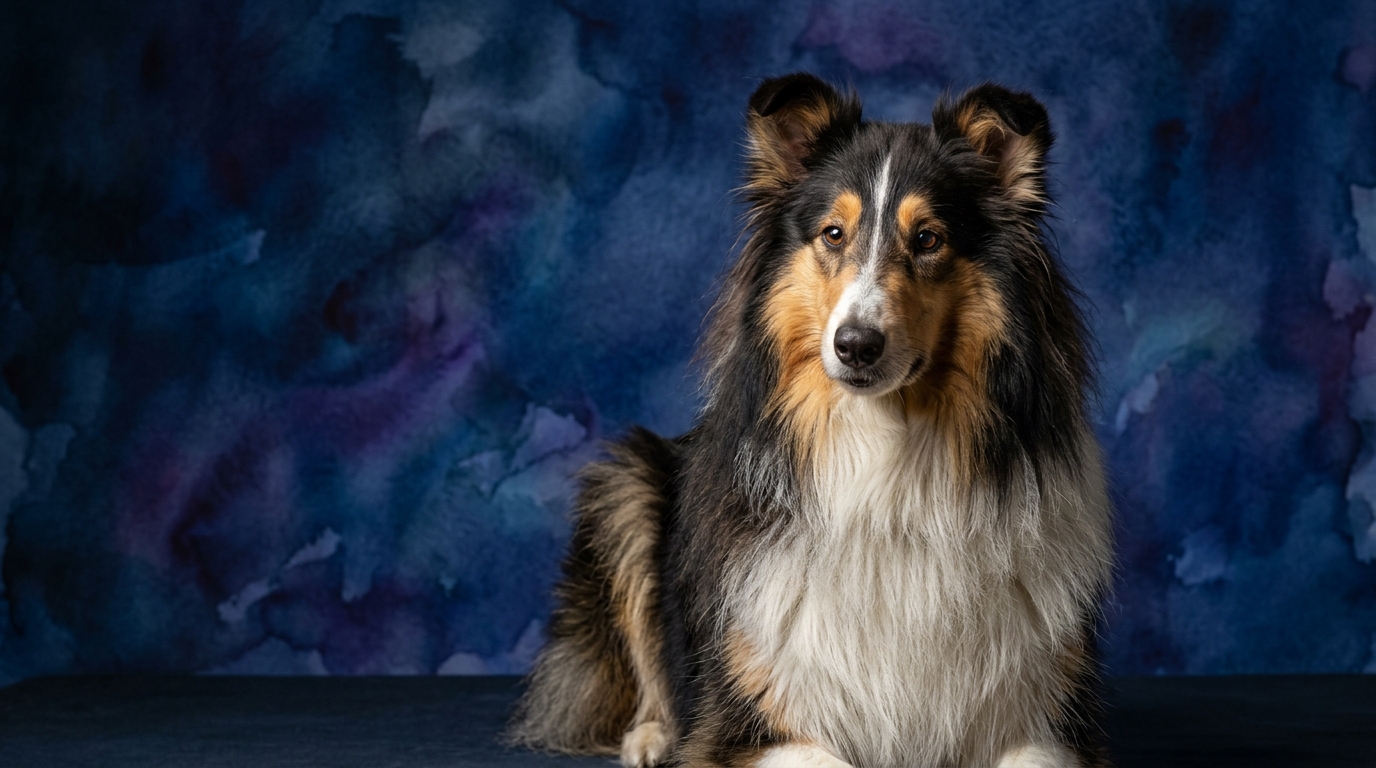
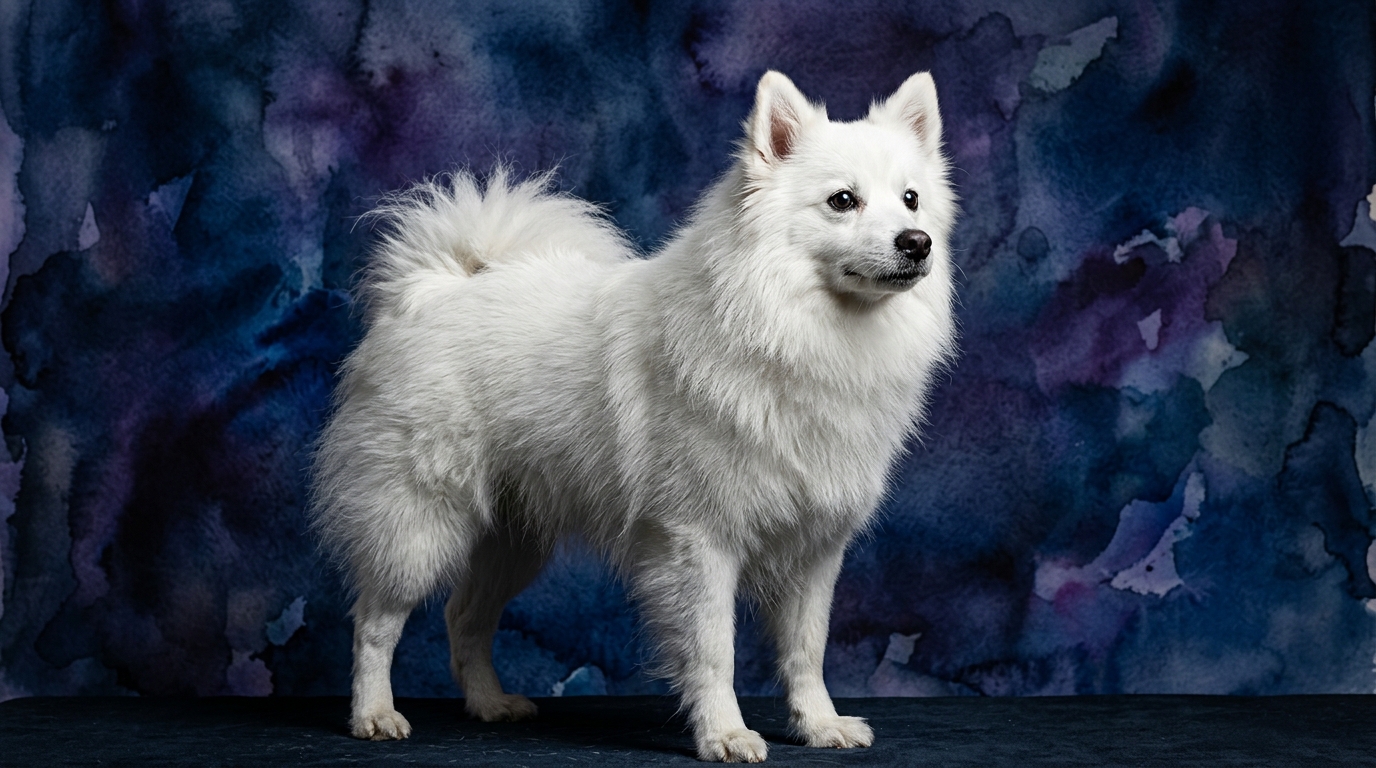
Side-by-Side Cognitive Profile: Collie (Rough) vs. American Eskimo Dog
To truly understand the cognitive makeup of these two breeds, The Cosmic Pet Pet IQ Lab employs a five-dimensional framework, evaluating aspects from problem-solving aptitude to memory retention. This allows for a nuanced comparison, moving beyond general impressions to specific intellectual strengths and tendencies. Let's explore how the Collie (Rough) and the American Eskimo Dog measure up across these crucial cognitive dimensions.
The Collie (Rough), ranked #16 by Coren, exhibits a remarkable cognitive profile. Their Problem Solving is rated at 4/5, indicating a strong capacity to analyze situations and devise effective solutions, often demonstrating foresight in their actions. Training Speed also scores 4/5, meaning they absorb new commands and routines with impressive alacrity, typically requiring fewer repetitions to achieve mastery. Their Social Intelligence stands at 3/5; while attuned to human cues, their focus often remains task-oriented. The Instinctive Drive, at 3/5, reflects their moderate herding predisposition, manifesting as a desire to gather or manage movement. Crucially, their Memory is exceptional at 5/5, allowing for superb retention of learned behaviors, complex sequences, and past experiences over extended periods.
The American Eskimo Dog, a spirited Non-Sporting breed not specifically ranked by Coren, presents a different, yet equally engaging, cognitive blueprint. Their Problem Solving is rated 3/5, suggesting an ability to navigate straightforward challenges and learn through direct experience, though they might require more guidance with abstract or multi-layered puzzles. Training Speed is 3/5, indicating a steady learning pace that thrives on consistent, positive reinforcement rather than rapid assimilation. Social Intelligence matches the Collie at 3/5, showing they are perceptive of human emotions and intentions, often forming deep, responsive bonds. Their Instinctive Drive is also 3/5, typically expressed as a strong desire for vigilance and active participation, rather than a herding impulse. Memory for the Eskie is 3/5, adequate for daily routines and basic commands, but potentially requiring refreshers for less frequently practiced skills.
Where the Collie (Rough) Wins Cognitively
The Collie (Rough) undeniably holds a cognitive advantage in areas demanding complex mental processing and sustained recall. Their 4/5 Problem Solving score means they are adept at navigating intricate environments and understanding multi-step commands, often figuring out solutions to novel challenges independently. This translates into superior performance in activities requiring strategic thinking, such as advanced obedience or competitive dog sports where sequences and precise movements are critical. Furthermore, the Collie's 5/5 Memory score is a significant differentiator. They don't just learn quickly; they retain that information with remarkable tenacity. This reduces the need for constant reteaching and allows them to build a vast repertoire of learned behaviors and experiences, making them exceptionally reliable in recalling complex sequences or long-term training objectives. Their ability to quickly process and store information makes them highly efficient learners for intricate tasks.
Where the American Eskimo Dog Shines Cognitively
While the American Eskimo Dog's individual cognitive scores might not surpass the Collie's in every domain, their unique combination of traits fosters distinct advantages in specific contexts. Their 3/5 Social Intelligence, paired with a 3/5 Instinctive Drive that often manifests as keen alertness and a desire to be involved, makes them exceptionally perceptive family members. Eskies excel at picking up subtle household dynamics and are often the first to 'report' changes in their environment, acting as natural watchdogs. Their cognitive strengths aren't solely about complex problem-solving in a vacuum, but rather about being a highly engaged, responsive, and integral part of their human family, often anticipating interaction or alerting to novel situations with charming enthusiasm. This blend cultivates a companion who is deeply connected and attuned to the ebb and flow of domestic life, offering a different, yet equally valuable, form of cognitive engagement.
Trainability: Collie (Rough) vs. American Eskimo Dog
When considering ease of training, the Collie (Rough) typically presents as the more straightforward student due to its superior training speed and exceptional memory. A Collie often grasps a new command or a multi-step routine with fewer repetitions, sometimes seeming to anticipate what's expected. Their 5/5 memory score ensures that once a behavior is learned, it is deeply ingrained, requiring minimal reinforcement over time. This means less frustration for the owner and a faster progression through training levels, whether for basic manners or advanced competitive sports. For instance, teaching a Collie a complex agility course or a precise obedience routine is often a smoother process because they can quickly link sequences of actions and remember the entire pattern after only a few run-throughs. Their problem-solving abilities also aid in understanding the 'why' behind commands, making them more adaptable when conditions change.
In contrast, the American Eskimo Dog, with its 3/5 training speed and memory, requires a more consistent and patient approach. While certainly trainable, Eskies benefit from shorter, more frequent training sessions and a clear, positive reinforcement strategy. They might need more repetitions to solidify a command, and occasional refreshers for less frequently practiced skills. Their moderate social intelligence means they are responsive to their owner's feedback, but their moderate instinctive drive can sometimes lead to independent thinking or a preference for self-directed exploration over strict adherence to commands, especially if not adequately stimulated. Owners might find that an Eskie learns best when the training feels like a game or involves engaging interaction, rather than rote memorization, requiring a creative and consistent hand to tap into their potential.
Matching Breeds to Lifestyles: Active vs. Relaxed Owners
The cognitive demands of each breed directly influence their suitability for different owner lifestyles. The Collie (Rough), with its high problem-solving capacity, rapid training speed, and exceptional memory, thrives with active owners who can provide consistent mental stimulation and physical activity. Their herding heritage means they are happiest when they have a 'job' to do, be it advanced obedience, agility, or engaging in long, varied walks that challenge their senses. A relaxed owner who cannot commit to regular, stimulating activities might find a Collie becoming bored, potentially leading to undesirable behaviors like excessive barking or destructive chewing.
The American Eskimo Dog, while energetic and engaged, generally suits moderately active owners. They enjoy regular walks, interactive play sessions, and being involved in family activities, but they might not demand the same intensity or complexity of mental exercise as a Collie. Their adaptability allows them to be content with a balance of physical activity and affectionate companionship, making them suitable for owners who are active but perhaps not seeking a dog for extensive competitive sports or specialized working roles. They are often quite happy to be the center of attention in a bustling household, benefiting from consistent interaction and a clear routine.
The Verdict
Choose the Collie (Rough) if you are an owner seeking a highly responsive, eager-to-learn companion for advanced training, dog sports, or a structured working role, and can provide ample mental stimulation and consistent engagement.
Opt for the American Eskimo Dog if you desire an adaptable, alert, and affectionate companion who enjoys regular activity and interaction, and can appreciate a dog with a charmingly independent streak that thrives on being a central part of family life.
🧠 Find Your Pet's IQ Score
Our Pet IQ Lab assessment covers 25+ tests across 5 cognitive dimensions — personalized to your breed.
Take the Full IQ Test →Frequently Asked Questions
Are Collies (Rough) good for first-time dog owners?
Collies (Rough) can be suitable for first-time owners who are prepared to dedicate time to consistent training and mental stimulation. Their eagerness to learn and strong memory make them responsive, but their need for engagement means they aren't a 'set it and forget it' breed.
Do American Eskimo Dogs bark a lot?
American Eskimo Dogs are known for being vocal and can bark frequently, especially when alerting to new sounds or visitors. This trait stems from their historical role as watchdogs, so consistent training from a young age is crucial to manage excessive barking.
How much exercise does a Collie (Rough) need daily?
A Collie (Rough) typically requires at least 60-90 minutes of vigorous exercise daily, ideally broken into multiple sessions that include both physical activity and mental challenges. Long walks, playtime, and training sessions are essential to keep them content.