Side-by-Side Cognitive Profiles: Collie (Rough) vs. Otterhound
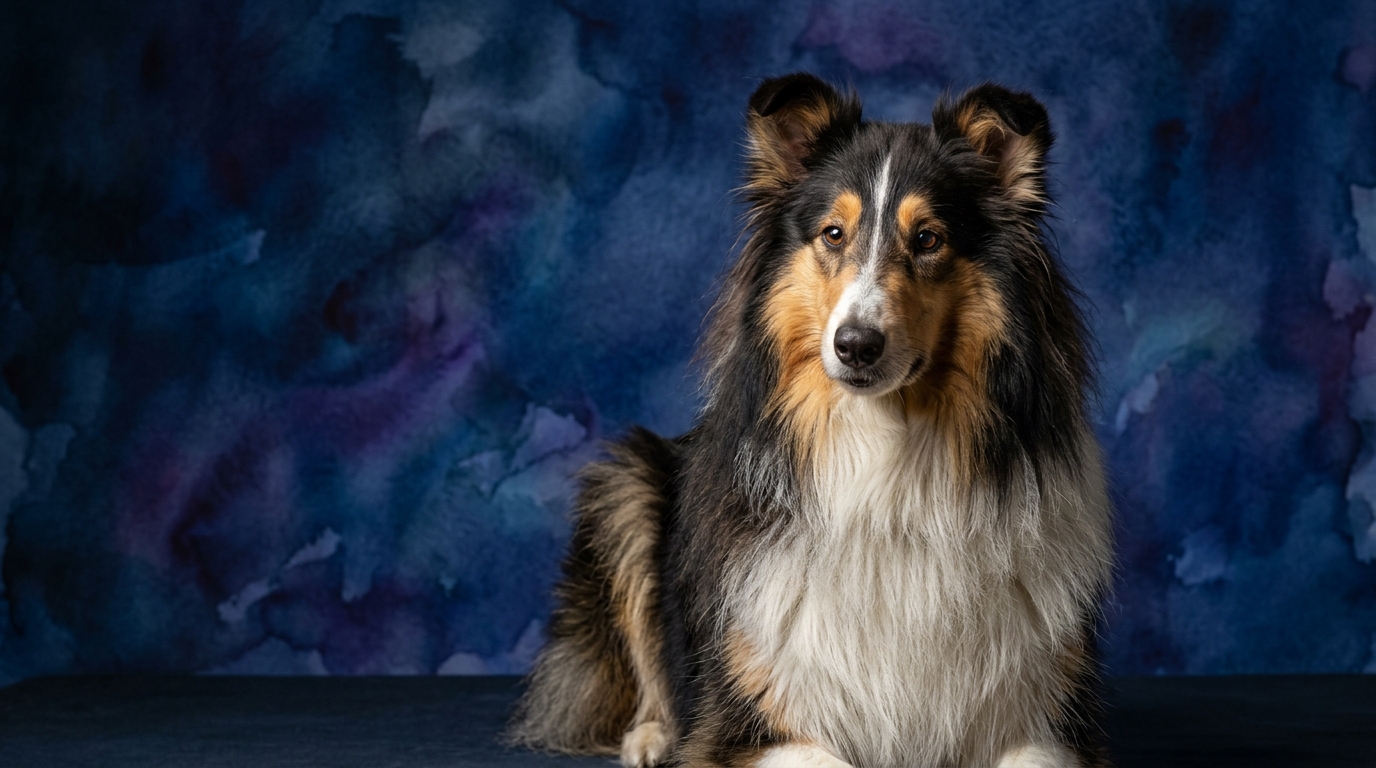
The Cosmic Pet Pet IQ Lab provides a comprehensive framework for understanding canine intelligence across five critical dimensions. For the Collie (Rough), historically tasked with managing livestock, its cognitive blueprint reflects aptitude for complex tasks. Its Problem Solving is rated 4/5, indicating strong capacity to strategize and navigate novel situations. Training Speed, also 4/5, points to rapid assimilation of commands. Social Intelligence stands at 3/5, suggesting a balanced ability to interpret human cues. Its Instinctive Drive, at 3/5, is moderate, channeled towards its herding heritage. Crucially, the Collie (Rough) excels in Memory, scoring 5/5, allowing it to retain vast amounts of information. This breed holds a Coren rank of #16, placing it among breeds demonstrating high working and obedience intelligence.
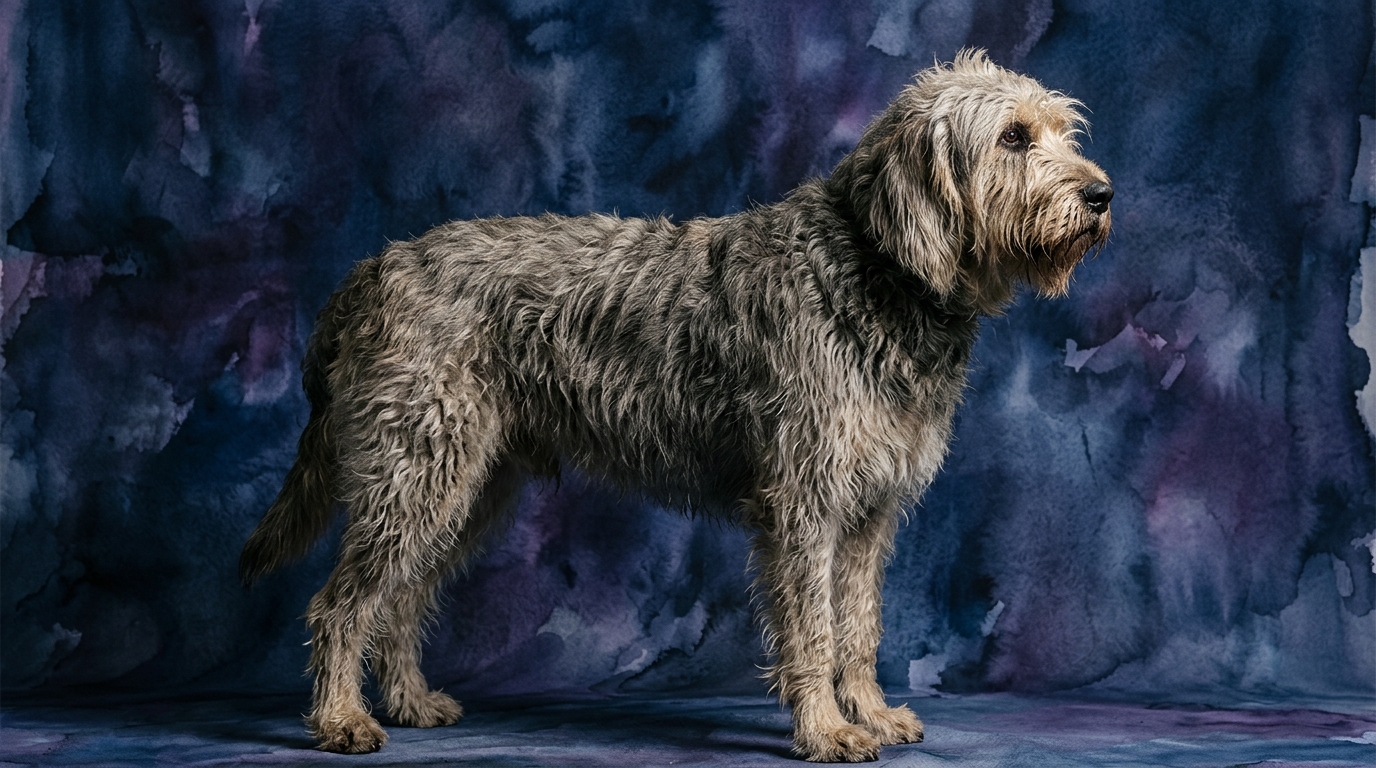
In contrast, the Otterhound, a less common breed from the Hound group, presents a different cognitive profile, tailored to its historical role as a scent hunter. Its Problem Solving ability is rated 3/5, indicating a capable but perhaps less strategically flexible approach. Training Speed also sits at 3/5, suggesting it may require more repetition. Social Intelligence matches the Collie at 3/5, implying similar capacity for social engagement. Its Instinctive Drive, 3/5, is strongly oriented towards specialized scenting capabilities. Memory, at 3/5, is adequate for its tasks but does not reach the exceptional level seen in the Collie. The Otterhound is not included in the Coren ranking, highlighting its distinct cognitive priorities.
Where the Collie (Rough) Excels Cognitively
The Collie (Rough)'s cognitive advantages are evident in its superior scores in Problem Solving, Training Speed, and particularly Memory. Its 4/5 in Problem Solving signifies an innate ability to assess situations and devise solutions, a trait honed over centuries of herding. This involves not just following commands but actively interpreting context and making independent decisions, like gathering scattered livestock across varied terrain. The Collie’s 4/5 Training Speed means it picks up new concepts and commands with relative ease, making it a highly responsive partner in various activities from obedience to agility. This quick uptake is a boon for owners seeking diverse training engagement. The most striking cognitive win is its perfect 5/5 Memory. This exceptional recall means it can store and retrieve a vast repertoire of commands, routines, and experiences over long periods, underpinning its reliability and consistency in advanced training scenarios.
Where the Otterhound Shows Unique Cognitive Strengths
While the Otterhound's raw scores might appear lower, its cognitive strengths are uniquely tailored to its ancestral purpose, representing a victory in specialized adaptation. Its 3/5 in Instinctive Drive is profoundly different from the Collie's, manifesting as an unyielding focus once a scent trail is picked up. This single-minded dedication to a sensory task is a cognitive triumph, an ability to filter out distractions and commit entirely to an olfactory puzzle with unmatched tenacity. Its 3/5 in Problem Solving is perfectly adequate for tracking, involving complex decision-making based on scent interpretation rather than visual cues. An Otterhound's "problem-solving" might involve discerning a faint scent among many, navigating obstacles to maintain a trail, or independently determining the most likely path. This persistent, independent problem-solving, guided by an acute sense of smell, is a unique cognitive specialization. Its moderate 3/5 Social Intelligence allows it to work effectively alongside humans while retaining independence, crucial for a hound following a trail for hours without constant direction.
Training Dynamics: Which Breed is Easier to Shape?
When it comes to ease of training, the Collie (Rough) generally presents a more straightforward experience due to its higher Training Speed (4/5) and exceptional Memory (5/5). A Collie typically grasps new commands quickly, often with just a few repetitions, and retains them for extended periods. This rapid learning curve means training sessions can be dynamic and varied, progressing swiftly through different levels of complexity. Their herding background fosters an inherent inclination to work in partnership with humans, making them excellent candidates for obedience, agility, and even complex trick training.
The Otterhound, while trainable (Training Speed 3/5), often requires more patience and a different approach. Their powerful Instinctive Drive (3/5), heavily geared towards scenting, can be a significant "distraction." Once an Otterhound picks up an interesting scent, their world narrows, making redirection challenging. This tenacious focus is a behavioral difference rooted in their cognitive specialization. They might understand a command, but their strong drive often overrides compliance if a compelling scent is present. Their Memory (3/5) is sufficient but less robust than the Collie's, requiring more frequent reinforcement. Training an Otterhound involves harnessing their drive through scent games or using high-value rewards, as their independent nature demands consistent, patient, and engaging methods.
Matching Canine Cognition to Owner Lifestyle
The choice between a Collie (Rough) and an Otterhound hinges significantly on an owner's lifestyle. The Collie (Rough), with its herding background and high cognitive engagement (Problem Solving 4/5, Memory 5/5), thrives with active owners who enjoy mental and physical interaction. They require consistent mental stimulation, making them ideal partners for dog sports, advanced training, or active family life. A relaxed owner might find a Collie's need for engagement overwhelming, potentially leading to boredom-induced behaviors.
Conversely, the Otterhound, while not hyperactive, suits active owners who appreciate its unique blend of physical endurance and profound scent drive. Their 3/5 Instinctive Drive compels them to explore the world through their nose, necessitating long, meandering walks or structured scent work activities. They possess considerable stamina for extended outdoor adventures. A relaxed owner might struggle with an Otterhound's independent nature and persistent desire to track; they need active participation in scent-rich environments and an owner willing to embrace their unique cognitive wiring.
The Verdict
You seek a highly trainable, responsive, and reliable partner for diverse activities, appreciating a dog with exceptional memory and problem-solving skills that thrives on collaborative engagement and mental challenges. The Collie (Rough) excels as a companion for owners who enjoy structured training, dog sports, and a predictable, attentive demeanor.
You are an owner who deeply appreciates and can accommodate a dog with an independent spirit and an unparalleled drive for scent work, prepared for patient, consistent training and a willingness to provide ample opportunities for their unique olfactory talents. The Otterhound is ideal for those seeking a robust, characterful companion for adventurous, scent-driven exploration rather than strict obedience.
🧠 Find Your Pet's IQ Score
Our Pet IQ Lab assessment covers 25+ tests across 5 cognitive dimensions — personalized to your breed.
Take the Full IQ Test →Frequently Asked Questions
Are Otterhounds difficult to train because they are not Coren-ranked?
Otterhounds are not inherently difficult, but their training requires patience and understanding of their strong scent drive. Their lack of Coren ranking doesn't imply a lack of intelligence, but rather that their cognitive strengths are specialized for tasks like tracking, which differ from the obedience-focused criteria of the Coren ranking.
Can a Collie (Rough) adapt to apartment living if given enough exercise?
Yes, a Collie (Rough) can adapt to apartment living, provided their significant needs for physical exercise and, crucially, mental stimulation are consistently met. Their high memory and problem-solving capabilities mean they need engaging activities beyond just physical exertion to prevent boredom.
Do Otterhounds make good family pets despite their strong hunting instincts?
Otterhounds can make wonderful family pets for the right households, often being good-natured and tolerant. However, their strong hunting instincts mean they require secure environments and consistent training to manage their drive, especially around smaller pets, and they need a family committed to providing outlets for their scenting abilities.