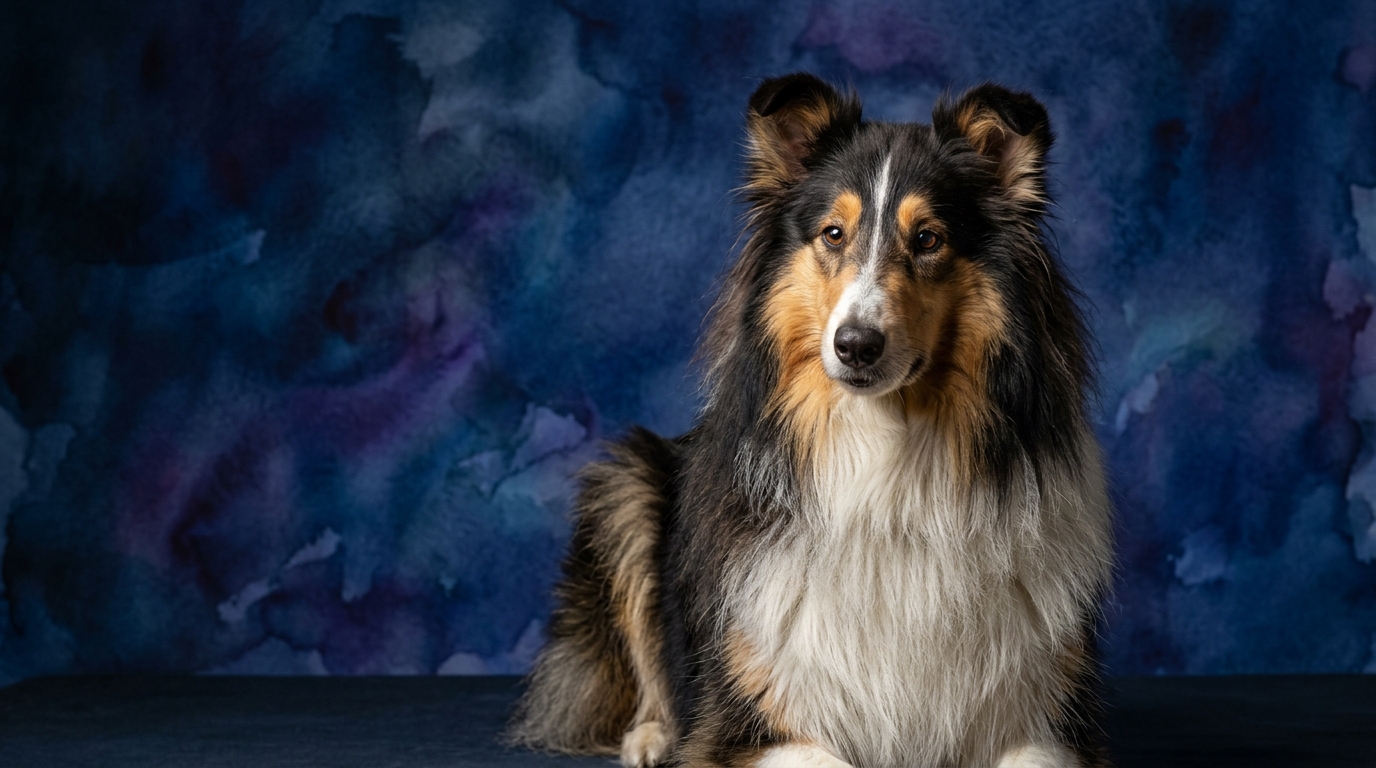
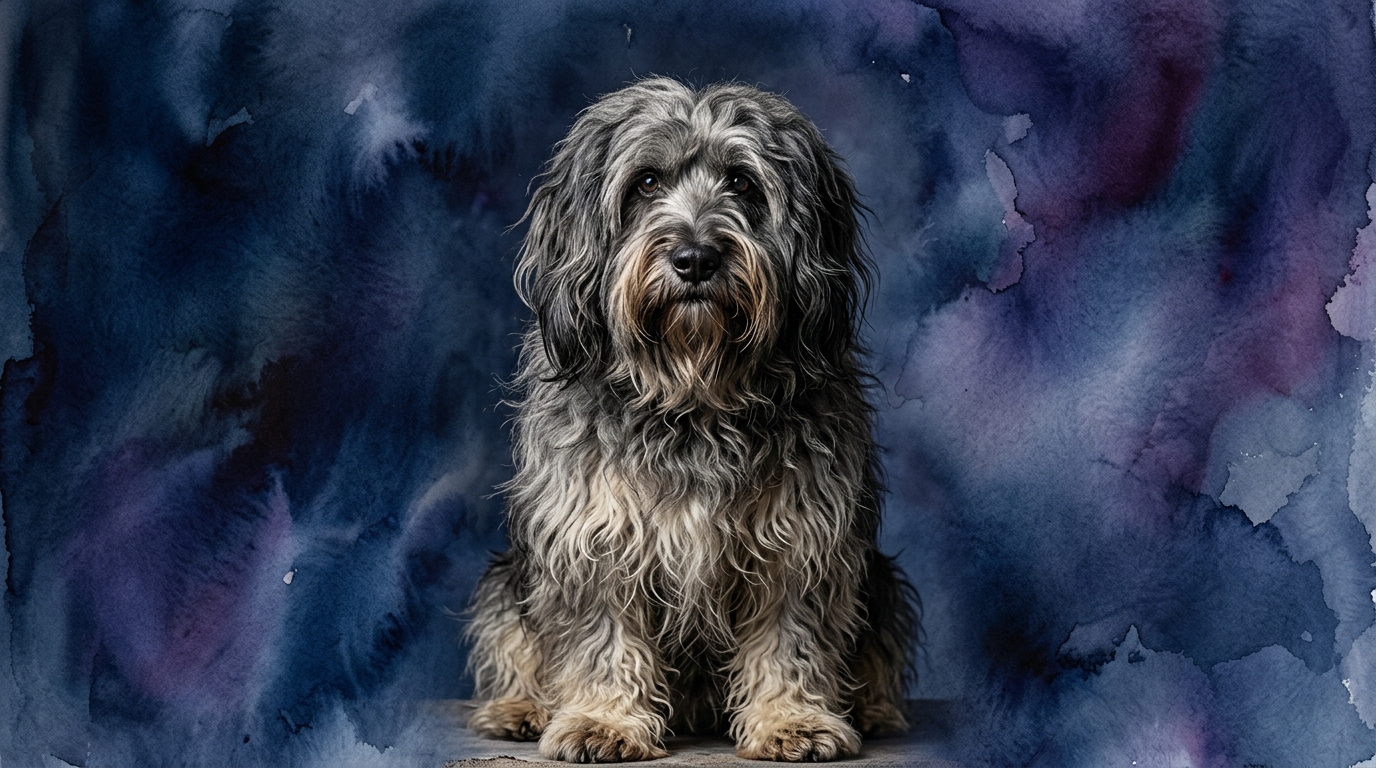
Side-by-Side Cognitive Profiles
At The Cosmic Pet Pet IQ Lab, we dissect canine cognition into five core dimensions: problem-solving, training speed, social intelligence, instinctive drive, and memory. Understanding these facets provides a clearer picture of a breed's inherent aptitudes and preferred learning styles, moving beyond generalized notions to specific, measurable traits. Both the Collie (Rough) and the Polish Lowland Sheepdog, while sharing their herding heritage, exhibit unique configurations across these cognitive measures, reflecting their historical working contexts and individual breed development.
The Collie (Rough), recognized for its refined elegance and ranked #16 in canine working intelligence by Stanley Coren, presents a robust cognitive profile. Its problem-solving capacity is rated at 4/5, indicating a strong ability to navigate novel situations and figure out solutions independently. Training speed also scores 4/5, suggesting a quick grasp of new commands and routines. Social intelligence stands at 3/5, reflecting a solid connection with human cues, while instinctive drive, primarily for herding, is 3/5. A standout trait for the Collie (Rough) is its exceptional memory, scoring a perfect 5/5, which underpins its reliability and consistency in learned behaviors.
In contrast, the Polish Lowland Sheepdog, a shaggy, watchful guardian, does not have a Coren ranking, but our Pet IQ Lab assessment reveals a steady, competent cognitive makeup. Its problem-solving ability is rated 3/5, indicating a capacity to resolve issues, though perhaps with a more deliberate approach. Training speed is also 3/5, meaning it learns consistently, albeit not with the rapid-fire acquisition seen in some breeds. Social intelligence is 3/5, showing a good understanding of its human companions and their intentions. Instinctive drive, again for herding and guarding, is 3/5, manifesting as a watchful and protective nature. Its memory, while reliable, is rated 3/5, suggesting information retention is solid but might require more reinforcement than a breed with higher scores.
Where the Collie (Rough) Demonstrates Cognitive Advantages
The Collie (Rough) exhibits clear advantages in several cognitive domains, most notably in its problem-solving aptitude and the speed at which it processes and retains information. With a 4/5 for problem-solving, Collies frequently demonstrate an innate ability to assess and overcome challenges, whether it's figuring out how to open a child-proof gate or devising a strategy to retrieve a toy from an inaccessible spot. This isn't merely about following commands; it's about independent thought and adaptability, allowing them to thrive in dynamic environments where quick, self-initiated solutions are beneficial. This cognitive agility often translates into a more flexible and responsive companion, capable of adapting to various tasks and situations with relative ease.
Perhaps the most striking cognitive strength of the Collie (Rough) lies in its exceptional memory, scoring an impressive 5/5. This superior recall means that once a command, routine, or even a specific route is learned, it is deeply ingrained and reliably remembered, even after significant periods of inactivity. This remarkable memory significantly contributes to their consistent performance in obedience and competitive activities, as they are less prone to 'forgetting' their training. Coupled with a 4/5 training speed, which signifies their ability to grasp new concepts with fewer repetitions, the Collie (Rough) presents itself as a highly efficient learner, making the training journey a remarkably smooth and rewarding experience for both dog and owner.
Nuances in Polish Lowland Sheepdog Cognition
While the Polish Lowland Sheepdog's numerical scores in problem-solving and training speed are slightly lower than the Collie's, their cognitive profile reflects a distinct and valuable set of traits, particularly suited to their original role as independent herders and guardians. Their 3/5 problem-solving score doesn't imply a lack of intelligence, but rather a more deliberate, independent approach to challenges. These dogs were bred to work autonomously, often making decisions without direct human instruction, which fosters a thoughtful and self-reliant problem-solving style. This means they might take a moment longer to process information or devise a solution, but their eventual answer is often well-considered and effective, reflecting a deep engagement with their environment.
The Polish Lowland Sheepdog's 3/5 social intelligence, combined with its 3/5 instinctive drive, points to a discerning and loyal connection with its family. Unlike breeds designed for constant human collaboration, the PLS's social acumen often manifests as a watchful devotion, forming profound bonds with their inner circle while maintaining a reserved demeanor towards strangers. Their instinctive drive, while moderate, is expressed through a steady vigilance and protective instinct, making them excellent, patient guardians. Their 3/5 memory, while not as phenomenal as the Collie's, is perfectly adequate for retaining essential commands and routines, provided training is consistent and engaging. These traits combine to create a dog that is deeply connected to its people, yet capable of independent thought and action.
Ease of Training: Collie (Rough) vs. Polish Lowland Sheepdog
When it comes to ease of training, the Collie (Rough) generally offers a more straightforward and rapid experience. Their 4/5 training speed means they quickly pick up new commands and behaviors, often requiring fewer repetitions for concepts to stick. This efficiency is amplified by their 5/5 memory, ensuring that once a lesson is learned, it is retained with remarkable consistency. Collies are typically eager to please, responsive to positive reinforcement, and thrive on mental engagement, making them highly receptive students. This combination of quick comprehension, excellent recall, and a cooperative temperament makes the Collie an excellent candidate for various canine sports, advanced obedience, or even complex service roles, where a reliable and rapidly acquired skillset is crucial.
Training a Polish Lowland Sheepdog, while ultimately rewarding, typically requires more patience and a nuanced approach. Their 3/5 training speed and 3/5 memory indicate that they learn steadily but may need more repetitions and consistent reinforcement to solidify new behaviors. Their historical role demanded a degree of independent thinking, which can sometimes translate into a perceived 'stubbornness' or a tendency to question commands rather than immediately comply. Owners will find success by employing clear, consistent training methods, utilizing positive reinforcement, and making sessions engaging to counteract their potential for boredom. A PLS owner should be prepared for a longer training journey, focusing on building a strong bond and mutual respect to encourage their cooperation, rather than expecting instant mastery.
Matching Breeds to Lifestyles: Active vs. Relaxed Owners
Both the Collie (Rough) and the Polish Lowland Sheepdog are herding breeds, meaning neither is truly suited for a completely 'relaxed' owner who prefers minimal engagement. However, their specific cognitive profiles and energy levels do lend them to different types of active lifestyles. The Collie (Rough), with its higher problem-solving aptitude, exceptional memory, and quicker training speed, thrives with owners who enjoy active mental and physical engagement. They are excellent partners for activities like agility, obedience trials, flyball, or long, stimulating hikes. Their desire to work alongside their human and their capacity for complex tasks make them ideal for owners who are keen to participate in structured dog sports or provide consistent, varied mental challenges. A Collie needs a purpose, and an active, engaged owner can provide that in spades.
The Polish Lowland Sheepdog, while also requiring regular activity, may suit an owner whose 'active' lifestyle leans more towards consistent, purposeful outings rather than high-octane sports. Their moderate energy levels and independent nature mean they enjoy long, exploratory walks where they can engage their senses and observe their surroundings, fulfilling their watchful instincts. They can be excellent companions for owners who appreciate a dog with a strong presence and a discerning loyalty, preferring consistent, patient training over rapid-fire command drills. While they aren't typically the first choice for competitive agility due to their more deliberate training speed, they excel as devoted family companions for owners who provide a stable routine, consistent mental enrichment, and opportunities for their natural guarding instincts to be expressed in appropriate ways.
The Verdict
Choose the Collie (Rough) if you seek a highly trainable, responsive companion eager for mental challenges and capable of quickly mastering new skills due to its exceptional memory and problem-solving abilities.
Opt for the Polish Lowland Sheepdog if you value an independent, watchful companion who thrives on consistent, patient training and offers a discerning loyalty, appreciating a slower, more deliberate learning pace.
🧠 Find Your Pet's IQ Score
Our Pet IQ Lab assessment covers 25+ tests across 5 cognitive dimensions — personalized to your breed.
Take the Full IQ Test →Frequently Asked Questions
Is the Collie (Rough) truly smarter than the Polish Lowland Sheepdog?
Based on our Pet IQ Lab metrics, the Collie (Rough) generally exhibits higher scores in problem-solving, training speed, and notably memory. While the Polish Lowland Sheepdog is a competent and capable learner, its cognitive profile suggests a different learning style rather than a lesser capacity overall.
How does a 'not Coren-ranked' status impact the Polish Lowland Sheepdog's intelligence?
Being 'not Coren-ranked' simply means the breed wasn't included in the specific study that generated the Coren rankings, not that it lacks intelligence. Our Pet IQ Lab provides a more granular breakdown of cognitive dimensions, allowing for a direct comparison of their specific aptitudes, regardless of external rankings.
Which breed is better for a first-time dog owner?
The Collie (Rough) might be a more forgiving choice for a first-time owner due to its higher training speed and exceptional memory, making the learning process smoother and more immediately rewarding. The Polish Lowland Sheepdog, while devoted, requires more patience and consistency in training, which can be challenging for novices.