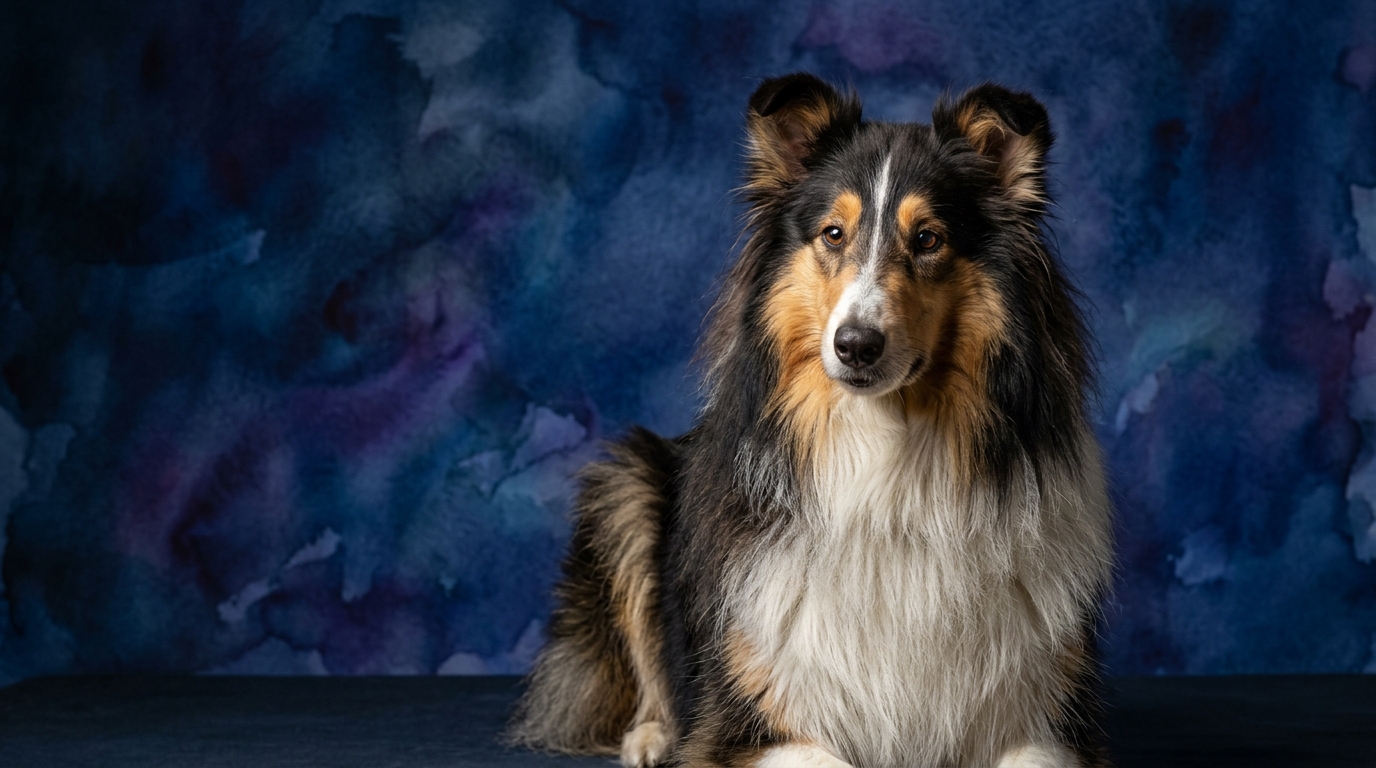
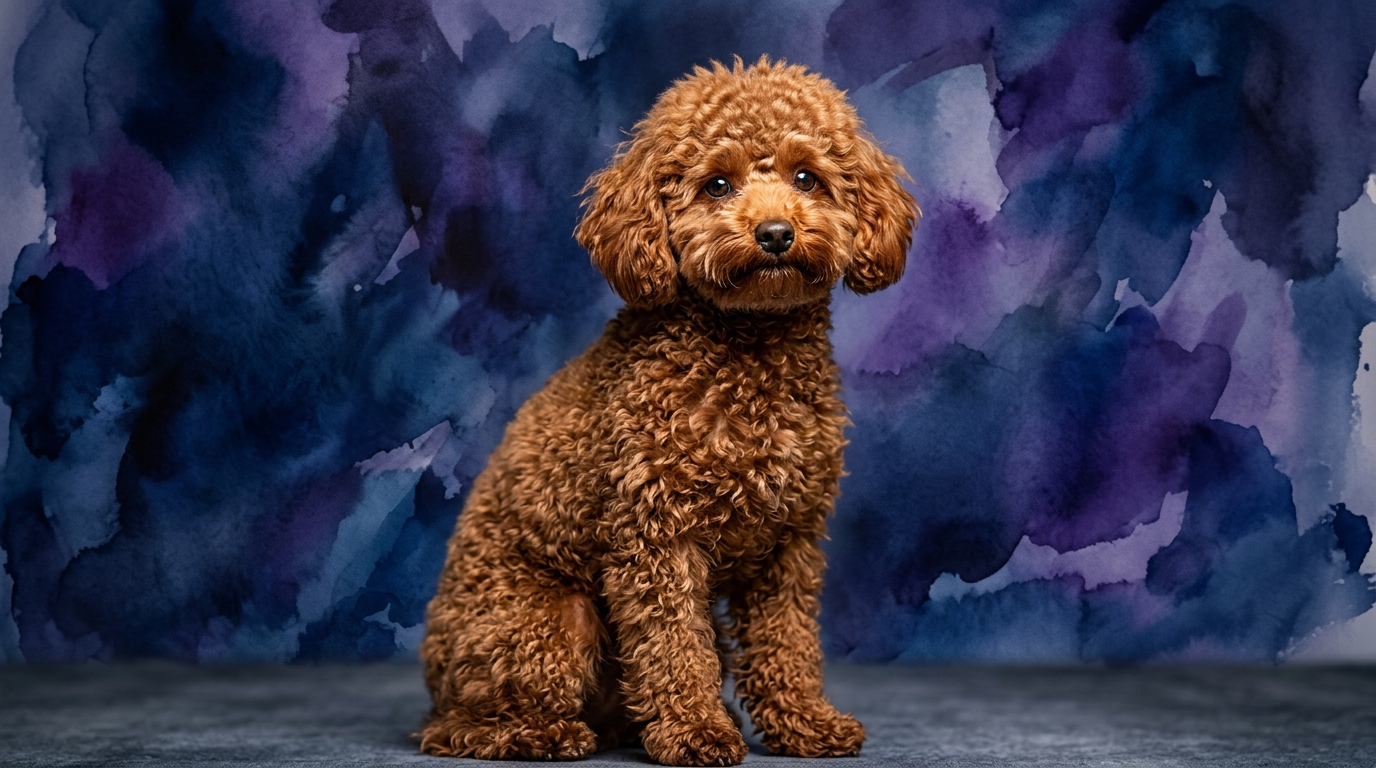
Side-by-Side IQ Profile: Collie (Rough) vs Toy Poodle
The Collie (Rough), ranked #16 by Coren, demonstrates a robust cognitive makeup. Their Problem Solving score of 4/5 indicates a good ability to navigate novel situations and figure out solutions, likely stemming from their herding roots where independent decision-making was crucial. Training Speed, also at 4/5, suggests they grasp new commands and routines effectively, though consistency yields solid results. Their Social Intelligence of 3/5 means they possess a moderate understanding of human cues, capable of forming strong bonds. An Instinctive Drive of 3/5 highlights their herding instincts are present but balanced, allowing for adaptability. Crucially, their Memory is exceptional, scoring 5/5, ensuring reliability once a lesson is ingrained.
In contrast, the Toy Poodle, holding an impressive Coren rank of #2, presents a profile geared towards rapid learning and abstract comprehension. Their Problem Solving score of 5/5 signifies an outstanding capacity to analyze and resolve new challenges, often finding creative solutions. Training Speed also hits a perfect 5/5, meaning they absorb new commands and behaviors with remarkable alacrity, often requiring minimal repetitions. Similar to the Collie, their Social Intelligence is 3/5, indicating a moderate understanding of human social cues and intentions. An Instinctive Drive of 3/5, linked historically to retrieving, is present but well-modulated. Like the Collie, their Memory is also a perfect 5/5, ensuring long-term retention of learned skills and experiences.
Where the Collie (Rough) Wins Cognitively
While the Toy Poodle boasts a higher Coren rank and perfect scores in problem-solving and training speed, the Collie (Rough) possesses a distinct cognitive advantage rooted in its ancestral occupation. Their herding lineage cultivates a specific type of problem-solving and spatial awareness that often surpasses breeds without such a history. A Collie's 4/5 problem-solving score, while one point lower than the Poodle's, manifests differently; it's less about rapid trick acquisition and more about managing complex, dynamic environments. For instance, a Collie excels at anticipating the movements of multiple 'flock' members—be it sheep or children—and strategically positioning itself to guide them. This involves a nuanced understanding of space, prediction, and independent decision-making in fluid situations, a skill set honed for purpose-driven tasks rather than abstract puzzles. Their moderate instinctive drive (3/5) is perfectly balanced to provide the impetus for these tasks without becoming obsessive, allowing for a practical application of their cognitive abilities in real-world scenarios.
Where the Toy Poodle Wins Cognitively
The Toy Poodle's cognitive strengths are undeniable, largely stemming from their exceptional problem-solving (5/5) and training speed (5/5) scores, underscored by their impressive Coren rank of #2. This combination translates into a remarkable capacity for rapid acquisition and application of abstract concepts. They excel in environments where quick comprehension and precise execution are paramount. For example, a Toy Poodle can master intricate multi-step commands or learn complex agility courses with astonishing speed, often anticipating the next instruction before it's even given. Their mental agility allows them to thrive in competitive obedience, trick training, or even service dog roles where a diverse repertoire of learned behaviors is required. This breed's perfect memory (5/5) ensures that once a concept is understood, it is deeply ingrained, allowing for reliable performance even after extended breaks. Their intelligence is geared towards understanding and manipulating human-designed systems with impressive efficiency.
Training Dynamics: Collie (Rough) vs Toy Poodle
When evaluating ease of training, the Toy Poodle holds a clear advantage, primarily due to its perfect 5/5 Training Speed score compared to the Collie (Rough)'s 4/5. This difference signifies that Toy Poodles generally require fewer repetitions to grasp new commands and behaviors, making the training process feel more fluid and immediate for owners. A Toy Poodle's innate eagerness to learn and please, combined with their rapid comprehension, means they often pick up complex sequences like multi-step tricks or intricate obedience routines with minimal effort. Their capacity for rapid pattern recognition allows them to quickly associate verbal cues with desired actions.
In contrast, while the Collie (Rough) is still an excellent student with a 4/5 Training Speed, they might benefit from a slightly more patient approach, potentially needing a few more repetitions to solidify a new skill. Their learning style, while efficient, leans more towards understanding the *purpose* behind a command, often connecting it to a practical application rather than simply rote memorization. For instance, teaching a Collie to 'stay' might be reinforced by understanding its role in managing a 'flock,' whereas a Poodle might simply internalize the command as a rule to be followed. Both breeds will achieve mastery, but the Poodle typically reaches that point faster and with less initial effort from the trainer.
Lifestyle Match: Active vs. Relaxed Owners
Choosing between a Collie (Rough) and a Toy Poodle based on lifestyle involves understanding their inherent needs, not just their size. A Collie (Rough), despite its calm demeanor indoors, is fundamentally a working breed. Owners who thrive on purposeful engagement will find a perfect match. They require consistent mental stimulation through activities like herding games, scent work, or advanced obedience that tap into their problem-solving and memory skills. While they don't demand constant high-intensity running, they need regular, sustained walks and opportunities to 'work' their brains, making them suitable for active owners who enjoy structured outdoor activities and mental challenges. A 'relaxed' owner who cannot provide this mental outlet might find a Collie becoming restless or developing undesirable behaviors out of boredom.
The Toy Poodle, despite its small stature, is not a sedentary lap dog. Their perfect problem-solving and training speed scores mean they thrive on mental engagement and can become bored if under-stimulated. They enjoy brisk walks, puzzle toys, and learning new tricks, often excelling in dog sports like agility or rally obedience. Therefore, an active owner who enjoys daily engagement, whether it's long walks, training sessions, or exploring new places, will find the Toy Poodle an eager and capable companion. While they can adapt to apartment living, a truly 'relaxed' owner who prefers minimal interaction and mental exercise might find a Toy Poodle becoming mischievous or vocal due to unmet intellectual needs. Both breeds require owners who are prepared to actively engage their cognitive abilities.
The Verdict
Choose a Collie (Rough) if you appreciate a dog with a strong, purposeful intellect, ideal for owners who enjoy consistent mental engagement through structured activities and who can provide opportunities for their problem-solving and memory skills to shine in a practical context.
Opt for a Toy Poodle if you seek a highly adaptable and rapid learner, perfect for owners who delight in teaching complex tricks, excelling in dog sports, and engaging in frequent, varied mental stimulation that leverages their exceptional training speed and problem-solving abilities.
🧠 Find Your Pet's IQ Score
Our Pet IQ Lab assessment covers 25+ tests across 5 cognitive dimensions — personalized to your breed.
Take the Full IQ Test →Frequently Asked Questions
Do Rough Collies have good memories?
Yes, Rough Collies possess an exceptional memory, scoring 5/5 in this dimension. Once they learn a command or behavior, they retain it reliably over time, making them consistent performers.
Are Toy Poodles good at problem-solving?
Toy Poodles are outstanding problem-solvers, earning a perfect 5/5 score. They quickly analyze new situations and often devise creative solutions, making them adept at navigating challenges and learning complex tasks.
Which breed is generally more obedient?
Both breeds demonstrate excellent obedience potential, with the Toy Poodle holding a slight edge due to its faster training speed (5/5 vs. 4/5 for the Collie). This means Poodles typically grasp and execute commands with fewer repetitions, though Collies are also highly trainable and dependable.